
Joy Harjo: Crazy Brave – A Memoir
February 8, 2016 by David
Filed under Non-Fiction, Poetry, WritersCast
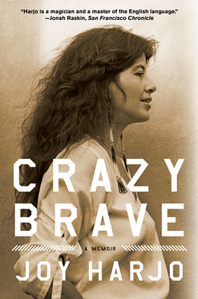 978-0-393-34543-8 – W.W. Norton – paperback – 176 pages – $14.95 (eBook versions available at lower prices)
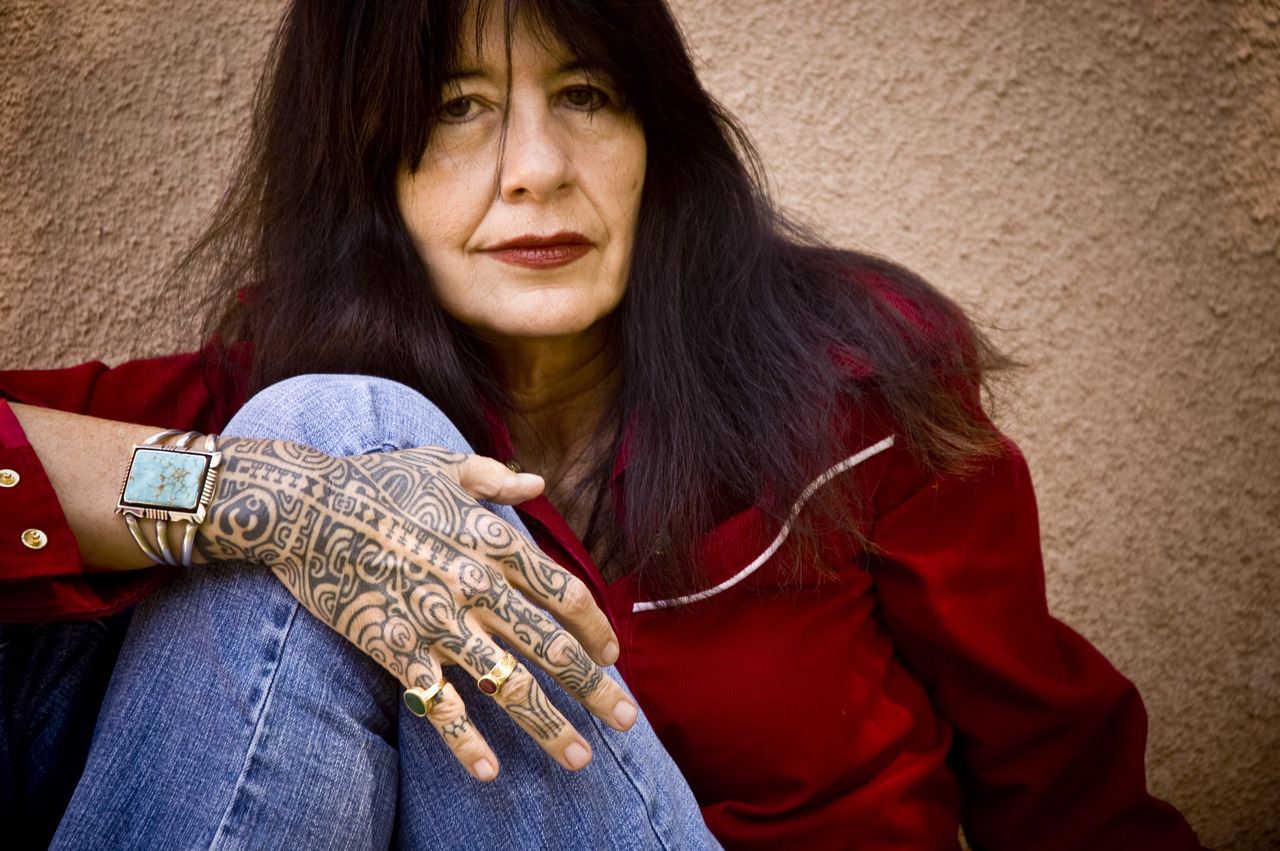
Joy Harjo has been one of my poet heroes for a really long time. I have been reading her poems for so many years I have lost count. Her writing is inspiring, mystical, deeply human and politically explosive. The perfect word to describe Joy’s work is “unflinching,” which she is with herself and with her commitment to following poetry and spirit wherever it takes her.
Recently I read her very personal memoir of self becoming called Crazy Brave, and was stunned by the language, heart and soul of this book. This is the story of Joy Harjo’s becoming a person, unfolding into poetry, and discovering her true self.
The writing in this book is literally transcendent, as Harjo recounts the her earliest memories and family life.
Here are the basics: Joy Harjo was born in Tulsa, Oklahoma and is a member of the Mvskoke Nation. Her mother remarried a deeply abusive man, and Harjo was lucky to escape to an Indian arts boarding school and from there went on to get her BA from the University of New Mexico and eventually an MFA from the Iowa Writers’ Workshop.
Crazy Brave is about all of this, but it is really the telling of her path into poetry, the words that saved her, the voice that enabled her to become. It’s a beautiful, power-full, magical book I urge you to read as soon as possible. This is a book whose inner song will stay with you for a long time. Joy Harjo once said this about her own work: I feel strongly that I have a responsibility to all the sources that I am: to all past and future ancestors, to my home country, to all places that I touch down on and that are myself, to all voices, all women, all of my tribe, all people, all earth, and beyond that to all beginnings and endings. In a strange kind of sense [writing] frees me to believe in myself, to be able to speak, to have voice, because I have to; it is my survival.
It was a heartfelt pleasure for me to speak to Joy Harjo about this book and her work as a writer. If you’ve never read her poetry, you can find some of her work online, including reading her fine poem, She Had Some Horses.
And here, a poem I really love:
Perhaps the World Ends Here
“Perhaps the World Ends Here” from The Woman Who Fell From the Sky by Joy Harjo. Copyright © 1994 by Joy Harjo
Podcast: Play in new window | Download
Courtney White: Two Percent Solutions for the Planet
October 22, 2015 by David
Filed under Non-Fiction, WritersCast
 Two Percent Solutions for the Planet: 50 Low-Cost, Low-Tech, Nature-Based Practices for Combatting Hunger, Drought, and Climate Change – 9781603586177 – Chelsea Green Publishing – 240 pages – paperback – $24.95 – October 2015 (ebook versions available at lower prices)
It’s my belief that climate change and its consequences are the single most important issue of our time. I am almost continuously upset by the responses of our society to environmental and planetary matters, which usually range from denial to despair.
Part of the problem is simply its scope. Solving planetary scale problems is simply beyond the ability of most of us to comprehend, much less to try to accomplish anything meaningful for us.
When I ran across this book, published by my friends at Chelsea Green Publishing in Vermont, I knew it would be a book I would like. And having read it, I continue to be inspired by its simple practicality. I’ve learned a lot from author Courtney White and can recommend this book to all, regardless of whether you are actually in a position to apply any of the ideas here. Even if you are a couch potato or a city dweller, this book will help you understand what is possible and practical for us to do in order to make a meaningful change in how we live on this earth.
I lifted the following paragraph from Courtney’s website, A West That Works, because it best explains what this project is all about, and places it meaningfully in context.
We live in what sustainability pioneer Wes Jackson calls “the most important moment in human history,” meaning we live at a decisive moment of action. The various challenges confronting us are like a bright warning light shining in the dashboard of a speeding vehicle calledCivilization, accompanied by an insistent and annoying buzzing sound, requiring immediate attention.
I call this moment the Age of Consequences – a time when the worrying consequences of our hard partying over the past sixty years have begun to bite hard, raising difficult and anguished questions.
How do you explain to your children, for example, what we’ve done to the planet – to their planet? How do you explain to them not only our actions but our inaction as well? It’s not enough simply to say that adults behave in complex, confusing, and often contradictory ways because children today can see the warning light in Civilization’s dashboard for themselves. When they point, what do we say?
As a parent and as a writer, this anguished question created a strong desire to document the sequence of events that I was witnessing as well as attempt to explain our behavior as a society. Hopefully, we would manage to turn off the warning light in the dashboard, but if we did not I was certain that future generations would want an accounting of our behavior.
So, in 2008 I began to write, blending headlines, narrative with travel and research into chronological installments, crossing my fingers.
I think he has done an admirable piece of work toward giving us a better future. Our conversation should add to an understanding of what is possible. Do go buy this book!
A former archaeologist and Sierra Club activist, Courtney dropped out of the ‘conflict industry’ in 1997 to co-found The Quivira Coalition, a nonprofit dedicated to building bridges between ranchers, conservationists, public land managers, scientists and others around the idea of land health. Today, his work concentrates on building economic and ecological resilience on working landscapes, with a special emphasis on carbon ranching and the new agrarian movement. His writing has appeared in numerous publications, including Farming, Acres Magazine, Rangelands, and the Natural Resources Journal. His essay The Working Wilderness: a Call for a Land Health Movement was included by Wendell Berry in 2005 in his collection of essays titled The Way of Ignorance. Island Press published Courtney’s book Revolution on the Range: the Rise of a New Ranch in the American West and Courtney co-edited, with Dr. Rick Knight, Conservation for a New Generation, also published by Island Press. He lives in Santa Fe, New Mexico, with his family and a backyard full of chickens.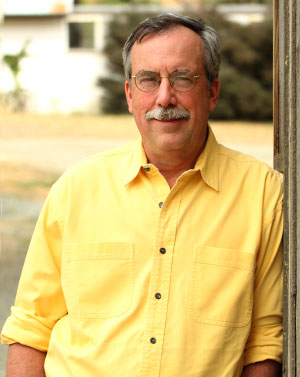
Podcast: Play in new window | Download
Kevin Jack McEnroe: Our Town
September 7, 2015 by David
Filed under Fiction, WritersCast
 978-1-61902-528-8-1 – Hardcover – $25.00 – Counterpoint – 229 pages
ebook versions available at lower prices
I happened across this young, tattooed writer sitting in a publisher’s exhibit space at Book Expo earlier this year, and since it was Counterpoint, a publisher whose work I deeply respect, I shook his hand and took a copy of the book.
It took me a couple weeks before I started reading this novel, and then I was immediately captivated. Our Town is a great story, interestingly constructed, and really well written. The author plays with voice and perspective throughout, there are shifts in narrative viewpoints, and as it is telling a story through time about a number of different characters, all that prismatic dancing really worked for me.
This is McEnroe’s first novel, and there are inevitably some rough patches, and maybe even some missing pieces (I would have liked a bit more writing about the main characters’ children, for example). The novel traces the life of a minor Hollywood actress, Dorothy White, her husband Dale, and their children, Dylan and Clover. It’s a feat of imagination on the part of author McEnroe, to inhabit place, time and people whose lives he could never possibly have experienced in any direct way. I thought he captured that hazy, sometimes glowing world of Hollywood in the fifties and sixties quite brilliantly.
There is an incredible amount of sadness and pathos in this novel, unavoidably, as the lives that are traced here are broken in so many ways. These are people who are trying to be real but who are trapped in the imagery of pop culture, not strong enough themselves to find themselves in the trappings of fame and celebrity, unable to be self aware enough to become whole, or even close to whole. Their tragedies are inevitable by products of impossible aspirations.
McEnroe captures the desire, and the striving and the power of hope throughout. From what I can tell, he has his own demons to wrestle with, but as they motivate him to go deeper into his own understanding, his sure handed talent will serve him well. Our Town is a terrific novel – I resisted the hackneyed impulse to say “first novel” by the way – demonstrating that the author has a terrific set of writing skills and the promise of much more to come. Definitely a book to read and ruminate on.
Kevin Jack McEnroe lives and writes in Brooklyn, New York. He received his MFA from Columbia University.
“From Lou Reed to Joan Didion, the tale of the young and the not-so-young Hollywood starlet has been treated with a gimlet-eyed intelligence. What makes Kevin Jack McEnroe’s Our Town so striking is not just his fierce intelligence —although there is certainly that— but his masterful flexibility of tone. Written with both razor-keen irony and surprising, startling depth of sympathy, Our Town is magnificent.” —Matthew Specktor, author of American Dream Machine

Podcast: Play in new window | Download
David Wilk talks with Justo Hidalgo of 24symbols
July 19, 2015 by David
Filed under Ebooks and Digital Publishing, PublishingTalks, Technology, The Future
 Publishing Talks began as a series of conversations with book industry professionals and others involved in media and technology about the future of publishing, books, and culture. As we continue to experience disruption and change in all media businesses, I’ve been talking with some of the people involved in our industry about how publishing might evolve as our culture is affected by technology and the larger context of civilization and economics.
I’ve now expanded the series to include conversations that go beyond the future of publishing. I’ve talked with editors and publishers who have been innovators and leaders in independent publishing in the past and into the present, and will continue to explore the ebb and flow of writing, books, and publishing in all sorts of forms and formats, as change continues to be the one constant we can count on.
It’s my hope that these conversations can help us understand the outlines of what is happening in publishing and writing, and how we might ourselves interact with and influence the future of publishing as it unfolds.
24symbols is a service to read and share digital books in the cloud, working in any reading device that has an internet connection, and that gives users access to an international and multi-publisher’s catalogue – essentially a subscription model that competes with other subscription services like Scribd, Oyster and Amazon to provide readers with easy access to ebooks for a low monthly fee (currently $8.95 US) and of course provides publishers with access to readers outside of the traditional “buy one copy” model that is still the predominant form of book commerce. The offering to readers is pretty clearly described here. Of course, in terms of competition, it’s not just the other subscription services they are up against, but mainly the hegemony of dedicated reading devices and apps where readers are so used to shopping for ebooks.
24symbols, based in Spain, and strongest in Europe, has over 200,000 titles (and growing fairly quickly), and is now making inroads into the US market. It seems to me that a diversity of business models and ultimately some different ways for readers to read digitally is going to be a necessary groundwork for the growth in e-reading that so many in publishing have thought would have arrived by now.
Justo Hidalgo is a co-founder of 24symbols, a technologist and book lover, and someone whose thinking and energy I have long admired. I wanted to find out more about this company, and its plans for the future, as well as Justo’s current thinking about ebooks and digital reading. This interview will not disappoint those who are interested in different perspectives on the current digital book environment. Justo provides a broad range of stimulating ideas here.
Aside from 24symbols, Justo also teaches Product Strategy and Innovation at the Master’s Degree program in Industrial Design of Nebrija University, and Technology for Managers at the Nebrija Business School in Madrid, Spain. Justo is member of the Internet Society and Board Member and Mentor at Tetuan Valley.
Justo holds a Ph.D. from the University of A Coruña, Spain and a B.S. in Computer Science by the Autonomous University of Madrid, Spain. He has received training in Product Management, Product Marketing, Innovation and Creativity in the universities of Stanford and University of California Berkeley.
Some of his work and thoughts can be viewed on Twitter (@justohidalgo), his blog (in Spanish) and here (in English).
My apologies to listeners, as there were some recording difficulties with this interview, and while our fantastic tech team has done a great job cleaning it up, there are still some low level background noises during some parts of the interview.
Podcast: Play in new window | Download
David Wilk talks with Sherisse Hawkins from Beneath the Ink
June 22, 2015 by David
Filed under Ebooks and Digital Publishing, PublishingTalks, Technology, The Future
 Publishing Talks began as a series of conversations with book industry professionals and others involved in media and technology about the future of publishing, books, and culture. As we continue to experience disruption and change in all media businesses, I’ve been talking with some of the people involved in our industry about how publishing might evolve as our culture is affected by technology and the larger context of civilization and economics.
It’s my hope that these conversations can help us understand the outlines of what is happening in publishing and writing, and how we might ourselves interact with and influence the future of publishing as it unfolds.
Sherisse Hawkins is co-founder with Alex Milewski of Beneath the Ink, a Boulder, Colorado based ebook technology company. Beneath the Ink is working on what is likely the next phase in ebook development evolution, which is the provision of tools that enable authors and publishers to easily create ebooks with interactive content and multimedia resources. As Sherisse says in our interview, the story must and will remain the core of the book, but there are many types of books where the reading experience can be meaningfully expanded with the addition of expanded content.
This concept is not new of course, but what differentiates Beneath the Ink is the way their technology integrates the additional material to enable the reader to choose whether to engage or not, and making sure the presence of the option is not distracting to the reader. Their proprietary technology creates what they call “binks,” which contain the media content within the book file, as opposed to simply being a link out to the open web (which is, of course, also always enabled in epubs and mobi files). Another other key offering is to make it easy for creators to manage their own ebook media production process simply and easily.
I think it makes sense to enable this sort of feature in the digital reading experience. Not all readers want to “go deeper” or be taken out of the main text. But many others do. In a way it’s like having enhanced footnotes – and many of us do enjoy a good footnote to enhance our understanding of the text at hand. Fiction is another matter and is likely going to be a much greater challenge both for writers and for readers. But again, there are plenty of readers who do enjoy taking side trips from the main text, perhaps to better understand a character or a place inside a novel.
Beneath the Ink creates the tools for expanded reading experiences; of course, it remains to be seen how they are used and deployed by creators, and appreciated by readers. Aside from Binks, Beneath the Ink now has a new product called PageDip, which enables the one-click creation and has also created the option for users to offer their ebooks as hosted WebBooks, essentially untethering the reading experience from devices and apps, something that many in the ebook development world have been promoting for a number of years.
Beneath the Ink appeared on Shark Tank April 17, 2015! heavy.com did an interview with Sherisse about her appearance.
I like what this company is doing and have done some experimenting with their technology for my clients. I wanted to talk to Sherisse about her vision for the future of digital publishing and also to learn more about her experiences in creating technology and offering it to the publishing community. Beneath the Ink has done a great deal of research into the ways that readers prefer to interact with digital content and Sherisse and her team have developed their software accordingly. Her insights into the ways that digital reading is evolving are very worthwhile to hear.
Sherisse is the former VP of software development at Time Warner cable and was a Senior Electrical Engineer in the Walt Disney Imagineering Show and Ride division, responsible for the design, development, and installation of attractions in four major Disney theme parks. She received a BS degree in Engineering from the University of Arizona, and earned a Masters in Engineering Management from the University of Colorado. Alex Milewski is the other co-founder of Beneath The Ink. His background is in web and mobile application development using Javascript, PHP, CSS3, HTML5 and many other programming languages. Beneath the Ink is based in Boulder, Colorado.
Podcast: Play in new window | Download
Jessica Anya Blau: The Wonder Bread Summer, a novel
August 17, 2014 by David
Filed under Fiction, WritersCast
 The Wonder Bread Summer: A Novel – 978-0062199553 – Harper Perennial – paperback – $14.99 (lower cost ebook versions available)
Discovering writers that are new to us and that we end up liking in a big way, is one of the pleasures of life. I’m fortunate that publishers and writers get in touch with me about books they want me to read for this podcast series. And sometimes, writers have told other writers about Writerscast, suggesting they contact me, a form of recommendation I appreciate. So I’m very glad that Jessica Anya Blau reached out to me about reading her novel, The Wonder Bread Summer, as it is most likely I would never have known about it otherwise.
And what a fun and complicated novel it is. The Wonder Bread Summer is a wild romp of a book, certainly a coming of age story, hilarious and sometimes scary. But underneath the nonstop breathless action of the story, there is a lot of complexity, and as her heroine, twenty year old Berkeley college student Allie Dodgson deals with issues of family, race, sexuality and friendship, she is becoming a real person, someone with agency, rather than someone to whom events happen. The story is pretty bold – Allie is working part time in a dress shop that turns out to be a front for drug dealing, and through a series of misadventures, she ends up on the run with an amazing amount of cocaine, driving her best friend’s new car, drives to LA to where she thinks her father might be, runs across her estranged mother and her mother’s new husband’s band, has sex with a famous rock star, finds her father, and deals with some real dangers. There is alot going on in this novel!
I couldn’t help but ask Jessica about the connection between Allie’s adventures in the book and her own life experiences – not that I thought or believed it was an autobiographical novel – because the events and people she writes about seem so vivid and real. This is a fun book that takes risks and rewards the reader with its intelligence and emotional depth. Oh yeah, you might enjoy knowing that the reference to Wonder Bread is a bread bag full of cocaine. Great image.
This is Blau’s third novel and I’m looking forward to reading the first two soon.
Author website here. And another good interview (from 2011) with Jessica here.
 Thanks to John Cheary of John Marshall Media for use of their studio, and to Nathan Rosborough for sound engineering and editing.
Podcast: Play in new window | Download
Sean Davis: The Wax Bullet War – Chronicles of a Soldier & Artist
June 21, 2014 by David
Filed under Non-Fiction, WritersCast
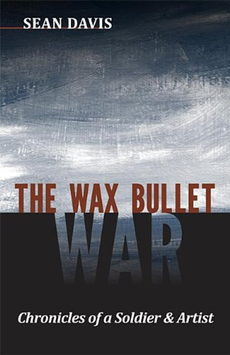 The Wax Bullet War: Chronicles of a Soldier & Artist – 978-1932010701 – paperback – Ooligan Press – $16.95 (ebook version available at lower prices)
Sean Davis grew up in Oregon, joined the Army after high school, went to art school for awhile, had an unsuccessful relationship with an attractive woman, and was working at an unsatisfactory job as a highway worker on September 11, 2001. The next day he walked into the Oregon National Guard recruiting office and re-enlisted, on the working assumption that he would be contributing to the greater good and giving himself a sense of direction and meaning. He had no idea he would soon end up on active duty in Iraq on the front lines of the war trying to figure out how to be a sensitive warrior in a strange country.
Davis is a talented writer and exceptional memoirist with a keen eye for details and a wry sense of humor. In Iraq he lost his best friend in an ambush and was himself critically wounded. He returns home after a lengthy period of recovery to deal with the aftermath of his experiences and suffers through what we now know is so common for the veterans of our seemingly endless recent wars, alcohol and drug dependency and a minimally helpful support system. Somehow, Davis managed to rediscover the interior place where his art comes from and was able to rebuild his life. He now has a family, an advanced degree, is actively an artist and a writer, and has created a nonprofit organization (A Rock or Something Productions: “veterans getting veterans into the arts”) to connect other veterans to the healing power of the arts.
Davis recounts the seeming insanity of daily life in the war zone with humor and clarity, and clearly cares deeply about the civilians he encountered in Iraq as well as the men and women with whom he served. As an example, the wax bullets in the title were what was used in training exercises in Kuwait prior to active deployment – to save money. Evidently it escaped the thinking of military planners that in the plus 100 degree temperature there, the bullets would melt, fouling the soldiers’ guns, wasting time and endangering their lives. This is not the only example of how things go wrong for US soldiers and the Iraqi people in the midst of the war, which Davis describes with a soldier’s sense of black humor.
His description of what happened to him after he returned home is terrifying and powerful. When he does rediscover himself, we are right there with him, joined with his indomitable spirit to become someone better, someone who can be alive and present and fully engaged in the beingness of humanity.
The Wax Bullet War is a beautiful book, incredibly moving and compelling. I’d recommend adding it to the short list of great books about war and specifically about the real experiences of soldiers who fight and then must live their lives in time of peace. Put aside some quiet time to read it and let it sink in. Sean Davis website. Publisher Ooligan Press website.
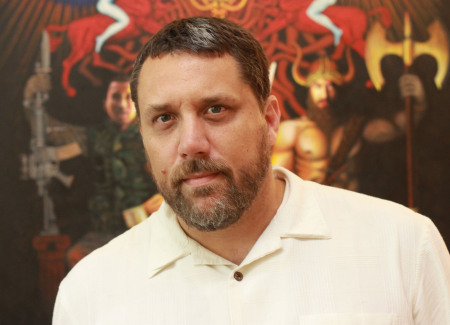
Sean Davis bio: Sean Davis is an artist, writer, and returning veteran of the Iraq War. He earned a bachelor’s degree in English from Portland State University and an MFA in Writing from Pacific University. His previous work includes the novel Motivation and Toleration, published under the name Ian Avi, as well as contributions to the Portland Mercury, Nailed Magazine, and Split Infinitive. He has appeared on 60 Minutes and is one of the cofounders of Hubris Press in Portland, where he lives with his wife and daughters.
Podcast: Play in new window | Download
Katharine Weber: The Memory of All That
August 19, 2011 by David
Filed under Non-Fiction, WritersCast
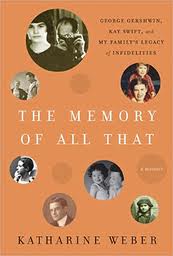 978-0307395887 – Crown – Hardcover – $24.00 – ebook editions also available
Katharine Weber is best known as a novelist – I interviewed her last year about her wonderful novel True Confections and she has written many more fine books. The Memory of All That, subtitled “George Gershwin, Kay Swift and My Family’s Legacy of Infidelities is both a memoir of her own family, as well as a history of a certain slice of twentieth century America, primarily focused on her grandmother, Kay Swift, whom she loved, and her quite unusual and difficult father, Sidney Kaufman, with whom her relationship was far more complicated to say the least.
Sidney Kaufman was a larger than life character, but mainly one of his own making, someone who spent years trying to “make it” in the movies and never succeeding. He was also a narcissist, a husband who literally neglected his wife and family, and who had numerous long lasting affairs. One most notable was an affair that lasted for years with Beatrice Buchman, wife of the famed (blacklisted) screenwriter, Sidney Buchman (who happens to be my father’s first cousin).
Sidney Kaufman also was a target of a decades long investigation by the FBI, initially because the agency confused him with another Sidney Kaufman, a longshoreman who joined the Abraham Lincoln Brigade to fight fascism in Spain. And hilariously, Kaufman was such a fantasist, that the FBI itself could not tell the facts about his life from the fiction. Not so hilariously was the effect of Kaufman’s absences and failures to relate to his family, which deeply affected the author of this book, as she recounts in some deeply moving passages in this book.
But in many ways, the focus of this book is really on Kay Swift, known even today for her wonderful music, as well as for her lengthy romance (and musical collaboration) with renowned composer George Gershwin. Weber tells her grandmother’s fascinating life story with a great deal of love, and of course intimacy, and provides an insider’s view of many details of her life and relationships with her husbands and lovers. Swift is in many ways an iconic, 20th century American woman, who made her way among men at a time when doing so was unusual and difficult, and required considerable verve and inner direction. And while she had many material advantages, the challenges she faced and overcame, both personally and professionally, were significant and testament to her powerful inner being.
Weber’s grandfather was James Paul Warburg, and here introduces us to him and the rest of his famous banking family. Interesting stories are here in abundance. Grandfather Warburg advised and feuded with President Franklin D. Roosevelt, great-uncle Aby Warburg, while eccentric to say the least, was responsible for significant theories in art and myth, and the family was at times dominated by the unusual psychoanalyst Gregory Zilboorg (who slept with his patients on a regular basis, and turned George Gershwin against Kay Swift when she decided to stop allowing him to sleep with her!)
Overall, this is an engaging, beautifully written and emotionally powerful book. Katharine Weber’s family has been complicated, brilliant, interesting, and influential in many areas of American life, and of course has made her the writer she is today. She tells the story of her family with humor, love and a keen eye for emotional detail, and gives us a portrait of herself at the same time.
In my conversation with Katharine we talked about her father, and the complexities of his life, as well as her relationship with Kay Swift and how this book came to be written. It’s a terrifically engaging story she has to tell and we had a great talk about her really great book.
Katharine Weber’s website is here. The Memory of All That got a terrific review in the NY Times:
“…Ms. Weber’s account of her relationship with her manipulative fabulist of a father brings to mind classic autobiographies of unmoored childhoods, like Mary Karr’s “Liars’ Club” and those companion volumes from the brothers Wolff, “This Boy’s Life” (Tobias) and “The Duke of Deception” (Geoffrey)…It’s when Ms. Weber remembers Papa that her considerable skills as a writer are most seductively on display. And it’s not just because the exasperating Kaufman is such a good subject. It’s that Ms. Weber is able to arrange words musically, so that they capture the elusive, unfinished melodies that haunt our memories of childhood. As her grandmother’s lover might have put it, she’s got rhythm.” – Ben Brantley
Podcast: Play in new window | Download
Slowing Down for the Summer
 I have been posting two podcasts a week for the better part of the last year, which has been great fun. But with the summer in full swing, weather wonderful and plenty of work in the hopper, it looks like I may be posting slightly less frequently for the next couple of months. I’m not reading fewer books, but scheduling interviews seems to be more difficult in the summer too. And publishers and technologists take vacations! I do have some really good interviews coming along soon: Anna Lappe, Nick Mamatas, Dean Bakopoulos among other writers, and Kate Wilson of the great new kids publisher Nosy Crow for Publishing Talks. And there will be more.
I’ve also started a new website I hope you will visit – it’s called New Book Media (newbookmedia.com) featuring a long list of digital book events around the world, and a steady stream of news and information about the wildly expanding world of digital publishing. Livewriters.com now has more than 2500 book and author related videos, and is still the only website focused exclusively on video about books, along with an entertaining and original literary blog called LiveWires.
If you’ve read a great book lately I want to know about it. Direct message your recommendations to @writerscast.
Publishing Talks: David Wilk Interviews Frank Rose
June 13, 2011 by David
Filed under Ebooks and Digital Publishing, PublishingTalks, The Future
 In this series of interviews, called Publishing Talks, I have been talking to book industry professionals and other smart people about the future of publishing, books, and culture. This is a period of disruption and change for all media businesses. We must wonder now, how will publishing evolve as our culture is affected by technology, climate change, population density, and the ebb and flow of civilization and economics?
I hope these Publishing Talks conversations can help us understand the outlines of what is happening in the publishing industry, and how we might ourselves interact with and influence the future of publishing as it unfolds.
These interviews give people in and around the book business a chance to talk openly about ideas and concerns that are often only talked about “around the water cooler,” at industry conventions and events, and in emails between friends and they give people inside and outside the book industry a chance to hear first hand some of the most interesting and challenging thoughts, ideas and concepts being discussed by people in the book business.
Frank Rose is a journalist and author, most recently of a book called The Art of Immersion, How the Digital Generation Is Remaking Hollywood, Madison Avenue, and the Way We Tell Stories. I could easily have interviewed him about that book, which is interesting enough in its own right (and later this year I plan to talk to him about it for WritersCast).
But for this conversation, I wanted to talk to Frank about how writers are adapting to the changes wrought in publishing by the advent of digital books.
Frank has recently reprinted another one of his books, one that has been out of print for a number of years; it fits the profile of a fine book from the recent past that cannot be published or re-published commercially anymore. That book is called West of Eden: The End of Innocence at Apple Computer. It’s about the power struggle at Apple that ended up with Steve Jobs being pushed out of the company he had helped found. West of Eden was originally published in 1989 at which time it was a national best-seller and was rated as one of the ten best business books of the year by BusinessWeek.
In 2009, Frank published an updated version of the book himself for Amazon’s Kindle, as well as a digitally printed paperback edition under his own press name (Stuyvesant Street Press) and the book has been doing quite decently. One assumes that there are a fairly large number of people today who are interested in and knowledgeable about the history of modern computing and the computer industry. Enough for an author, if not for a commercial publisher to make a reasonable profit from publishing this book digitally.
Currently Frank writes for Wired, where he has been a contributing editor for almost ten years. Before this assignment, he was a contributing writer at Fortune, writing about Hollywood and global media conglomerates, he’s also been at Esquire, Premiere and Travel + Leisure, and has written for the New York Times Magazine among many other magazines. And he began his writing career at the Village Voice covering the emerging punk scene in Lower Manhattan in the ’70s.
Chances are good that Frank Rose’s experience as an author turned publisher will be reflective of a myriad of similar authors in the next few years. And perhaps will indicate some interesting opportunities for other segments within the publishing ecosystem.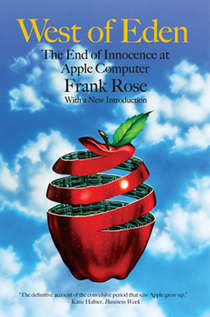 I think this conversation will be interesting to many in the book business who are thinking about how roles are changing in publishing, especially as digital publishing creates so many new opportunities for easy distribution to readers.
More on Frank Rose here. More on West of Eden at Amazon.
Podcast: Play in new window | Download