
Marc Nieson: Schoolhouse: Lessons on Love & Landscape
January 29, 2017 by David
Filed under Non-Fiction, WritersCast
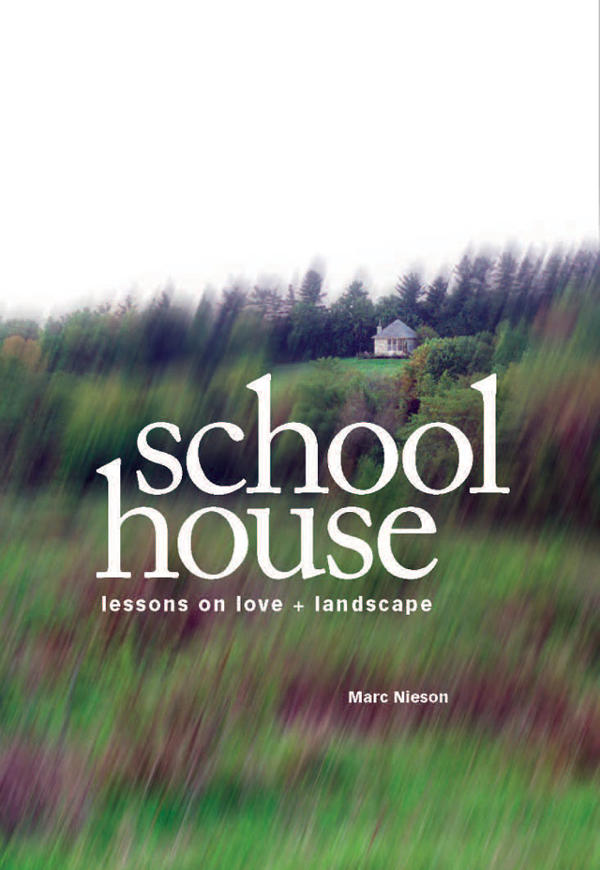 Schoolhouse: Lessons on Love & Landscape – Marc Nieson – Ice Cube Press – paperback – 9781888160925 – 272 pages – $19.95
Memoirs are most often stories of self discovery. To work for readers, they have to engage us indirectly – we have to buy into the narrator’s central problem the story will show us being solved. Marc Nieson’s memoir is about a period in his life when he was confused about love and self-identity. He left his home and long term lover in New York City to attend the famed Writer’s Workshop at the University of Iowa, and ended up living in a former one room schoolhouse on 500 acres of beautiful Iowa landscape.
Escaping the travails of modern life, and living in the woods, the comparisons to Walden cannot help being made. City-bred Nieson learns how to observe the natural world, and in so doing, learns how to understand himself at the same time. Nieson keeps us involved throughout his narrative, and we come to the end of the story fully engaged in his personal adventure.
The book is structured like a schoolbook, each chapter being named after a school subject (i.e. Geography, History, Social Studies, What I Did On My Summer Vacation), which gives the book a certain charm, and while it’s a conceit, this organization helps keep the narrative moving forward. It’s a fully transformational story, even if you have never experienced the woods or the Iowa landscape.
As Nieson writes: “Here on a quiet Iowa hillside, I was hoping … to both learn and unlearn who I was. To try living not only alone and apart, but a more consciously observed life — both inside and out.” I think he achieved what he was hoping to do in Iowa.
“Those of us who have lived in old one-room schoolhouses understand the solitude, solace, and proximity to nature that they provide. During his year living in Union #9, Marc Nieson embraced these opportunities for inner growth. His new memoir—a must read—traces the story of his journey of discovery along the trail through the woods surrounding his house and along the path of human relationships. Read Schoolhouse, and you will open the door to the mind of an engaging voice, a probing, reflective writer who delights the reader with his lyrical prose on every page.”
—Mary Swander, author, Out of this World: A Woman’s Life Among the Amish
Marc Nieson has degrees from both the Iowa Writers’ Workshop and NYU Film School. His background includes children’s theatre, cattle chores, and a season with a one-ring circus. He’s been awarded a Raymond Carver Short Story award and recent fiction appears in Everywherestories: Short Fiction From A Small Planet (Press 53), Museum of Americana, and Tahoma Literary Review. He is also a screenwriter, whose credits include Speed of Life, The Dream Catcher, and Bottomland. He teaches at Chatham University in Pittsburgh, and is working on a new novel, Houdini’s Heirs.
In this interview, Marc and I talked in detail about this excellent book and his work as a writer and teacher. Special kudos to Ice Cube Press for publishing this memoir.
Author website here.
Ice Cube Press website here.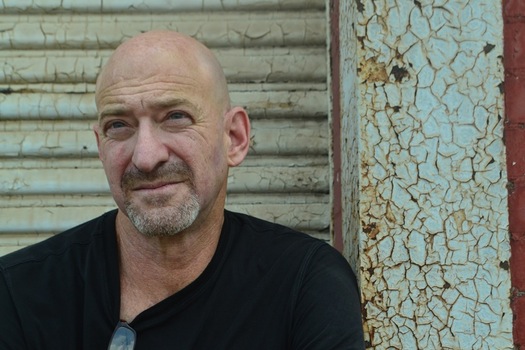
Podcast: Play in new window | Download
Lara Naughton: The Jaguar Man
November 12, 2016 by David
Filed under Non-Fiction, WritersCast
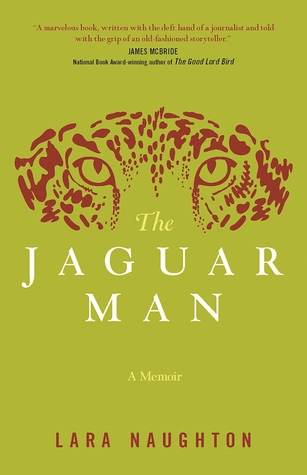 The Jaguar Man – 9781942094203 – paperback – Central Recovery Press – $15.95 – ebook editions available at lower retail prices
The Jaguar Man is a harrowing, powerful and uplifting memoir. On the fourth day of a long awaited vacation in tropical Belize, and in the midst of a new romance, author Lara Naughton was kidnapped by a man who pretended to be a cabdriver. He drove her into the forest, held her captive and raped her.
In this deftly written memoir, Naughton describes how she coped with her ordeal with the figure she called the Jaguar Man. As she makes so clear in a beautiful, complicated and difficult narrative, compassion for her attacker became her only defense, her only coping method, and myth making a passage of self therapy and reclaiming of her personal power.
There is so much going on in this very short memoir, it is difficult to easily describe. I don’t think I can remember reading such a vivid, honest and convincing story. Lara Naughton changes up all our expectations of what it means to be a victim of sexual assault.
In her story telling, Naughton works with myth and spirituality to make sense out of her difficult experience and to be open to the power of compassion. Talking or writing about rape and assault is scary and challenging. Naughton has taken on this difficult task with grace and brilliance. She works through an impossibly difficult experience, using the magic of telling as a way to both navigate and make sense of the psychological effects of trauma both for herself and for readers. It’s completely transformational. I can’t think of any book I can compare to this one.
Our conversation about this book and Lara’s experience was truly rewarding for me and I hope for all my listeners. The opportunity to speak with her about this book was important and deeply meaningful to me.
 I have seen many amazing reviews for this book. Clearly, this book has been extremely powerful to many readers, and can be highly recommended.
“A marvelous book written with the deft hand of a journalist and told with the grip of an old fashioned storyteller.The magic of this book is not so much that Lara Naughton had to reach deep into a cauldron of wit and courage to survive an ordeal from a vicious, twisted villain, but rather that her redemption created a new level of understanding and wisdom that she embraced, so that she might live long enough to share this wisdom with others.That is why we read books.And that is why this is an excellent one.”
—James McBride, National Book Award-winning author of The Good Lord Bird
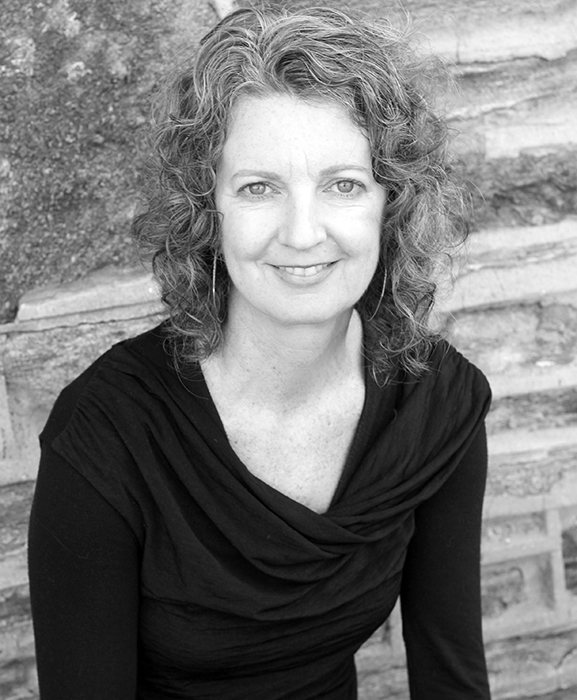
Lara Naughton, MPW, is Director of New Orleans based Compassion NOLA. She has worked with students K-12 as well as adults, and has led workshops with individuals who have faced challenging circumstances, including homelessness, HIV/AIDS, wrongful conviction, incarceration, and torture. As a writer and documentarian, she often incorporates personal narrative exercises into her classes, and assists individuals who wish to tell their own stories. She is Chair of Creative Writing at New Orleans Center for Creative Arts, and a certified Compassion Cultivation Trainer through the Center for Compassion and Altruism Research and Education (CCARE) at Stanford University School of Medicine. Visit her website for much more about this book and her work.
Podcast: Play in new window | Download
Tilar J. Mazzeo: Irena’s Children: A True Story of Courage
October 17, 2016 by David
Filed under Non-Fiction, WritersCast
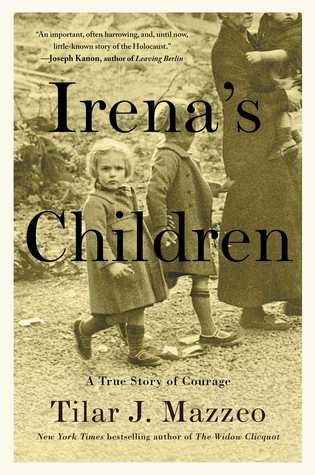
Irena’s Children: A True Story of Courage – 9781476778501 – Gallery Books – Hardcover – $26 – ebook versions available at lower prices.
Author Tilar Mazzeo is a terrific storyteller, who took on the task to tell the world about an inspiring, heroic and terrifying story with this book, the true story of one woman who, with a network of associates, saved 2,500 Jewish children from the Nazis during World War II. The main subject of the book is Irena Sendler, who was a young social worker in Warsaw, living in a socially and politically progressive milieu, when the Germans began World War II by invading Poland.
Poland, of course, was quickly defeated by the larger and more modern German army. The conquered country’s resources, human and otherwise, were turned toward the use of the German war effort, with hundreds of thousands of Poles used as slave laborers as their country was occupied by a brutal military regime. And the Germans then began their concerted efforts to destroy the large Jewish population of that country. While many Poles opposed the Nazis, with partisans fighting them from the outset of the war, some Poles were active collaborators with the Fascists, and many more simply did their best to survive under impossible conditions.
Some Poles risked everything to rescue Jews from the near total eradication of that community that the Germans sought.
Irena Sendler and a close circle of her friends and work associates undertook what we now can recognize as an heroic effort to save some of the children of the Warsaw ghetto. For almost four years, they took immense risks and dangers upon themselves and their families, to rescue innocents from the horrors they could see were happening all around them.
While everything in this book reads like a terrifying, fast-paced novel, Mazzeo has pieced together a completely true story of unimaginable heroism by many “regular” citizens of Poland. Irena Sendler, together with the help of a network of local people and the Jewish resistance, was able to save upwards of 2,500 Jewish children from likely death in the brutal concentration camps to which most Polish Jews were sent. Irena herself went back and forth into the Jewish ghetto, sneaking children out in a myriad of ways, and then found refuge for the children with local Polish families, convents, churches and farmers.
It was an incredible effort. Irena Sendler knew the terrible risks – she was at one point brutally tortured by the Gestapo – but also knew she could not fail to act.
It is incredible that she and so many of her cohorts survived the war. But then, of course, she and Poland had to survive the takeover of her country by the Soviets, and that meant that the story of her wartime heroism could not be told until long after the war had ended. Mazzeo’s effort here to celebrate and tell this amazing story is extraordinary, and much appreciated. Irena Sendler and her network of heroes serves as inspiration and constant reminder that we “regular citizens” must be prepared to face moral choices at any time, sometimes with dire consequences. So many good people were killed in this terrible war.
It is impossible to read this book and not wonder how any of us would have responded then. And of course we must each ask our selves honestly, how will we respond when our time to act is upon us?
I really enjoyed reading this book. It brought up powerful emotions and important questions. Mazzeo is both a fine writer and a terrific researcher, and in this book displays both those talents in full flower. We had a really interesting conversation about this book. There is so much in it I did not want to discuss in detail, so readers will be able to have the full experience of the book for themselves, but we had much to talk about nonetheless.
Tilar Mazzeo is the Clara C. Piper Associate Professor of English at Colby College, in Waterville, Maine. She is the author of numerous works of narrative nonfiction, including the New York Times bestselling The Widow Clicquot.
There’s a wonderful portrait of Sendler, written while she was still alive here and a website devoted to her life and story called Life in a Jar.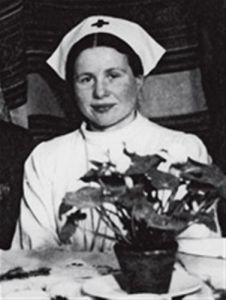

Podcast: Play in new window | Download
David Wilk interviews Peter Costanzo of Associated Press
October 2, 2016 by David
Filed under Ebooks and Digital Publishing, PublishingTalks, Technology, The Future
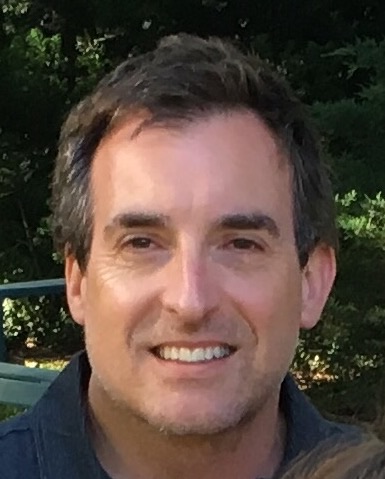 Publishing Talks began as a series of conversations with book industry professionals and others involved in media and technology about the future of publishing, books, and culture. As we continue to experience disruption and change in all media businesses, I’ve wanted to talk with people involved in our industry about how publishing might evolve as our culture is so influenced by technology, within the larger context of a change across human civilization.
This series has expanded to include conversations that go beyond the future of publishing. I’ve talked with editors and publishers who have been innovators and leaders in independent publishing in the past and into the present, and will continue to explore the ebb and flow of writing, books, and publishing in all sorts of forms and formats, as change continues to be the one constant we can count on.
Back in 2011 I spoke with my friend Peter Costanzo, who even then was one of the most experienced and knowledgeable digital thinkers in the book industry. Five years later, as digital publishing has evolved and to some extent stabilized, I thought it would be useful to speak to him again to benefit from his perspective as an active participant in this aspect of our industry.
Peter is now the Digital & Archival Publishing Manager for The Associated Press. He is an award-winning book producer who also teaches the “New Media Technology: Formats and Devices” course at NYU.
Peter is also now known for being the person who taught Donald J. Trump (yes that guy) how to use Twitter! This story was widely reported earlier this year, gaining Peter considerable attention and perhaps, notoriety. Here is what the AP said in its story:
Costanzo crossed paths with Trump in 2009 when he was working as online marketing director for the publisher putting out the businessman’s book, “Think Like a Champion.” Twitter was still in its infancy at the time. But Costanzo saw the 140-character-per-message platform as a new tool that the real estate mogul could use to boost sales and reach a broader audience.
He was given seven minutes to make his pitch to Trump — “Not five minutes, not 10,” Constanzo said — in a boardroom at Trump Tower in Manhattan that appeared to be the same one used on Trump’s reality television show.
Trump liked what he heard.
“I said, ‘Let’s call you @RealDonaldTrump — you’re the real Donald Trump,'” Costanzo said. “He thought about it for a minute and said, ‘I like it. Let’s do it.'”
Our talk for this occasion focused on much more serious and meaningful matters, however.
You can follow Peter on Twitter @PeterCostanzo and Writerscast @writerscast.
Podcast: Play in new window | Download
Clara Bingham reading from Witness to the Revolution
September 19, 2016 by David
Filed under AuthorsVoices
 Witness to the Revolution: Radicals, Resisters, Vets, Hippies, and the Year America Lost Its Mind and Found Its Soul
9780812993189 – Random House – Hardcover – $30
I interviewed Clara Bingham about her terrific and important book, Witness to the Revolution for Writerscast. You can listen to that interview here. When she was in the studio, I took the opportunity to ask her to read from her book as well. Here is that terrific selection. Of course if you like what you hear, you can buy the audio book and listen to the whole thing.
And if voices from the sixties is of interest, there is a wealth of such material online. There’s a great collection of interviews with sixties era radicals and activists at Winthrop University, for example, and much, much more to be found and heard.
Podcast: Play in new window | Download
Clara Bingham: Witness to the Revolution
September 19, 2016 by David
Filed under Non-Fiction, WritersCast
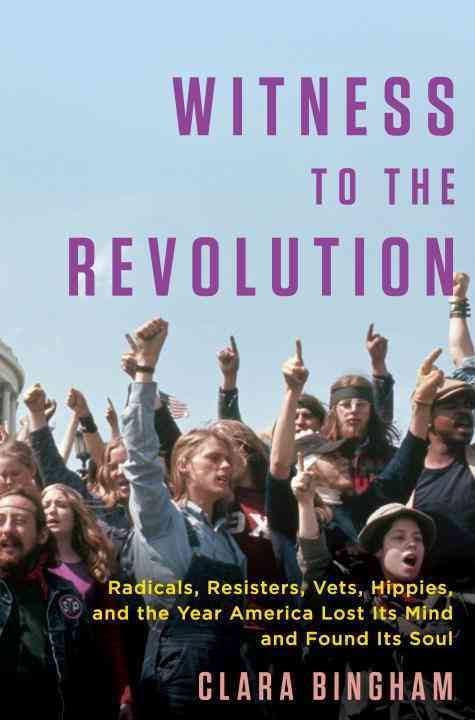 Witness to the Revolution: Radicals, Resisters, Vets, Hippies, and the Year America Lost Its Mind and Found Its Soul
9780812993189 – Random House – Hardcover – $30 – (ebook versions available at lower prices)
There have been many books written about the politics and culture of the sixties, but I don’t think there has ever been a book quite like this one.
Clara Bingham is a journalist who grew up just a bit too young to join in the festivities of what is now known as “The Sixties.” That term is actually a misnomer, as most of us know, since the decade of turbulence and strife really started in the mid-sixties and ended, more or less, with the close of the Vietnam War in 1975. However it is measured, and measuring time periods in history is never easy or altogether clear, that time was full of energy, social discord, cultural change, political engagement, joy and tragedy.
Ms. Bingham had relatives and family members who were old enough to participate actively in the youth culture explosion of that time, and we are lucky that their experiences inspired her interest in this historically significant era. She took upon herself a seriously daunting task, to try to understand what happened in the culture through the words of some of its key participants. It’s an altogether brilliant, inspiring effort.
She has chosen to focus on a single year to create a lens through which to see America in the throes of cultural upheaval. The book covers the period from August 1969 to August 1970, during which there were nine thousand protests and eighty-four acts of arson or bombings across the country. It was an incredible year, one that included so many key events of the time, both at home and abroad, including the rise of the Weather Underground, the invasion of Cambodia, Woodstock, May Day in New Haven, and the massacre at Kent State – and so much more.
As an active member of the counter culture myself in those halcyon years, this book brought back many memories, and reminded me of some of the things I’d forgotten about, as well as some of the people who were so important to us in those years. There’s so much in this book, there are some events and people I had not even thought about for almost 45 years. The first-hand accounts included in this book are important and powerful. These reminiscences can help us understand an era that is so much with us still – both culturally and politically. This book can help us understand why America is still in the throes of cultural and political upheaval, and is so culturally divided. While there were many failures in the sixties, and many terrible things done in the name of good intentions and beliefs, we are awash in the cultural forces unleashed then. The baby boomers who created the youth culture of the sixties are aging out of the population now, but the effects of that time continue to reverberate today.
There is so much of importance to be found in this book. I was really pleased to have a chance to speak to Clara about Witness to the Revolution. It’s an incredible effort and I hope it will help spur further conversations about the Sixties and what we can learn from that incredible era.
If you want to listen to Clara reading from the book, there’s a short segment over in Author’s Voices.
Podcast: Play in new window | Download
George Gmelch: Playing With Tigers, A Minor League Chronicle of the Sixties
August 1, 2016 by David
Filed under Non-Fiction, WritersCast
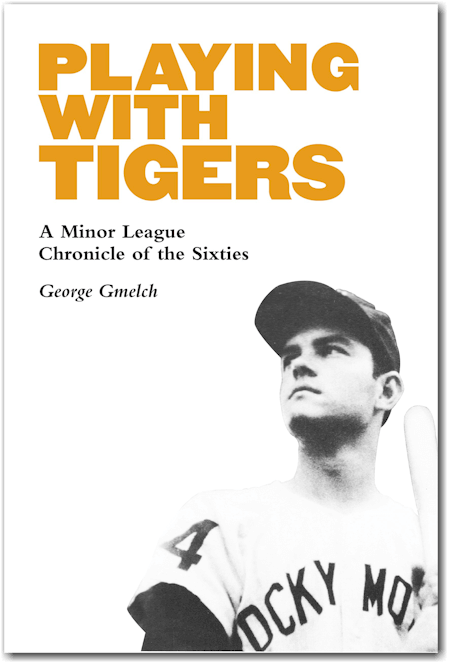 9780803276819 – University of Nebraska Press – 288 pages – Hardcover – $26.95 (ebook versions available at roughly similar prices)
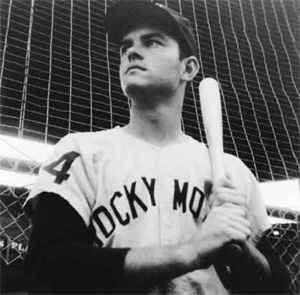
Today, George Gmelch is a successful anthropologist, with a number of books to his credit. But when he was a young man, he was a very good baseball player, with the typical dreams so many shared of becoming a professional baseball player and making it to the Major Leagues. Growing up in an all-white suburb in California in the late fifties and early sixties, George led a fairly sheltered childhood, playing ball and having fun. In 1965 he signed a contract to play professional baseball with the Detroit Tigers organization and so began a four year period of coming of age, during which George experienced the challenges of life in baseball’s minor leagues.
While learning to be a professional athlete, he also became aware of the realities of race and class; minor league baseball in the nineteen sixties was often played in small towns in the south where segregation was still in effect, despite the advances of the civil rights movement. And as an adolescent on his own with other boys in the cocoon like world of pro sports, he also had his first experiences of sex and romance, living, traveling and playing ball. Somewhat unlike most of his teammates, George paid attention to the events of the era, including the Vietnam War, the rise of the counter culture, and civil rights protests.
Playing with Tigers is a memoir certainly unlike most others written by baseball players. The sixties was a time of turmoil involving young people of all backgrounds and professional baseball was not immune from its disruption. George was likely more socially aware than most of his compatriots, and his direct experience of racial issues ultimately led to the end of his professional baseball career.
To write this book, George relied on the journals he kept as a player, as well as letters from that time, and in addition he used his skills and experience as an anthropologist to interview thirty former teammates, coaches, club officials – and even some former girlfriends. This is a unique story, documenting a socially disrupted period in American history through the lives of many of the young people who lived through it. We get to experience first hand the naivete, frustrations and joys of a young man trying to find his way in a complex time. And clearly, some of the motivation for writing this book was unfinished business, events, relationships with people, his baseball experience, on which George wanted to gain some closure.
I read alot of baseball books, as many listeners know. Among the many I have read the past couple years, I found Playing With Tigers extremely compelling, and one I had fun reading. I very much enjoyed the opportunity to speak with George Gmelch for the second time – in 2013, George and I talked for Writerscast about another of his baseball books, Inside Pitch. In addition to being an intensely personal memoir, Playing With Tigers opens a door to a period in our history that deserves a lot more exploration than it seems to have been given. George has some great stories and a deep understanding and love for the people and places he’s experienced. This is a fine book and you do not need to know anything about baseball to like it.
George Gmelch is a professor of anthropology at the University of San Francisco and at Union College in Schenectady, New York. His books include In the Ballpark: The Working Lives of Baseball People, with J. J. Weiner (Bison Books, 2006), and Inside Pitch: Life in Professional Baseball (Bison Books, 2006). He is the editor of Baseball without Borders: The International Pastime (Nebraska, 2006). His writing has also appeared in the New York Times, the Washington Post, Psychology Today, Society, and Natural History.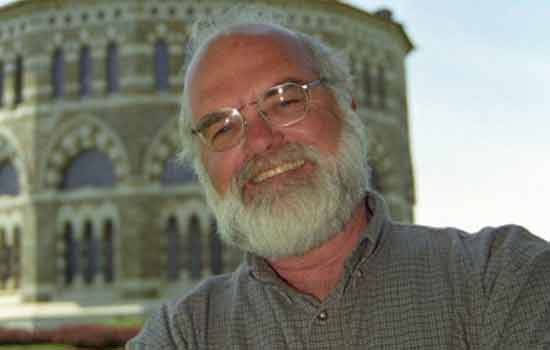
Podcast: Play in new window | Download
David Wilk Interviews Richard Grossinger of North Atlantic Books
May 22, 2016 by David
Filed under Publishing History, PublishingTalks, The Future
Publishing Talks began as a series of conversations with book industry professionals and others involved in media and technology about the future of publishing, books, and culture. As we continue to experience disruption and change in all media businesses, I’ve been talking with some of the people involved in our industry about how publishing might evolve as our culture is affected by technology and the larger context of civilization and economics.
I’ve now expanded the series to include conversations that go beyond the future of publishing. I’ve talked with editors and publishers who have been innovators and leaders in independent publishing in the past and into the present, and will continue to explore the ebb and flow of writing, books, and publishing in all sorts of forms and formats, as change continues to be the one constant we can count on.
It’s my hope that these conversations can help us understand the outlines of what is happening in publishing and writing, and how we might ourselves interact with and influence the future of publishing as it unfolds.
Over the past few years, I’ve talked to a number of independent publishers in an effort to document the extraordinary period of the past 40 years, which has been a sort of golden age of innovation and creativity, as publishing has literally been redefined. The number of great publishers established during this time in almost every category of publishing is pretty incredible.
One of the presses that has had a special impact on my own work is North Atlantic Books, founded by Richard Grossinger and Lindy Hough, as a transformation of their literary journal, Io, which they began together in 1965 as undergraduates at Amherst and Smith Colleges respectively. Richard and Lindy have been important mentors, friends, and colleagues to me for more than forty years, and their influence on my thinking about writing, ideas and books has been profound.
Since both Richard and Lindy are writers and editors with their own individual interests and styles, I thought it would make sense to interview each of them separately for this Publishing Talks series of conversations. Each of these conversations can stand independently or together. They tell two versions of an almost mythologic story, which I hope listeners will find as compelling as it was for me when I spoke to them.
Io is one of a number of influential literary magazines established in the sixties and seventies, publishing poets, film-makers and visual artists, many of whom were related to what has become known as the New American Poets, with influences ranging from Black Mountain College and the New York School to hermeticism and mystical spirituality. Io was singular in that it was most frequently a one-subject magazine, and this led eventually to the establishment of North Atlantic Books, which was incorporated in 1974 as a non-profit literary publisher in California.
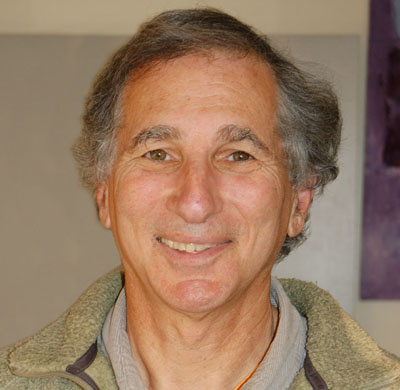
Richard Grossinger was born November 3, 1944, and grew up in Manhattan. He graduated from Amherst College in June 1966 with a B.A. in English. That same month he married Lindy Hough, who attended Smith College in Northampton, Massachusetts.
He received a Ph.D. in anthropology from the University of Michigan for an ethnography incorporating economic and ecological studies of fishing communities in Eastern Maine and subsequently taught anthropology and other subjects at the University of Maine and Goddard College.
Io published 23 issues through 1976 before merging with North Atlantic and converting its publications to anthologies thereafter. Richard and Lindy served as the co-publishers of North Atlantic Books from 1974 onward, and Grossinger now functions mainly as acquisitions editor, while the press is run by its staff and board of directors.
Grossinger is the author of many books including Planet Medicine, The Night Sky, Embryogenesis, New Moon, Migraine Auras, On the Integration of Nature, and The Bardo of Waking Life.
This is the “official” description of North Atlantic Books, taken from its website:
North Atlantic Books is a nonprofit publisher committed to an eclectic exploration of the relationships between mind, body, spirit, and nature. Founded in 1974 by Richard Grossinger and Lindy Hough, NAB aims to nurture a holistic view of the arts, sciences, humanities, and healing. Over the decades, it has been at the forefront of publishing a diverse range of books in alternative medicine, ecology, and spirituality. NAB is the publishing program of the Society for the Study of Native Arts and Sciences, a 501(c)(3) nonprofit educational organization that promotes cross-cultural perspectives linking scientific, social, and artistic fields. With more than one thousand books in print, NAB has operated from Berkeley, California, since 1977.
My conversation with Richard Grossinger was recorded in December, 2016. This interview runs 52 minutes.
More about Richard Grossinger here.
Richard’s history of North Atlantic Books is on his website here. Companion interview with co-editor and co-publisher Lindy Hough is here.

Podcast: Play in new window | Download
Joy Harjo: Crazy Brave – A Memoir
February 8, 2016 by David
Filed under Non-Fiction, Poetry, WritersCast
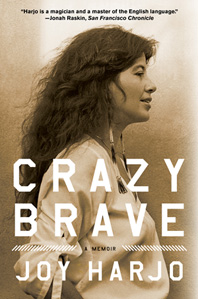 978-0-393-34543-8 – W.W. Norton – paperback – 176 pages – $14.95 (eBook versions available at lower prices)
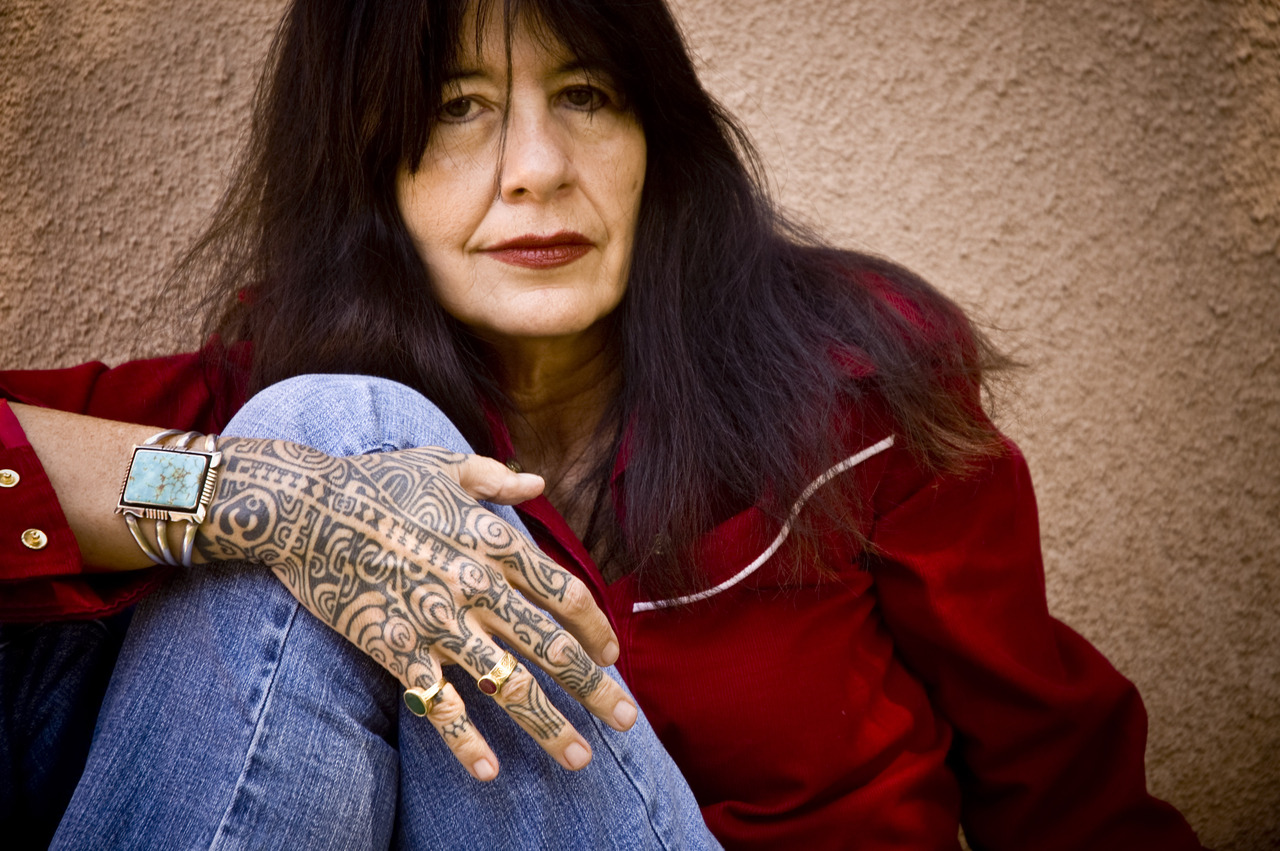
Joy Harjo has been one of my poet heroes for a really long time. I have been reading her poems for so many years I have lost count. Her writing is inspiring, mystical, deeply human and politically explosive. The perfect word to describe Joy’s work is “unflinching,” which she is with herself and with her commitment to following poetry and spirit wherever it takes her.
Recently I read her very personal memoir of self becoming called Crazy Brave, and was stunned by the language, heart and soul of this book. This is the story of Joy Harjo’s becoming a person, unfolding into poetry, and discovering her true self.
The writing in this book is literally transcendent, as Harjo recounts the her earliest memories and family life.
Here are the basics: Joy Harjo was born in Tulsa, Oklahoma and is a member of the Mvskoke Nation. Her mother remarried a deeply abusive man, and Harjo was lucky to escape to an Indian arts boarding school and from there went on to get her BA from the University of New Mexico and eventually an MFA from the Iowa Writers’ Workshop.
Crazy Brave is about all of this, but it is really the telling of her path into poetry, the words that saved her, the voice that enabled her to become. It’s a beautiful, power-full, magical book I urge you to read as soon as possible. This is a book whose inner song will stay with you for a long time. Joy Harjo once said this about her own work: I feel strongly that I have a responsibility to all the sources that I am: to all past and future ancestors, to my home country, to all places that I touch down on and that are myself, to all voices, all women, all of my tribe, all people, all earth, and beyond that to all beginnings and endings. In a strange kind of sense [writing] frees me to believe in myself, to be able to speak, to have voice, because I have to; it is my survival.
It was a heartfelt pleasure for me to speak to Joy Harjo about this book and her work as a writer. If you’ve never read her poetry, you can find some of her work online, including reading her fine poem, She Had Some Horses.
And here, a poem I really love:
Perhaps the World Ends Here
“Perhaps the World Ends Here” from The Woman Who Fell From the Sky by Joy Harjo. Copyright © 1994 by Joy Harjo
Podcast: Play in new window | Download
Courtney White: Two Percent Solutions for the Planet
October 22, 2015 by David
Filed under Non-Fiction, WritersCast
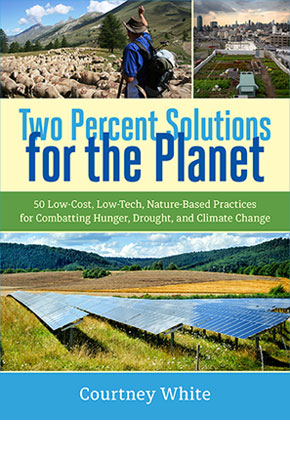 Two Percent Solutions for the Planet: 50 Low-Cost, Low-Tech, Nature-Based Practices for Combatting Hunger, Drought, and Climate Change – 9781603586177 – Chelsea Green Publishing – 240 pages – paperback – $24.95 – October 2015 (ebook versions available at lower prices)
It’s my belief that climate change and its consequences are the single most important issue of our time. I am almost continuously upset by the responses of our society to environmental and planetary matters, which usually range from denial to despair.
Part of the problem is simply its scope. Solving planetary scale problems is simply beyond the ability of most of us to comprehend, much less to try to accomplish anything meaningful for us.
When I ran across this book, published by my friends at Chelsea Green Publishing in Vermont, I knew it would be a book I would like. And having read it, I continue to be inspired by its simple practicality. I’ve learned a lot from author Courtney White and can recommend this book to all, regardless of whether you are actually in a position to apply any of the ideas here. Even if you are a couch potato or a city dweller, this book will help you understand what is possible and practical for us to do in order to make a meaningful change in how we live on this earth.
I lifted the following paragraph from Courtney’s website, A West That Works, because it best explains what this project is all about, and places it meaningfully in context.
We live in what sustainability pioneer Wes Jackson calls “the most important moment in human history,” meaning we live at a decisive moment of action. The various challenges confronting us are like a bright warning light shining in the dashboard of a speeding vehicle calledCivilization, accompanied by an insistent and annoying buzzing sound, requiring immediate attention.
I call this moment the Age of Consequences – a time when the worrying consequences of our hard partying over the past sixty years have begun to bite hard, raising difficult and anguished questions.
How do you explain to your children, for example, what we’ve done to the planet – to their planet? How do you explain to them not only our actions but our inaction as well? It’s not enough simply to say that adults behave in complex, confusing, and often contradictory ways because children today can see the warning light in Civilization’s dashboard for themselves. When they point, what do we say?
As a parent and as a writer, this anguished question created a strong desire to document the sequence of events that I was witnessing as well as attempt to explain our behavior as a society. Hopefully, we would manage to turn off the warning light in the dashboard, but if we did not I was certain that future generations would want an accounting of our behavior.
So, in 2008 I began to write, blending headlines, narrative with travel and research into chronological installments, crossing my fingers.
I think he has done an admirable piece of work toward giving us a better future. Our conversation should add to an understanding of what is possible. Do go buy this book!
A former archaeologist and Sierra Club activist, Courtney dropped out of the ‘conflict industry’ in 1997 to co-found The Quivira Coalition, a nonprofit dedicated to building bridges between ranchers, conservationists, public land managers, scientists and others around the idea of land health. Today, his work concentrates on building economic and ecological resilience on working landscapes, with a special emphasis on carbon ranching and the new agrarian movement. His writing has appeared in numerous publications, including Farming, Acres Magazine, Rangelands, and the Natural Resources Journal. His essay The Working Wilderness: a Call for a Land Health Movement was included by Wendell Berry in 2005 in his collection of essays titled The Way of Ignorance. Island Press published Courtney’s book Revolution on the Range: the Rise of a New Ranch in the American West and Courtney co-edited, with Dr. Rick Knight, Conservation for a New Generation, also published by Island Press. He lives in Santa Fe, New Mexico, with his family and a backyard full of chickens.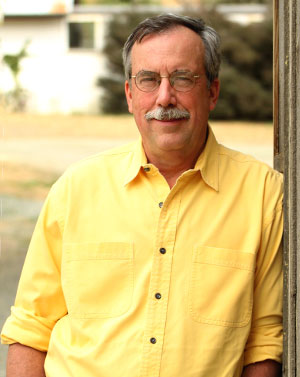
Podcast: Play in new window | Download