
Jeff Gomez: The 10 Commandments of Successful Corporate Narratives
August 12, 2026 by David
Filed under Non-Fiction, Technology, The Future, WritersCast
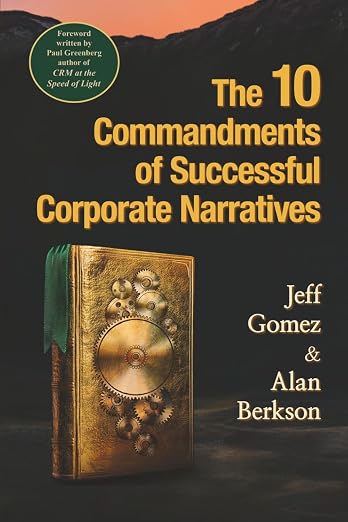 The 10 Commandments of Successful Corporate Narratives – Jeff Gomez & Alan Berkson – Intelligist Press – Paperback – 9798218853914 – 138 pages – $24.00 – February 15, 2026 – Kindle version $14.99 (Amazon only)
Jeff Gomez is an amazing guy. We met years ago in some now forgotten business connection, but I always remembered being impressed by his innate understanding of narrative. He seems to always have been able to use that understanding to engage in brilliantly executed world building for a range of brands and entertainment properties.
For the many years he has been in the entertainment industry, he has worked on some of the most iconic properties in the world with many brands and companies, including Coca-Cola, Hasbro, Pirates of the Caribbean, Spiderman, and many more. His work has doubtless touched the lives of millions of people.
Jeff has also recognized how much the media world has changed as the internet as grown and new media has arisen. Many of us recognize how different the media landscape is today, but most of us do not fully understand exactly what has changed and similarly, while we can feel that society and culture have changed inalterably, understanding how to operate in this new environment is deeply challenging, not only to creators and entertainment industries, but to all of us as consumers and citizens.
Jeff has written about this under the rubric “The Collective Journey: Storytelling architecture for the post-digital age.” Follow this link to read the entire piece. Here is a quote to get you started:
For centuries, every agency, company, studio, and writer has relied on the Hero’s Journey as a standard for storytelling. But nonlinear, trans-platform communication has entirely disrupted that model. To rising generations, the standard tropes of classic storytelling have begun to feel slow, obvious, and dated. We yearn for a new, far more dynamic and participative approach…
Society is grappling with seismic, accelerated, and seemingly chaotic change.”
Together with his long-time colleague Alan Berkson, Jeff has also written on this topic in the book we started out to discuss, The 10 Commandments of Successful Corporate Narratives. It’s a short book and is well worth reading. While it is directed at and oriented toward business executives trying to understand and navigate our fractured and challening media landscape, it is really useful for anyone who wants to grapple with the implications of a highly connected culture.t to
The core insight is that the now famous structure of “The Hero’s Journey” has been transformed into what they call “the lightning bolt” of the Collective Journey.
Jeff posits and I agree, that this understanding is crucial for all of us, not just as consumers of media, but more importantly as citizens in a democracy that is subject to all of the pressures and tensions of this new world. If you do not understand what is happening, you will not be able to work successfully to achieve your goals, whether they are cultural or political.
I hope you will enjoy listening to our conversation as an entry point to Jeff’s thinking and writing. The Collective Journey comprises an eight part series of essays published on Medium (available for free). I think it’s an important piece of writing that should be read more widely.
Jeff Gomez is the CEO of Starlight Runner, a transmedia entertainment company. He is a brand and cause-related consultant, producer of franchise storyworlds and transmedia entertainment properties.
Alan Berkson has provided top-tier service to companies from one-person firms to enterprise-level corporations—across Wall Street, the United Nations and Main Street—by wielding his own brand of non-traditional business strategy. Alan was named one of The Top 100 Most Social Customer Service Pros On Twitter and is the Director of Community Outreach for SaaS helpdesk company Freshdesk.
You can buy The 10 Commandments of Successful Corporate Narratives on Amazon.


Podcast: Play in new window | Download
Publishing Talks: Brooke Warner of She Writes Press 2026
July 29, 2026 by David
Filed under Publishing History, PublishingTalks, The Future
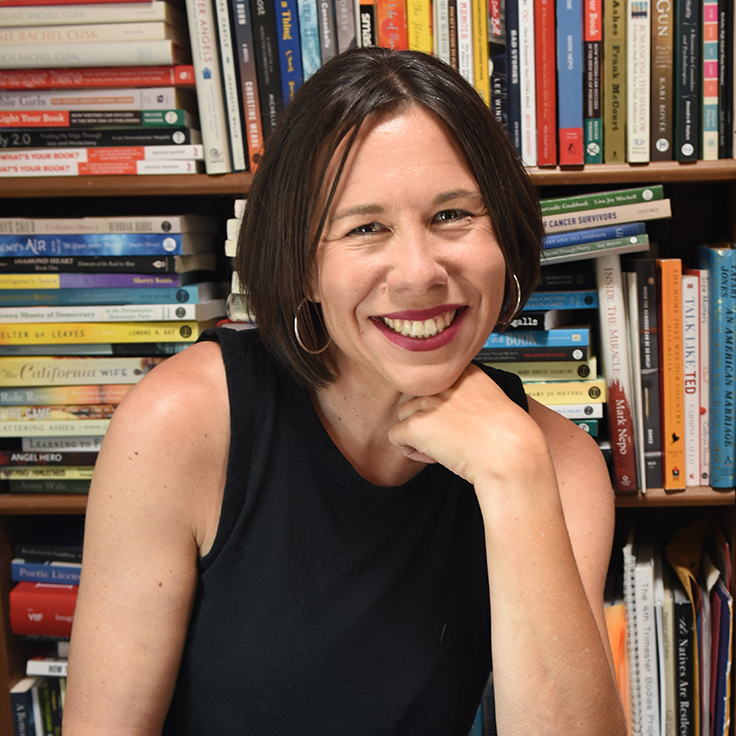 I originally began Publishing Talks as a series of conversations with book industry professionals and others involved in media and technology, mostly talking about the future of publishing, books, and culture. I continue to enjoy my conversations with people in the book industry about the evolution of publishing in the context of technology, culture, and economics. This latest episode features a conversation I recently had with the wonderful Brooke Warner, publisher of She Writes Press (which is only one among the many other roles she somehow manages).
It was ten years ago that I first talked to Brooke for Publishing Talks about her work with She Writes (which she co-founded with Kamy Wicoff in 2012) when the publishing world was a very different place. She Writes was and is a hybrid publisher, requiring support from its author for the publishing process. Ten years ago that was far less common than it is today.
Since Brooke not only keeps a close watch on everything that is happening in independent and commercial publishing, she also writes, talks and podcasts herself about book matters, and now she is also publishing a weekly newsletter about writers, books, and writing. So she is an ideal person for me to talk to about what is happening in the book world today, and I think you will find our conversation to be interesting and educational, no matter your role – reader, writer, publisher, book marketer – or your degree of knowledge about books and publishing. I always enjoy speaking with knowledgeable publishing folk and I think you will enjoy hearing what Brooke has to say. Please have a listen.
Brooke is also is a memoir coach and author of Write On, Sisters!, Green-light Your Book, What’s Your Book?, and three books on memoir. She’s also a TEDx speaker (“Green-light Revolution”), weekly podcaster (of “Memoir Nation” with co-host Grant Faulkner), and publishes a weekly newsletter, Writerly Things, on Substack at brookewarner.substack.com.
In March 2025, SWP joined The Stable Book Group as one of the inaugural imprints in this new publishing collective. Brooke became Stable Book Group’s COO while maintaining her role as Publisher of She Writes Press.
During the course of its existence SWP has worked with over 1300 authors.
Brooke’s own website is here.
She Writes Press website.
The Stable Book Group website.


Podcast: Play in new window | Download
Publishing Talks: Ramsey Kanaan of PM Press
June 15, 2026 by David
Filed under Publishing History, PublishingTalks, The Future
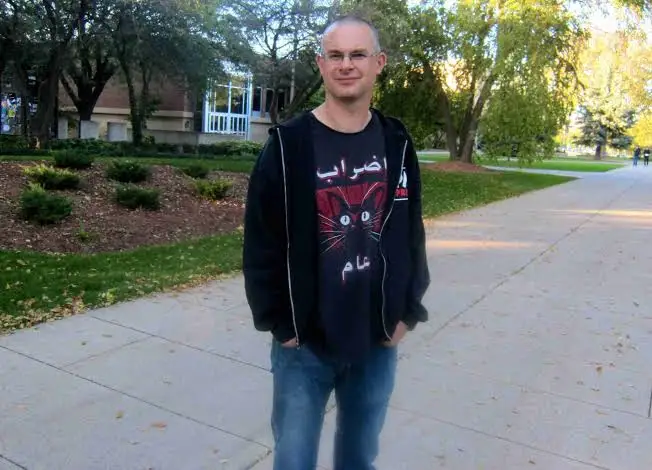 Publishing Talks started as a series of conversations with book industry professionals and others involved in media and technology, mostly talking about the future of publishing, books, and culture. It has been an ongoing education talking with people in the book industry about the evolution of publishing in the context of technology, culture, and economics. This latest episode features a recent conversation with Ramsey Kanaan about the anarchist publisher PM Press he founded in 2007, and his work in publishing, music and activism for the past many years. Ramsey has been a leader among the innovative, creative editors, publishers, and others in independent publishing and bookselling whose work is so important, especially now.
I met Ramsey years ago when he was working with activist AK Press he helped start in the UK. He later left AK, establishing PM Press in 2007 to focus on a wider range of literary publishing, and to reach a larger audience than AK nonfiction oriented publishing could do.
PM Press was originally based in the Bay Area and still maintains space there, but moved its main operations to Ithaca, New York in 2023, when it purchased the former Autumn Leaves bookstore space to establish its warehouse there. And there’s also a branch in the UK, so it’s pretty wide-reaching for an independent publisher. Publishing authors as varied as Ursula K. Le Guin, Peter Linebaugh, Silvia Federici, C.L.R. James, James Kelman, and Jonathan Lethem, as well as a plethora of newer and less well-known voices, PM has become one of the most successful radical publishers of modern times. Their list is impressive, including a range of books in fiction, art, music, politics, history, and culture in print, ebook, and audio formats.
PM’s publishes widely, including coloring books and cookbooks, polemics, memoirs, novels, pamphlets, treatises, manifestos, and comics in almost every topic imaginable – bicycles, vegetables, squatting, sex, sports, punks, Wobblies, self-defense, parenting, striking, and much more. PM brings tremendous energy to its publishing, reaching readers “by any means necessary” with unmatched creativity and gusto.
Aside from his work in books and publishing, Ramsey was also the vocalist of the Scottish punk band Political Asylum.
We had a great conversation about books, publishing, distribution and the current state of politics in America. Talking to Ramsey, it’s clear that the energy and strength of outsider publishing is stronger than ever, and that energy is needed now more than ever.
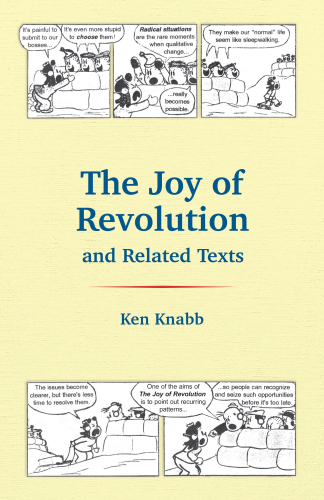
Check out the press and its books here.
You can join Friends of PM Press to support their work and get access to an array of essential books.
PM is an altogether terrific outfit keeping the flags flying – red, black, and rainbow. What energy! What facts-on-the-ground! What excitement! What dreams!—Peter Linebaugh, author of The Magna Carta Manifesto: Liberties and Commons for All and coauthor of The Many-Headed Hydra: Sailors, Slaves, Commoners, and the Hidden History of the Revolutionary Atlantic
If a revolutionary’s first weapon is a book, PM Press has the arsenal. Their texts are battle plans for a new world.—Peter Werbe, The Fifth Estate

Podcast: Play in new window | Download
Publishing Talks Interview: Luke Palder of MemoirGhostWriting.com
April 21, 2026 by David
Filed under PublishingTalks
 I discovered the very interesting Luke Palder by accident one day when I saw an ad he ran for his memoir writing and publishing business, MemoirGhostWriting.com. It sounded really interesting, and similar enough to some of my own work that I wanted to find out more about his work.
Luke is a serial entrepreneur in book publishing and production – he is the founder and CEO of ProofreadingServices.com, MemoirGhostwriting.com, TranslationServices.com, and TranscriptionServices.com. As he says about himself – “I’m committed to enhancing communication—whether it’s through the written word, across different languages, or from audio to text. My passion lies in empowering writers to share their stories, assisting businesses to overcome language barriers, and enabling individuals to immortalize their spoken words in written form. Leading these companies, my goal is to maintain the highest standards of service, treating every project with meticulous attention to detail.”
Publishing Talks has given me the opportunity to meet and talk to so many smart people in the book business. I really enjoy sharing the boundless creativity that motivates so many of us in the book business. Luke exemplifies those qualities and what this series of conversations is about. It was a pleasure to get to speak with him about his work and I am sure you will find this conversation of interest. We had a great conversation about his work, the book business and the importance of storytelling, among other subjects. His passionate commitment to people and their stories is visible in everything he does.
Luke is a Yale College graduate who also studied at Yale Law School, the Yale School of Management (SOM), Cambridge University, and Peking University. He is the founder of ProofreadingServices.com, serving more than 25,000 clients globally over 13 years. And he rode a bicycle across the United States, covering more than 4,000 miles in 63 days. He lives and works in North Carolina.

Podcast: Play in new window | Download
Publishing Talks Interview: Kathleen Schmidt, Publishing Confidential
March 9, 2026 by David
Filed under Publishing History, PublishingTalks, The Future
 I started Publishing Talks as a series of conversations with book industry professionals and others involved in media and technology, mostly talking about the future of publishing, books, and culture. It has been great fun talking with people in the book industry about the evolution of publishing in the context of technology, culture, and economics.
These conversations have been inspirational to me. I have had the pleasure of speaking with visionaries and entrepreneurs, editors, publishers and others who have influenced and changed contemporary literature and culture. I’ve also had the opportunity to speak with a number of friends and colleagues in the book business.
I really enjoy the opportunities to find out about the boundless creativity that motivates so many of us in the book business, and I also really enjoy talking to others in the business, who like me, have tried to make sense of it all in some way or another.
Today’s conversation is with Kathleen Schmidt, a long time book publicist whose Substack newsletter Publishing Confidential, is widely read within the book business. Her newsletter is always a great source of thoughtful ideas and commentary about the current state of publishing and book marketing and promotion. I was inspired to speak with her after reading one of her truly great posts this past December, “Marketing + Publicity in 2026: Change Needs to Happen: The good, the bad, and the ugly.”
Here’s a key quote from that piece that caught my attention right away:
“The industry must accept that some books absolutely will not get attention from legacy media and move towards what works for each book, whether that’s a marketing-heavy campaign or just pitching podcasts. Why are we still creating arbitrary publicity plans for every title when we know most of it is b.s.?”
She went on from there to provide a meaningful list of ideas and practices that any publisher, publicist or author can learn from, be inspired by, and adapt for their own best practices. I appreciate her honesty, willingness to try new things, and her understanding that failure is not a bad thing, but a way to learn and get better at what we do. Everyone in the book business is frustrated by the current media landscape and by the massive number of new (and old) book titles that makes getting attention for any new book so difficult, not to mention the competition from other media forms, social media included, that take attention away from books and reading. But that frustration needs to be converted into positive energy. Otherwise you may as well quit doing what you love to do.
Having a chance to speak with Kathleen was rewarding for me, and I am sure will be for you as well. She’s smart, creative and realistic. I am sure she is a good marketer too. We need more radical honesty, more innovation and more enjoyment in book marketing!
Her bio: Kathleen is the founder and CEO of Kathleen Schmidt Public Relations with three decades of experience spanning publicity, literary representation, acquisitions editing, and ghostwriting. She has worked on more than 50 New York Times bestsellers and led global media and branding campaigns for politicians, A-list celebrities, athletes, and other high-profile figures.
I found another recent interview with Kathleen by Christelle Lujan at She Writes Magazine. In that interviewsays: “First and foremost, I want Publishing Confidential to be a resource for authors to learn about the publishing industry.”
And here are a couple more of her posts:
30 Years in Book Publishing: What I’ve Learned
Why Advertising Doesn’t Work for Books
And here is her business website, Kathleen Schmidt Public Relations.
Podcast: Play in new window | Download
Publishing Talks Interviews Jordan Fleming, Owlcrate Press
December 18, 2025 by David
Filed under PublishingTalks, The Future
 Publishing Talks started as a series of conversations with book industry professionals and others involved in media and technology, mostly talking about the future of publishing, books, and culture. It has been great fun talking with people in the book industry about the evolution of publishing in the context of technology, culture, and economics. Today’s episode is an interview with Jordan Fleming of Owlcrate Press, who joins the many editors, publishers and others I have spoken with, who have been innovators and leaders in independent publishing and bookselling in the past and into the present.
These conversations have been inspirational to me. I have had the pleasure of speaking with visionaries and entrepreneurs, editors, publishers and others who have influenced and changed contemporary literature and culture. I’ve also had the opportunity to speak with a number of friends and colleagues in the book business.
I really enjoy the opportunities to find out about the boundless creativity that motivates so many of us in the book business, and I also really enjoy talking to others in the business, who like me, have tried to make sense of it all in some way or another.
I was spurred to seek out Jordan by a story I read in Jane Friedman’s illustrious industry newsletter. Here’s the headline – “Subscription box service OwlCrate launches publishing arm: is this a glimpse of the future of publishing?”
That’s a pretty great entry point for a conversation.
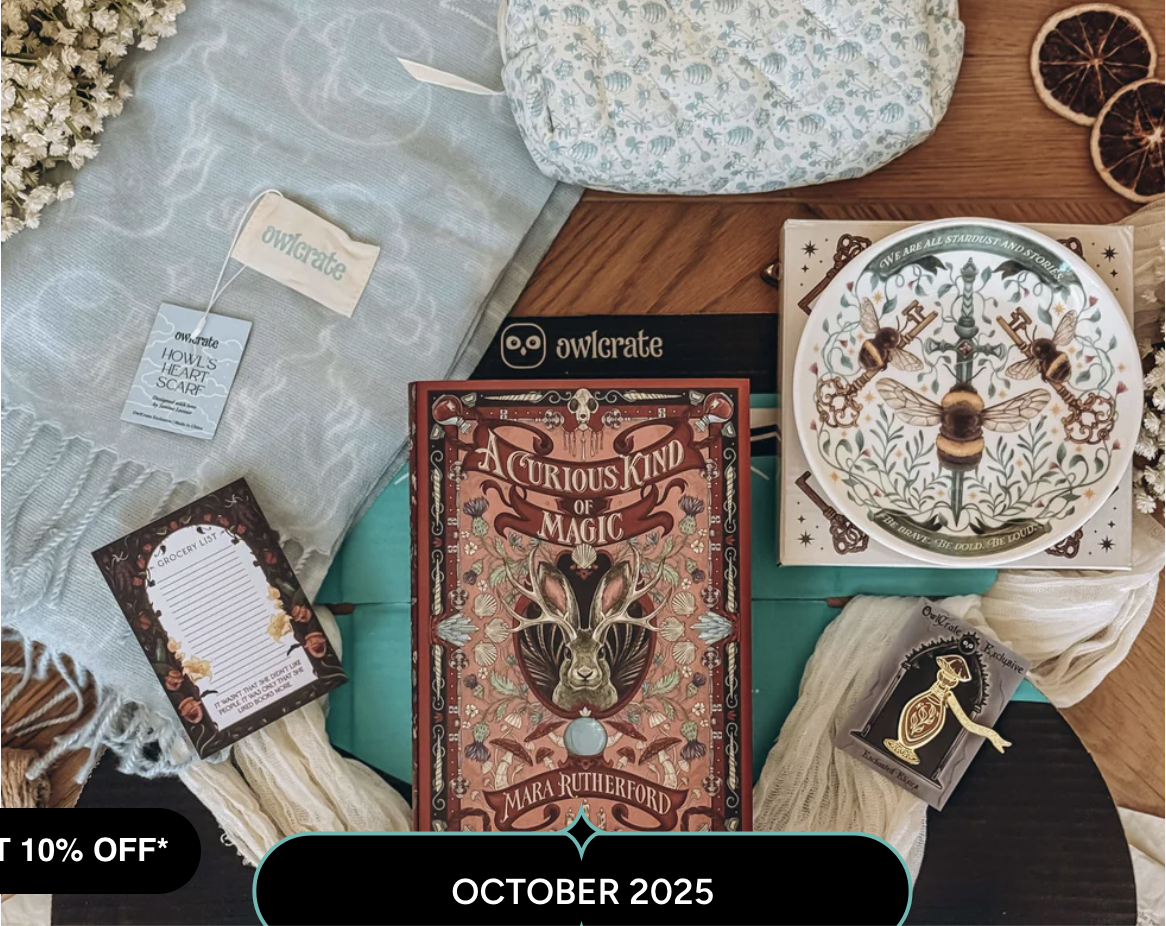
In case you are not yet aware of the subscription box industry (for that is what it has become), “book box” subscription services offer readers in various genres selections of interesting and compelling books the companies think their fanbases will be interested in reading. Fans get rewarded with unique, special, and of course hopefully, surprising products related to their interests.
There are a good number of such services, including The Book Drop (literary fiction, curated by indie booksellers), Owlcrate and Fairyloot (YA, fantasy and romantasy), Bookish Box, Once Upon a Book Club, Literati Kids, and The Wordy Traveler.
Owlcrate stands out for its exclusive designs, signed hardcovers, and other bookish items that appeal to its dedicated audiences, and having been founded in 2015, appears to be the first of its kind in this area (not counting its historical forebears like the old Book of the Month Club and other similar continuation services).
And now, they are jumping from their massive success in serving readers to what might be considered a natural evolution, becoming publishers of original titles. It makes sense – with a direct to consumer business, they know their readers bettwe than anyone (other than perhaps the giant retailer who shall not be named here).
As Jordan Fleming wrote recently on the Owlcrate site: “We’ve always centered readers. We’ve always spotlighted artists. We’ve always made space.”
I really enjoyed learning about this business from Jordan, and was especially struck by not only her boundless energy and enthusiasm, but by what she said about placing Owlcrate and the other subscription services not as competitors, but as collaborators in growing communities. I think that is a truly powerful approach to what they do and will help them continue their success.
This is what Owlcrate says about their publishing endeavor: “Every title we select is read, debated, and championed by a member of our curation team who loved it. We don’t rely on algorithms. We don’t chase trends. We rely on readers and curate our own art. OwlCrate Press simply lets us keep doing what we’ve always done; only now, we are inviting our community to help us create the stories they want to see.”
Owlcrate Press’s debut fantasy/horror anthology was Monsters in Masquerade, in which they reserved space for unpublished authors, furthering their values of supporting emerging writers.
“OwlCrate Press opens the door for new and emerging authors at a time when publishing risks becoming monopolized by a select few. As established book subscription services like OwlCrate move into publishing, they decentralize a gatekept industry and offer more equitable options for authors, from bestselling names to debut voices. With one of the highest-paying anthology models I’ve seen, alongside open submissions and an emphasis on diverse backgrounds, OwlCrate Press represents a new kind of publishing: reader-powered, author-prioritized, and built for the future.”—Sarah Mughal Rana, MPhil, University of Oxford, contributor to the anthology
Jordan Fleming is head of community for Owlcrate, and is now the head of publishing for Owlcrate Press. Their journey began with the highly-regarded Words & Whimsy Book Club, where they built strong connections with hundreds of authors and fostered a vibrant literary community. Jordan brings their deep expertise and unwavering passion for ethical publishing to OwlCrate Press.
Korinna Ede is the founder of Owlcrate, which is headquartered in Vancouver, British Columbia, Canada. Its book subscription boxes are packed and shipped from a fulfillment center in Portland, Oregon, USA.
Link to Owlcrate and Owlcrate Press
Article in The Bookseller about the launch
Monsters in Masquerade (Exclusive Edition)
Podcast: Play in new window | Download
Publishing Talks Interviews Thad McIlroy-Future of Publishing
November 24, 2025 by David
Filed under PublishingTalks, Technology, The Future
 Publishing Talks started as a series of conversations with book industry professionals and others involved in media and technology, mostly talking about the future of publishing, books, and culture. It was great fun talking with people in the book industry about the evolution of publishing in the context of technology, culture, and economics.
In the past few years, I’ve talked with a variety of editors, publishers and others who have been innovators and leaders in independent publishing and bookselling in the past and into the present.
These conversations have been inspirational to me. I have had the pleasure of speaking with visionaries and entrepreneurs, editors, publishers and others who have influenced and changed contemporary literature and culture. I’ve also had the opportunity to speak with a number of friends and colleagues in the book business.
I really enjoy the opportunities to find out about the boundless creativity that motivates so many of us in the book business, and I also really enjoy talking to others in the business, who like me, have tried to make sense of it all in some way or another. That’s one of the reasons I have frequently sought out other publishing consultants, gurus, and observers over the years, to talk about various topics in publishing. Sometimes it is about the history of books, but more often during the past almost twenty years of this series, conversations have centered on change and the future of publishing.
And that brings me to Thad McIlroy, a publishing consultant and author whose aptly named website is The Future of Publishing. As you can imagine, Thad and I had a great time together, and I hope you will enjoy hearing what he has to say, especially about emerging technology. Thad is a really smart guy who understands publishing from multiple perspectives.
AI discussions cannot be avoided at this point. My current thinking is that the version of AI we have now (LLMs) is not going to be the AI technology that will eventually take over our world. In the meantime, human creativity is still valued and it would surprise no one if there is a massive backlash against this technology before too long, especially as it is applied to the creative arts. Would love to hear what listeners think, so feel free to comment.
Here’s what Thad sent me as a working bio: “Writing and publishing are in my blood—my father was an author and broadcaster, and Kenneth Grahame (The Wind in the Willows) was my third cousin. I began as a bookseller in Toronto, then founded Virgo Press (1977) and co-founded book distributor Beatty & Church (1979). In 1985, I created what I believe was the first trade book using desktop publishing technology.
Now based in San Francisco, I’m an electronic publishing consultant, and author. I co-founded Publishing Technology Partners and serve as contributing editor at Publishers Weekly, focusing on AI and innovation. My latest book is 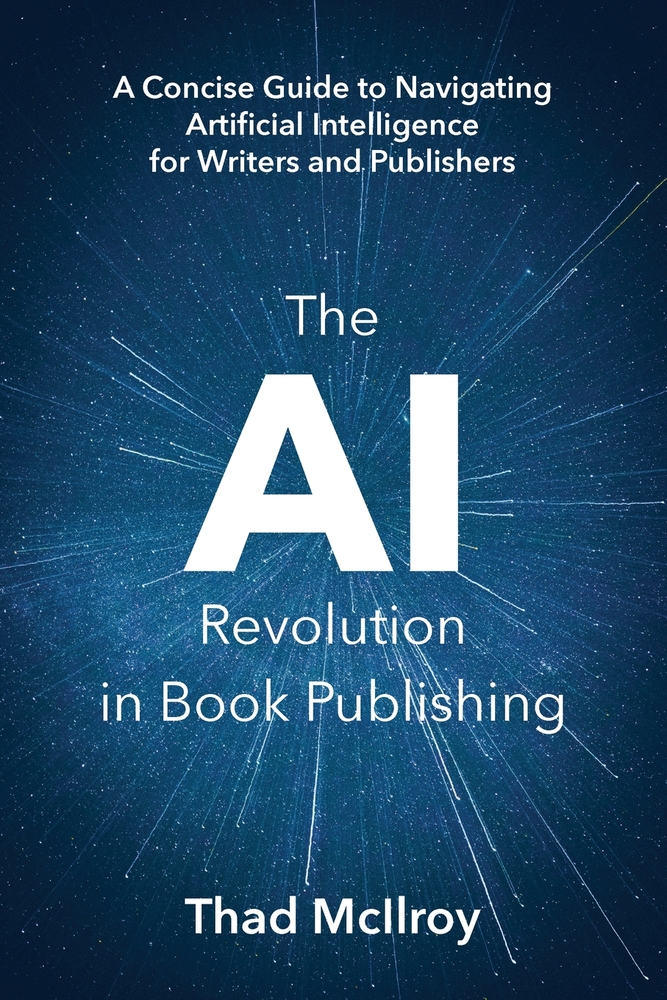 (2024, re 2025). I’ve authored dozens of books and articles exploring publishing technology, metadata, and industry transformation.”
Thad’s current interests are focused on AI. Here is a recent post of his on Onix 3 (if you’re not in the book business, this piece may be a bit in the weeds for you, but if you are in the business and care about data, search and findability, this matters – alot.)
Podcast: Play in new window | Download
Publishing Talks Interviews Derek Newton/Verify My Writing
October 24, 2025 by David
Filed under PublishingTalks, Technology, The Future
 Publishing Talks started as a series of conversations I had with book industry professionals and others involved in media and technology, talking about the future of publishing, books, and culture. It was great fun discussing the evolution of publishing in the context of technology, culture, and economics.
More recently, I’ve also had conversations with a variety of editors, publishers and others who have been innovators and leaders in independent publishing and bookselling in the past and into the present.
These conversations have been inspirational to me. I have had the pleasure of speaking with visionaries and entrepreneurs, editors, publishers, and others who have influenced and changed contemporary literature and culture. I’ve also had the opportunity to speak with a number of friends and colleagues in the book business about their work.
I really enjoy these opportunities to learn about the boundless creativity that motivates so many in the book business. I was approached recently by a PR firm who wanted me to talk to edtech writer Derek Newton about a new project he has undertaken. While my first reaction was to ignore what seemed to be yet another “pitch,” when I read further about the project, my interest was piqued and I decided I should talk to Derek to find out more about his ideas.
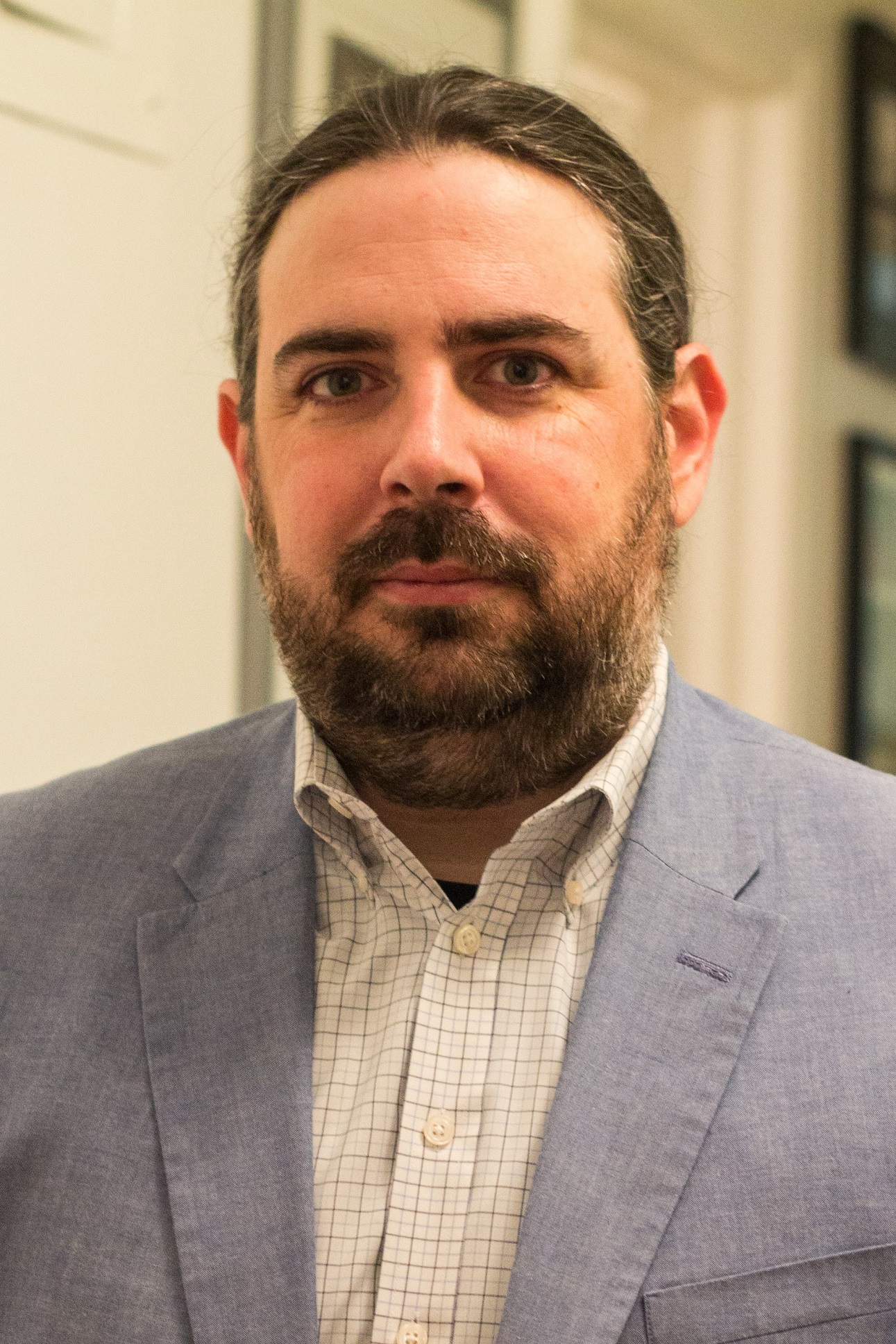
Derek Newton has written extensively about education and technology, including contributions to the Atlantic, Washington Post, USA Today, Money Magazine and many others. He’s also a contributing writer at Forbes and founder of the new and very interesting project that we talked about in this episode, Verify My Writing.
Verify My Writing allows writers to get a verified certification that their work is real, authentic, and human. In short, this enables them to certify that their work was not created by AI. The certification can help with submissions and pitches. Verify My Writing also certifies books and articles that have already been published with a “Human-Written” hallmark. And as Derek and I discussed, there other applications for this sort of certification as well. While writers certainly have self-interest in proving to magazines and publishers that their work is original, it seems to me that publishers will also want to verify for themselves when they receive submissions that the work they are reading is wholly or at least substantially original.
Book publishers and magazines with limited editorial resources are now dealing with a tsunami of submissions, with no practical way to determine the originality of the work they are considering for publication.
Given how good some AI-assisted writing can be, and how often AI is inaccurate (or completely wrong), there’s no question that all of us as readers will also appreciate knowing whether what we are reading online is human or machine written. This sort of validation may become a requirement in the not too distant future.
I found this conversation to be stimulating and thought provoking. Derek’s Verify My Writing seems interesting, and compelling in that it comes from a writer whose work experience inspired it. I hope you find this conversation as stimulating as I did.
Here’s the Verify My Writing website.
If you want to learn more, contact Derek directly: DNewton@VerifyMyWriting.com
Podcast: Play in new window | Download
Publishing Talks Interview with Carol Fitzgerald of The Book Report Network
September 23, 2025 by David
Filed under PublishingTalks
 Publishing Talks started as a series of conversations with book industry professionals and others involved in media and technology, mostly talking about the future of publishing, books, and culture. It was great fun talking with people in the book industry about the evolution of publishing in the context of technology, culture, and economics.
In the past few years, I’ve talked with a variety of editors, publishers and others who have been innovators and leaders in independent publishing and bookselling in the past and into the present.
These conversations have been inspirational to me. I have had the pleasure of speaking with visionaries and entrepreneurs, editors, publishers and others who have influenced and changed contemporary literature and culture. I’ve also had the opportunity to speak with a number of friends and colleagues in the book business.
The Publishing Talks series of interviews enables me to talk to some really interesting people who have made an impact of all kinds on books and book publishing. Carol Fitzgerald is a good example. She started out working for Conde Nast and then moved into the book business, founding
The Book Report Network (TBRN) at the very beginning of the online universe in 1996. Bookreporter.com and ReadingGroupGuides.com are now gathering places for a large and devoted community of booklovers and TBRN is recognized as an online leader of informed, contemporary book news, reviews and author interviews. With 30 years of constant innovation, Carol has remained deeply engaged with the constantly evolving interaction of book readers, authors and publishers. She is always great to talk to and if you’re not familiar with her sites, you should check them out.
We had a great conversation about a the past, present, and imminent future of the book publishing world. I think you will enjoy this episode of Publishing Talks. Carol is knowledgeable, engaged, and in touch with so much of what matters to the future of books and publishing.
Read Carol’s most recent book reviews here. She is a dedicated reader with incisive views about the books she consumes.
Check out the Book Reporter’s video interviews with authors on YouTube. Very cool.

Podcast: Play in new window | Download
Publishing Talks Interview with Lauren Woods of LitBox
August 20, 2025 by David
Filed under PublishingTalks, Technology
 Publishing Talks started as a series of conversations with book industry professionals and others involved in media and technology, mostly talking about the future of publishing, books, and culture. It was great fun talking with people in the book industry about the evolution of publishing in the context of technology, culture, and economics. In the past few years, I’ve talked with a variety of editors, publishers and others who have been innovators and leaders in independent publishing and bookselling in the past and into the present. These conversations have been inspirational to me. I have had the pleasure of speaking with visionaries and entrepreneurs, editors, publishers and others who have influenced and changed contemporary literature and culture. I’ve also had the opportunity to speak with a number of friends and colleagues in the book business.
I really enjoy the opportunities to find out about the boundless creativity that motivates so many of us in the book business. When I read about Lauren Wood and her cool new project, Litbox, a book vending machine in Washington, DC, I had to reach out to her to find out more about it. Lauren’s goal was to create an innovative way to promote local readership with local authors, something that writers always feel strongly about. Even the best independent bookstores do not focus as much attention on local authors as most of us wish they would. “I want to give writers and people in this town something to feel excited about,” she says. “I wanted to bring a little bit of optimism into an otherwise bleak moment….Great literature is really about empathy and kind of deeply getting outside of your own framework and inhabiting another person’s consciousness.”
LitBox launched in May, 2025. Lauren made it work with a Kickstarter campaign that raised seed capital of $5000.
Almost everyone in the book business recognizes how challenging it is to connect books with readers in our media’s overwhelmingly saturated information deluge. Any project that can connect writers and books to readers in a personalized, area-specific way is worthy of our support. I am hopeful that Litbox will not be a one-off, and could inspire others to try out the idea. It seems to have worked successfully in England, where there are book vending machines in subway stations and many other locales.
If you’re in the DC area, look for a Litbox and try it out. It’s in the Western Market.
And here’s a good local story about the Litbox launch on the “Inchy’s Bookworm Vending Machine” website. It looks like they are encouraging others to use their machine wherever books could be sold by machine. I hope this idea catches on!

Reggie Van Lee buying the first book from LitBox.


Podcast: Play in new window | Download