
Publishing Talks: David Wilk interviews writer and entrepreneur Rachel Lehmann-Haupt
November 5, 2019 by David
Filed under Publishing History, PublishingTalks
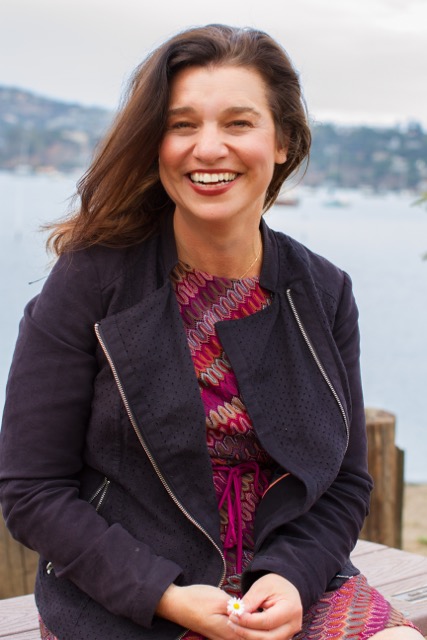 Publishing Talks began as a series of conversations with book industry professionals and others involved in media and technology, mostly talking about the future of publishing, books, and culture. As every media business continues to experience disruption and change, I’ve been talking with some of the people involved in our industry about how publishing might evolve as it is affected by technology and the larger context of culture and economics.
Rachel Lehmann-Haupt is best known for being an expert on the future of family life, career timing, and the influence of science and technology on fertility, pregnancy and family.
She is the author of In Her Own Sweet Time: Egg Freezing and the New Frontiers of Family. Her articles have been featured in a wide range of magazines and websites.
Rachel graduated with a degree in English literature from Kenyon College, and has a Masters in Journalism from the Graduate School of Journalism at the University of California, Berkeley. At UC Berkeley, she apprenticed under Clay Felker, the founder of New York Magazine. She has spoken on numerous panels at bookstores, hospitals and corporate events, and has delivered keynotes at universities.
Rachel’s newest venture, StoryMade Studios, a content development and editorial production studio was what introduced me to her work and caused me to want to talk to her for this Publishing Talks podcast series.
Much like my own work with content creators, and similar to the way movie studios work, Rachel builds teams that include writers, designers, developers, and video producers, and then manages the creation and editing of all the elements of a digital media story. StoryMade Studios focuses on health, parenting, advanced reproductive technology, neuroscience, women, sustainability, and food.
In recent years, Rachel has been a senior content strategist and strategic advisor for a number of technology start-ups, media properties, and non-profits including TED Books, The Dwell Store, Wired Magazine, BabyCenter.com, The Women 2.0 Conference, Code for America, Bridge Housing, Shebooks, and Dr. Dean Ornish/Healthways.
It was a pleasure to spend some time with her for a lengthy and wide ranging conversation when she was recently in New York City for a visit. I wanted to talk to her about her work as a writer and as a facilitator of book and other content projects, but in particular, I thought it would be really interesting to talk to Rachel about what it was like to have grown up as the child of two writers in the hothouse environment of New York City literary culture and how it influenced her own professional and personal life.
Thank you Rachel for a great conversation!
You can buy her book from RJ Julia here.
Visit Rachel’s own website here. Read about her book,In Her Own Sweet Time. 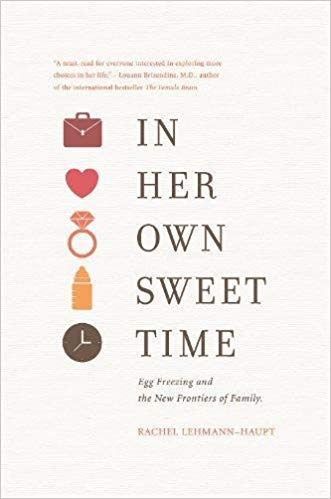
And about Story Made Studio here.
Podcast: Play in new window | Download
Fred Waitzkin: Deep Water Blues, a Novel
August 18, 2019 by David
Filed under Fiction, WritersCast
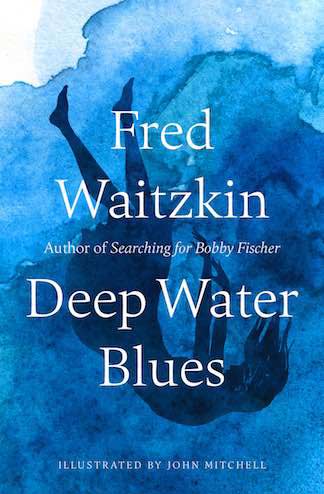 Deep Water Blues: A Novel – Fred Waitzkin – 9781504057745 – 160 pages – Open Road Media – paperback – May 28, 2019 – $17.00 – ebook versions available at lower prices.
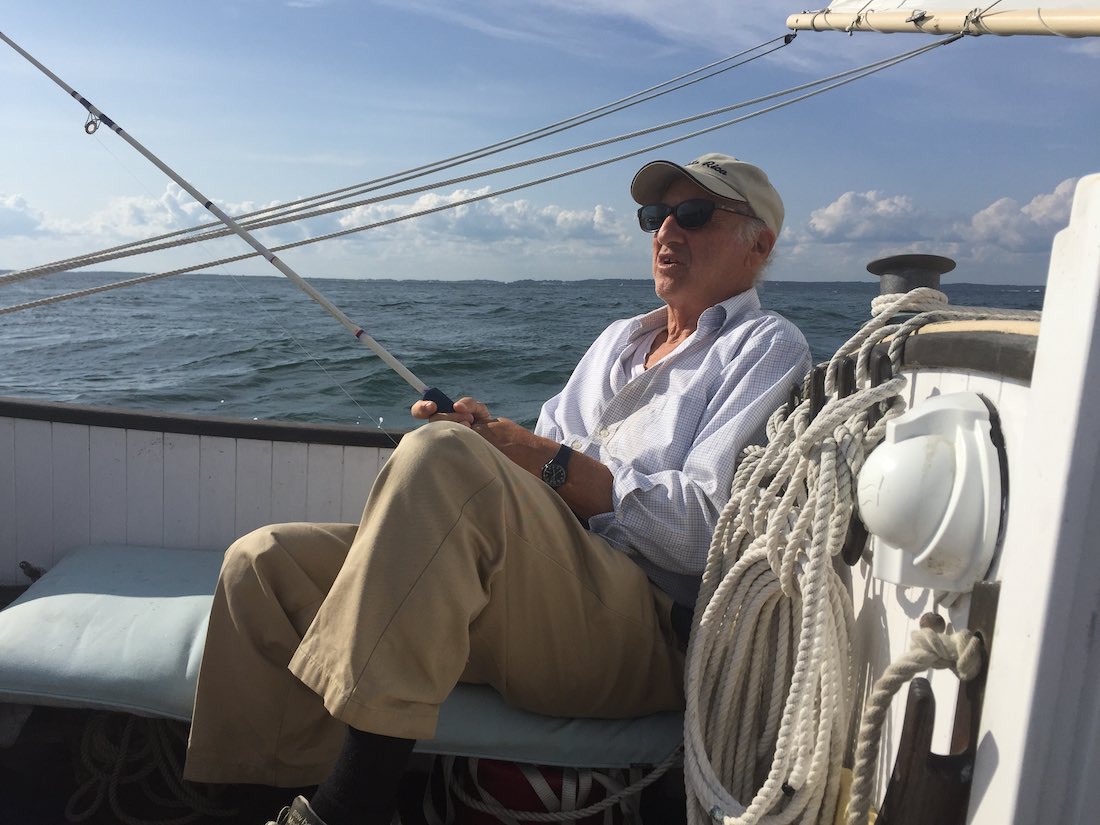
Fred Waitzkin’s Deep Water Blues is a surprisingly affecting short novel based to a great extent on his personal experiences in a small boat on the open water and islands of the Caribbean. Because it is based in so much lived experience, it has an authenticity that shines through in every page. In Deep Water Blues three older men (including the boat’s owner) and one younger man, a painter who has never been to sea, leave Ft. Lauderdale on an old boat heading for a Bahamian island that has an almost mythical story and appeal. Each is there for a different reason and each will gain something different from their adventure. But the story is really about the island and the mysteries of what happened there.
When I first started reading this book, I did not expect to find it as compelling as I did in the end. There’s alot more here than initially meets the eye, and this is a book I can recommend to readers.
Waitzkin calls his book a “curated blend of real-life experience and fiction.” Deep Water Blues tells a compelling story about an unusual man in an exotic place, an almost mythical story whose hero suffers a classic fate and redemption in a mysterious and beautiful location, bringing to mind Shakespearean and Biblical storytelling. Waitzkin writes in spare prose that carries his story through to its exciting end, and makes a short book impactful beyond its length.
Fred Waitzkin was born in Cambridge Massachusetts. He was an English major at Kenyon College in Ohio, then taught English at The College of the Virgin Islands, where he also got to pursue his love of fishing for big game fish. Fred and his wife moved to New York City, where Waitzkin wrote feature journalism, personal essays and reviews for numerous magazines including Esquire, Forbes, the New York Times Sunday Magazine, the New York Times Book Review, New York Magazine, Outside Magazine, and Sports Illustrated.
Waitzkin’s first book was Searching for Bobby Fischer. Published in 1984, it’s the story of three years in the lives of Fred and his chess prodigy son, Josh Waitzkin. The book became an internationally acclaimed best seller, and the film based on it was nominated for an academy award.
Mortal Games, his biography of world chess champion, Garry Kasparov was published in 1993, and was followed in 2000 by The Last Marlin, a memoir. The Dream Merchant, Waitzkin’s first novel, was published in 2013 – Deep Water Blues is his second published work of fiction. Fred still lives in Manhattan with his wife Bonnie, and still spends as much time as possible on his old boat, Ebb Tide.
It was my pleasure to speak with Fred, and while we talked about the book at hand, our conversation went into a variety of related coves and channels.
Visit Fred Waitzkin’s website to learn more about him and his writing.
“Deep Water Blues does what all fine literature aspires for – it transports readers to another time and place, in this case, to a sleepy, lush island deep in the Bahamas. Fred Waitzkin writes about life, sex and violence with aplomb, and Bobby Little is a tragic hero fit for the Greek myths. Hope to see everyone on Rum Cay soon.” – Matt Gallagher, author of Youngblood
“Fred Waitzkin effortlessly recreates a singular world with uncanny insight and humor. His language is remarkable for its clarity and simplicity. Yet his themes are profound. This is like sitting by a fire with a master storyteller whose true power is in the realm of imagination and magic.” – Gabriel Byrne, actor and director
Podcast: Play in new window | Download
Peter Rock: The Night Swimmers (A Novel)
April 7, 2019 by David
Filed under Fiction, WritersCast
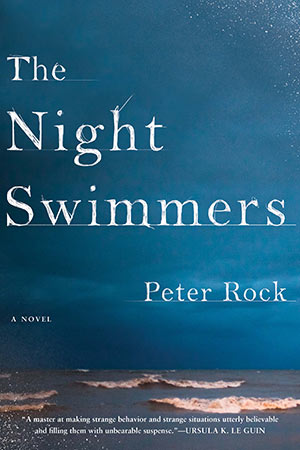 The Night Swimmers – A Novel – Peter Rock – ISBN 9781641290005 – Soho Press – Hardcover – 272 pages – $25.00 – March 12, 2019 – ebook versions available at lower prices.
As I have said here before, one of the things I like best about doing the Writerscast interviews is that it’s introduced me to the work of many writers I would not have discovered on my own. The Night Swimmers is a perfect example. Peter Rock has been writing extremely fine fiction for many years, and yet I had never run across his work before, which still seems quite surprising to me, given the nature of his work.
Peter’s autobiographical novel captured my imagination from the outset. The writing is luminous and personal, dreamy, yet descriptive. His narrator is a young aspiring writer living temporarily in beautiful Door County in the northern reaches of Wisconsin’s Lake Michigan coastline. He’s bit lost, maybe stuck in his inability to see himself as an adult. He meets a young widow, Mrs. Abel, who is, like him, not exactly clear about herself and who she wants to be. She is older, attractive, smart and mysterious. The narrator finds himself swimming with Mrs. Abel at night without really knowing why, although there is a strong undercurrent of attraction between them, a tension that defines the essential mystery of their relationship, and the way they swim in the depths of the lake across large distances is similar to the ebb and flow of the narrator’s own life. And then Mrs. Abel disappears.
Some twenty years later, the narrator, who is now married, living in San Francisco and the father of two daughters, finds himself trying once again to understand what happened that summer, his psychic history rising to capture him like a deep lake current he used to swim in. He reads old letters and notebooks from the past, explores his relationship to a former lover, tries to understand through a sort of personal archeological expedition the world he once lived in and still cannot fully understand. Back in Door County once again, he tries to find out what happened to the elusive Mrs. Abel, and again he enters the deep lake waters to swim across the night.
Scattered throughout the book is the evidence of the narrator’s archeological exploration of his own history, pieces of paper, old emails, quotations from poets, and references to the extraordinary and strange psychic photographer Ted Serios. This book is a sort of literary pastiche that really could exist in multiple forms and formats, reflecting the author’s psychic imagination crossing over time and space through the medium of memory.
The Night Swimmers is a beautiful, complicated and challenging work of literary inspiration I found completely engaging. And it was a pleasure then, to have the opportunity to speak with Peter Rock about his fine novel.
“Peter Rock has written a weird and haunting story about a younger man and an older woman who like to swim in the dark. Happily The Night Swimmers is no male coming of age story. Instead their secret nightly practice in a dark and foreboding lake shimmers as a queer refusal for either of them to grow up right.”
—Eileen Myles, author of Afterglow
I recommend visiting Rock’s website, and follow the link to The Night Swimmers page, where there are some great visuals related to the book.
Peter Rock was born and raised in Salt Lake City. He is the author of several novels SPELLS, Klickitat, The Shelter Cycle, My Abandonment, The Bewildered, The Ambidextrist, Carnival Wolves and This Is the Place, as well as a story collection, The Unsettling. Rock attended Deep Springs College, received a BA in English from Yale University, and was a Wallace Stegner Fellow at Stanford University. He lives in Portland, Oregon, where he is a Professor in the English Department of Reed College. Leave No Trace, the film adaptation of My Abandonment, directed by Debra Granik, premiered at Sundance and Cannes and was released in 2018.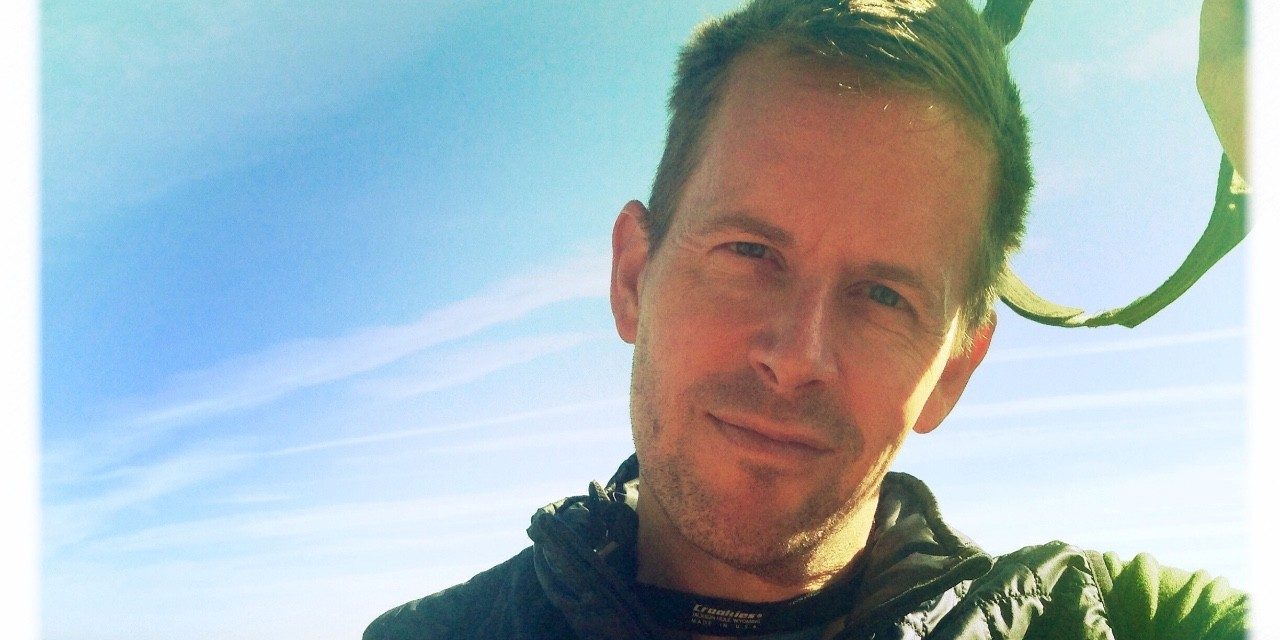
Podcast: Play in new window | Download
Gregory McNamee: Tortillas, Tiswin & T-Bones: A Food History of the Southwest
September 23, 2018 by David
Filed under Non-Fiction, WritersCast
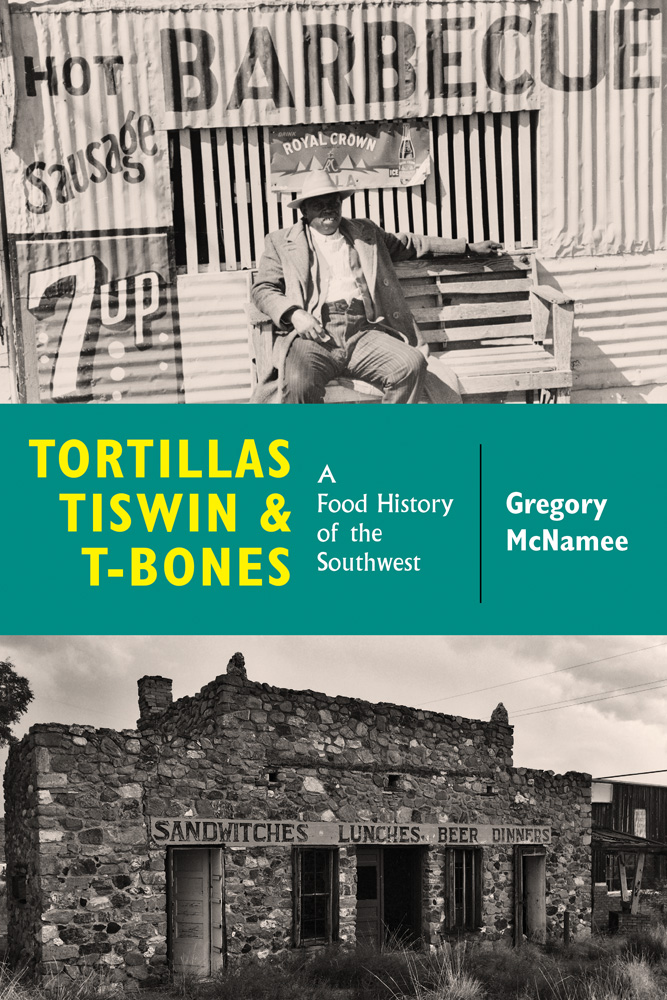 Tortillas, Tiswin & T-Bones: A Food History of the Southwest – Gregory McNamee – University of New Mexico Press – 256 pages – paperback – 9780826359049 – $24.95 – October 30, 2017 – ebook versions available.
According to the publisher, this book is an “entertaining history [of] the many ethnic and cultural traditions that have contributed to the food of the Southwest.” And while I do agree that the book’s style makes it a relatively compelling and easy book to read, I think its author, Greg McNamee, is trying to do much more than entertain. McNamee uses food and cooking as a lens to understanding culture, yes, but also to pinpointing the issues that face us in America as we try to grapple with climate change, to live reasonably and sustainably on the earth, and to work together with our fellow humans. There is no heavy handedness to his approach, but he never lets us forget the driving themes of his work, and his perspective.
McNamee starts off by going back to the earliest periods when humans arrived in the Americas, and takes us through the beginning of agriculture in Mesoamerica, and the ancient trade networks that evolved to connect peoples of the coasts, plains, and mountains. From there, he takes us through the various areas that comprise the loosely labelled southwestern region of America, up through the present day’s fusion of cultures and foodways from so many different areas that defines this cuisine now.
Covering just about everything edible in human cultures in what we consider to be the southwest region (which he defines a bit more broadly than most), from chili pepper and agave, to modern day cuisines that include Frito pie and other cross cultural inventions, McNamee traces a culinary journey through varieties of space and time, to get us where we are today and significantly, what the southwest and its food and people might look like in our emerging future.
Tortillas, Tiswin & T-Bones is indeed, a masterful work of accessible anthropology that was recognized as one of the 2017 Southwest Books of the Year. Since I love the southwest and its food, reading this book was a great pleasure for me.
Greg McNamee is a writer, journalist, editor, photographer, and publisher. He is the author or editor of forty books and more than five thousand periodical contributions. He operates Sonora Wordworks, an editorial and publishing service, and is also the publisher of Polytropos Press.
McNamee is a research associate at the Southwest Center of the University of Arizona, and a lecturer in U of A’s Economics Department of the Eller College of Management. Additionally, he teaches courses and gives talks on writing, publishing, journalism, media and technology, as well as cultural and environmental issues. He lives in southern Arizona. Learn more about him and his work at his website.
It was a pleasure for me to get to speak with Greg, who is a great storyteller and conversationalist, and a I only wish we had been able to speak in person, and for a much longer period of time. And I was very pleased to learn how to pronounce “tiswin” too.
This book feels like sitting down to a dinner with Diana Kennedy and Jim Harrison, tequila in hand and great conversation going long into the night. It’s alive, a love story, a timeless journey. I absolutely loved reading it and will treasure Gregory McNamee’s words for a long time to come.
— Tracey Ryder, cofounder of Edible Communities and coauthor of Edible: A Celebration of Local Foods
Tortillas, Tiswin, and T-Bones sends the reader on a riveting adventure, tracking the origins of Southwestern ingredients and culture to reveal American history through food. McNamee’s prose is deft and authoritative, and this is a highly original, timely book.
—Kate Christensen, author of Blue Plate Special and How to Cook a Moose
Podcast: Play in new window | Download
Bill Schubart: Lila and Theron (A Novel)
December 13, 2017 by David
Filed under Fiction, WritersCast
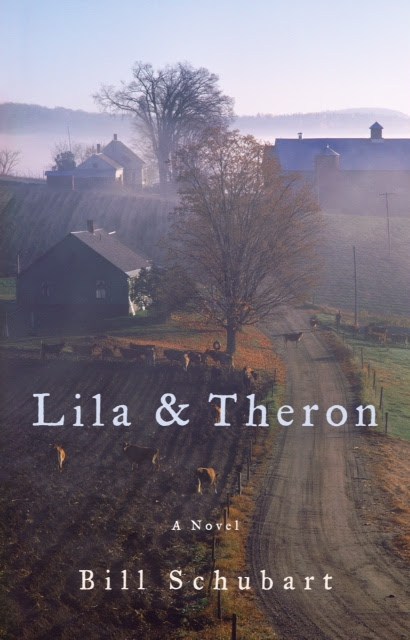 Lila and Theron (A Novel) – Bill Schubart – Charles Michael Publishing – Hardcover — 9781682613566 – 192 pages- $19.95 – ebook versions available at lower prices – June 6, 2017
This small book is short and sweet in a very good way. Through well written fiction, the book documents and celebrates an imagined place and people in time, that have only recently disappeared from the American landscape. It’s difficult for most of us moderns to imagine life without all the technological conveniences we have come to take for granted today. It was not that many years ago that the isolated mountain communities of northern Vermont were still home to small farmers, whose daily lives were closer in rhythm to the nineteenth century than to even the twentieth, much less the technologically advanced twenty first century of today. Some of these hardy folk still farmed with horses into the 1960s, and many small-scale daily and truck farming operations managed by dint of endless toil, to support the families on the land they had worked for generations.
To most of us, these lives will be as foreign as science fiction. Harsh circumstances often make people harsh, but Schubart’s characters find a way to access their humanity despite all the struggles of life which which they must cope. It’s a joy to get to know these characters and to share the stories of their lives. Schubart, now in his seventies, bridges this time frame. He grew up in northern Vermont, and while his life experience was vastly different from the farm people he writes about here, these are people he knew and loved during the his youth, and it benefits us all that he has brought them to life in this lovely novel.
Thelma dies at nineteen giving birth to a son, Theron. When the son first meets his father, he learns his mother’s death is his fault and can only muster the question, “How did she die?”
Looking away, the father mutters, “She died givin’ birth ta you. An’ I lost all her help and comforts.”
“I have long considered Bill Schubart to be the wisest columnist in America. That same wisdom, deep life experience, and empathy come shining through on every page of his new novel, Lila and Theron. Full of joy, sadness, humor, and insight, Lila and Theron is a clear-eyed celebration of our almost boundless capacity, despite all our human frailties, to love both one another and the place we call home. Over the years, I have known many true and good country people like Lila and Theron, whom I have been proud and honored to call my friends. This is a beautiful book.” – Howard Frank Mosher, author of Marie Blythe and Walking to Gatlinburg.
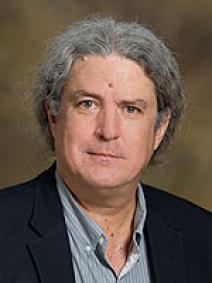
Bill Schubart has lived with his family in Vermont since 1947. He writes about Vermont in fiction, humor and opinion pieces, is the author of several books, is a regular commentator on Vermont Public Radio, and active in Vermont community and political life. Learn more about him and his work at his website.
It was a true pleasure for me to share a conversation about Vermont and its people, small-scale farming, and the art of fiction with my old friend, Bill Schubart.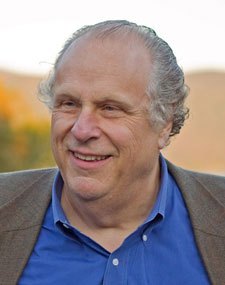
Podcast: Play in new window | Download
Christopher Benfey: Red Brick, Black Mountain, White Clay
November 26, 2017 by David
Filed under Non-Fiction, WritersCast
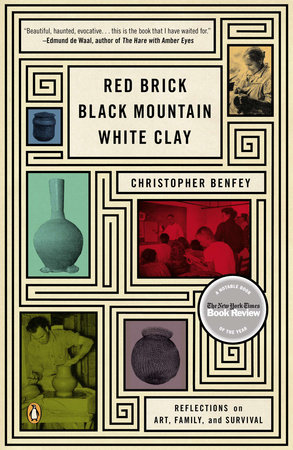 Red Brick, Black Mountain, White Clay: Reflections on Art, Family, and Survival – Christopher Benfey – Penguin – paperback – 9780143122852 – 304 pages – $16.00 – ebook versions available at lower prices – February 26, 2013
I found this lovely and compelling book by complete happenstance while visiting North Carolina earlier this year. The redoubtable Regulator Bookshop in Durham had a copy out on its “local interest” shelf, and the cover grabbed my attention immediately.
Not knowing anything about author Benfey, I was surprised and pleased to learn about his background through this complex and rewarding memoir. It’s a book that combines so many different areas of his interest – and mine – built around a complex interweaving of his family’s story and his desire to learn about and understand the people in his life story.
Benfey was raised in Richmond, Indiana, where his father was a chemistry professor at Earlham College. His father’s side of the family were German Jews who escaped Hitler, including aunt and uncle Josef and Anni Albers, who were both central figures at Black Mountain College, in North Carolina (and central also to modern arts and crafts in 20th century America). North Carolina is a nexus, as Benfey’s mother grew up in the longstanding folk pottery region of the state as well.
So Benfey’s story starts as a family history, but moves assuredly through art, geography, cultural history and his own personal journey of discovery as a writer and thinker; as the title itself suggests, “names the three paths, each mapping the experience of relatives or ancestors of mine trying — by art, by travel, or by sheer survival — to find a foothold in the American South.”
There are many well-told stories here, and North Carolina is at the core of it all. Even if you have never explored the cultural and geographical riches of that state, this book will capture your imagination and bring you there. Benfey builds his story much as a brick layer does, carefully assembling the pattern from materials at hand to create a fully formed story all the while.
This is a book I am happy to recommend to almost any reader.
Chris Benfey is a professor at My. Holyoke College, where he is Andrew W. Mellon Professor of English. He was educated at the Putney School, Earlham College, Guilford College, and Harvard (Ph.D. in Comparative Literature). Benfey is also a journalist, having served as the art critic for Slate, and also is a contributor to The New York Review of Books, The New York Times Book Review, and The New Republic, among many others. Chris is a renowned Emily Dickinson scholar, and author of four highly regarded books about the American Gilded Age. His edition of essays on the Iliad by Simone Weil and Rachel Bespaloff appeared as War and the Iliad in 2005.
Benfey’s poems have appeared in The New Yorker, the Paris Review, and Ploughshares.
This book is among my favorites and I hope you enjoy the conversation I had with the interesting and well-spoken Christopher Benfey as much as I did.
Podcast: Play in new window | Download
Clara Bingham: Witness to the Revolution
September 19, 2016 by David
Filed under Non-Fiction, WritersCast
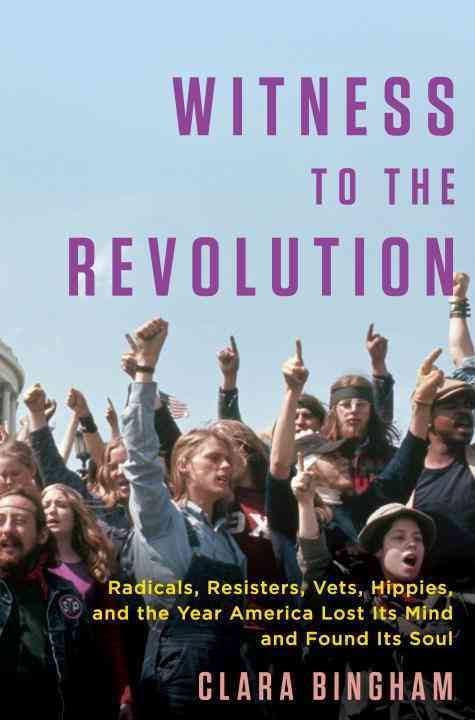 Witness to the Revolution: Radicals, Resisters, Vets, Hippies, and the Year America Lost Its Mind and Found Its Soul
9780812993189 – Random House – Hardcover – $30 – (ebook versions available at lower prices)
There have been many books written about the politics and culture of the sixties, but I don’t think there has ever been a book quite like this one.
Clara Bingham is a journalist who grew up just a bit too young to join in the festivities of what is now known as “The Sixties.” That term is actually a misnomer, as most of us know, since the decade of turbulence and strife really started in the mid-sixties and ended, more or less, with the close of the Vietnam War in 1975. However it is measured, and measuring time periods in history is never easy or altogether clear, that time was full of energy, social discord, cultural change, political engagement, joy and tragedy.
Ms. Bingham had relatives and family members who were old enough to participate actively in the youth culture explosion of that time, and we are lucky that their experiences inspired her interest in this historically significant era. She took upon herself a seriously daunting task, to try to understand what happened in the culture through the words of some of its key participants. It’s an altogether brilliant, inspiring effort.
She has chosen to focus on a single year to create a lens through which to see America in the throes of cultural upheaval. The book covers the period from August 1969 to August 1970, during which there were nine thousand protests and eighty-four acts of arson or bombings across the country. It was an incredible year, one that included so many key events of the time, both at home and abroad, including the rise of the Weather Underground, the invasion of Cambodia, Woodstock, May Day in New Haven, and the massacre at Kent State – and so much more.
As an active member of the counter culture myself in those halcyon years, this book brought back many memories, and reminded me of some of the things I’d forgotten about, as well as some of the people who were so important to us in those years. There’s so much in this book, there are some events and people I had not even thought about for almost 45 years. The first-hand accounts included in this book are important and powerful. These reminiscences can help us understand an era that is so much with us still – both culturally and politically. This book can help us understand why America is still in the throes of cultural and political upheaval, and is so culturally divided. While there were many failures in the sixties, and many terrible things done in the name of good intentions and beliefs, we are awash in the cultural forces unleashed then. The baby boomers who created the youth culture of the sixties are aging out of the population now, but the effects of that time continue to reverberate today.
There is so much of importance to be found in this book. I was really pleased to have a chance to speak to Clara about Witness to the Revolution. It’s an incredible effort and I hope it will help spur further conversations about the Sixties and what we can learn from that incredible era.
If you want to listen to Clara reading from the book, there’s a short segment over in Author’s Voices.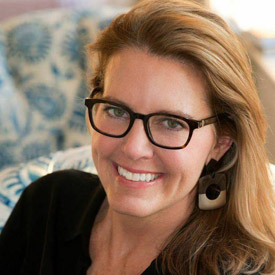
Podcast: Play in new window | Download
Chris Offutt: My Father, the Pornographer: A Memoir
June 6, 2016 by David
Filed under Non-Fiction, WritersCast
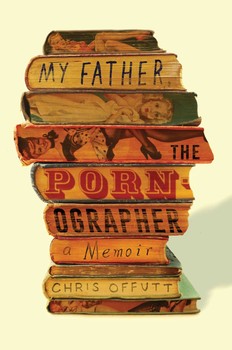 9781501112461 – Atria Books – 272 pages – Hardcover – $26.00 – ebook versions available at lower prices
Chris Offutt’s father, Andrew Offutt, left behind an unusual legacy – a massive quantity of pornography he wrote over a long swatch of his life. Besides being at one time a respected insurance agent, and subsequently a successful but still minor science fiction writer, Andrew Offutt spent years writing pornography, and made himself the “king of twentieth-century smut.”
During the 1970s, after Grove Press and other publishers had helped break down the barriers to legal publishing of pornographic and erotic literature, the floodgates of erotic writing opened up to meet a formerly unreachable demand. Several specialized, but relatively small commercial publishers created a mini-industry to satisfy an emerging market for written pornography and erotica of all kinds. During the height of the popularity of these books, some writers were able to make reasonable livings by turning out massive quantities of what was essentially pornographic pulp fiction.
Andrew Offutt was one of these writers, but unlike so many other high volume writers, he was singular in his commitment to good writing and real plot lines, among other features of traditional fiction. As one might imagine, Andrew Offutt was an unusual man, and a strange and awkward parent keeping secrets about his work and the toll it took on his psyche.
Chris Offutt therefore grew up in a highly unusual world. His mother was the typist for all his father’s books. The family lived in the Kentucky hills, where most kids grew up hunting and fishing, and learning the pleasures of traditional country woodcraft.
Andrew Offutt was more than a little eccentric, and was a fiery and unpredictable father. When he closed the door to his home office, he demanded silence and to be left alone to concentrate on his writing, terrifying and controlling his family. And Offutt took the entire family with him when he went off to science fiction conventions, where he was a sought after figure, playing the role of the exotic sci fi novelist. In the seventies, Chris’ parents were evidently active swingers at these conventions.
During this time, Andrew Offutt wrote an incredible number of books – in total, more than four hundred novels, including pirate porn, ghost porn, zombie porn, and secret agent porn.
In 2013, after his father died, Chris Offutt returned to help his mother move out of his childhood home. In order to make sense of his father and his own childhood, Chris took on the herculean task of reading and organizing his father’s manuscripts and the vast trove of memorabilia, journals, and letters that accompanied them. It was only through the lens of his father’s writing that he was finally able to bring some closure to his understanding of this difficult and sometimes brilliant man. And at the same time he was able to gain a better understanding of himself as a person, father and of course, his own life as a writer.
This book is a remarkable literary and personal effort of psychic and literary exploration, truly one of the best memoirs I have read. Perhaps because my own father was similarly a writer who made his living through his work with words, this book meant a lot to me.
It was a great pleasure to have the opportunity to speak with Chris Offutt about his courageous and beautifully written memoir, and his own creative work as a writer.
Chris Offutt was born in 1958 in Lexington, Kentucky and grew up in the small town of Haldeman in the same state. He went to Morehead State University, and then to the University of Iowa, where he earned an MFA from the famed Iowa Writers Workshop. His first short story collection was Kentucky Straight, published in 1992. Along with fiction and memoirs, Chris has also written comics and journalism for several magazines and newspapers. In recent years, he has written for television as well (Weeds and True Blood).
Chris has received awards from the Lannan Foundation, the Guggenheim Foundation, the American Academy of Arts and Letters, and the National Endowment for the Arts. He received a Whiting Award in Fiction and Nonfiction.
“Chris Offutt owns one of the finest, surest prose styles around, ready and able to convey the hardest truth without flinching. Now Offutt enters the darkest and most mysterious of places—the cave of a monstrous enigma named Andrew J. Offutt—armed with nothing but his own restless curiosity. Spoiler alert: He makes it out alive, walking into the daylight to bring us a deeper, funnier, more tender and more heartbroken truth—and his masterpiece.” —Michael Chabon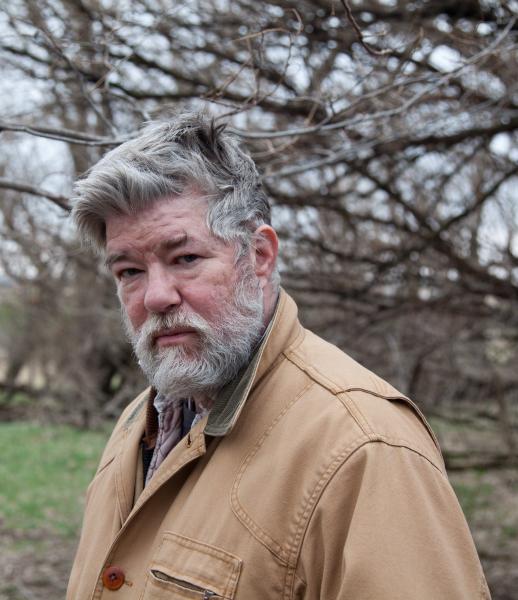
I’m as impressed as Michael Chabon is with this fine book.
And Offutt knows how to give a great interview too.
Podcast: Play in new window | Download
David Wilk talks with editor/writer Richard Marek
April 5, 2015 by David
Filed under Publishing History, PublishingTalks
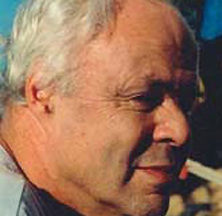 Publishing Talks began as a series of conversations with book industry professionals and others involved in media and technology about the future of publishing, books, and culture. As we continue to experience disruption and change in all media businesses, I’ve been talking with some of the people involved in our industry about how they believe publishing might evolve as our culture is affected by technology and the ebb and flow of civilization and economics.
I’ve now expanded the series to include conversations that go beyond the future of publishing. I’ve talked with editors and publishers who have been innovators and leaders in independent publishing in the past and into the present, and will continue to explore the ebb and flow of writing, books, and publishing in all sorts of forms and formats, as change continues to be the one constant we can count on.
It’s my hope that these conversations can help us understand the outlines of what is happening in publishing and writing, and how we might ourselves interact with and influence the future of publishing as it unfolds. This new interview reflects my interest in the history of independent literary publishing, an area in which I have been active for a long time. And this particular conversation reflects some longstanding personal relationships as well.
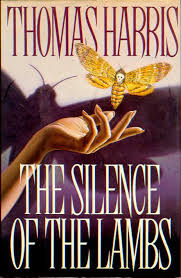
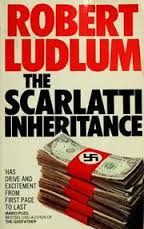
Richard Marek’s career in publishing began as an acquiring editor at Macmillan; he went on to World Publishing in 1967, and became Editor-in-Chief at The Dial Press in 1972. He acquired the manuscript of a first novel called The Scarlatti Inheritance by the then unknown author named Robert Ludlum, worked on it with him for over two years, and of course it later became a national bestseller. Marek edited Ludlum’s next eight books, including The Bourne Inheritance. He acquired and edited books by more than 100 writers, including James Baldwin, Mira Rothenberg, John Yount and David Morrell. In 1978, he was given his own imprint (“Richard Marek Publishers”) at G.P. Putnam’s, and moved it to St. Martin’s Press (“St. Martin’s/Marek”) where, among many other books, he acquired Thomas Harris’ The Silence of the Lambs and Robert Greysmith’s Zodiac. In 1989, Marek became President and Publisher of E.P. Dutton, where he edited a number of bestselling books.
After Dutton became a subsidiary of Viking/Penguin, Marek moved to Crown as Editor-at-Large and thereafter became an independent editor, evaluating manuscripts, editing and ghostwriting, which he calls “a glorious and rewarding career.”
In the past 10 years, he has edited some 120 books, working for publishers, agents, and unrepresented writers. And he has also become an in-demand ghostwriter. He reports that he enjoys writing mornings and editing during afternoons.
Richard is now the ghostwriter of fourteen books, fiction and nonfiction, among them Trisha Meili‘s I Am the Central Park Jogger (a national bestseller), James Patterson’s Hide and Seek (a national bestseller), Brian Weiss’ Same Soul, Many Bodies, Ilanna Rubenfeld’s The Listening Hand, David Grand’s Emotional Healing at Warp Speed, and David Hackworth’s Steel My Soldiers’ Hearts.
And I am happy to say that I have had the opportunity to publish a lovely novel authored by Richard and his wife, the writer Dalma Heyn. It’s a love story for grown ups called A Godsend.
Dick is an active member of the Independent Editors Group – more about him and that organization here.
For this Publishing Talks series, I thought it would be fun and valuable to talk to Dick about the past, present and future of publishing from his unique perspective. His long and successful experience in commercial and literary publishing as editor, publisher, and now writer, provides him with an amazing depth of knowledge and an unending well of anecdotes and stoies. What he has to say during our conversation in his home will not disappoint. He is a great conversationalist with important things to say about book publishing.
Podcast: Play in new window | Download
Marion Winik: Three books
February 8, 2015 by David
Filed under Non-Fiction, WritersCast
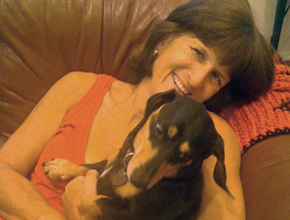 This interview with the talented essayist Marion Winik is unusual, as it is about three different (short) books Marion has published with the relatively new digital publisher SheBooks (“Every Woman Has a Story”). Since Winik, for a long time composed audio essays for NPR’s “All Things Considered” (archived here), she is pretty smart about doing interviews, so I thought we would be able to cover these three books, as well as talking a bit about SheBooks and Marion’s career as writer. I think she did a great job on all counts. I’d recommend a visit to her website too, lots of links, current information, and general literary goings on.
The three short books from SheBooks we talk about in this interview, all of which reflect Marion’s wonderful wit and stylish writing:
August in Paris is a collection of travel stories told with great humor and affection, “from lost teenagers and missed connections to overpriced drinks and gambling mishaps.” I don’t know how she does it, but she keeps her bearings throughout.
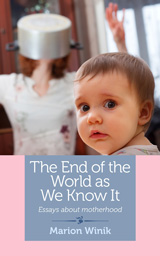
The End of the World as We Know It collects nine essays about parenting and family, beginning with the story of her second wedding and subsequent move to rural Pennsylvania. She covers a broad range of subjects, from blended families, to having kids in her 40’s and eventually to dealing with the legal problems that sometimes arise with teenage boys. Very much along the lines of her NPR pieces.
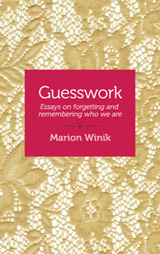
Guesswork is a collection of essays about memory and identity. One of my favorites, ”The Things They Googled” looks at search engines and their effects on our lives. These eight essays will inspire you to reconsider your own history and sense of self from new angles: how treasured places and objects fit in, how your life as a reader shapes who you are.
You can purchase these and other books directly from SheBooks (they already have a really extensive and impressive list of publications) here or from Barnes & Noble, Amazon and probably other ebook retailers, all at reasonable prices. Buy direct and you support the publisher and its authors.
Marion Winik’s (very abbreviated) biography in her own words:
“I was born in Manhattan in 1958 and raised on the Jersey shore. I graduated from Brown in 1978 and got my MFA from Brooklyn College in 1983.
Throughout my childhood and into my twenties, I wrote poetry. Some of it was published in two small-press books. In the late eighties—by which time I was living in Austin, Texas with my first husband, Tony—I began writing personal essays.
These days I live with my daughter Jane and our dachshund, Beau, in the beautiful Evergreen neighborhood of Baltimore. What a fabulous, underrated town this is. I teach writing in the MFA program in Creative Writing & Publishing Arts at the University of Baltimore. I write a column at BaltimoreFishbowl.com, and have a new memoir from Globe Pequot Press. It’s called Highs in the Low Fifties: How I Stumbled Through The Joys of Single Living.”
And here is something about the digital publishing start up, Shebooks: a curated collection of short e-books written by women, for women. All of our stories are easy to download and read on any digital device—and so good you’ll finish them in an hour or two. We like to think of ourselves as an e-book boutique, the kind where you’ll always find a story to fit your busy life.
Whether short fiction, memoir, or journalism, all Shebooks are handpicked by discerning magazine and book editors and written by women you either know of or will want to know. And because we offer our e-books by subscription as well as individually, you need never be without a great story to read.
As anyone who listens to WritersCast knows, I’m always interested in new publishing models. SheBooks certainly represents one of those new models. I think we will revisit them in a little while to see how this venture turns out. I hope it works – we need more digital publishing that tries to break out of the existing structures and models to try out different approaches to engaging with readers.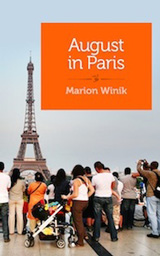
Podcast: Play in new window | Download