
Joanna Cantor: Alternative Remedies for Loss (A Novel)
July 31, 2018 by David
Filed under Fiction, WritersCast
 Alternative Remedies for Loss – Joanna Cantor – Bloomsbury – Hardcover – 9781635571714 – 320 pages – $26.00 – May 8, 2018 – ebook editions available at lower prices. Paperback comes out
One of the great things for me about doing this podcast is that I have been introduced to such a varied range of books and writers. When I started this series, my intention was primarily to make myself a more regular reader. Like so many other people, I have found the intrusion of devices and media of all kinds distracting (in an enjoyable way for the most part), taking so much of my time away from the pure pleasure of reading, that I thought a regular schedule of talking to writers about their books would give me the discipline I generally lack, and make certain that I both read more books, and think more reflectively about what I read.
In many ways, of course, that intention has succeeded. But one of the surprises for me in this process has been that so many publishers and authors have approached me to read and interview an amazingly wide range of books. I have done my best to read books that are outside my “normal” range of interests. And that has been incredibly rewarding. Today’s interview, with the author of Alternative Remedies for Loss demonstrates one of those enjoyable discoveries that being a book podcaster has enabled.
Joanna’s story revolves around Olivia, who leaves her senior year at college to be with her mother through her terminal illness. The through line of the book is Olivia’s effort to cope with this unexpected loss. She takes a job in media in New York City in a sort of dazed state, and while it appears the rest of her family is moving on with their lives, Olivia cannot quite figure out what is going on now. Then she accidentally discovers that her mother might have been involved with a man other than Olivia’s father, and this emotional shock triggers Olivia’s quest to more fully understand her mother, come to terms with her own self in the world, and essentially to work through the emotions that are blocking her from being at peace.
There’s a great energy to this book, and because the writing is so good, the characters believable and fully formed, it is easy to get wrapped up in Olivia’s effort to become a fully formed human being in challenging emotional circumstances, perhaps her first in a fairly privileged upper middle class upbringing that many readers will recognize, and perhaps identify with themselves. Author Cantor refuses to whitewash her main character and gives her flaws and weaknesses that bring her to life. A good novel solves problems we sometimes did not realize we were able to engage with, and this one does that for me – I am glad to have had the chance to engage with Olivia’s story, and it was a pleasure to meet and speak with Joanna.
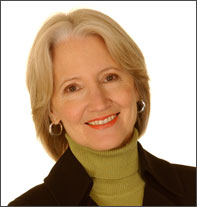
Joanna Cantor is a very talented writer. She lives in Brooklyn, teaches yoga and continues to write fiction. I really enjoyed reading this book and talking to her about writing, first novels, and of course, this book.
Joanna Cantor’s website is worth a visit.
(Production note: in doing this interview, I had a problem with the recording device, and we had to finish the conversation by phone, so you will notice some variations in the sound during the course of this particular podcast. I’ve got a new recording device now and hope to avoid problems like this in the future.)
Podcast: Play in new window | Download
Peter Donahue: Three Sides Water (Short Novels)
June 19, 2018 by David
Filed under Fiction, WritersCast
 Three Sides Water – short novels – Peter Donahue – Ooligan Press – paperback – 978-1-932010-98-5 – $17 – ebook versions available at lower prices – May 1, 2018
Ooligan Press is an unusual publishing operation; it’s a Portland, Oregon based independent publisher that draws its books from the rich literary communities of the Pacific Northwest. Founded in 2001, Ooligan is also a teaching press dedicated to the art and craft of publishing. Affiliated with Portland State University, the press is staffed by students pursuing master’s degrees in an apprenticeship program under the guidance of a core faculty of publishing professionals. This gives the press a continual sense of transformation and rebirth as the people involved with it change so frequently. I’ve made a number of literary discoveries through Ooligan’s diverse and very literate offerings.
I am really pleased that Ooligan decided to send me Peter Donahue’s unusual collection called Three Sides Water. The book is a collection of three short novels that I was immediately drawn to. And once I started reading the first novel, I was completely hooked. Donahue has been writing about the Olympic peninsula of Washington for some time. While he no longer lives there, clearly the area west and north of Seattle has captivated his imagination. Three Sides Water follows the construct of a peninsula itself – three stories surrounded by the space beyond. Each of the book’s short novels is about young characters, all in very different time periods, learning what it means to take responsibility for their own lives, and all of them must make decisions that will have long lasting consequences for themselves and others in their lives.
In his writing, Donahue literally inhabits the landscape of the far northwestern edge of our country with these stories. There’s a certain exoticism he brings us, with a careful eye and precise descriptive language that never gets in the way of the stories he is telling. His characters are all very different but share a common desire to become “something” – whether it is more, or better, or simply the desire to become an authentic self. The Pacific Northwest’s Olympic Peninsula is a itself a dramatic element, within which his compelling characters do what they must to establish the arcs of their lives, all in different ways and with different means, but all operating from the deepest part of their selves. The stories share common traits but are set in completely different time periods and tell very different tales, making this collection great fun to read.
Peter Donahue has published two full length novels, Clara and Merritt and Madison House (winner of the Langum Prize for American Historical Fiction), as well as a collection of short stories, The Cornelius Arms. He is the co-editor of two literary anthologies, Reading Seattle and Reading Portland, and of Seven Years on the Pacific Slope, a 1914 memoir set in Washington’s Methow Valley. Since 2005, he has written the Retrospective Review column on Northwest literature for Columbia: The Magazine of Northwest History, published by the Washington State Historical Society. Donahue teaches at Wenatchee Valley College in Omak, a small rural campus in North-Central Washington. More about Peter Donahue and his work can be found at his website here. And learn about the interesting Ooligan Press at its website here.
Peter Donahue is a fine story teller and an excellent interviewee as well. Thanks to him and to Ooligan for this excellent book.
Podcast: Play in new window | Download
Dara Horn: Eternal Life – A Novel
May 29, 2018 by David
Filed under Fiction, WritersCast
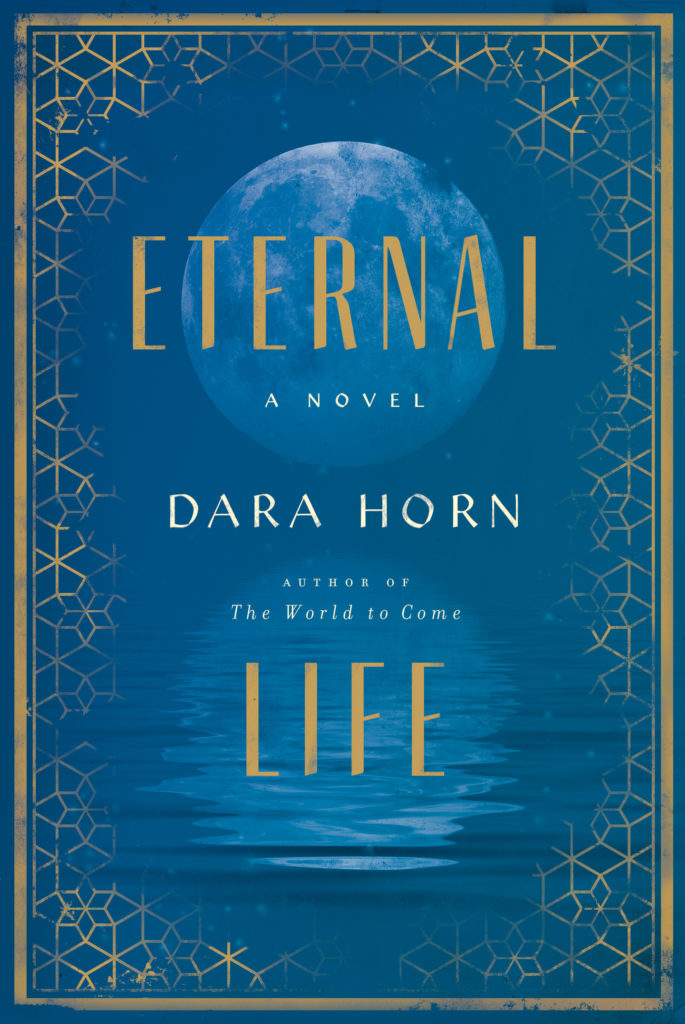 Eternal Life – A Novel – Dara Horn – W.W. Norton – Hardcover – 978-0393608533 – 256 pages – $25.95 – ebook versions available at lower prices – January 23, 2018
I have to admit I had some trepidation about reading this novel, when I first approached it. I was aware that Dara Horn is a brilliant writer, but I was afraid, after learning the premise of this book, that it would be too difficult for her to transform the material into an effective novel. Much to my surprise, this book swept me off my feet.
I had asked myself the question — would I really want to read a book about someone who has had the blessing of eternal life? Could this idea, something that has been explored so often by so many writers and thinkers in the past, really work? Would she manage to avoid the triteness of writing about eternal life?
Happily, Horn tackles this concept with originality and utter charm, avoiding the predictable at every turn, to give us a rich novel that resonates with the joys and painfulness of life. It turns out that a well told story of eternal life has much to teach us mere mortals about our own lives. And her mastery of Jewish mysticism, history, and modern culture envelopes the reader completely.
Rachel and Elazar’s story begins in the time of the Roman occupation of Jerusalem, when, as young lovers, they must make a bargain with God they do not fully understand until much later in their live – much later. They are doomed to live forever, their lives intersecting and completely entwined, each living out experiences with multitudes of families and children, repeating a seeming endless cycle of love and loss without redemption. By the time they have reached the twenty first century, Rachel has had enough of living, and truly wishes to die.
“The hard part isn’t living forever,” Rachel observes. “It’s making life worth living.” That’s the challenge for all of us, and the way Dara Horn tells Rachel’s story, it is impossible not to face up to our own understanding of our common humanity.
This is a terrific book, one which will surprise and delight you with its complicated story, and vivid interweaving of Jewish history into modern life. And it was great to have a chance to talk to the ever interesting and erudite Dara Horn about the mysteries and challenges of Eternal Life.
Dara Horn received her Ph.D. in comparative literature from Harvard University, studying Hebrew and Yiddish. In 2007 she was chosen by Granta magazine as one of 20 “Best Young American Novelists.” Her first four novels have won many awards. She has taught courses in Jewish literature and Israeli history at Sarah Lawrence College and City University of New York, and was a Visiting Professor in Jewish Studies at Harvard. She lives in New Jersey with her husband and four children. You can read more about Dara at her well put together website here.
Podcast: Play in new window | Download
Phillip Lopate: A Mother’s Tale
January 15, 2018 by David
Filed under Non-Fiction, WritersCast
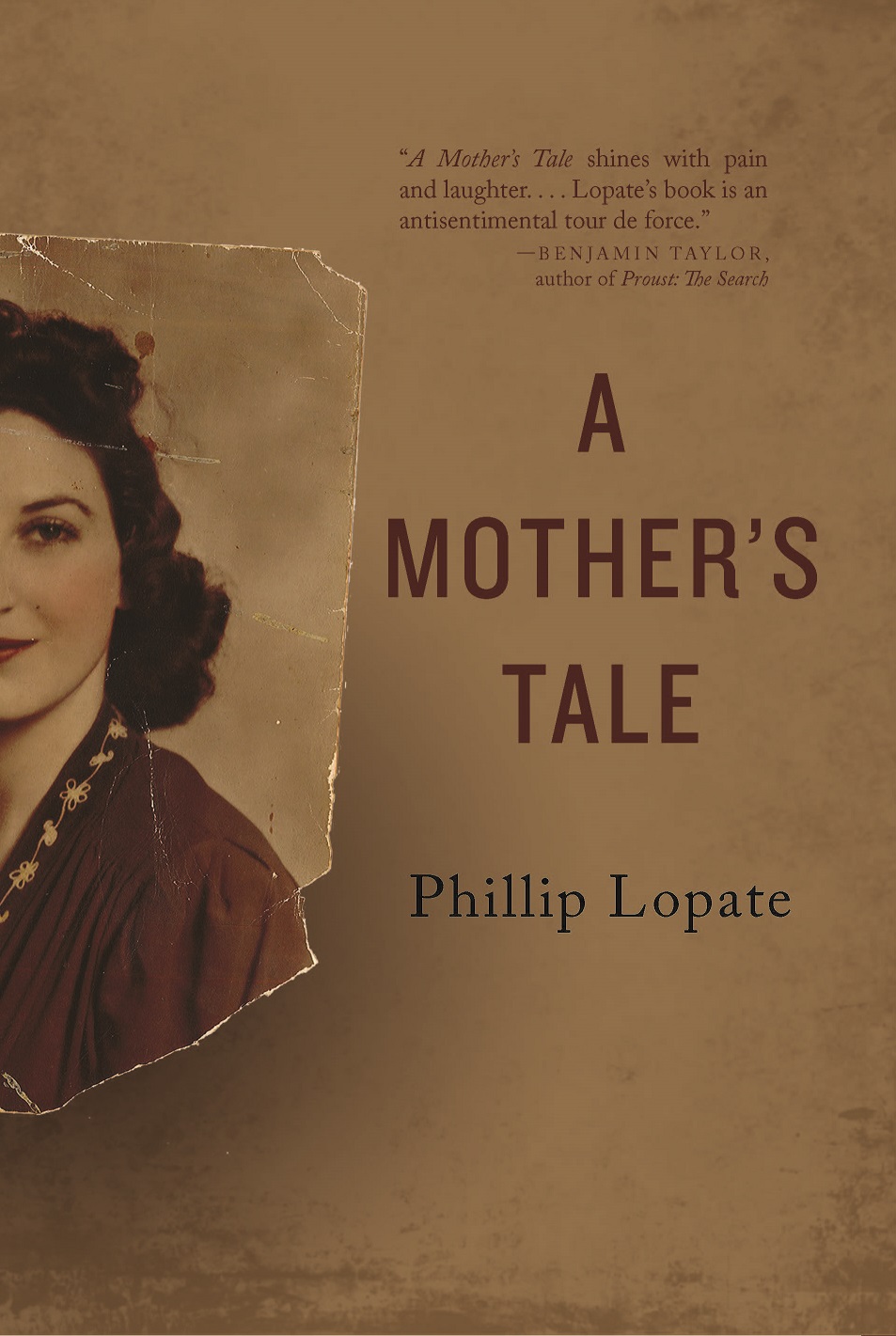 A Mother’s Tale – Phillip Lopate – Mad River Books (Ohio State University Press) – Hardcover – 9780814213315 – 196 pages – $24.95 – ebook versions available at slightly lower prices – January 12, 2017
It might be said that a good memoir is a hard thing to find. It takes a special touch from a writer. The best memoirs have humor and self awareness – one must be selective in choosing what is important to share and what must be omitted, valuable to one’s self but not so much for the reader.
Philip Lopate is a skilled and experienced writer who inherently understands the necessities of writing about self and family. His mother was a complicated person, his family life unusual and full of strange twists and turns that made him and his brother who they are as adults.
In 1984, Lopate convinced his mother, Frances, to allow him to interview her and record the story of her life. Frances was a powerful and strong willed figure. She was orphaned in childhood, married young, and had to make a life for herself without a support system, as a mother. She worked in a number of fields and late in life became an actress and singer. She appeared in television commercials and performed in plays in New York.
She told Philip all her many criticisms of her husband (his father), recounted the details of her affairs and sexual encounters, told him about her experiences with therapy and continuously complained about how the world had mistreated and misunderstood her. Locate set the tapes aside and never listened to them until thirty years later, when his mother had passed away. At that point Lopate was drawn back to the recordings, perhaps wanting to better understand his mother and himself through her confessions.
A Mother’s Tale is essentially then a three-way conversation between Lopate today, his mother, and the younger self he hears talking to her on the tapes.
Lopate seeks to better understand and appreciate his mother and the husband she ostensibly despised, but could never leave. He cannot share her self-pity or the harping on blame assessed to everyone but herself. But through it all, he comes to see her anew, now as a grown man, recognizing more clearly the survivor, her powerful appetite for love and for life, and the ways he finally found to express his love for her.
It’s a brave thing to expose oneself and one’s family in such a personal piece of writing. Lopate has succeeded with this short memoir, giving us much to savor, appreciate, and ponder about ourselves and our own family histories. This is a terrific book.
“With his signature insight an candor, Lopate reveals his mother for the complicated and troubled character she was, and himself–her darling, her confessor, her victim, her judge–as the child behind the writer he was to become. I could not put it down.” — Lynn Freed
Philip Lopate is the author of a number of well respected memoirs and personal essays, as well as two novellas, and is also the editor of several important anthologies. He has won a variety of awards for his writing, as well as for his work as a teacher. He is currently a professor at Columbia University’s School of the Arts, where he teaches nonfiction writing.
Philip Lopate is a wonderful conversationalist and an easy person to interview. It was a tremendous pleasure for me to speak with him about this book and his intriguing mother.
Author website here. Author photo by Sally Gall.
Podcast: Play in new window | Download
Bill Schubart: Lila and Theron (A Novel)
December 13, 2017 by David
Filed under Fiction, WritersCast
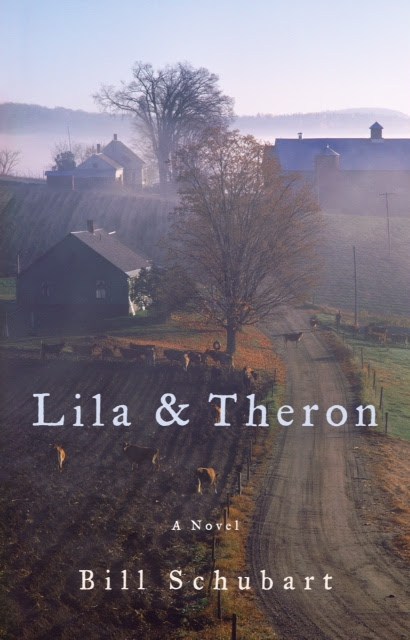 Lila and Theron (A Novel) – Bill Schubart – Charles Michael Publishing – Hardcover — 9781682613566 – 192 pages- $19.95 – ebook versions available at lower prices – June 6, 2017
This small book is short and sweet in a very good way. Through well written fiction, the book documents and celebrates an imagined place and people in time, that have only recently disappeared from the American landscape. It’s difficult for most of us moderns to imagine life without all the technological conveniences we have come to take for granted today. It was not that many years ago that the isolated mountain communities of northern Vermont were still home to small farmers, whose daily lives were closer in rhythm to the nineteenth century than to even the twentieth, much less the technologically advanced twenty first century of today. Some of these hardy folk still farmed with horses into the 1960s, and many small-scale daily and truck farming operations managed by dint of endless toil, to support the families on the land they had worked for generations.
To most of us, these lives will be as foreign as science fiction. Harsh circumstances often make people harsh, but Schubart’s characters find a way to access their humanity despite all the struggles of life which which they must cope. It’s a joy to get to know these characters and to share the stories of their lives. Schubart, now in his seventies, bridges this time frame. He grew up in northern Vermont, and while his life experience was vastly different from the farm people he writes about here, these are people he knew and loved during the his youth, and it benefits us all that he has brought them to life in this lovely novel.
Thelma dies at nineteen giving birth to a son, Theron. When the son first meets his father, he learns his mother’s death is his fault and can only muster the question, “How did she die?”
Looking away, the father mutters, “She died givin’ birth ta you. An’ I lost all her help and comforts.”
“I have long considered Bill Schubart to be the wisest columnist in America. That same wisdom, deep life experience, and empathy come shining through on every page of his new novel, Lila and Theron. Full of joy, sadness, humor, and insight, Lila and Theron is a clear-eyed celebration of our almost boundless capacity, despite all our human frailties, to love both one another and the place we call home. Over the years, I have known many true and good country people like Lila and Theron, whom I have been proud and honored to call my friends. This is a beautiful book.” – Howard Frank Mosher, author of Marie Blythe and Walking to Gatlinburg.
Bill Schubart has lived with his family in Vermont since 1947. He writes about Vermont in fiction, humor and opinion pieces, is the author of several books, is a regular commentator on Vermont Public Radio, and active in Vermont community and political life. Learn more about him and his work at his website.
It was a true pleasure for me to share a conversation about Vermont and its people, small-scale farming, and the art of fiction with my old friend, Bill Schubart.
Podcast: Play in new window | Download
Christopher Benfey: Red Brick, Black Mountain, White Clay
November 26, 2017 by David
Filed under Non-Fiction, WritersCast
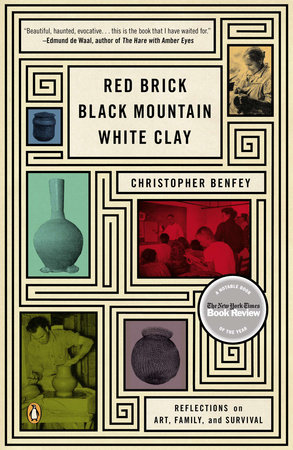 Red Brick, Black Mountain, White Clay: Reflections on Art, Family, and Survival – Christopher Benfey – Penguin – paperback – 9780143122852 – 304 pages – $16.00 – ebook versions available at lower prices – February 26, 2013
I found this lovely and compelling book by complete happenstance while visiting North Carolina earlier this year. The redoubtable Regulator Bookshop in Durham had a copy out on its “local interest” shelf, and the cover grabbed my attention immediately.
Not knowing anything about author Benfey, I was surprised and pleased to learn about his background through this complex and rewarding memoir. It’s a book that combines so many different areas of his interest – and mine – built around a complex interweaving of his family’s story and his desire to learn about and understand the people in his life story.
Benfey was raised in Richmond, Indiana, where his father was a chemistry professor at Earlham College. His father’s side of the family were German Jews who escaped Hitler, including aunt and uncle Josef and Anni Albers, who were both central figures at Black Mountain College, in North Carolina (and central also to modern arts and crafts in 20th century America). North Carolina is a nexus, as Benfey’s mother grew up in the longstanding folk pottery region of the state as well.
So Benfey’s story starts as a family history, but moves assuredly through art, geography, cultural history and his own personal journey of discovery as a writer and thinker; as the title itself suggests, “names the three paths, each mapping the experience of relatives or ancestors of mine trying — by art, by travel, or by sheer survival — to find a foothold in the American South.”
There are many well-told stories here, and North Carolina is at the core of it all. Even if you have never explored the cultural and geographical riches of that state, this book will capture your imagination and bring you there. Benfey builds his story much as a brick layer does, carefully assembling the pattern from materials at hand to create a fully formed story all the while.
This is a book I am happy to recommend to almost any reader.
Chris Benfey is a professor at My. Holyoke College, where he is Andrew W. Mellon Professor of English. He was educated at the Putney School, Earlham College, Guilford College, and Harvard (Ph.D. in Comparative Literature). Benfey is also a journalist, having served as the art critic for Slate, and also is a contributor to The New York Review of Books, The New York Times Book Review, and The New Republic, among many others. Chris is a renowned Emily Dickinson scholar, and author of four highly regarded books about the American Gilded Age. His edition of essays on the Iliad by Simone Weil and Rachel Bespaloff appeared as War and the Iliad in 2005.
Benfey’s poems have appeared in The New Yorker, the Paris Review, and Ploughshares.
This book is among my favorites and I hope you enjoy the conversation I had with the interesting and well-spoken Christopher Benfey as much as I did.
Podcast: Play in new window | Download
Thomas McNamee: The Inner Life of Cats
November 12, 2017 by David
Filed under Non-Fiction, WritersCast
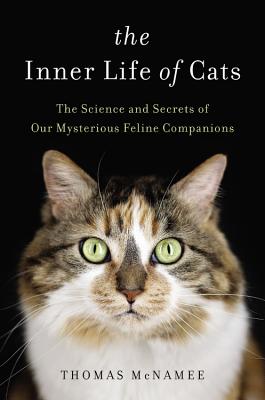 The Inner Life of Cats: The Science and Secrets of Our Mysterious Feline Companions – Thomas McNamee – Hachette Books – Hardcover – 9780316262873 – 288 pages – $27.00 – ebook versions available at lower prices – March 28, 2017
What a fun read! Thomas McNamee’s story begins with the story of finding his own cat, Augusta, and that story becomes the framework for a comprehensive understanding of how cats develop both physiologically and psychologically, and of course how their owners do as well.
McNamee recounts the evolution of cats and much more as he tells the story of his own cat’s adventures. He talks to all kinds of experts, animals behaviorists, activists and researchers to help his readers understand these strange and different animals who have lived with and among humans for so long. His book is well grounded in every way.
The author has strong opinions about these animals. He is clearly someone who loves cats and wants to improve the way other cat lovers live with and treat their pets. He aims for them to have happier and better relationships with them, and I suspect that reading this book will in fact help make that happen for them.
While I am decidedly not a cat person, Tom McNamee is such a fine writer and storyteller, I found this book impossible to put down. I am guessing true cat loving humans will as well.
McNamee is the author of several successful books, including The Grizzly Bear; Nature First: Keeping Our Wild Places and Wild Creatures Wild; a novel, A Story of Deep Delight; The Return of the Wolf to Yellowstone; Alice Waters and Chez Panisse: The Romantic, Impractical, Often Eccentric, Ultimately Brilliant Making of a Food Revolution; The Man Who Changed the Way We Eat: Craig Claiborne and the American Food Renaissance; and most recently, The Killing of the Wolf Number Ten.
McNamee also wrote the PBS documentary Alexander Calder, which won a Peabody Award and an Emmy. In 2016, he was awarded a Guggenheim Fellowship to work on The Inner Life of Cats.
He was a board member and chairman of the Greater Yellowstone Coalition. He has also served as a board member of Rare Conservation and the Center for Urban Education about Sustainable Agriculture. After two decades in New York City, he then lived on a cattle ranch in Montana for eight years. He now lives and writes in San Francisco.
Thomas McNamee’s website is here.
“The Inner Life of Cats is filled with shining prose, moments of sheer cat joy–and intimate, careful scientific observation. Thomas McNamee’s naturalist’s eye, combined with his humor and heart, bring the always wild, yet domesticated cat into delightful, insightful focus.”
―Cat Warren, New York Times bestselling author of What the Dog Knows
Talking with Tom about this book was a true pleasure. Full disclosure: I published his excellent book, The Killing of Wolf Number Ten (a great book – it is the story of the return of wolves to Yellowstone National Park).
Podcast: Play in new window | Download
Jonathan Lerner: Swords in the Hands of Children
October 30, 2017 by David
Filed under Non-Fiction, WritersCast
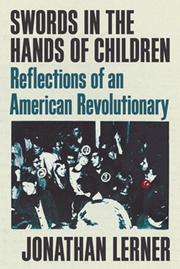 Swords in the Hands of Children: Reflections of an American Revolutionary – Jonathan Lerner – OR Books – Hardcover – 9781944869472 – $22 – 224 pages – December 5, 2017. Ebook versions available at a lower price. Order direct from the publisher, OR Books.
As Writerscast listeners doubtless know, I am interested in books about the sixties, a period in our history that shaped so much of what is now our current worldview and world situation, for better and for worse. This was a period in American history marked by social and political conflict, sparked principally by the Vietnam War. For many young people, it was the time in their lives when political and social idealism flourished, yet for some, directions taken and decisions made, acts committed, that would later appear misguided and wrong.
In the early sixties, Jonathan Lerner was a student at Antioch College, who almost accidentally became a full-time staff member of Students for a Democratic Society, the most powerful organization of the New Left (among its founders, the recently deceased Tom Hayden). In this book, Jonathan recounts the story of his life during the most fraught years of the political upheavals of this era.
Jonathan Lerner was at the center of many of the most important political events of that time. He became a founding member of the Weatherman faction of SDS, which ended up taking over the organization in 1969, and was the editor of its newspaper Fire! and an “above ground” representative of the Weather Underground organization, that was responsible for much of the far left spawned violence of the era.
The Weather Underground ultimately carried out a campaign of bombings across America. Some of its members died, many stayed underground for years, and some went to jail. Lerner tells some compelling stories about this time in particular and the people he worked and lived with. Overall, he seems to have been almost an accidental radical, who like many in the sixties, “went with the flow” of events and people around him, trying to find his place in a complicated environment.
Jonathan tells his story with brutal honesty, questioning much of what he once took for granted, as an insecure gay man existing in an environment that was not supportive in any way. This memoir has much to offer to those of us still seeking to understand the politics and culture of our youth, as well as for those too young to have experienced the sixties directly.
Lerner is the author of the novels Caught in a Still Place and Alex Underground, and is today a journalist focusing on architectural, urbanist and environmental issues. He lives in the Hudson Valley of New York state with his husband.
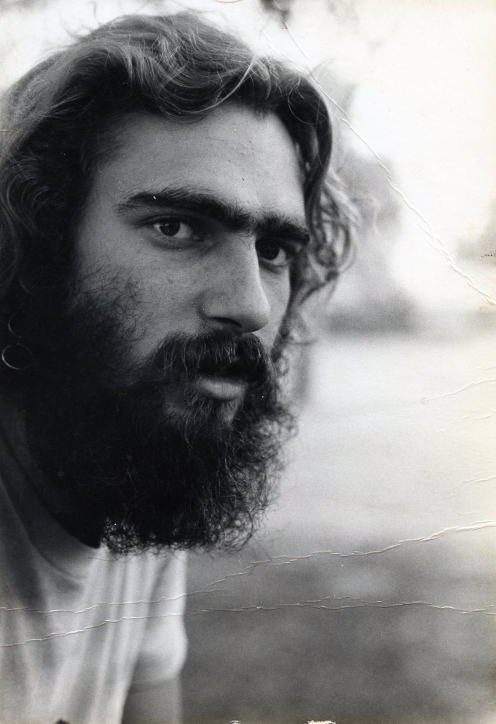
We had a great conversation in our wide ranging conversation. Visit Jonathan’s website here.
“Imagine if your favorite uncle, a brutally honest, worldly, self-reflective gay raconteur, had been, as a twenty year-old, a lieutenant in an underground guerrilla army dedicated to the violent overthrow of the government of the United States. Jonathan Lerner is that favorite uncle you never had, telling unbelievable true stories―no bullshit―from the ‘revolution’ fifty years ago. This is the closest you’ll ever get to being there.” ―Mark Rudd, national secretary of SDS, founding member of the Weather Underground and author of Underground: My Life with SDS and the Weathermen
Podcast: Play in new window | Download
Elizabeth Farnsworth: A Train through Time – A Life, Real and Imagined
October 15, 2017 by David
Filed under Fiction, WritersCast
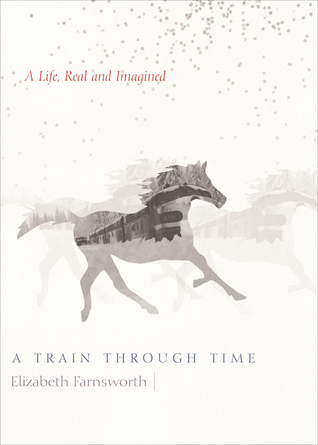 A Train through Time: A Life, Real and Imagined – Elizabeth Farnsworth – Counterpoint – Hardcover – $25.00 – 160 pages – February 14, 2017 – ebook versions available at lower prices
“I began this book with a sense of discovery and finished it in a state of exaltation. Along the way it broke my heart. It has been a long time since I read a book so moving, plain spoken and beautiful. The instant I finished it, I went back to the beginning and started in again.” ―Michael Chabon
This slim – and gorgeously produced – memoir is one of the most striking and memorable books I have read recently. I have to simply echo what Chabon said about it – Elizabeth Farnsworth has written something very special, a book that does not fit easily into our conception of book categories – and that is a good thing. Her book is an exploration of childhood memories of loss and of family life that woven together with more recent stories of her work as a journalist and documentary film maker, are built into a fictional structure. The book forms an almost dream state to carry the author (and the reader) through her story.
Farnsworth interrogates her own understanding of events, real and imagined, to understand the arc of her life. It is a truly magical journey of self and psyche.
A Train through Time is illustrated with the remarkable photo art of Mark Serr, whose works contribute to the ethos and sensibility of the book, as well as providing us with a beautiful and dreamy cover image.
Of course it helps that Farnsworth is a fine writer and a terrific storyteller. I was deeply moved by this book, and really enjoyed having the opportunity to speak with the Ms. Farnsworth about her story, about trains, journeys, and life in general. As an experienced television personality, she is very comfortable in recorded conversation and we had a great talk together, which I hope you will enjoy.
Elizabeth Farnsworth is a filmmaker and a foreign correspondent. For many years, she was the chief correspondent on the PBS NewsHour hosted by Jim Lehrer. During her career, she traveled widely to report on stories in Cambodia, Vietnam, Chile, Haiti, Iraq, and Iran and many other places. Farnsworth grew up in Topeka, Kansas, has a B.A. from Middlebury College, an M.A. in history from Stanford University and now lives in Berkeley, California.
Her documentaries include The Judge and the General (2008) and The Gospel and Guatemala (1983).
You can learn more about the author and A Train Through Time at the Counterpoint website here.
Podcast: Play in new window | Download
Nancy MacLean: Democracy in Chains: The Deep History of the Radical Right’s Stealth Plan for America
September 26, 2017 by David
Filed under Non-Fiction, WritersCast
 Democracy in Chains: The Deep History of the Radical Right’s Stealth Plan for America – Nancy MacLean – Viking – Hardcover – 9781101980965 – $28.00 – 368 pages – June 13, 2017
I will say this clearly and forthrightly: whatever your political opinions or positions, you must read this book. It shines an important light on the history of what has now become the most potent force in modern American politics. This book reveals in detail how the Koch brothers and other shadowy billionaires’ political philosophy has been weaponized in an ongoing war against democratic beliefs and institutions.
Professor MacLean came across this historical record more or less by accident, while she was researching the Nobel Prize-winning political economist, James McGill Buchanan, the principal architect of the ideas and institutions the Koch brothers and their allies have harnessed to radically alter the American political landscape in their distorted image of “economic libertarianism.” This philosophy fully recognizes that anti-democratic efforts are necessary to secure the wealth of the few against the “predations” of the democratic majority, and all their work for the last forty years or more has been aimed toward controlling and weakening democratic institutions. They have been remarkably successful in their efforts.
There is so much to learn in this book, yet still so much more for us to uncover, and ultimately then, so much that needs to be done by those who feel the need to defend democratic liberalism and American institutions. It is remarkable to learn that this effort is essentially part of a longstanding effort to reach far back into our history to undo FDR’s democratic reforms, as well as those of JFK, LBJ, and the civil rights movement. And that Charles Koch is so ironically a follower of the principles of that old Bolshevik, V.I. Lenin.
We learn here that Koch and his cronies have built a secret cadre of true believers who want to do what their hero Buchanan did in Pinochet’s Chile, which was to use the institutions of government to control and contain democracy. They have come a long way toward succeeding in our own country, as most citizens are completely unaware of what they are doing, especially with their takeover of the judiciary. And in Trump’s America, they are free to have their way with us.
One way you can tell Nancy MacLean has made an impact with her research is the level and sheer ferocity of mostly personal attacks from the right against her. Those who post in opposition seem to have neither read the book, nor care to think about the author’s actual work. One of the tools used by the Koch-financed opponents of democracy is the personal attack and what they call the “increased transaction cost” for anyone who opposes their views. Since they usually cannot win intellectual or even political arguments, they prefer to disparage and attack those who dare stand against them on other grounds than reason.
I urge listeners to read this book, think about what MacLean has uncovered, and then, if you agree with what she says, use what you learn from this book to stand up for freedom and democracy against oligarchy.
“This sixty-year campaign to make libertarianism mainstream and eventually take the government itself is at the heart of Democracy in Chains. . . . [MacLean] takes the time to meticulously trace how we got here. . . . If you’re worried about what all this means for America’s future, you should be. . . . And if someone you know isn’t convinced, you have just the book to hand them.”
—NPR
“It’s the missing chapter: a key to understanding the politics of the past half century. To read Nancy MacLean’s new book, Democracy in Chains: The Deep History of the Radical Right’s Stealth Plan for America, is to see what was previously invisible.”
—George Monbiot, The Guardian
“[A] riveting, unsettling account of ‘Tennessee country boy’ James McGill Buchanan, key architect of today’s radical right.”
—O, The Oprah Magazine
Nancy MacLean is also the author of Behind the Mask of Chivalry (a New York Times “noteworthy” book of the year) and Freedom is Not Enough. She is currently the William Chafe Professor of History and Public Policy at Duke University, and lives in Durham, North Carolina.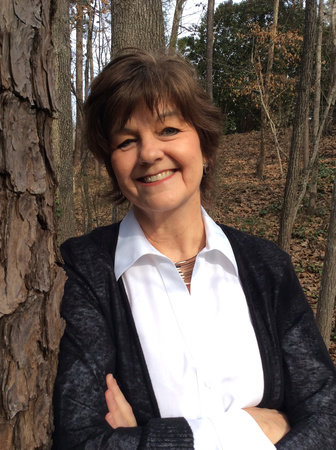
Podcast: Play in new window | Download