
Tom Bouman: Dry Bones in the Valley
November 24, 2014 by David
Filed under Fiction, WritersCast
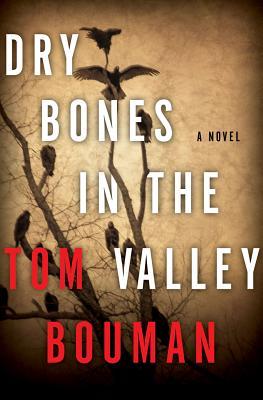 Dry Bones in the Valley – 978-0393243024 – Hardcover – W.W. Norton -$24.95 (ebook version available at lower prices)
This is a very fine mystery set in an unusual locale – rural Pennsylvania (fracking country). I don’t usually read mysteries, but one of the pleasures of doing interviews with writers has been that I have been sent books by publishers that I would normally never have even looked at on my own. It’s fun to pick up a book, to start reading a few pages and then to be thoroughly hooked. That happened for me with Tom Bouman’s fine first novel. I really liked the portrayal of his main character, the local policeman, Henry Farrell. He’s terrifically drawn and is a compelling, complicated, extremely human character. And I liked the way Bouman worked his way slowly into the depths of the story. And I really loved the way he wrote about the people who live in this isolated rural county in Pennsylvania.
Bouman’s interest in the outlaws and eccentrics who inhabit this world, his appreciation and even love for those who have kept to themselves, and to older forms of relationships among family and neighbors is palpable and powerful.
The book revolves around a body found in the woods and the search, naturally enough, for the killer. This novel is well worth spending some time as the story unravels. Great characters and fine writing make for a terrific read.
Author website here. Bowman used to work in publishing – he was an editor – and now lives in northeastern Pennsylvania with his family. As of this writing, he is attending law school, so it may be a little while yet before he publishes his next book. And here is a terrific piece that Bouman wrote for Modern Farmer about rural crime fiction (that is a genre I did not know even existed!) I am hoping we’ll see a new book from Tom Bouman before too much time passes.
Podcast: Play in new window | Download
Douglas Rushkoff: Present Shock: When Everything Happens Now
September 21, 2013 by David
Filed under Non-Fiction, WritersCast
 978-1591844761 – Current – Hardcover – $26.95 (ebook versions available at lower prices, and paperback edition due February 2014)
“If the end of the twentieth century can be characterized by futurism, the twenty-first can be defined by presentism.”
As it happens, I started this Writerscast project as an antidote to my own sense of what Douglas Rushkoff calls Present Shock, which is about how time, technology, attention, human intelligence, culture, meaning, advertising, commerce and belief systems that mark 21st century modern life have changed the way we experience our lives. This is an important book that having read and thought about, I can highly recommend.
What is ironic is that all of the things about our time that Rushkoff talks about in Present Shock, our feeling of being too busy and overwhelmed with input, our inability to filter out what does not matter to us and to focus on what does matter most are all the reasons why so many people I know will end up not reading this book at all. In fact the author felt those same issues during the writing of the book, and had to devise a plan and method that allowed him to concentrate on getting the work done.
You are not alone if you are feeling the need to make some space for yourself. It took me much longer to read this book than it would have some years ago. And it took me much longer to find the space in my life to write this short piece and post it than I am comfortable with. Technology in communication has enabled tremendous gains for many of us, while at the same time enslaving us to our devices.
Rushkoff brilliantly describes what has happened to us – the end of narrative, changes in the way we perceive and operate in time, what he calls digiphrenia – mental chaos provoked by digital experience – our need to escape the present, and our inability to filter information and sensory input. We instinctively know what he is talking about because we experience it ourselves every day.
But most of the time, most of us believe all of these concerns are personal and individual – how do I learn how to cope with the modern world? I think Rushkoff’s point in this book is that these are not individual problems, they are structural, and we need to start thinking about ways we can alter the course of our culture, to take control of technology, to act rather than be acted upon. In that way, this is an inspiring book, which I hope will lead to change in thinking and behavior.
I interviewed Doug about one of his earlier books, Program or Be Programmed. He is a terrific talker as well as writer and I am sure you will enjoy listening to our conversation. 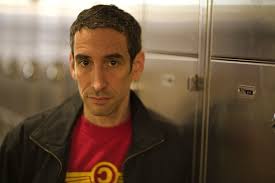
Podcast: Play in new window | Download
Dean Bakopoulos: My American Unhappiness
September 5, 2011 by David
Filed under Fiction, WritersCast
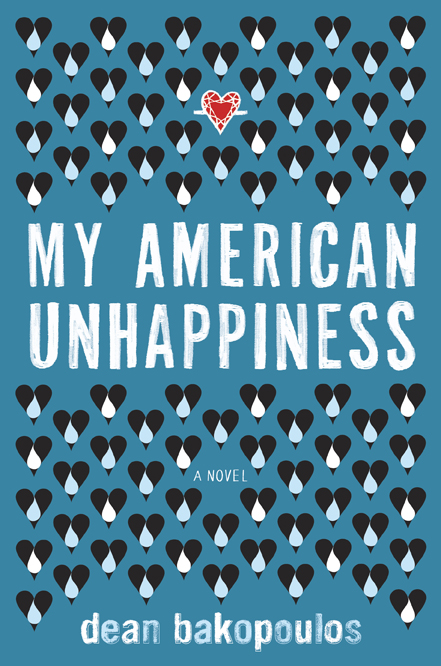 978-0151013449 – Houghton Mifflin Harcourt – Hardcover – $24.00 – ebook editions available
Dean Bakopoulos is a very funny and perceptive writer. My American Unhappiness, his second novel, takes place in Madison, Wisconsin during the period of the second Bush administration. Both the geographical and political backdrops are crucial elements of the story, whose main character is Zeke Pappas, a nebbish who runs a nonprofit called the Great Midwestern Humanities Initiative.
Zeke is an obsessive of some great measure. His life work has become the creation and maintenance of an “inventory of American Unhappiness,” a project that is a “byproduct of an overly cerebral loneliness.” He is also wildly naive and unrealistic, characteristics which in a certain way serve him well, as he is surrounded with problems in his life that would defeat the average person in short order.
Bakopoulos brilliantly balances the personal difficulties faced by Zeke with his involvement with some of the darker elements of the Bush era, including corrupt conservative politicians hiding the kind of personal behavior they legislate against in public, and the disconcerting pursuit of Zeke by a dark security-oriented governmental agency established after 9/11.
In some ways, the book could be read as just a zany midwestern comedy, but it’s clear that with Zeke Pappas’s story, Bakopoulos wants to tell us something important about 21st century American society. Zeke’s world is falling apart. His mother develops cancer, and decides to give her orphaned grandchildren (whom Zeke loves) to an aunt, unless Zeke can marry in time (impossible for him as he is simply too unrealistic about women). The government wants to audit the nonprofit he runs. Nothing works for Zeke. It’s a situation he feels he shares with the country as a whole, and Zeke knows it is the President that is the source of American unhappiness and ennui. Zeke sees Bush as “unencumbered by something as pervasive as unhappiness,” which makes him unfit to lead a country as complex and haunted as America. For Zeke Bush does not have the depth of spirit required to lead the nation.
Dean Bakopoulos is a writer to watch, a writer with great skills and who does have the depth of spirit required to portray the American scene through fiction. He is also a terrific writer to talk to about his work and gave me a great interview. You can visit his website to learn more about his work and ideas.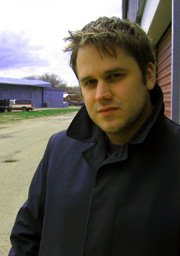 I am definitely looking forward to reading his next book.
Podcast: Play in new window | Download
Paul De Angelis: Dear Mrs. Kennedy, The World Shares Its Grief, Letters November 1963
September 23, 2010 by David
Filed under Non-Fiction, WritersCast
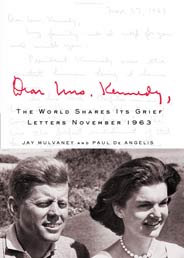 978-0312386153 – St. Martin’s Press – Hardcover – $19.99 (also available as an e-book at $9.99)
Are there more books about the Kennedys than about the Lincolns? I don’t know, but I am certain that there are many of them and my guess is that many who lived through the Kennedy era and many who did not, may feel they know everything they need to know about the Kennedys, JFK and Jackie, and the rest of the family. Reading this book may well change their minds.
In fact it’s a wonderful window into the heart and soul of America and in fact the world in the period just after the assassination of JFK in Dallas in November, 1963. Now almost a half century beyond that time, these letters, written by the famous and the ordinary, old and young, depict a period of extreme pain, emotional and social disruption, grief, sorrow, and disbelief that affected an incredible number of people all over the world. It gives us an opportunity to understand a great deal about how human beings respond to a devastating public tragedy. And some of the letters are simply beautiful, and transcendent in their expression of sympathy and emotion.
The story of the letters themselves is amazing – over 1 million condolence letters, notes and cards were sent to Jacqueline Kennedy in the months after the death of JFK. They were filed away and saved for many years, and despite a controversial culling in the 1980’s, there are still almost 400,000 letters, now cataloged and available for historians and journalists and the public to read and review. Editors Jay Mulvaney (who sadly passed away while working on this book) and subsequently Paul De Angelis, have given us a wonderful narrative and selection of letters that uses the words of the original writers to bring this terrible period in our history to life in an unusual and compelling tapestry of voices.
Paul De Angelis is a freelance editor and writer who lives in rural Connecticut. He’s been an editor, editorial director and editor-in-chief for a number of publishers. In our conversation about Dear Mrs. Kennedy, he talks about the process of putting this book together and highlights a number of the most interesting stories and letters in the book. For readers who lived through the 1960’s, this book will bring back many difficult emotions, and for readers for whom this is only history, these letters can bring the events of that period to life in a very powerful and compelling way, as the writers of these letters always speak from their hearts. You can see more from the book at Paul’s own website.
Full disclosure: the co-editor of this book, Paul De Angelis is a friend and occasional colleague, which does not make this book any less worth reading, of course.
Podcast: Play in new window | Download