
Joseph Kelly: Marooned: Jamestown, Shipwreck, and a New History of America’s Origin
March 18, 2019 by David
Filed under Non-Fiction, WritersCast
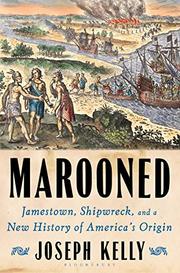 Marooned: Jamestown, Shipwreck, and a New History of America’s Origin – Jospeh Kelly – 978-1-63286-777-3 – Bloomsbury – Hardcover – 512 pages – $32 – October 30, 2018 – ebook versions available at lower prices
I really enjoy reading books about American history, and especially lately, books that explore some of the stories and moments that are foundational to the history of this continent, but are not well known or well told. And I’ve also become extremely concerned about gaining a better and more nuanced understanding of those stories that have been told solely from the perspective of the European (white) perspective that dominates our historical narrative, and thus our understanding of ourselves.
Joseph Kelly’s Marooned is just such a book, and I was immediately drawn to it. This is an insightful re-examination of the 1607 Jamestown settlement, the story of which really should replace the Mayflower colony’s position as America’s founding Puritan-centric myth.
In fact, the multiple stories of Europeans’ initial contact with the native peoples who fully inhabited North, Central and South America all require a complete re-examination, and I have been reading several books that provide insight into the way these continents were conquered by the marauding Europeans and their violence and diseases.
Marooned is about much more than just the Jamestown settlement. The book begins by recounting the settlement’s really awful circumstances. Most of those early settlers died of disease or starvation or deserted to the local tribes for protection. The workings of the Virginia Company that was set up to colonize and exploit the supposedly “virgin” New World are fascinating and in some ways depressingly familiar to our modern large scale version of unrestrained capitalism.
The traditional blame for the miseries of Jamestown’s early years goes to those leaders who failed to manage their “lazy” colonists, as opposed to those who were ready, willing and able to literally whip them into shape. But Kelly makes it clear that because it was the aristocrats who wrote the documents on which our traditional history relies, the real story may be, likely is, significantly different. Kelly finds ample evidence that the colonists who were cast into the wilderness, “marooned” from home and trying to survive, experienced a far different reality than their leaders. Many of them had a nascent understanding that Britain’s rigid class structure would not work in this different environment, and that their actual survival required a far more equitable system of governance. In fact, there were many uprisings and expressions of rebellion, all of which were put down, although a limited electoral oligarchy emerged during the course of the 17th century in the Virginia colony.
There are many side trips and journeys throughout this engaging narrative. The story of the castaways from one of the resupply ships on Bermuda, truly a story of being marooned, is striking. Nine ships en route to re-supply Jamestown in 1609 were hit hard by a hurricane, a storm of extreme high winds and waves, and one ship, the Sea Adventure, with some of the key leaders of the expedition on board, was wrecked on the shores of the Bermudas. The crew reached one of the islands in safety, and almost a year later, after building two boats by hand, they sailed again for Jamestown, and somewhat surprisingly, were able to reach their destination not long after departing from Bermuda. This story circulated widely in London, and may well have inspired Shakespeare’s great play, The Tempest. The timing is certainly right for that to be the case.
Kelly contributes a significantly better understanding of the Powhatan Confederacy’s formation and politics before and during the settlement period, as well as the fluidity between the cultures of the native peoples and the colonists. Marooned is not just the story of the Europeans and their conquest, but successfully weaves together the the narrative of the struggles of native peoples of that time and place in their powerful efforts to survive the arrival of the brutal land grabbing English settlers and the lives of the colonists at the lower ends of the social strata, whose stories we rarely, if ever, get to know.
It is a pleasure to discover such a good writer and story teller as Joe Kelly is. In this book, he truly brings history alive through its people, and with a narrative built on a solid grounding of research and a deeper understanding of the complexities of perspective than many other historians.
Joseph Kelly holds a Ph.D. in English from the University of Texas, Austin, and is a professor of literature and director of Irish and Irish American Studies at the College of Charleston. He is the author of America’s Longest Siege: Charleston, Slavery, and the Slow March Toward Civil War, and the editor of the Seagull Reader series. He lives in Charleston, South Carolina. Joe’s blog can be found here.
Podcast: Play in new window | Download
Philip Connors: A Song for the River
January 28, 2019 by David
Filed under Non-Fiction, WritersCast
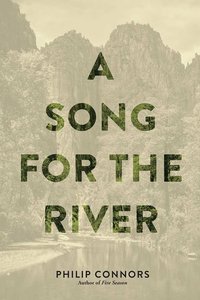 A Song for the River – Philip Connors – 978-1-941026-90-8 – Cinco Puntos Press – Hardcover – 256 pages – $22.95 – September 18, 2018 – ebook versions available at lower prices.
“The river that runs through the wilderness opens his heart: the mountains burn, friends die, and green shoots sprout from the ashes.”
Philip Connors, like some other fine writers of the desert southwest, notably Gary Snyder, Jack Kerouac and Norman Maclean, has been a long time fire lookout. Phil has spent many years in the Gila Wilderness in New Mexico. He began working as a fire lookout in 2002, and wrote about his experience in an earlier book, Fire Season: Field Notes From a Wilderness Lookout.
As it happens, I visited the Gila Wilderness for the first time in 2018, and was completely smitten by its beauty and the magnitude of the mountains, the vistas, and the Gila River. I’m sure I had read about the Gila at some point; it is famous for being the first wilderness area established anywhere in the world (in 1924), principally through the efforts of the great naturalist Aldo Leopold. Leopold was himself one of our best writers about nature; the Forest Service transferred him to Wisconsin, perhaps fortunately for the rest of us, as his Sand County Almanac has inspired so many to a better understanding of the natural world.
The Gila area is not only beautiful, but it is historically important as well. When we were there, we visited the famous Mogollon cliff dwellings, which are simply extraordinary. After that culture disappeared, the Gila was subsequently home to the Apache, and then the American pioneers, outlaws, and miners who displaced them. It’s an area which Connors knows intimately, and this powerful and emotionally gripping book reflects the depth of his knowledge of places and people, of the natural landscape and the depth of both human despair and our equally transcendent spirit.
There is a great deal of pain and sorrow in this book, but the spiritual and emotional power of Connors’ writing and his ability to transform experience into something resonant is important for himself and for his readers. The power of the writing is palpable and strong. It’s a beautiful book that I hope will be read by many.
Wilderness is where the heart grows stronger, or breaks, or both. No matter, we need these places and the writers who, like Connors, bring forth meaning out of pain, beauty out of loss.
Philip Connors was raised on a farm in Minnesota, went to the University of Montana for college, and spent a number of years working as a journalist. But he became disillusioned and made his way west, which clearly has become his true home and emotional center. His first book, Fire Season: Field Notes From a Wilderness Lookout won the National Outdoor Book Award, the Sigurd Olson Nature Writing Award, the Reading the West Award for nonfiction, and the Grand Prize from the Banff Mountain Book Competition. His second book, All the Wrong Places, a memoir of life after his brother’s suicide, was published in 2015.
Talking to Philip after reading this beautifully written, moving narrative of nature and loss was a great experience for me.
“Everything that is absent in the current political crises of this nation is abundantly present in Philip Connors’ A Song for the River: humility, quietude, forgiveness, and gratitude. His writing is pure, exact, compassionate, and often elegaic…I loved this book.”
—Benjamin Alire Sáenz, winner of the PEN/Faulkner for Everything Begins and Ends at the Kentucky Club
Visit Philip Connors’ own website here and his outstanding, El Paso based publisher, Cinco Puntos Press, here.

Podcast: Play in new window | Download
Ken Krimstein: The Three Escapes of Hannah Arendt
November 28, 2018 by David
Filed under Graphic Novels, Non-Fiction, WritersCast
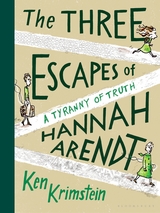 The Three Escapes of Hannah Arendt: A Tyranny of Truth – Ken Krimstein – Bloomsbury – 240 pages – Hardcover – 9781635571882 – $28.00 – September 25, 2018 – ebook versions also available at lower prices.
What a completely cool and unexpected pleasure it was to discover this amazing book! Yes, I had seen Ken Krimstein’s cartoons in the New Yorker, and I have even read a bit of Hannah Arendt’s powerful writing over the years, but neither Ken’s humorous work, nor my limited knowledge of Arendt’s life prepared me for the serial delight of this graphic novel biography of one of the twentieth century’s most important thinkers.
Hannah Arendt is one of those intellectual figures whose reputation obscures her actual story. Her books were highly influential and widely read in the mid and late twentieth century, though I suspect in present times, now are consumed mostly by college students and scholars, as serious political philosophy does not have a broad readership anymore (if it ever did). We know of her mainly through her many famous books, including The Human Condition, On Totalitarianism, and Eichmann in Jerusalem, among her many, many others.
Arendt’s writing on the nature and form of authoritarianism, couched in her direct experience with Hitler’s Germany, and the rise of Stalin after the war, certainly has become increasingly resonant today, for obvious reasons. And with the increase in modern day anti-Semitism, it is difficult to not draw comparisons between the 1930s world she inhabited and our current troubled experiences.
So it is timely to think about Hannah Arendt’s work, and especially to learn how that work was shaped by her extraordinary life and mind. As revealed in this wonderful biography, Hannah Arendt’s story is heroic and rich. The details about her life continually surprise and delight us. The men and women she knew are some of the greatest thinkers and artists of the century, and it is remarkable just how many now-famous people appear in her life. She knew and associated with so many,from philosophers like Heidegger and Jaspers, to political theorists like Walter Benjamin, writers like Mary McCarthy and geniuses like Albert Einstein and Sigmund Freud, and her own writing and thinking have influenced generations of thinkers and writers.
The escapes Krimstein documents so heart wrenchingly in this book were all determinative to the development of her thinking and writing, and shaped her individualistic, powerful thinking about what it means to be an engaged citizen in a modern world in constant strife. Reading this book was inspiring, and I give full credit to Ken Krimstein for bringing Hannah Arendt to life for me in a way I doubt a prose biography could have done.
Ken Krimstein’s cartoons have been published in the New Yorker, Barron’s, The Harvard Business Review, Prospect Magazine, Punch, The National Lampoon, the Wall Street Journal, Narrative Magazine and many others magazines. His writing has been published in The New York Observer’s “New Yorker’s Diary” and a number of humor websites, including McSweeney’s Internet Tendency, Yankee Pot Roast, and Mr. Beller’s Neighborhood.
Ken is also a teacher at De Paul University and The School of the Art Institute of Chicago. You can read more about him, his work, and The Three Escapes at his website here, where you can also see sample pages from the book.
It was a pleasure for me to meet Ken, and I think you will enjoy our conversation just as much as I did.
“Ken Krimstein’s deeply moving graphic memoir about the life and thoughts of philosopher Hannah Arendt is not only about Hannah Arendt. It’s also, through her words, about how to live in the world, the meaning of freedom, the perils of totalitarianism, and our power as human beings to think about things and not just act blindly. Krimstein explains Arendt’s ideas with clarity, wit, and enormous erudition, and they still resonate.” – Roz Chast

Podcast: Play in new window | Download
Justin A. Frank MD: Trump on the Couch: Inside the Mind of the President
October 23, 2018 by David
Filed under Non-Fiction, WritersCast
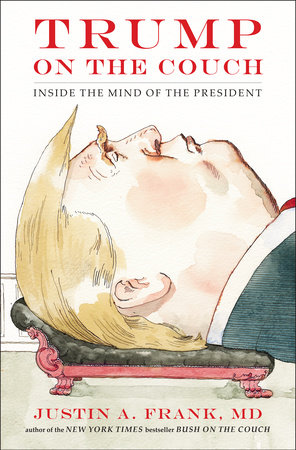 Trump on the Couch: Inside the Mind of the President – Justin A. Frank, MD – Avery – 304 pages – Hardcover – 9780735220324 – $26.00 – September 25, 2018 – ebook editions available at lower cost.
Inside the mind of this president is a scary place to be, as Dr. Justin Frank aptly tells us in this frightening and compelling book. In an interview with the Guardian newspaper, Dr. Frank said: “Yes, we should be scared,” Frank, a clinical professor of psychiatry at George Washington University, told the Guardian. “We have to accept that he is the president and we also have to accept that he’s never going to change because he can’t. Once we accept those things, we can then figure out what to do with our fears.”
Almost everyone I know has thought about the psychology of Donald Trump. So in some ways he might be the most analyzed person in the history of the world. Ironically, that appears to be exactly what he wants. Funny how whether one loves or despises Donald Trump, he wins, because his narcissistic, empty soul requires the full attention of the entire world and still cannot be satisfied.
In this book, like his two previous books on Obama and Bush, Dr. Frank has applied the principles of applied psychoanalysis, which allows him to at least somewhat clearly understand the mind of Donald Trump. While it is true that the American Psychiatric Association’s Goldwater Rule prevents psychiatrists from offering diagnoses on public figures who are not their own patients, Frank has invoked the moral responsibility that compels him to speak out, something which all of us can understand and appreciate. So much is at stake and so much is in the hands of someone who is demonstrably unstable, and as Dr Frank shows in this book, someone who is riddled with pathologies, and quite evidently, deeply disturbed.
From his close study of Trump’s patterns of thought, action, and communication, and an analysis of his personal life story, Dr. Frank uncovers a personality deeply distorted by mental health problems. His work reveals many insights about Trump and his behavior, including some highly disturbing glimpses into his childhood, his family, his business dealings, and Trump’s unique way of literally inventing his own reality.
While most of us can see for ourselves that our president is wildly unhinged, Dr. Frank’s more clinical description and analysis of Trump’s narcissism, misogyny, racism, and untruthfulness are highly useful in helping us to understand more fully the reasons and causes behind Trump’s pathologically disturbed behavior. Whether it can help us prevent him from leading us into disaster is unclear. But this book should be required reading for anyone, supporters and opponents alike. It might also help us to better understand his appeal to those who do find him compelling. At least for me, it made me want to turn off the television and stop giving him the attention he craves. I wish the news media would do the same.
I very much enjoyed the opportunity to talk about this book with Dr. Frank, and to learn so much from a professional analyst.
Read more about the book at the author’s website.
“I’ve known Trump a long time and I have even tried my own hand at psychoanalyzing him on television. But, Dr. Frank has shown a more complete picture inside our 45th President’s mind than I ever dared to consider. Behind all Trump’s tough guy theatrics, his petty cruelties and bloated ego is a tangled knot of pathologies that should terrify us all. Trump on the Couch is a great first step to sizing up the President’s inner demons.”
—Donny Deutsch, Co-Host on MSNBC’s Morning Joe
Podcast: Play in new window | Download
Gordon Ball reading from ’66 Frames
August 28, 2018 by David
Filed under AuthorsVoices
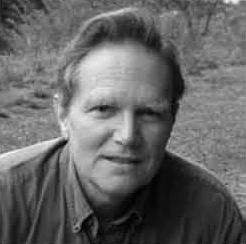 ’66 Frames – Gordon Ball – Coffee House Press – 9781566890823 – paperback – 320 pages – $15.95
Allen Ginsberg, who helped Ball with some of the research for his book, once remarked on Ball’s vantage point:
From city and country communes, underground and avant garde film and photography,
Gordon Ball has been marvelously placed as participant and observer of many
extraordinary art situations.
’66 Frames: A Memoir (Coffee House Press, l999, introduction by Jonas Mekas), is an account of one year in Ball’s life thirty-five years ago, working in avant garde film, immersed in New York’s counterculture. Its readers have responded with enthusiasm, as these comments suggest:
This book made me want to take acid and have sex with lots of people. It also made me want to stay up all night in the company of my genius friends in the mid-sixties in New York’s Lower East Side. It also made me grateful for not being twenty and living in a war-wracked, generation-torn, paranoid world. Gordon Ball writes with compassion and nostalgia about a unique and nearly indescribable epoch.
–Andrei Codrescu
’66 Frames is a beautifully written book which captures the spirit of those times better than any other book I know.
–Filmmaker Stan Brakhage
Gordon Ball’s own website includes a gallery of his photographs of Ginsberg and others.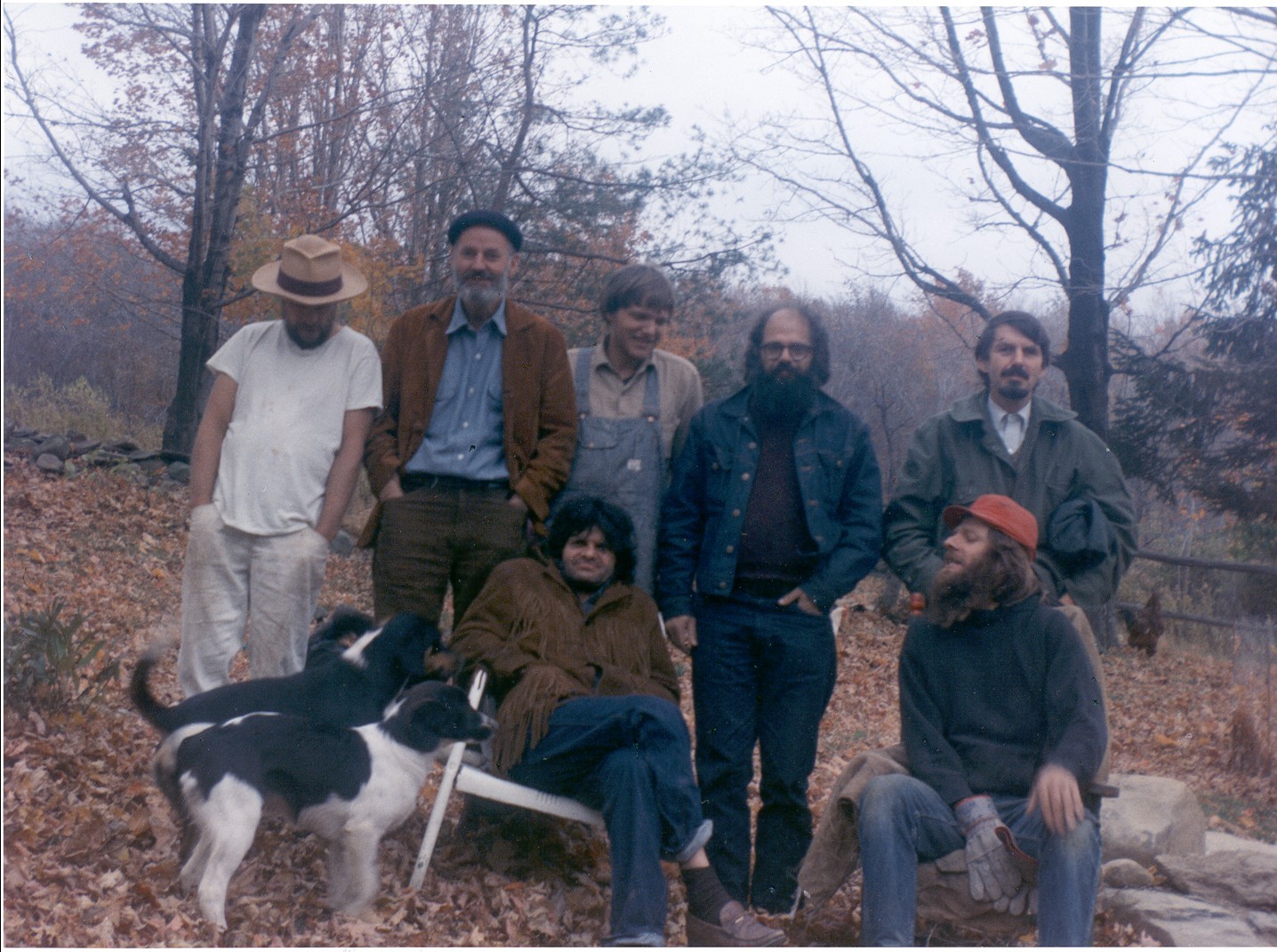
Podcast: Play in new window | Download
Gordon Ball: East Hill Farm: Seasons with Allen Ginsberg
August 28, 2018 by David
Filed under Non-Fiction, WritersCast
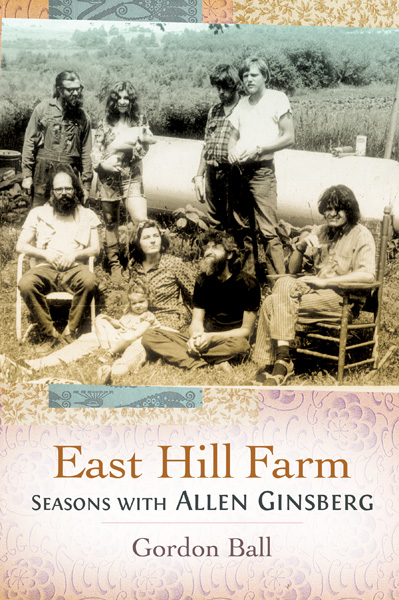 East Hill Farm: Seasons with Allen Ginsberg – Gordon Ball – Counterpoint Press – 416 pages – paperback – 9781619020177 – $18.95 – December 11, 2012 – ebook edition available at lower prices
It’s been a great pleasure for me to be able to interview writer friends and editors about their work for the Writerscast and Publishing Talks podcasts. I first met writer, film-maker and now professor Gordon Ball soon after moving to Chapel Hill, North Carolina at the very end of 1973. I knew almost no one in North Carolina, but in those still counter-cultural days of boomer history, it was relatively easy to make friends, especially within the fairly small community of like-minded poets and writers that laid-back college town oasis attracted.
Gordon Ball was in Chapel Hill for graduate school, after spending several years as the amanuensis and farm manager for Allen Ginsberg at his funky farm refuge in Cherry Valley, New York. How Gordon got to be there, and what happened during his time among the heroes of the Beat Generation and the hippie revolutionists who followed them is the subject of his excellent and enjoyable memoir, East Hill Farm.
Allen Ginsberg was unique, as a poet who became a cultural icon, a political and spiritual leader whose writing has influenced millions of readers. East Hill Farm was his attempt to build a refuge from city life – “a haven for comrades in distress,” especially friends whose lives were being ruined by hard drugs like iconic beat poets Herbert Huncke and Ray Bremser, who both spent time at the farm in the late sixties. Gordon recounts his first hand stories of the refugees who arrived there as well as the many local upstate characters who helped make the dilapidated farm into a livable home and a functioning farm of sorts. This story is emblematic of so many “back to the land” excursions from the sixties, when hippies from the cities and suburbs arrived uninvited in small town farm communities in places like Vermont, Maine, northern California, Oregon and of course, upstate New York.
But he also tells us about his own journey, his family, the loves and losses that he experienced in this heady era when millions of young people all around the world revolted against the constraints of post-War modern capitalism, all trying to find a different way to live. His experiences and those of his compatriots help us understand how that special moment in our history was lived, and perhaps also, why it could not last or lead to the kind of social change its participants believed in and hoped for.
But what a great experience it was. And so much of what happened there will not be lost or forgotten because of this book.
“I couldn’t stop reading East Hill Farm and learning so much of what really went down on that farm in that so crucial period in the lives of the Beats. I visited the farm just twice but wish I had had Ball’s innocent yet so perceptive eye.” —Lawrence Ferlinghetti, author of A Coney Island of Mind.
“In the late 1960s, poet Allen Ginsberg bought an isolated, broken-down farm in upstate New York as a retreat for himself and his worn-out, burned-out friends. Ginsberg hoped to create an Elysium where they could escape from the urban pressures and drug addictions that had laid Kerouac, Corso, Orlovsky, and Huncke so low. Only a masterful story-teller like Gordon Ball could turn a depressing tale of poets at rock bottom into a triumph of the human spirit.”—Bill Morgan, author of I Celebrate Myself: The Somewhat Private Life of Allen Ginsberg
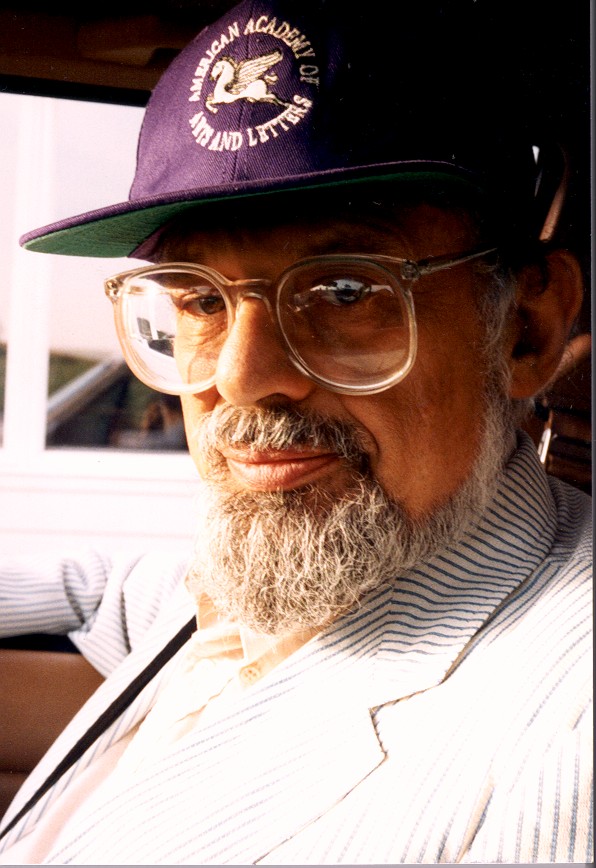
Gordon Ball photographed Allen Ginsberg and the Beat Generation for many years. As well as being exhibited at five conferences on Ginsberg and the Beat Generation, at one-man shows at the Southeastern Center for Contemporary Art and other venues, Ball’s photos have appeared in many publications. Gordon is the author of 66 Frames: A Memoir and a volume of prose poems, Dark Music. He lives in Lexington, Virginia, taught at VMI and now is teaching at Washington and Lee University. Author website here.
East Hill Farm is a charming, warm memoir that will be a compelling read for anyone who wants to know what it was like to live through the sixties with a cast of some amazing characters, many of whom helped create the culture we still experience today. It was great fun for me to reconnect with Gordon after so many years, and to share his experiences and memories through this wonderful book.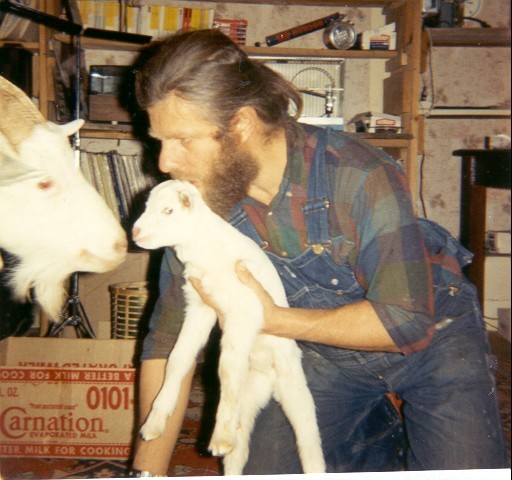
Podcast: Play in new window | Download
Steve Steinberg: Urban Shocker: Silent Hero of Baseball’s Golden Age
April 15, 2018 by David
Filed under Non-Fiction, WritersCast
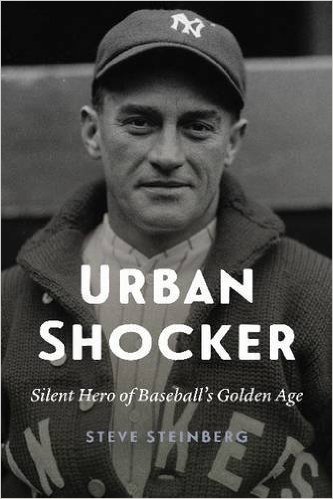 Urban Shocker: Silent Hero of Baseball’s Golden Age – Steve Steinberg – University of Nebraska Press – Hardcover – 9780803295995 – 352 pages – $32.95 – ebook versions available at lower prices – April 1, 2017
Even avid baseball fans may be forgiven for not knowing much about Urban Shocker, one of the best pitchers of major league baseball’s early modern era. It is no surprise that Shocker is not as famous as he could and should be. Shocker’s best years were spent in St. Louis, playing for the perennially mediocre Browns. And his time as a Yankee teammate of Babe Ruth was tragically cut short by ill health. Furthermore, he was a star player at a time when baseball was much more of a local sport – no television to memorialize his achievements – his face and skill as a pitcher is virtually invisible to us, now almost 100 years since his glory years.
Steve Steinberg is a talented baseball historian and writer. His work in uncovering the story of this undeservedly ignored pitcher is admirable. Baseball history can be a rich vein to mine, but it requires talented and dedicated individuals to do the incredibly time consuming work of research, and then to transform those details into a compelling narrative arc. Steinberg succeeds in both respects, and with this fine book, he brings Urban Shocker to life for contemporary readers.
Even if you are not a diehard baseball fan, Shocker’s life reveals a great deal about baseball and its players as part of the culture and daily life of America in the immediate post World War I (Roaring Twenties) era. Baseball players lived much more difficult lives than their modern descendants, it seems. And of course, the business of baseball was very different then – players were tied to their teams for life, and had very little control over their own destinies. While they were paid well compared to the average worker of the day, in relative terms, their paychecks were not usually life changing and most players had to work other jobs during the off seasons.
Little is known of Shocker’s early life, and he did not make it to the big leagues until he was in his early twenties. Like many players of the day, his path to success was not an easy one. And once he reached the majors, playing for the Yankees before their great success years, he was quickly traded away to the St. Louis Browns in 1918. It was not until 1925, after four straight seasons with at least twenty wins for the lowly Browns that Urban was finally traded back to the Yankees. He finally had the opportunity to play in the World Series with the 1926 Yankees.
In the almost mythological 1927 season, often considered to be among best in baseball history, Shocker pitched brilliantly to compile 18 wins against only 6 losses, this at a time when his skills were clearly in decline. Shocker was suffering from a then incurable heart disease that would kill him less than a year later. He kept his illness to himself, and managed to excel as a pitcher using his years of experience to substitute for physical dominance before he finally had to quit the game altogether, surprising the baseball world at the time.
Steinberg has given us a deftly written, detailed and sensitive portrait of a complicated man, whose brilliant baseball career was cut all too short. I enjoyed reading this compelling biography immensely – it brought me back to a period of baseball history I have long been interested in – and I had a great time speaking with author Steinberg about this book and his work in baseball history.
Steve Steinberg is known as a baseball historian of the early 20th century. He was fortunate to have sold a family business, allowing him to explore a new career as a baseball writer. He focuses his work on portraying long-forgotten players, bringing them to the attention of contemporary baseball fans and readers. He is the author or co-author of several books and many articles, including with Lyle Spatz, 1921: The Yankees, the Giants, and the Battle for Baseball Supremacy in New York. Steve’s web site is a wealth of baseball history. He lives in Seattle with his wife, Colleen.
Podcast: Play in new window | Download
Phillip Lopate: A Mother’s Tale
January 15, 2018 by David
Filed under Non-Fiction, WritersCast
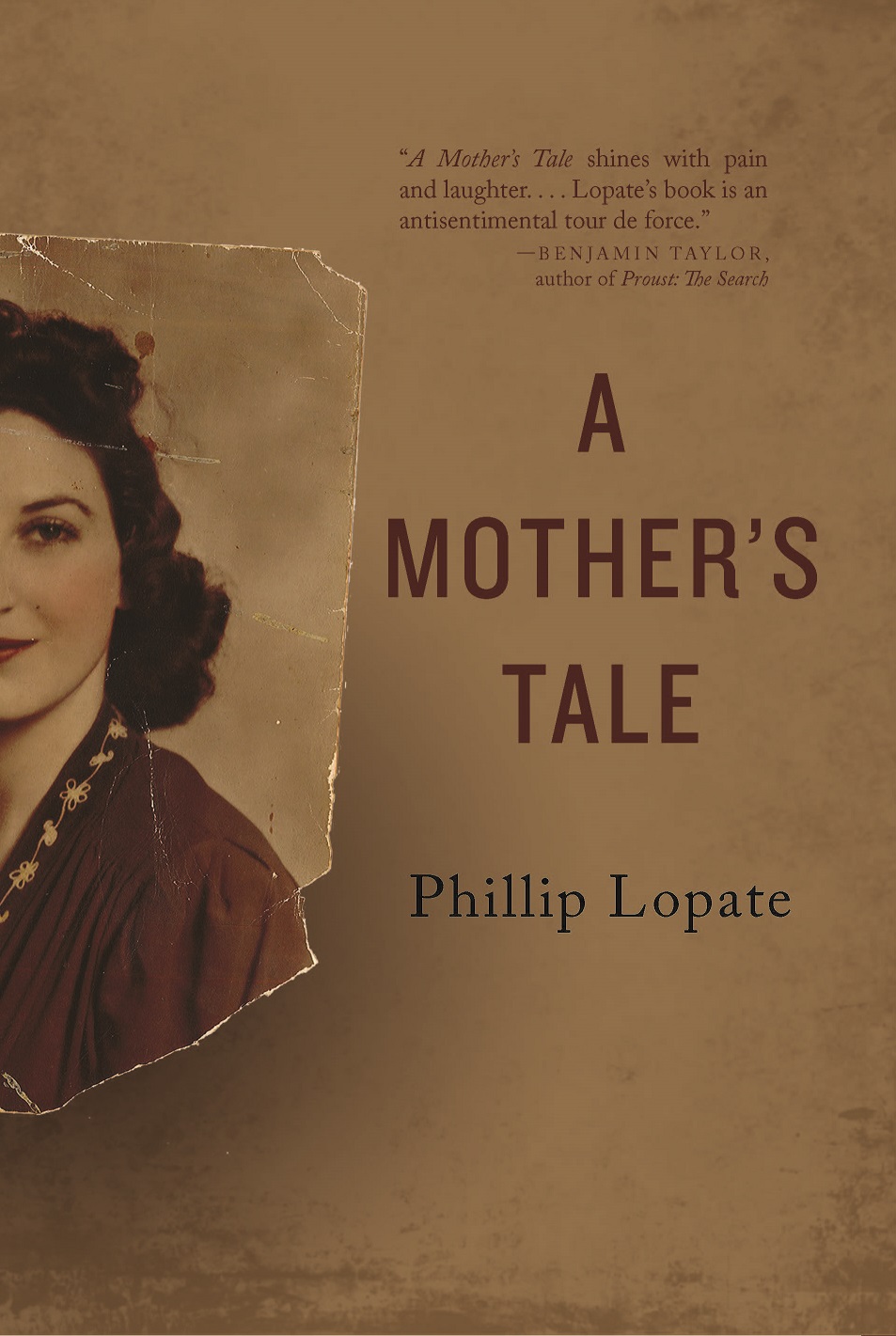 A Mother’s Tale – Phillip Lopate – Mad River Books (Ohio State University Press) – Hardcover – 9780814213315 – 196 pages – $24.95 – ebook versions available at slightly lower prices – January 12, 2017
It might be said that a good memoir is a hard thing to find. It takes a special touch from a writer. The best memoirs have humor and self awareness – one must be selective in choosing what is important to share and what must be omitted, valuable to one’s self but not so much for the reader.
Philip Lopate is a skilled and experienced writer who inherently understands the necessities of writing about self and family. His mother was a complicated person, his family life unusual and full of strange twists and turns that made him and his brother who they are as adults.
In 1984, Lopate convinced his mother, Frances, to allow him to interview her and record the story of her life. Frances was a powerful and strong willed figure. She was orphaned in childhood, married young, and had to make a life for herself without a support system, as a mother. She worked in a number of fields and late in life became an actress and singer. She appeared in television commercials and performed in plays in New York.
She told Philip all her many criticisms of her husband (his father), recounted the details of her affairs and sexual encounters, told him about her experiences with therapy and continuously complained about how the world had mistreated and misunderstood her. Locate set the tapes aside and never listened to them until thirty years later, when his mother had passed away. At that point Lopate was drawn back to the recordings, perhaps wanting to better understand his mother and himself through her confessions.
A Mother’s Tale is essentially then a three-way conversation between Lopate today, his mother, and the younger self he hears talking to her on the tapes.
Lopate seeks to better understand and appreciate his mother and the husband she ostensibly despised, but could never leave. He cannot share her self-pity or the harping on blame assessed to everyone but herself. But through it all, he comes to see her anew, now as a grown man, recognizing more clearly the survivor, her powerful appetite for love and for life, and the ways he finally found to express his love for her.
It’s a brave thing to expose oneself and one’s family in such a personal piece of writing. Lopate has succeeded with this short memoir, giving us much to savor, appreciate, and ponder about ourselves and our own family histories. This is a terrific book.
“With his signature insight an candor, Lopate reveals his mother for the complicated and troubled character she was, and himself–her darling, her confessor, her victim, her judge–as the child behind the writer he was to become. I could not put it down.” — Lynn Freed
Philip Lopate is the author of a number of well respected memoirs and personal essays, as well as two novellas, and is also the editor of several important anthologies. He has won a variety of awards for his writing, as well as for his work as a teacher. He is currently a professor at Columbia University’s School of the Arts, where he teaches nonfiction writing.
Philip Lopate is a wonderful conversationalist and an easy person to interview. It was a tremendous pleasure for me to speak with him about this book and his intriguing mother.
Author website here. Author photo by Sally Gall.
Podcast: Play in new window | Download
Thomas McNamee: The Inner Life of Cats
November 12, 2017 by David
Filed under Non-Fiction, WritersCast
 The Inner Life of Cats: The Science and Secrets of Our Mysterious Feline Companions – Thomas McNamee – Hachette Books – Hardcover – 9780316262873 – 288 pages – $27.00 – ebook versions available at lower prices – March 28, 2017
What a fun read! Thomas McNamee’s story begins with the story of finding his own cat, Augusta, and that story becomes the framework for a comprehensive understanding of how cats develop both physiologically and psychologically, and of course how their owners do as well.
McNamee recounts the evolution of cats and much more as he tells the story of his own cat’s adventures. He talks to all kinds of experts, animals behaviorists, activists and researchers to help his readers understand these strange and different animals who have lived with and among humans for so long. His book is well grounded in every way.
The author has strong opinions about these animals. He is clearly someone who loves cats and wants to improve the way other cat lovers live with and treat their pets. He aims for them to have happier and better relationships with them, and I suspect that reading this book will in fact help make that happen for them.
While I am decidedly not a cat person, Tom McNamee is such a fine writer and storyteller, I found this book impossible to put down. I am guessing true cat loving humans will as well.
McNamee is the author of several successful books, including The Grizzly Bear; Nature First: Keeping Our Wild Places and Wild Creatures Wild; a novel, A Story of Deep Delight; The Return of the Wolf to Yellowstone; Alice Waters and Chez Panisse: The Romantic, Impractical, Often Eccentric, Ultimately Brilliant Making of a Food Revolution; The Man Who Changed the Way We Eat: Craig Claiborne and the American Food Renaissance; and most recently, The Killing of the Wolf Number Ten.
McNamee also wrote the PBS documentary Alexander Calder, which won a Peabody Award and an Emmy. In 2016, he was awarded a Guggenheim Fellowship to work on The Inner Life of Cats.
He was a board member and chairman of the Greater Yellowstone Coalition. He has also served as a board member of Rare Conservation and the Center for Urban Education about Sustainable Agriculture. After two decades in New York City, he then lived on a cattle ranch in Montana for eight years. He now lives and writes in San Francisco.
Thomas McNamee’s website is here.
“The Inner Life of Cats is filled with shining prose, moments of sheer cat joy–and intimate, careful scientific observation. Thomas McNamee’s naturalist’s eye, combined with his humor and heart, bring the always wild, yet domesticated cat into delightful, insightful focus.”
―Cat Warren, New York Times bestselling author of What the Dog Knows
Talking with Tom about this book was a true pleasure. Full disclosure: I published his excellent book, The Killing of Wolf Number Ten (a great book – it is the story of the return of wolves to Yellowstone National Park).
Podcast: Play in new window | Download
Elizabeth Farnsworth: A Train through Time – A Life, Real and Imagined
October 15, 2017 by David
Filed under Fiction, WritersCast
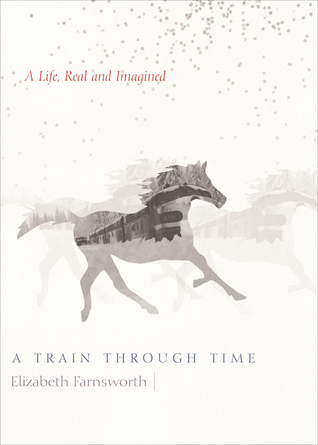 A Train through Time: A Life, Real and Imagined – Elizabeth Farnsworth – Counterpoint – Hardcover – $25.00 – 160 pages – February 14, 2017 – ebook versions available at lower prices
“I began this book with a sense of discovery and finished it in a state of exaltation. Along the way it broke my heart. It has been a long time since I read a book so moving, plain spoken and beautiful. The instant I finished it, I went back to the beginning and started in again.” ―Michael Chabon
This slim – and gorgeously produced – memoir is one of the most striking and memorable books I have read recently. I have to simply echo what Chabon said about it – Elizabeth Farnsworth has written something very special, a book that does not fit easily into our conception of book categories – and that is a good thing. Her book is an exploration of childhood memories of loss and of family life that woven together with more recent stories of her work as a journalist and documentary film maker, are built into a fictional structure. The book forms an almost dream state to carry the author (and the reader) through her story.
Farnsworth interrogates her own understanding of events, real and imagined, to understand the arc of her life. It is a truly magical journey of self and psyche.
A Train through Time is illustrated with the remarkable photo art of Mark Serr, whose works contribute to the ethos and sensibility of the book, as well as providing us with a beautiful and dreamy cover image.
Of course it helps that Farnsworth is a fine writer and a terrific storyteller. I was deeply moved by this book, and really enjoyed having the opportunity to speak with the Ms. Farnsworth about her story, about trains, journeys, and life in general. As an experienced television personality, she is very comfortable in recorded conversation and we had a great talk together, which I hope you will enjoy.
Elizabeth Farnsworth is a filmmaker and a foreign correspondent. For many years, she was the chief correspondent on the PBS NewsHour hosted by Jim Lehrer. During her career, she traveled widely to report on stories in Cambodia, Vietnam, Chile, Haiti, Iraq, and Iran and many other places. Farnsworth grew up in Topeka, Kansas, has a B.A. from Middlebury College, an M.A. in history from Stanford University and now lives in Berkeley, California.
Her documentaries include The Judge and the General (2008) and The Gospel and Guatemala (1983).
You can learn more about the author and A Train Through Time at the Counterpoint website here.

Podcast: Play in new window | Download