
Thomas W. Gilbert: Death in the Strike Zone
June 7, 2026 by David
Filed under Non-Fiction, WritersCast
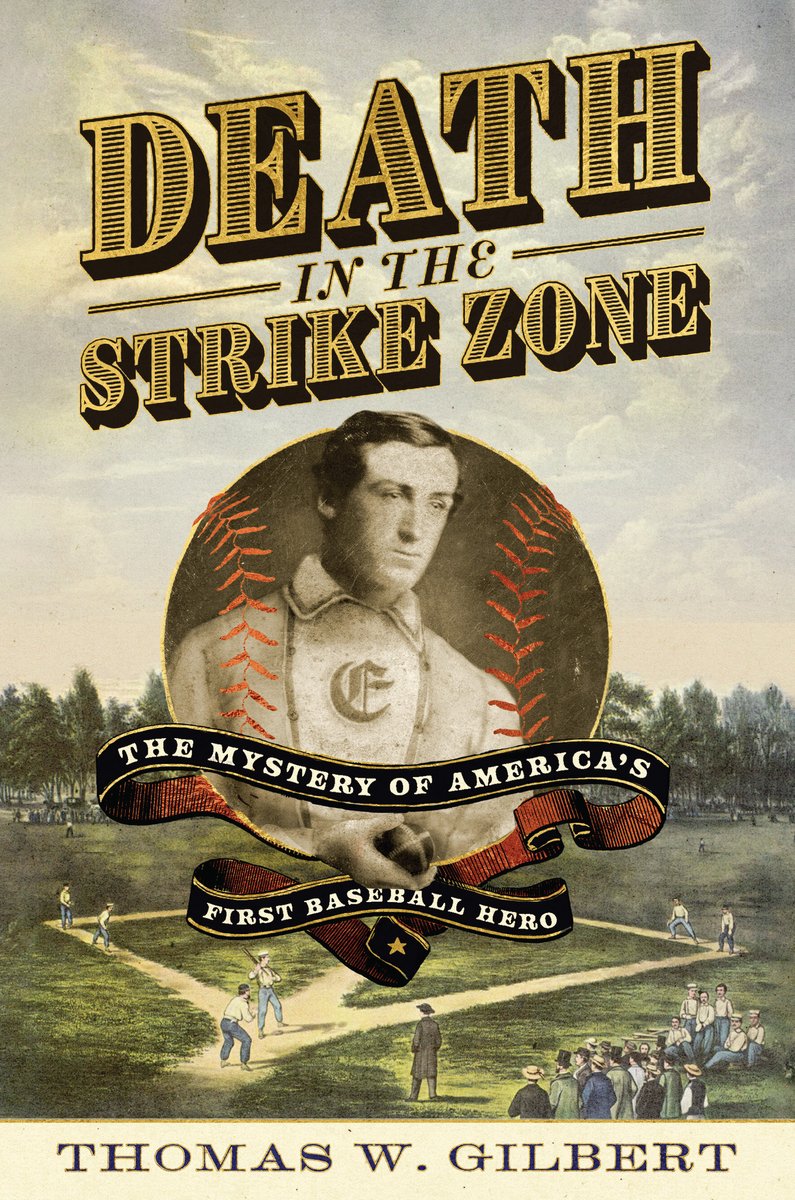 Death in the Strike Zone: The Mystery of America’s First Baseball Hero — Thomas W. Gilbert — David Godine — Hardcover — 978-1-56792-759-7 — 192 pages — $27.95 — March 24th, 2026 – ebook edition available at lower cost
As most of my listeners probably know by now, I love baseball and I really love books about baseball. At one time I thought I knew alot about baseball history, but I have come to realize that I am a rank amateur in a world where there are true baseball historians at work on almost any baseball related subject one could imagine.
I loved reading Tom Gilbert’s wonderful book about James Creighton, arguably the first true baseball star, whose brief career took place in the heated era of early baseball in New York City. Pre-Civil War baseball is really not the same game as the one we play today. It was a precursor even to the game played in the late 19th century and early twentieth century, an era that at least some rabid fans today know something about. But baseball as it was played in the 1850s and 1860s was far different, and perhaps no more so than how pitching was done.
Reading this vividly written book, we learn about an era that is both strangely foreign and similar to our own in many ways. Baseball this early was still being defined by its players, and the game was emerging from pure amateur club sport played only in the big eastern cities, showing signs of popularity that would enable baseball to become the dominant sport in the entire country in less than 50 years.
Creighton was his era’s Babe Ruth and Shohei Ohtani, someone whose skills and manner of playing changed the game completely. What I learned from Tom Gilbert is that in this early time, pitching was much more like today’s slow pitch softball than what we recognize as hardball pitching today. The mount was much closer to home plate, and there were no balls and strikes – hitters just waited for a pitch “served” to them that they could hit, and it was fielding and running that made the game interesting, not today’s “inside game” where the pitcher and hitter define so much of what will happen.
Even if you don’t care as much about baseball as I do, Gilbert’s narrative weaves together the history of nineteenth century America into his narrative in a way that will interest many in the story of American culture.
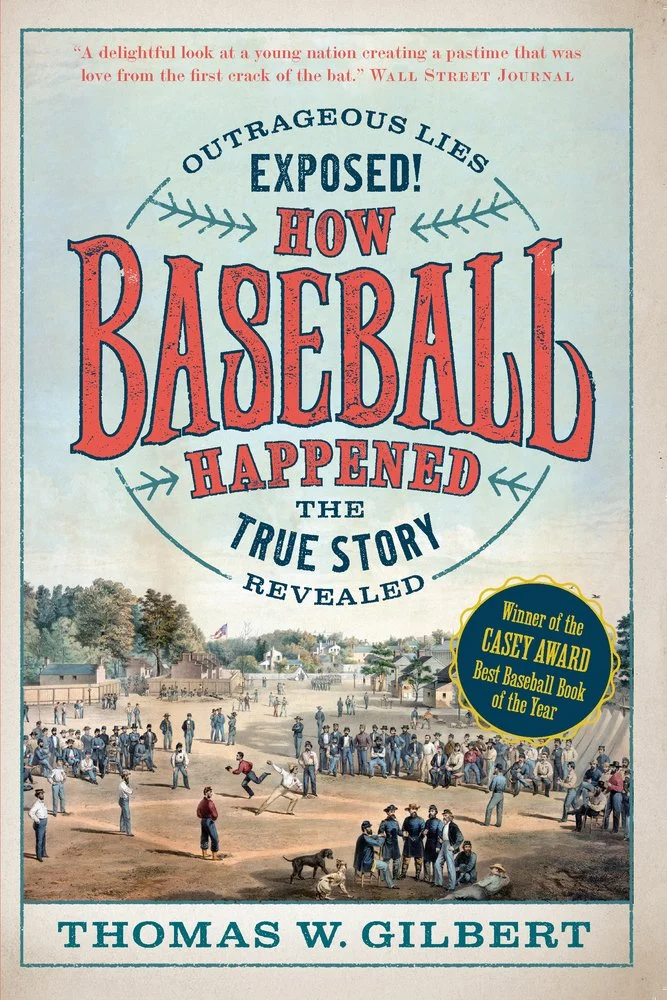
Thomas W. Gilbert is also the author of How Baseball Happened: Outrageous Lies Exposed, The Truth Revealed, Baseball and the Color Line, Roberto Clemente, and Playing First. He grew up in Connecticut and lives in Brooklyn, not far from where James Creighton played and is buried.
We had a great conversation I hope you will enjoy as much as I did.

Podcast: Play in new window | Download
Peter Quinn: Banished Children of Eve: A Novel of Civil War New York
December 10, 2021 by David
Filed under Fiction, WritersCast
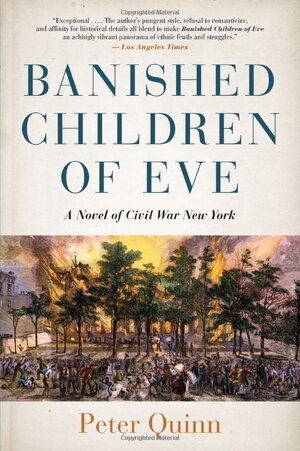 Banished Children of Eve: A Novel of Civil War New York – Peter Quinn – Empire State Editions (Fordham University Press) – 978-08232-9408-4 – 612 pages – paperback – $17.95 (eBook version is not available for this title)
Historical novels based in New York City have always appealed to me. I am not sure why. Maybe it has something to do with the time I spent with my grandparents, who lived in New York City, took me frequently to the Museum of the City of New York, and showed me many of the historical sites of the city. Maybe it is simply because so much of American history is the history of that great city.
I picked this book to read while browsing a bookstore for the first time since the pandemic began. Book discovery is a wonderful thing, and something many of us have missed. There are occasions when a book seems to jump off the shelf and into your hands, drawn there by some mysterious bookstore magic. Sometimes those discoveries are serendipitous and that was definitely the case with this novel. It was not the only book I bought that day, but it jumped my queue and I devoured the book in a way that reminded me of my youthful nights under the covers reading by flashlight.
Banished Children of Eve is one of those longish historical novels that is a joy to immerse oneself in. It is a great story about a dramatic time and place, with terrific well-drawn characters and a great story unfolding in multiple voices. And even the minor characters are brought to life by Quinn’s sympathetic descriptions.
The story takes place in 1863 when the Civil War is its third bloody year and the Union, having exhausted its volunteer army, has been forced to impose the first military draft. In New York City, where this book is set, that is a fateful decision, one that will set off the worst urban riot in American history. The cast of characters created by author Quinn represents every element of New York’s cultural community including an Irish-American hustler, a dishonest Yankee stockbroker, a young immigrant serving girl, a beautiful mixed-race actress and her white lover (a struggling minstrel). Surrounding these main characters are a number of historical, real-life characters we recognize, including the Union General George McClellan, Archbishop “Dagger John” Hughes and even the songwriter Stephen Foster.
All come together in the emerging disaster of the Draft Riots, bringing to life a period in American history that is certainly less well-known to most Americans than the more often told stories of battles and national politics of our war-torn country.
William Kennedy’s description of Peter Quinn pretty much sums up how I feel about this book: “Peter Quinn takes history by the throat and makes it confess.” That is perhaps one of the greatest book blurbs ever, by the way.
Quinn is a natural storyteller, and if you are not familiar with this incredible period in American history, I recommend you get a copy of this book immediately and dive in. You will be amazed and thrilled to read this book.
Talking to Peter was great fun for me. We certainly could have gone on for hours. I hope you enjoy our conversation as much as I did.
Quinn was the chief speechwriter for Time, Inc. and retired as corporate editorial director for Time Warner at the end of 2007. He received a B.A. from Manhattan College, an M.A. in history from Fordham University and completed all the requirements for a doctorate except the dissertation. He was awarded a Ph.D., honoris causa, by Manhattan College in 2002.
In 1979, Quinn was appointed to the staff of Governor Hugh Carey as chief speechwriter. He continued in that role under Governor Mario Cuomo.
Originally published in 1994, Banished Children of Eve won a 1995 American Book Award. Hour of the Cat, set in Berlin and New York on the eve of WWII, was published in 2005, a nonfiction collection, Looking for Jimmy: In Search of Irish America was published in February 2007. His third novel, The Man Who Never Returned is based on the still-unsolved 1930 disappearance of NYS Supreme Court Justice Joseph Force Crater, published in 2010.
Quinn co-wrote the script for the 1987 television documentary McSorley’s New York, for which he won an Emmy. He appeared in several PBS documentaries, including The Irish in America, New York: A Documentary Film, and The Life and Times of Stephen Foster, as well as the dramatic film, The Passion of Sister Rose. Quinn was an advisor on Martin Scorcese’s film Gangs of New York, the story of which precedes and in some ways underpins Banished Children of Eve.
Quinn was the editor of The Recorder: The Journal of the American Irish Historical Society from 1986 to 1993 and has published articles and reviews in the New York Times, Commonweal, America, American Heritage, the Catholic Historical Review, the Philadelphia Enquirer, the L.A. Times, Eiré-Ireland, and other newspapers and journals.
Quinn is also president and co-founder of Irish American Writers & Artists.
You can buy Banished Children of Eve at Bookshop.org
Podcast: Play in new window | Download