
Todd Goddard: Devouring Time: Jim Harrison a Writer’s Life
February 1, 2026 by David
Filed under Fiction, Non-Fiction, WritersCast
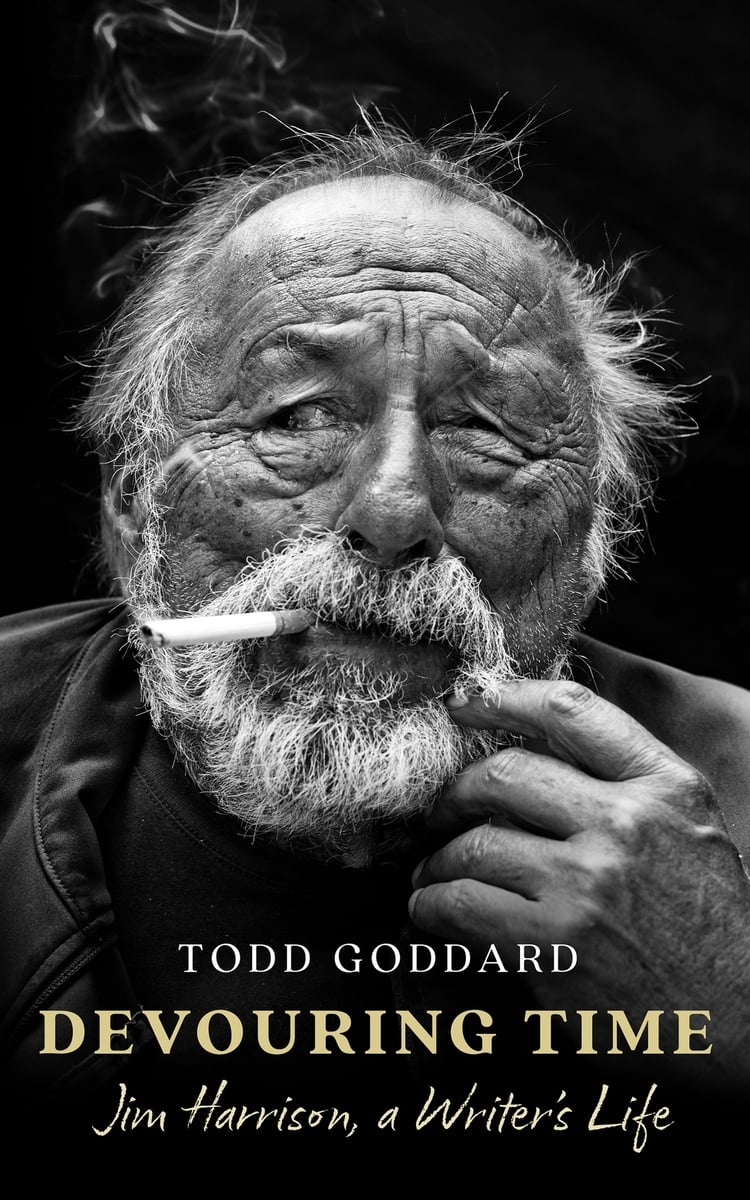 Devouring Time: Jim Harrison, a Writer’s Life — Todd Goddard — 9781799902362 – Blackstone Publishing — Hardcover — 558 pages — $29.99 — November 4, 2025
Jim Harrison was for so many readers – and other writers – one of the central voices of American literature for the last half century. When Harrison began writing, it was as a poet, and most readers came to his fiction and nonfiction much later. It was the novels and many novellas that drew large numbers of readers to him, while his first hand style nonfiction writing about food and his many adventures introduced him to a completely different audience who in many case, I am sure, also read his fiction. And then there was the film writing and the stories of fishing, carousing and gourmand like intake of food, alchohol, and drugs with friends like Thomas McGuane, Peter Matthiessen, Jimmy Buffett, and Jack Nicholson in Key West, Montana and Hollywood. Harrison became more than a writer, but also a publicly imagined character much like Ernest Hemingway and F. Scott Fitzgerald, whose persona became entwined with his writing and made him that much more attractive to some of his readers.
His output as a writer was amazing: poetry, novels, novellas, short stories, magazine nonfiction, film scripts. His appetite for life was immense. His friendships were legendary and he was loved by many whose lives he touched. Fittingly, he died alone while in the midst of writing a poem.
In Devouring Time, Todd Goddard presents a meaningful account of this writer’s life, from beginning to end, including much about his persona that many readers could not have otherwise known. I’ve read much of Jim Harrison’s writing, and knew more than a little about his life. But I learned much more from this book, feeling after reading it that I understood Harrison more clearly both as a writer and a person. This is not a celebratory paean to someone’s hero, or the work of a starry eyed fan. Nor is it a reductionist scholarly account. This book is a carefully constructed narrative worthy of the subject’s complicated, sometimes very painful, but always meaningful life. Goddard refuses to turn away from Harrison as a human being whose life included physical and emotional challenges, who suffered, who lived a full life also of joy and beauty, and despite his foibles, his accomplishments were immense and lasting.
Jim Harrison was born in Michigan in 1937 and died Patagonia, Arizona in 2016. He wrote twenty-one books of fiction and fourteen books of poetry that influenced many other writers of all kinds and won him legions of readers. Harrison helped shape the course of contemporary American literature, revitalizing in particular the novella, a form he mastered and reinvigorated.
Though it was his fiction, nonfiction, and film writing that made him famous (and by which he made his living), it was always poetry that he loved most, and while he was a thoroughly social writer who enjoyed the company of many friends (and lovers), he was simultaneously a private person who cherished remoteness, the singularity of the wilderness, and solitude, and also the company of his wife and children at home.
Todd Goddard conducted over a hundred interviews and had full access to Harrison’s collected papers, as well as the cooperation of Harrison’s family to create this fully formed literary biography of one of our most important writers of the last half century.
I very much enjoyed the opportunity to speak with Todd. We talked about Harrison, of course, but also about the art of biography and the process of writing a book with so much depth of attention and detail. Whether you are a reader of Jim Harrison’s poetry or prose, this biography will capture your attention and in all likelihood, lead you to want to read further in Harrison’s extensive body of work.
“Todd Goddard tells the story of this bon vivant, outdoorsman, hellion, and great poet from his ancestors to his end with grace, momentum, generosity, and insight…and what a great American life it was, wreckage, glory, gifts, and ALL.”—Rebecca Solnit, author of Orwell’s Roses
Calendars
Back in the blue chair in front of the green studio
another year has passed, or so they say, but calendars lie.
They’re a kind of cosmic business machine like
their cousin clocks but break down at inoppormne times.
Fifty years ago I learned to jump off the calendar
but I kept getting drawn back on for reasons
of greed and my imperishable stupidity.
Of late I’ve escaped those fatal squares
with their razor-sharp numbers for longer and longer.
I had to become the moving water I already am,
falling back into the human shape in order
not to frighten my children, grandchildren, dogs and friends.
Our old cat doesn’t care. He laps the water where my face used to be.
from IN SEARCH OF SMALL GODS, Copper Canyon Press, 2010
Podcast: Play in new window | Download
John Oakes: The Fast: The History, Science, Philosophy, and Promise of Doing Without
March 2, 2024 by David
Filed under Non-Fiction, WritersCast
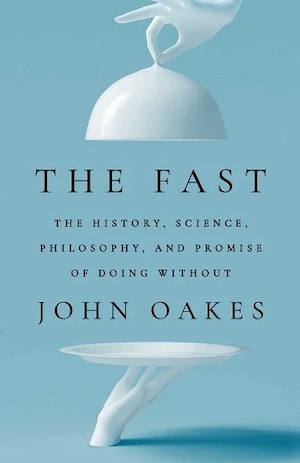 The Fast: The History, Science, Philosophy, and Promise of Doing Without—John Oakes—Avid Reader Press / Simon & Schuster—Hardcover —9781668017418—320 pages—$30—February 13, 2024—ebook versions available at lower prices
If you’re expecting to find a “how to guide to fasting” you will have to look elsewhere. John Oakes is far too good a writer and thinker to spend his time writing something simple like a guide book or even a “rah rah” tome aimed at encouraging you to take up the idea of “intermittent fasting” for yourselves. You might decide to try it out after reading The Fast, but that’s not his purpose and not why you should want to read this book. If you are already engaged in fasting, you should read this book. Perhaps it will be most especially useful during the meditative moments while you are in the midst of your own fast.
Oakes is more interested in a deeper approach to this practice, giving it historicity and enabling us to explore for ourselves how denial of a core bodily function can alter consciousness and help us better understand ourselves. This kind of antidote to the habits of modern life does have an appeal to many of us, but even if you are not going to be a practitioner, you will find yourself captivated, as he is, by the science, history, philosophy and spiritual background of fasting and the denial of physical needs. For Oakes, the ideas and the connection to human spirituality are as important as the specific practices themselves. I’m glad of that, as it makes reading this book that much more rewarding to engage with.
I will also note that Oakes, who has been an editor and publisher for many years, is a really terrific writer and therefore you can read this book for the pleasure good writing affords. As I am sure many of you who listen to this podcast have noticed, there are a lot of badly written books out there and no one wants to spend their limited time reading them. Given the vast number of choices of what to read, it is a particular joy to discover a really good writer. Bravo Oakes for spending a lifetime learning how to write, and bravo Avid Reader Press for publishing this book. I hope you will consider reading it yourself after you listen to our conversation here. Whether you decide to fast or not. For myself, much as I like this book, I am happier eating than not, even if it is an indication of my generally shallow approach to spirituality.
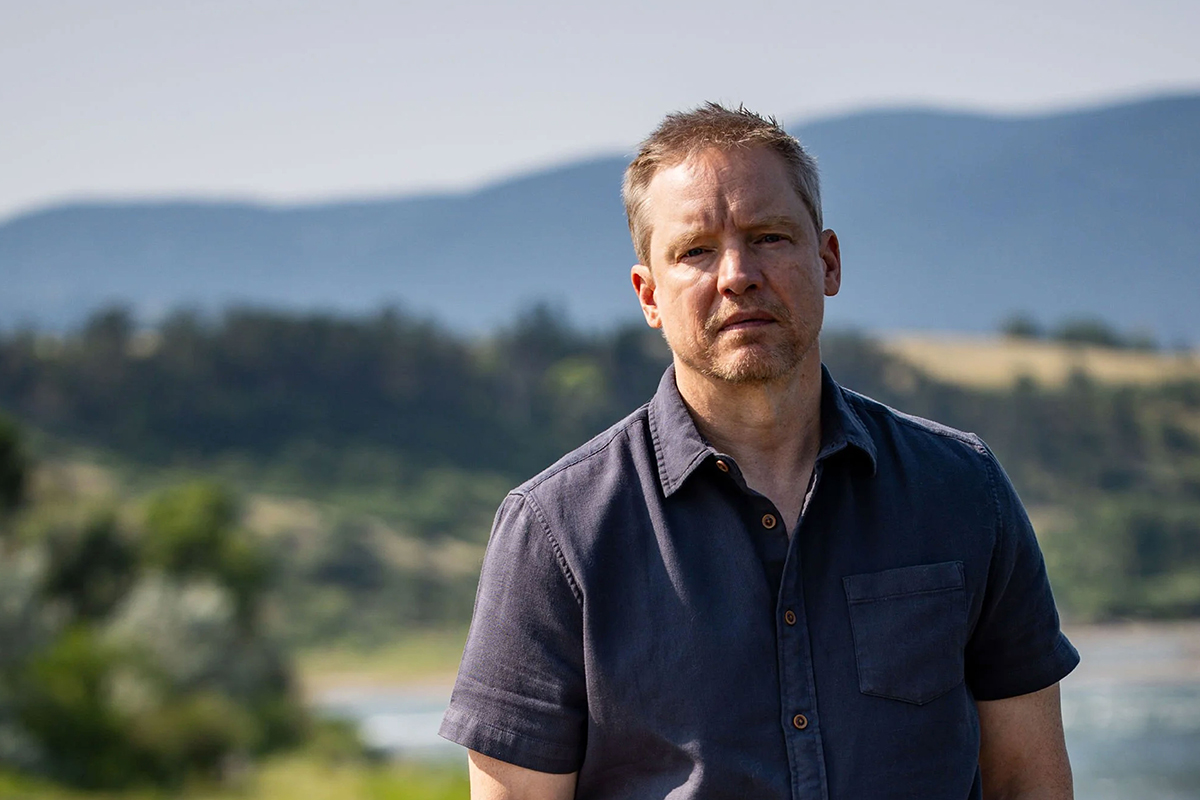
I’ve known John Oakes for a number of years through our mutual involvement in independent publishing. He is currently the publisher of The Evergreen Review. He is also editor-at-large for OR Books, which he cofounded in 2009. OR has been a singularly contrarian publisher for many years, built to demonstrate an alternative approach to traditional reliance on a certain popular online bookseller. Oakes has written for a variety of publications and The Fast is his first book.
We had alot of fun talking together about John’s book. Enjoy…

Podcast: Play in new window | Download