
Shirley C. Strum: Echoes of Our Origins: Baboons, Humans, and Nature
January 8, 2026 by David
Filed under Non-Fiction, WritersCast
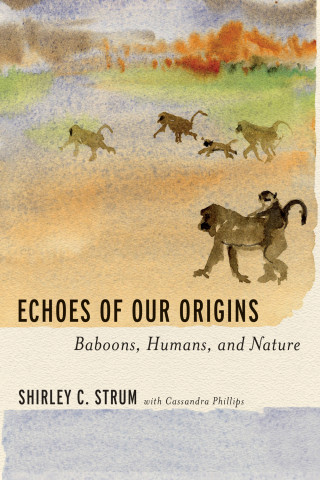 Echoes of Our Origins: Baboons, Humans, and Nature — Shirley C. Strum, with Cassandra Phillips — Johns Hopkins University Press — Hardcover — 978-1-4214-5203-6 — 376 pages — $32.95 — September 9, 2025 — ebook edition available.
This book was a fantastic discovery for me. I consider myself fairly well read; I’ve studied anthropology extensively and I even briefly went to graduate school to study biology, but my knowledge of primates is woefully poor. Shirley’s book was a great introduction for me to one part of a much wider field, and got me excited and engaged with baboons, who turn out to be incredibly interesting animals, and of course connect us not only to issues of human evolution, but also historical and modern ecology, issues of human/animal interactions, and human responsibilities in relation to other animals, especially primates.
I feel like I learned more from this book than almost anything I have read in the past year. Shirley Strum’s story of her fifty years studying baboons is completely compelling.
Her baboon story started in 1972, when as a graduate student, Strum traveled to Kenya to study the origins of human aggression by observing baboons. Her earliest discoveries completely changed the scientific study of baboons, and many long-held assumptions about primate behavior.
Living closely with a number of different populations of baboons over the past half century, and closely observing their lives, Strum has learned more than any other human about baboons’ complex strategies of negotiation, collaboration, and resilience. And through her work, Strum has had to deal with an array of challenges – not just within her field itself, but in the changing ecology and landscape of Africa, as more people have taken over former baboon (and many other animals’) territories, creating new forms of human/animal conflicts, and changing the evolution of baboon society itself.
In addition to illustrating the incredibly interesting lives of baboons, Strum’s experiences tell us a great deal about how human science works, and the challenges that we face in trying to deal with the massive effects of the anthropocene on our fellow beings in the world. I know it’s simplistic to say that baboons and other primates have a lot to teach homo sapiens about how to live cooperatively together, but I do think that understanding more about primate life can in fact teach us a great deal about ourselves, if only we can begin to see that we humans are not at the top of a hierarchy that makes us “better than” or “smarter than” our evolutionary cohort.
Echoes of Our Origins combines natural history, adventure, memoir, feminism and like some of the its best antecedents in nature writing, asks us to think about and empathize with the natural world in previously unfamiliar ways.
I hope you enjoy our wide-ranging conversation as much as I did. While it is doubtful that I will ever get to Africa to see baboons in the wild for myself, Echoes has given me an unmatched opportunity to imagine these incredible animals.
I’ve been recommending this book to anyone interested in humanity, ecology, our history and our future.
Dr. Shirley C. Strum is a Professor of Anthropology and a Professor of the Graduate Division, School of Social Sciences, at the University of California, San Diego, and Director of the Uaso Ngiro Baboon Project in Kenya. Her first book was Almost Human: A Journey into the World of Baboons.
More about Dr. Shirley C. Strum here.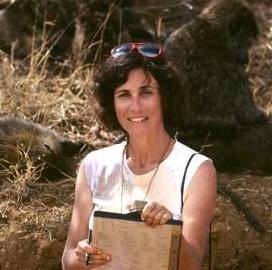
Podcast: Play in new window | Download
Publishing Talks: Interview with Arthur Attwell
February 2, 2021 by David
Filed under Ebooks and Digital Publishing, PublishingTalks, Technology
 Publishing Talks began as a series of conversations with book industry professionals and others involved in media and technology, mostly talking about the future of publishing, books, and culture. I’ve spent time talking with people in the book industry about how publishing is evolving in the context of technology, culture, and economics.
Some time back, this series broadened to include conversations that go beyond the future of publishing. In an effort to document the literary world, I’ve talked with a variety of editors, publishers and others who have been innovators and leaders in independent publishing in the past and into the present.
These conversations have been inspirational to me on many levels. I have gotten to speak with visionaries and entrepreneurs, as well as editors and publishers who have influenced and changed contemporary literature and culture.
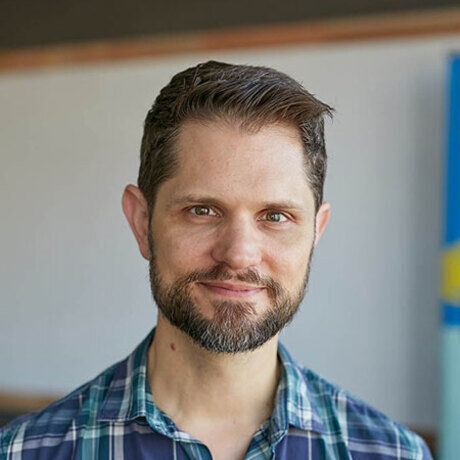
Today’s guest is another such special individual. Arthur Attwell, who lives in Capetown, South Africa, got his start in publishing working for Oxford University Press as an editor. Impatient with the inefficiencies of publishing, he left to start up his current venture with some collaborators, Electric Book Works, which has been building books since 2006 that are active in multiple formats and versions, from beautifully produced print books to well fashioned ebooks to websites that express the book form in new ways.
In addition to the work he has done with Electric Book Works, this energetic entrepreneur has co-created an impactful health care information project, Bettercare, which has created and distributed healthcare learning materials to thousands of practitioners and consumers all over Africa. Although this project, entirely volunteer run, has had to cut back on its activities because of the pandemic, its impact continues with part timers and reduced capabilities.
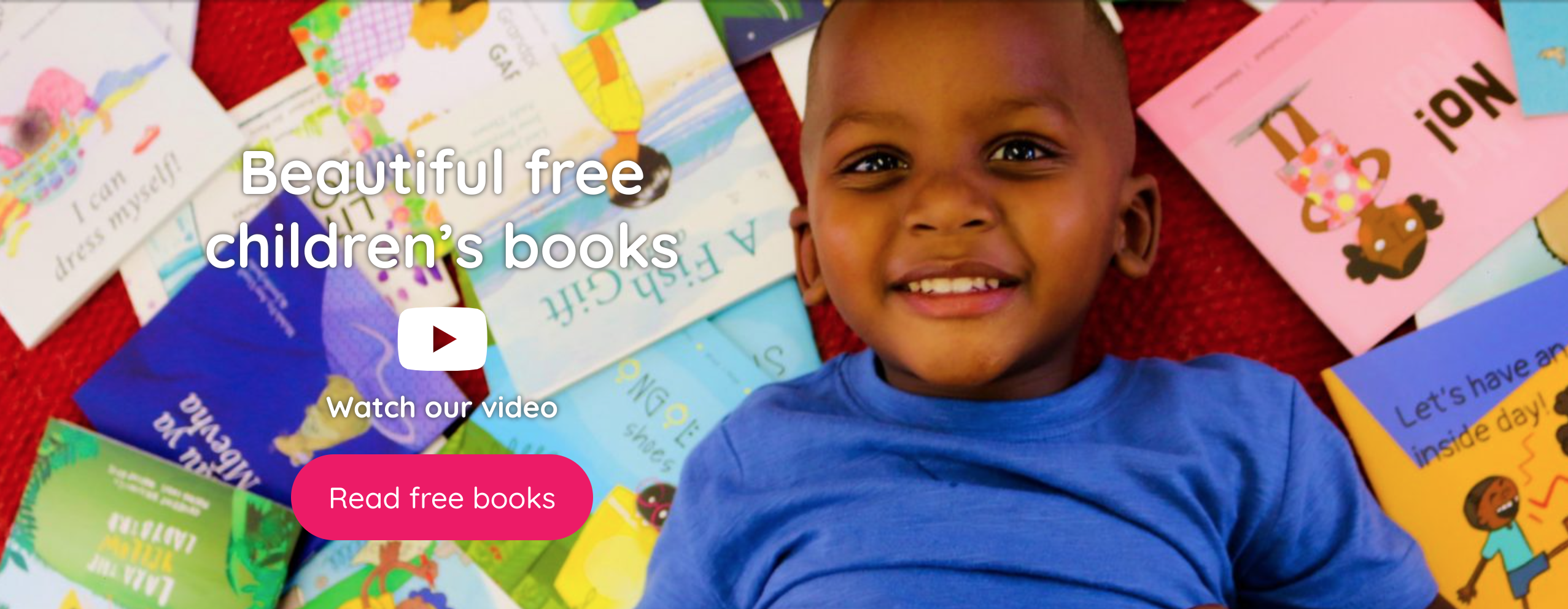
Perhaps the most exciting efforts I have learned about recently is yet another Attwell project, Book Dash. Arthur and his partners created (and have since carefully refined) a process that assembles teams of book professionals to create and publish children’s books, and which also the raises money and support needed for the printing and distribution of thousands of books across Africa, with the stated goal that every child should own 100 books by the time they are five years old! The Book Dash process was built as an intensive one day effort, gathering teams in person, but has quickly adapted to a virtual model, enabling contributors to participate from multiple physical locations. They have made some really terrific books using this process and Book Dash has now distributed over one million books to children in Africa.
With the time difference between us, arranging this talk required bit of organizing, but we were able to speak recently by Skype. My original goal was simply to give Arthur an opportunity to talk about Book Dash. But we ended up having a much wider conversation on a range of topics, including distributed print on demand printing, a dream concept we both have explored, and much more. I suspect we will talk further in the necessary follow up conversation I hope to have with him as there are so many exciting ideas to discuss.
For now, I hope you will enjoy listening to Arthur Attwell as much as I did.
Arthur’s “On Transit” Talk


Podcast: Play in new window | Download
Kwei Quartey – The Wife of the Gods
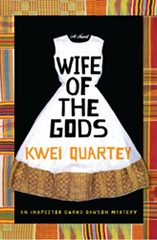 978-1400067596 (Hardcover)
Random House $24.00
Dr. Kwei Quartey is medical doctor, born in Ghana and raised by an African American mother and a Ghanian father. He has lived and practiced medicine in California (where he is the lead physician for an urgent care clinic) for a number of years; he wanted to be a writer since he was a young boy and writes in the morning before going to work. Writerscast host David Wilk interviewed Kwei during a recent visit to New York where he was appearing at Book Expo America. Dr. Quartey talks about his writing, the background for his new novel, a complicated and beautifully written mystery set in contemporary Ghana. Wilk and Quartey explore many aspects of the writing life as it has emerged for this first time novelist. Wife of the Gods is an impressive debut by a new talent, and as the first in a series based on his compelling main character, Inspector Darko Dawson. This interview should be an equally compelling introduction to the author and his work for many readers.
Podcast: Play in new window | Download