
Karl Marlantes: Deep River, a Novel
November 19, 2019 by David
Filed under Fiction, WritersCast
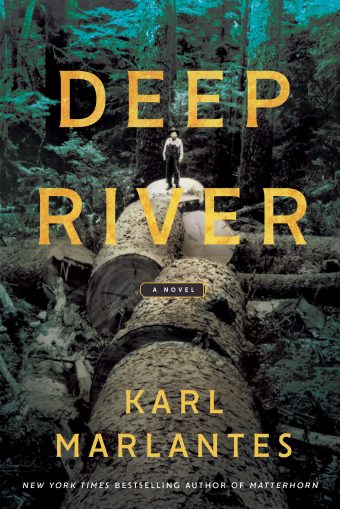 Deep River – Karl Marlantes – 978-0-8021-2538-5 – Atlantic Monthly Press – Hardcover – 736 pages – $30 – July 2, 2019 – ebook version widely available at lower prices.
“Deep River seems a work born from Willa Cather by way of Upton Sinclair. But this new book is its own animal, and it’s something of a masterpiece… In Deep River, [Aino] takes her place beside Antonia Shimerda as one of the great heroines of literature.”—BookPage (starred review)
Several years ago I discovered Karl Marlantes’ first novel, Matterhorn, which is a loosely autobiographical novel about the Vietnam War, in which Karl served as a Marine lieutenant. I think that is one of the best war novels I have ever read and was pleased to interview Karl about that book.
That book was followed by a nonfiction book called What it is Like to Go to War, which I also read and was affected by. What I said in 2011 still holds true: this book is a deeply thoughtful and moving work of nonfiction about the nature and meaning of war, and what it means to the individual warriors who participate who fight, as well as to the society that gives them that responsibility.
It took Marlantes almost thirty years to write and rewrite Matterhorn. Almost ten years after he completed that book, he has now turned in a completely different book, an historical novel set in the early 1900s, starting in Russian occupied Finland and moving to the Pacific Northwest. The three Koski siblings, Ilmari, Matti, and the politically radical young Aino, flee Russian oppression and come to the United States.
They join a community of other Finns in the logging area in southern Washington, during a time when massive trees of the old growth forest are being harvested by hard working men and dangerous technology. It is fertile ground for the establishment of radical labor movements like the IWW (Industrial Workers of the World, also known as the Wobblies). The two Koski brothers build their lives in this environment amid danger and many challenges, while Aino, just one of the book’s many also hard working independent women, works to build a union in an environment where organized labor is not welcomed by the logging industry or the power structures of the day.
Karl has built this novel following the structure and characters of the great stories of the Finnish oral tradition, written down in the nineteenth century as the Kalevala. It is a truly magisterial novel that weaves together so many strands of American and immigrant cultures, documents the struggles of the early twentieth century in the great forests of the Pacific Northwest, and shows us how human beings find a way to make meaningful lives despite the harshest challenges. Nothing comes easy for the Koskis their friends and families, but everything about them is redemptive and strong. It’s impossible to read this book and not be moved.
Reading Deep River is a commitment – it’s a long book – and there are inevitably times when it becomes difficult to keep track of the whole story and the many compelling characters in the book. That is not a criticism. The book is gripping, and well worth the time and attention of the reader. And it is impossible not to read it in the context of our current political circumstance. Reading about the sacrifices made by workers in the early twentieth century, to make advances for labor that are now taken for granted, and imagining their struggles as evidenced by the characters in this book, who are so thoroughly human in their differences and outlooks, personalities and beliefs, brings forth a range of thoughts about what has become of America today. We live in a world that others made great sacrifices for, and have somehow managed to avoid making sacrifices of our own. The people of Deep River as imagined by Karl Marlantes, deserve better from us.
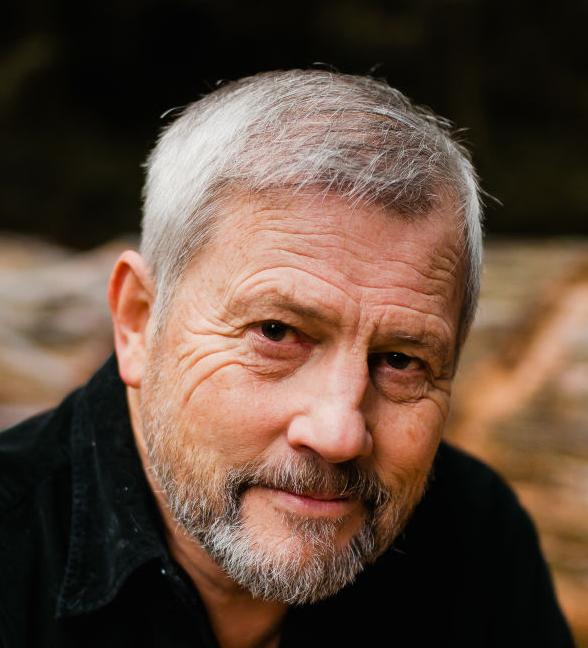
I had the great pleasure to interview Karl in New Haven in a building on the Yale campus, where he was visiting during his book tour.
Karl Marlantes graduated from Yale University and was a Rhodes Scholar at Oxford University, before serving as a Marine in Vietnam, where he was awarded the Navy Cross, the Bronze Star, two Navy Commendation Medals for valor, two Purple Hearts, and ten air medals. He is the author of the novel, Matterhorn and a work of nonfiction, What It Is Like to Go to War. He lives now in Washington State.
Buy Deep River from RJ Julia here.
Podcast: Play in new window | Download
Tilar J. Mazzeo: Irena’s Children: A True Story of Courage
October 17, 2016 by David
Filed under Non-Fiction, WritersCast
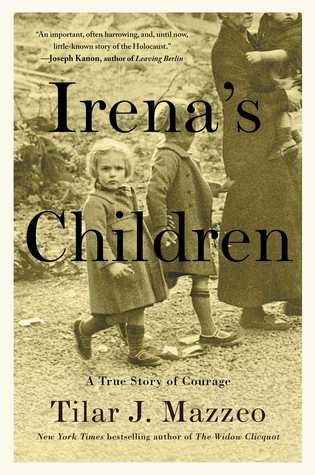
Irena’s Children: A True Story of Courage – 9781476778501 – Gallery Books – Hardcover – $26 – ebook versions available at lower prices.
Author Tilar Mazzeo is a terrific storyteller, who took on the task to tell the world about an inspiring, heroic and terrifying story with this book, the true story of one woman who, with a network of associates, saved 2,500 Jewish children from the Nazis during World War II. The main subject of the book is Irena Sendler, who was a young social worker in Warsaw, living in a socially and politically progressive milieu, when the Germans began World War II by invading Poland.
Poland, of course, was quickly defeated by the larger and more modern German army. The conquered country’s resources, human and otherwise, were turned toward the use of the German war effort, with hundreds of thousands of Poles used as slave laborers as their country was occupied by a brutal military regime. And the Germans then began their concerted efforts to destroy the large Jewish population of that country. While many Poles opposed the Nazis, with partisans fighting them from the outset of the war, some Poles were active collaborators with the Fascists, and many more simply did their best to survive under impossible conditions.
Some Poles risked everything to rescue Jews from the near total eradication of that community that the Germans sought.
Irena Sendler and a close circle of her friends and work associates undertook what we now can recognize as an heroic effort to save some of the children of the Warsaw ghetto. For almost four years, they took immense risks and dangers upon themselves and their families, to rescue innocents from the horrors they could see were happening all around them.
While everything in this book reads like a terrifying, fast-paced novel, Mazzeo has pieced together a completely true story of unimaginable heroism by many “regular” citizens of Poland. Irena Sendler, together with the help of a network of local people and the Jewish resistance, was able to save upwards of 2,500 Jewish children from likely death in the brutal concentration camps to which most Polish Jews were sent. Irena herself went back and forth into the Jewish ghetto, sneaking children out in a myriad of ways, and then found refuge for the children with local Polish families, convents, churches and farmers.
It was an incredible effort. Irena Sendler knew the terrible risks – she was at one point brutally tortured by the Gestapo – but also knew she could not fail to act.
It is incredible that she and so many of her cohorts survived the war. But then, of course, she and Poland had to survive the takeover of her country by the Soviets, and that meant that the story of her wartime heroism could not be told until long after the war had ended. Mazzeo’s effort here to celebrate and tell this amazing story is extraordinary, and much appreciated. Irena Sendler and her network of heroes serves as inspiration and constant reminder that we “regular citizens” must be prepared to face moral choices at any time, sometimes with dire consequences. So many good people were killed in this terrible war.
It is impossible to read this book and not wonder how any of us would have responded then. And of course we must each ask our selves honestly, how will we respond when our time to act is upon us?
I really enjoyed reading this book. It brought up powerful emotions and important questions. Mazzeo is both a fine writer and a terrific researcher, and in this book displays both those talents in full flower. We had a really interesting conversation about this book. There is so much in it I did not want to discuss in detail, so readers will be able to have the full experience of the book for themselves, but we had much to talk about nonetheless.
Tilar Mazzeo is the Clara C. Piper Associate Professor of English at Colby College, in Waterville, Maine. She is the author of numerous works of narrative nonfiction, including the New York Times bestselling The Widow Clicquot.
There’s a wonderful portrait of Sendler, written while she was still alive here and a website devoted to her life and story called Life in a Jar.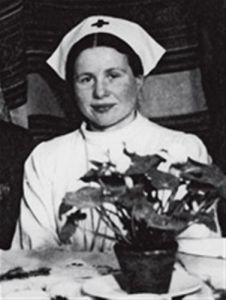

Podcast: Play in new window | Download
Sean Davis: The Wax Bullet War – Chronicles of a Soldier & Artist
June 21, 2014 by David
Filed under Non-Fiction, WritersCast
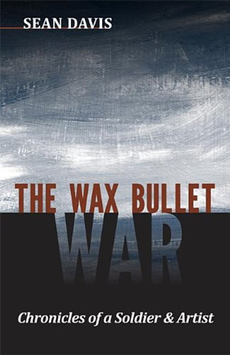 The Wax Bullet War: Chronicles of a Soldier & Artist – 978-1932010701 – paperback – Ooligan Press – $16.95 (ebook version available at lower prices)
Sean Davis grew up in Oregon, joined the Army after high school, went to art school for awhile, had an unsuccessful relationship with an attractive woman, and was working at an unsatisfactory job as a highway worker on September 11, 2001. The next day he walked into the Oregon National Guard recruiting office and re-enlisted, on the working assumption that he would be contributing to the greater good and giving himself a sense of direction and meaning. He had no idea he would soon end up on active duty in Iraq on the front lines of the war trying to figure out how to be a sensitive warrior in a strange country.
Davis is a talented writer and exceptional memoirist with a keen eye for details and a wry sense of humor. In Iraq he lost his best friend in an ambush and was himself critically wounded. He returns home after a lengthy period of recovery to deal with the aftermath of his experiences and suffers through what we now know is so common for the veterans of our seemingly endless recent wars, alcohol and drug dependency and a minimally helpful support system. Somehow, Davis managed to rediscover the interior place where his art comes from and was able to rebuild his life. He now has a family, an advanced degree, is actively an artist and a writer, and has created a nonprofit organization (A Rock or Something Productions: “veterans getting veterans into the arts”) to connect other veterans to the healing power of the arts.
Davis recounts the seeming insanity of daily life in the war zone with humor and clarity, and clearly cares deeply about the civilians he encountered in Iraq as well as the men and women with whom he served. As an example, the wax bullets in the title were what was used in training exercises in Kuwait prior to active deployment – to save money. Evidently it escaped the thinking of military planners that in the plus 100 degree temperature there, the bullets would melt, fouling the soldiers’ guns, wasting time and endangering their lives. This is not the only example of how things go wrong for US soldiers and the Iraqi people in the midst of the war, which Davis describes with a soldier’s sense of black humor.
His description of what happened to him after he returned home is terrifying and powerful. When he does rediscover himself, we are right there with him, joined with his indomitable spirit to become someone better, someone who can be alive and present and fully engaged in the beingness of humanity.
The Wax Bullet War is a beautiful book, incredibly moving and compelling. I’d recommend adding it to the short list of great books about war and specifically about the real experiences of soldiers who fight and then must live their lives in time of peace. Put aside some quiet time to read it and let it sink in. Sean Davis website. Publisher Ooligan Press website.
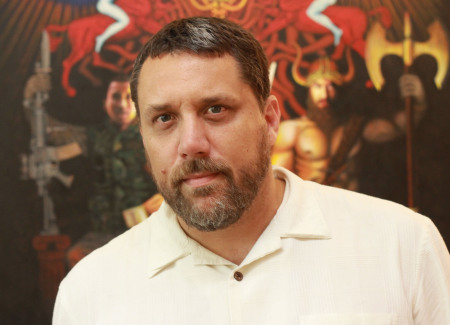
Sean Davis bio: Sean Davis is an artist, writer, and returning veteran of the Iraq War. He earned a bachelor’s degree in English from Portland State University and an MFA in Writing from Pacific University. His previous work includes the novel Motivation and Toleration, published under the name Ian Avi, as well as contributions to the Portland Mercury, Nailed Magazine, and Split Infinitive. He has appeared on 60 Minutes and is one of the cofounders of Hubris Press in Portland, where he lives with his wife and daughters.
Podcast: Play in new window | Download
Paul Conroy: Under the Wire: Marie Colvin’s Final Assignment
November 3, 2013 by David
Filed under Non-Fiction, WritersCast
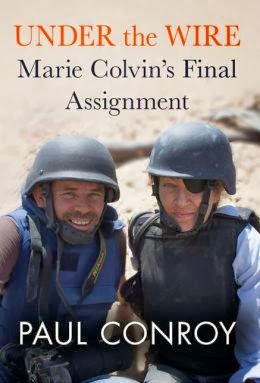 978-1602862364 – Weinstein Books – hardcover – October 8, 2013 – $26.00 (ebook versions available, prices vary depending on retailer)
Marie Colvin was an award-winning journalist who wrote principally for the London Sunday Times for almost thirty years until she was killed covering the siege of Homs in Syria in February, 2012. She was raised in Oyster Bay (Long Island), NY, graduated from Yale in 1978 who worked for the British newspaper The Sunday Times from 1985 until her death.
Marie was an activist journalist in the best sense of the word, committed to reporting the lives and conditions of the oppressed and especially civilians suffering in wars, armed conflicts and governmental actions. Her writing was vivid and clear, gripping and very muscular.
Colvin specialized in the Middle East, but also worked in East Timor, Sri Lanka, Chechniya and the Balkans. She was recognized by the British Press awards for her reporting in Chechniya (and an amazing escape from that war zone, also grippingly reported). In East Timor in 1999, she helped save the lives of 1,500 refugees stranded in a United Nations compound that was surrounded by the Indonesian Army after the Timorese chose independence from Indonesia in a referendum. Colvin and two other journalists refused to leave and forced the UN to stay as well, and eventually the refugees were extracted and taken in by Australia.
In 2001 she became the first Western journalist in years to enter Tamil Tiger rebel territory in northern Sri Lanka. When she returned to the government-controlled area, her group was fired on by Sri Lankan military, and she was wounded by shrapnel, losing the use of an eye. She famously wrote a 3,500 word dispatch about her adventure while in the hospital in NY for surgery. From that time onward, her black pirate-style eye-patch became the emblem that represented her irrepressible spirit to all.
John Burns, the veteran New York Times foreign correspondent, called her “one of the most respected and celebrated reporters on Fleet Street…She was, of course, absolutely fearless, though she knew the dangers well.”
Alan Philps, a former Telegraph foreign correspondent said: “What she brought to journalism was being a great eyewitness and being incredibly brave. It was a role she settled into and she never saw another form of journalism she wanted to do, but that meant she sacrificed everything for the job.”
In 2010 at a London newspaper industry service for fallen British journalists, she gave a moving speech about the work and risks of foreign correspondents: “We always have to ask ourselves whether the level of risk is worth the story. What is bravery, and what is bravado?
“Journalists covering combat shoulder great responsibilities and face difficult choices. Sometimes they pay the ultimate price.”
Marie Colvin reported from Libya in the middle of many battle zones during the revolution against Qadaffi, where she worked with photographer Paul Conroy, who became a close friend of Colvin’s. In 2012, the two of them, working for the Sunday Times, made their way into Homs in Syria, where the government was bombarding the local population into submission.
Under the Wire is Conroy’s story about his friendship and work with Marie Colvin in Libya and Syria. Most of the book is a blow by blow account of their time in Homs, where Marie was killed while trying to leave Homs after many days in terrible danger, along with French photographer Remi Ochlik and Conroy was grievously wounded as well.
The book is a vivid and powerful account, not only of the work of the foreign correspondents who went to Syria to document what was going on there, but of the people in the country on the rebel side, who wanted Marie, Paul and other western journalists there to report what was happening. Acts of bravery, selflessness and heroism abound.
Paul Conroy’s story is a gripping and painful celebration of the human spirit, full of bravery and hope and a wonderful memorial to the work and life of Marie Colvin. It’s also a reminder, as the civil war in Syria continues, of how much we need people like Marie to serve as a public conscience in the face of oppression and state sponsored violence.
Marie Colvin’s work has been published as On the Front Line: The Collected Journalism of Marie Colvin. Visit her website to learn more about her life and work, and the Marie Colvin Memorial Fund. The Colvin family has established a memorial fund in honor of Marie. The fund will direct donations to charitable and educational organizations that reflect Marie’s lifelong dedication to humanitarian aid, human rights, journalism and education. 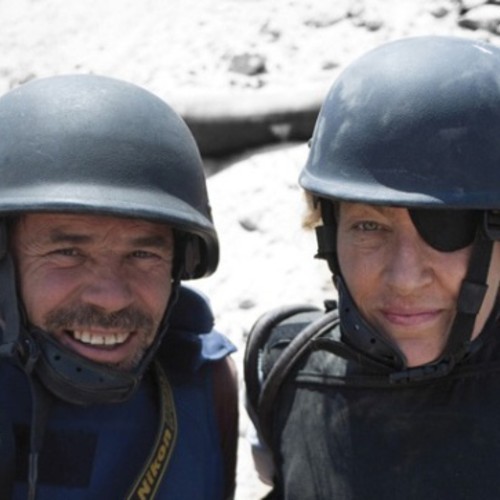
Podcast: Play in new window | Download
Karl Marlantes: What It Is Like to Go to War
October 2, 2011 by David
Filed under Non-Fiction, WritersCast
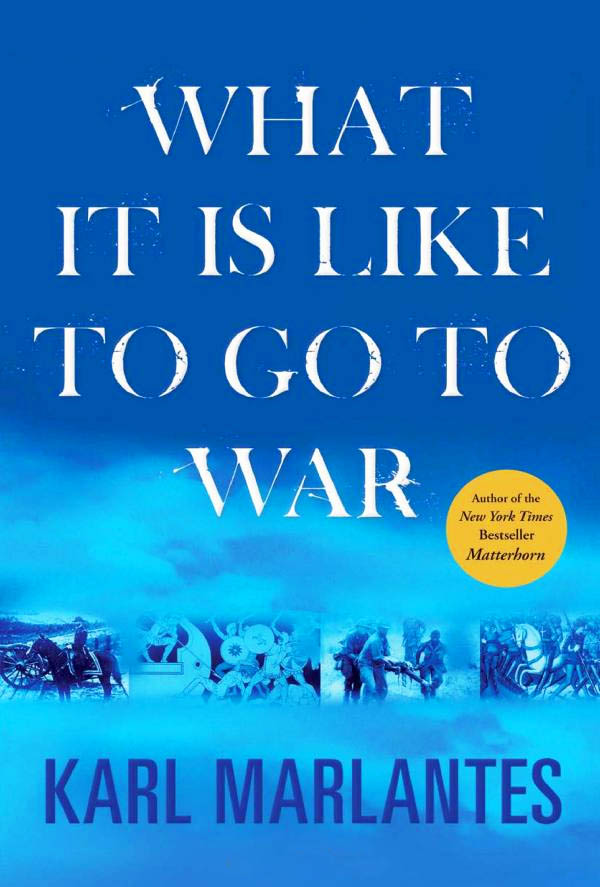 978-0802119926 – Atlantic Monthly Press – Hardcover – $25.00 (e-book and audiobook editions available)
I read Karl Marlantes’ novel, the extraordinary Matterhorn last year (and interviewed him about it for Writerscast – you can listen to that interview here). I don’t think I am alone in believing that Matterhorn is perhaps the finest and most important war novel of the Vietnam generation; for me at least, it belongs in the pantheon of great American war novels (going back to WWI, Thomas Boyd’s Through the Wheat is another great novel written by an former Marine).
It took Karl Marlantes more than 30 years to write and publish the novel we read as Matterhorn its final form. His new book, What It Is like to Go to War, now follows as a deeply thoughtful and moving work of nonfiction about the nature and meaning of war, and what it means to the individual warriors who participate who fight, as well as to the society that gives them that responsibility.
There are many parallels between the two books. I’d recommend you take on the novel first, spend some time thinking about its story and characters, and then move on to this new work of nonfiction, which is a combination of personal memoir, meditation and social, political and cultural analysis and polemic.
Insofar as fiction gives us our deepest emotional and spiritual truths, Matterhorn cannot fail to move you and allow you to feel the reality of what it is like when our best and brightest go to war. Then What It Is Like to Go to War gives us another carefully wrought perspective, what Marlantes has learned from his own experiences and from many years of studying and thinking about war and society.
And we should all be paying attention to what he says here. America has had more people fighting wars for a longer period of time than at any other time in our history. Indeed what does this say about contemporary American society?
In 1969, when he was just 23, Karl Marlantes was an inexperienced lieutenant in charge of a platoon of Marines whose lives were in his hands. His experiences in the jungles of Vietnam , molded and shaped him throughout his life. He has thought deeply about his wartime experiences, how they affected him and his comrades, as well as how other soldiers before and since have gone through similar experiences. In What It Is Like to Go to War, Marlantes weaves accounts of his own combat experiences with analysis, self-examination, and powerful ideas drawn from his wide reading from Homer to the Mahabharata to Jung.
Unlike many of us who feel that war must be ended in modern society, Marlantes starts from the belief that war is an inevitable component of societal and political being. What he is after is to make us think about preparing warriors not for fighting, which we already do quite well, but for living with the effects on those who go to war that derive from participating in the morally unnatural but societally sanctioned acts of killing other human beings.
Most societies that preceded us have used powerful rituals, myths and ceremonies to integrate acts of war into the fabric of their cultures, and to reintegrate their warriors thoroughly into their societies, while our secular, materialist society really offers no tools or methods to warriors (or for that matter to civilians) to create a holistic “story” of why and how war is meaningful and necessary.
One of the many points he made in this book really struck me is that those who send men and women to war are themselves warriors, that actual soldiers (as opposed to guns and bombs) are their weapons. These individuals must fully comprehend what they do, and must find ways to integrate their own acts of war as much as the soldiers on the battlefield who wield the weapons and who witness so much death and destruction on both sides of battle.
I found that the author’s afterword to the book was very important to my understanding and acceptance of his work:
“We must be honest and open about both sides of war. The more aware we are of war’s costs, not just in death and dollars, but also in shattered minds, souls, and families, the less likely we will be to waste our most precious asset and our best weapon: our young.”
“The substitutes for war…are spirituality, love, art, and creativity, all achievable through individual hard work.”
I can’t recommend this book to readers enough. It’s book that, like the work of my friend, Paul Chappell, (Will War Ever End and The End of War) has the potential to shift our societal dialogue about war and what it can and should mean to a modern society.
There’s a fine review of What It Means to Go to War in the NY Times and a very worthwhile interview with Karl on Livewriters about Matterhorn.
Podcast: Play in new window | Download
Tatjana Soli reading from “The Lotus Eaters”
June 16, 2010 by David
Filed under AuthorsVoices
 978-0312611576 – St. Martin’s Press – Hardcover – $24.99 (also available as an e-book)
Writerscast is proud to present the third in a series of authors reading from their work, called AuthorsVoices. I hope you will agree that hearing these works read aloud by the original authors adds to your experience of the writing.
I love getting a sense of the author’s distinct sense of her or his own words. With writers touring in support of their books less frequently now, these podcasts should provide readers with an opportunity to hear some of our best contemporary authors reading from, and sometimes performing their own works.
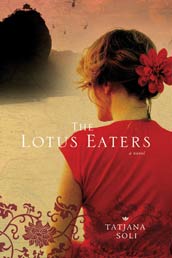
Tatjana Soli’s The Lotus Eaters is one of my favorite out of a pretty long list of some really great books I have read recently. Her book tells the story of Helen, a photographer who goes to Vietnam early in the war to try to understand how her brother died. She ends up staying for many reasons. There are a couple of different love stories entwined around her, and Soli captures brilliantly the intensity of Southeast Asia at war, the various cultures involved, and some incredibly powerful and vivid characters. Tom O’Brien, who wrote another great Vietnam novel, The Things They Carried, praised Tatjana’s “spare, lucid prose” that “helps us to see and hear and feel the terrible human costs of that conflagration.” He’s right about the book. But there is also incredible beauty, and much love in this book.
Soli reads from the opening chapter of The Lotus Eaters in this terrific reading. It’s captivating.
Podcast: Play in new window | Download
Tatjana Soli: The Lotus Eaters: A Novel
June 4, 2010 by David
Filed under Fiction, WritersCast
 978-0312611576 – St. Martin’s Press – Hardcover – $24.99 (also available as an e-book)
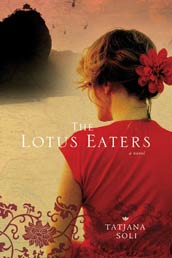
I know I am not alone having read both Tatjana Soli’s The Lotus Eaters and Karl Marlantes’ Matterhorn – they are unavoidably linked as both are set in Vietnam during the American war. Of course they are incredibly different in outlook, approach and story, but reading them together is a wonderful experience. As Writerscast listeners know, I loved Matterhorn – I do think it is the great novel of the Vietnam War that we have been waiting to experience for several decades.
At the same time, Tatjana’s novel is simply remarkable. She writes beautifully, inhabits her characters, their place and time, their suffering, challenges and transcendent moments. As she told me in her interview, she fell in love with the Vietnam of that era from afar, and learned everything she could about it in order to be able to write this story. Her main character is a young photographer, Helen, who comes to Vietnam early in the war, mainly because her brother died there, and she is drawn to the place where he lost his life, to figuratively solve the mystery of his death. But that is just the beginning of her journey. The war, the soldiers and other journalists, and the people of Vietnam overtake her. She becomes deeply connected to this place and time. Soli brilliantly portrays the landscape and the people of Vietnam, the suffering and horror of a seemingly endless war, and the way that war overtakes every element of human and natural life.
Helen falls in love with another photographer, Sam Darrow, a grizzled veteran who teaches her how to cope with war, survive, thrive, document, participate, suffer and love the danger and energy of men at war. But the truest, and deepest story is her love for Linh, an exceptionally complicated Vietnamese former soldier, who has gone to work for the American news agency Helen works for. At the end of the book, which thankfully avoids the cliched approach of much modern fiction, Helen and Linh journey out of Vietnam through Cambodia, an even more horrendous landscape of death and together find their way to safety, a harrowing journey that mirrors where they have traveled emotionally through the course of the novel.
A woman among men sees war more clearly than most, I think; in this book, that vision focuses and transforms the reader as well. Tatjana Soli’s story about writing this book and what it means to her is great to hear. I think she is a terrific writer, worth reading, and well worth listening to as well.
Podcast: Play in new window | Download
Will War Ever End? Capt. Paul K. Chappell
January 31, 2009 by David
Filed under Non-Fiction
978-1935073-02-4
Ashoka Books, Hardcover $14.95
“There is cause to hope, and believe, that there can be an end to war.”
–Lt. Col. Dave Grossman, U.S. Army (ret.), author of On Killing
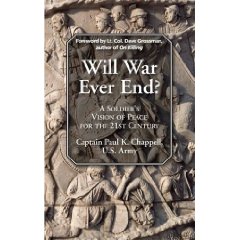
Writerscast host David Wilk interviews first time author US Army Captain Paul K. Chappell, whose new book, Will War Ever End? A Soldier’s Vision of Peace for the 21st Century will be published in February, 2009. The author talks about his personal background, why an active duty soldier who has served in Iraq has written a “manifesto for waging peace,” and explores some of the powerful ideas he covers in his new book. In a wide ranging interview Captain Chappell makes clear that achieving peace is not just a cliche, discusses the practical ways we can all work toward an active state of peace on earth, and gives compelling evidence for his reasoning that human beings are not naturally violent. In this interview the author shows why his powerful and original ideas are receiving so much attention among thinkers and activists for peace. The book website is located at www.paulkchappell.com.
Podcast: Play in new window | Download