
Jesse Wegman: James Wilson and the Forgotten Fight for a People’s Constitution
October 15, 2026 by David
Filed under Non-Fiction, WritersCast
 The Lost Founder: James Wilson and the Forgotten Fight for a People’s Constitution — Jesse Wegman — Celadon Books — 384 pages — $30.00 — June 23, 2026 — ebook versions available at lower prices
It is fairly mind-boggling that few Americans know the name or the story of James Wilson. He was a crucial “founding father” of the US Constitution whose influence in American history is incredibly important.
I think of myself as pretty well educated and I have spent a fair amount of time during my life learning about American history.I am sure I have run across James Wilson’s name at some time, but I never knew anything about his life or his involvement with the writing of both the Declaration of Independence and the US. Constitution. It turns out that he played a major part in the drafting the U.S. Constitution at the Constitutional Convention in Philadelphia, and is one of only six who signed both the Declaration of Independence and the Constitution itself.
Jesse Wegman’s book is a masterful work of history I found impossible to put down. I do not like staying up late into the night to read anymore. I work hard and I need my sleep. But this book kept me reading until I was finished with it, and I was never once bored by Wegman’s storytelling of Wilson’s colorful and difficult life. This is a man who contributed as much as any of those we consider the “giants” of the founding of America as an actual country instead of the loose confederation of competing states it started out to be. In some ways, he made a greater impact than anyone else. His dedication to the concept of “We the People” and the idea that government can come only from the people is crucial to who we are as a country.
Wilson’s accomplishments during the heated period from which an actual country emerged, are surprising to learn about, especially since he has literally disappeared from American history. There are reasons why his contributions have not been recognized. He died as an early Supreme Court justice while hiding out in the malaria infested North Carolina coast to escape the law and his creditors. ,His misadventures as a greedy real estate speculator tainted his reputation. His early demise allowed other figures of that time to move to the forefront. First-hand histories of the founding years of American democracy were written by the longer-lived, better appreciated survivors. Wilson was written out of their narratives.
It was a distinct pleasure and a great honor to have the opportunity to speak with Jesse about this book. I hope you enjoy listening to our conversation as much as I enjoyed participating in it with him.
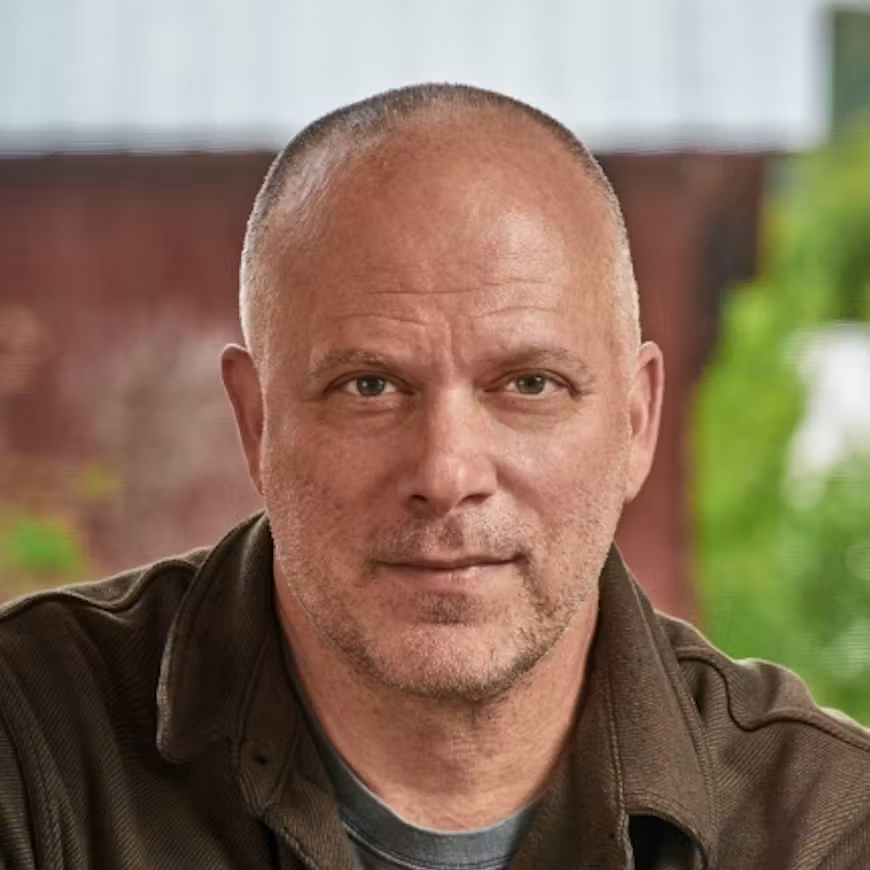
Jesse Wegman is a Senior Fellow at the Brennan Center for Justice, where he writes about Supreme Court reform and constitutional amendments. From 2013 to 2025, he was a member of the New York Times editorial board, covering law and politics, the Supreme Court, democracy, and electoral reforms.
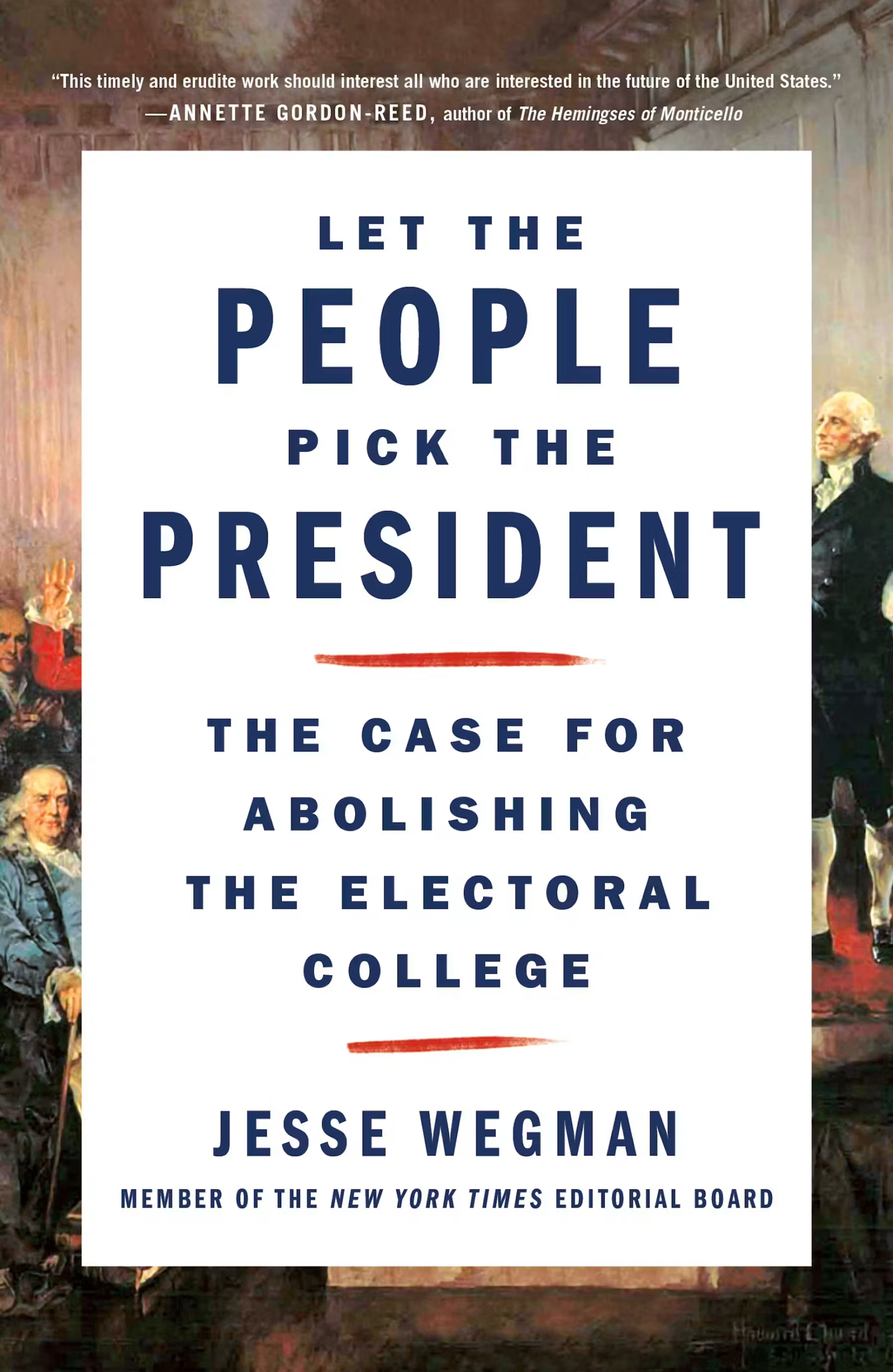
I am planning to read his previous book, Let the People Pick the President: The Case for Abolishing the Electoral College, a subject I have strong feelings about myself.
(Ironically, we have the Electoral College because of the need for compromise during the Constitutional Convention. In fact, James Wilson proposed it. His first choice for direct election of the president by the people could not gain support of the majority of the delegates. The Electoral College was a better choice than their even more regressive alternatives).
“Jesse Wegman has written a gripping and deeply researched work of American history. Scottish immigrant, signer of both the Declaration and the Constitution, and the man who coined ‘We the People,’ James Wilson believed that power resided in the people themselves, foreseeing a democratic future the country is still struggling to achieve. That he died broke and largely forgotten, his headstone bearing the wrong date of his death, is one of American history’s more painful ironies. The Lost Founder restores Wilson to his rightful place and challenges us to reconsider what popular sovereignty really means.”
—Ken Burns, award-winning documentary filmmaker and director of PBS’ The American Revolution
Jesse Wegman at the Brennan Center website.
Podcast: Play in new window | Download
Publishing Talks: Interview with Jeremy Facknitz
October 2, 2026 by David
Filed under PublishingTalks, Technology, The Future
 Publishing Talks began as a series of conversations with book industry professionals and others involved in media and technology. Mostly we’ve talked with people in the book industry about the history and the evolution of publishing and books.
I’ve had the pleasure of speaking with editors, publishers, technologists, innovators, and leaders in independent publishing and bookselling past and present.
These conversations have been inspirational to me. I’ve learned a great deal from people who have influenced and changed contemporary literature and culture, as well as many interesting friends and colleagues in the book business.
Today’s Publishing Talks conversation is very different. Jeremy Facknitz is not in the book business. He is an independent songwriter and musician. Of course there are obvious differences between books and music—you can listen to music while you do other things, and people pay real money to hear singers and bands play live for them; whereas books require your full attention and reading is only rarely a shared public experience. But there are many similarities when you look at the actual business structures of book publishing and music distribution, especially for writers and musicians.
This is especially important now when technology has opened the floodgates of human creativity and enabled the creation and circulation of many more books and songs than was ever possible in the past. This outpouring has upended the economies of both the book business and the music business and inalterably changed how books and music are discovered by readers and listeners. And at the same time, this ocean of books and music has created massive challenges for creators (and their publishers and music labels) to reach audiences.
Jeremy stands out as someone who has found a meaningful path to creating a livelihood as a singer/songwriter, and that’s what got my attention.
Jeremy has been active as singer/songwriter for a long time (see his bio below). While he started out in a band, like many other musicians, he worked in many different non-music jobs for a long time, but finally in his thirties decided to make a living as a performer. He discovered that doing house concerts could be his primary form of revenue. He does his own booking and has created his own unique form of audience building. He now performs over 100 concerts a year in people’s homes.
When I first learned about Jeremy’s work, I thought he would be perfect for this series. Even though his performing does not align exactly with the way authors and publishers work , there is alot to learn from what Jeremy does. His values and commitment to connecting with his audience in a human way is crucial.
So please have a listen and do let me know what you think. There are some links below so you can learn more about Jeremy. I hope you will listen to (and enjoy) his songs. You might want to host him for a house concert of your own!
I love Jeremy’s motto: The Revolution Will Not Be Streamed
TIDBITS AND ACCOMPLISHMENTS: Finalist for the 2020, 2022 and 2025 Grassy Hill Kerrville New Folk Songwriting Competitions at the Kerrville Folk Festival… Winner for the 2023 Empower Music Awards (formerly known as the Posi Awards)… Awarded 2nd place in the 2022 Indie International Songwriting Competition (“Unsung”)… Runner-up in the Renaissance Artists and Writers Association “Songs For Social Change Competition”, 2020 (“Land Fills”)… Member of “The Ottomans” from 1997 through 2002 (2001 Detroit Music Award Winner, “Best New Alternative Group”)… Member of “Standing Room Only” with brother Jarod Facknitz from 2001 through 2003… 2009 Pikes Peak Arts Council nominee for “Best Solo Performer of the Pikes Peak Region”… has opened as solo act for/performed with The Samples, Tim Reynolds (Dave Matthews Band), Pat Donahue (Prairie Home Companion), Edie Carey, Charlie Milo, Lindsay Weidmann… graduated from the Specs Howard School of Broadcast Arts in 1997 and was a radio DJ for 4 years (gospel and adult contemporary)… passed the series 7 test for license to sell securities in 2013 and one year later quit working in finance… loves baseball and is an avid fan of the Detroit Tigers baseball club… is married to singer-songwriter Lindsay Weidmann and together they have two children… is a U.S. citizen with Canadian permanent residency and will soon be based in the Vancouver area.
Video “As of This Morning”
Video “Smilin’ at the Future”


Podcast: Play in new window | Download
Mel Harkrader Pine: From Pain to Peace
September 4, 2026 by David
Filed under Non-Fiction, WritersCast
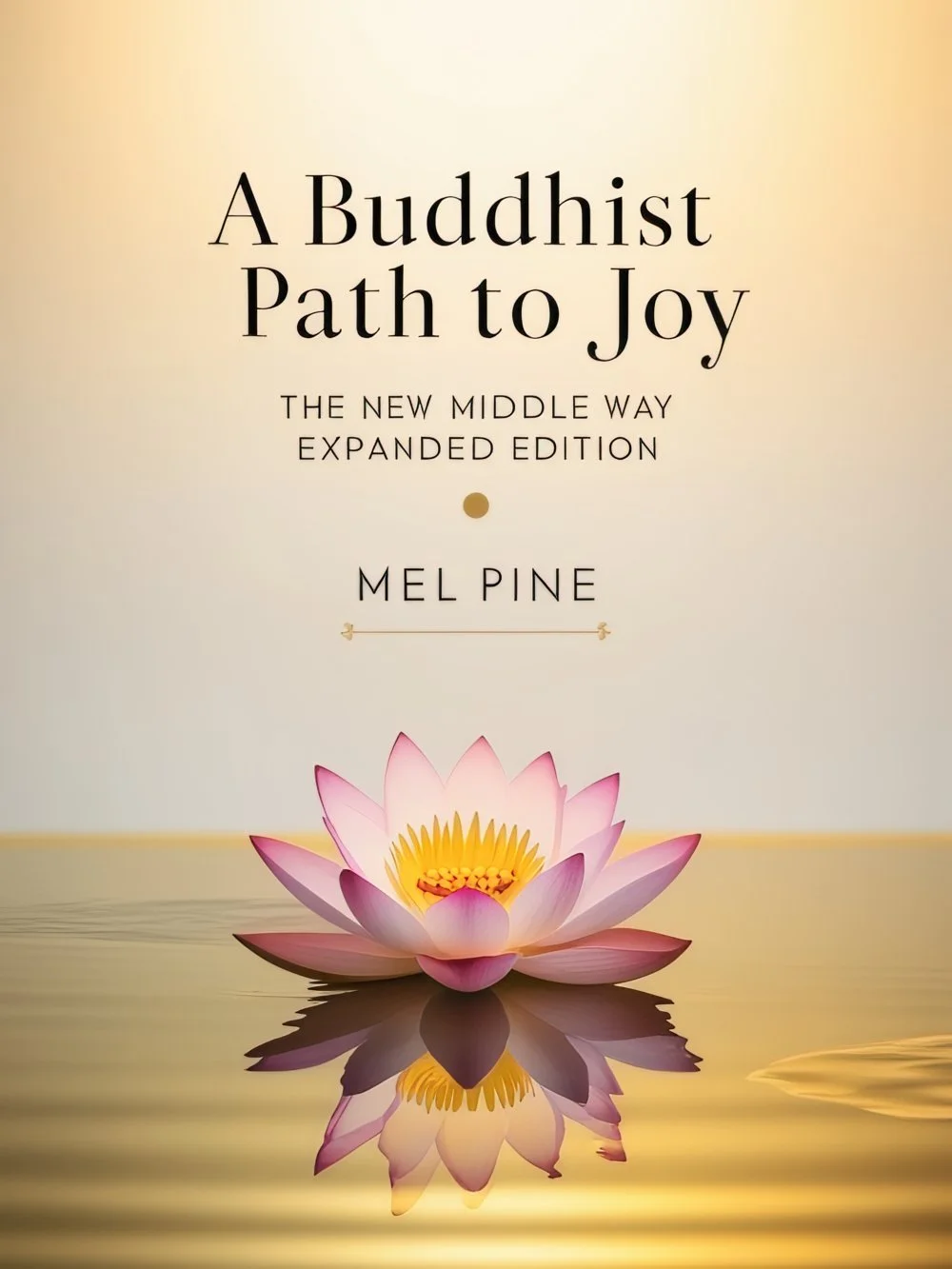
 From Pain to Peace: How Trauma and Tragedy Teach Us Compassion and Wisdom – Mel Harkrader Pine – Prospecta Press – Paperback – 9781632261786 – 240 pages – $18.00 – September 15, 2026 – ebook versions available at lower prices
The subject of trauma has become far more discussed and understood over the past half century. When I was growing up, people never really talked about the traumatic events and experiences in their lives. Today, trauma is much more commonly talked about and recognized, yet still so many of us are unable to heal from our traumatic experiences. The counter culture of the sixties planted seeds for a broader acceptance and understanding of trauma, both personal and cultural, experienced directly or epigenetically, as well as an increased awareness and practice of non-western religions and philosophies that often enable practitioners heal from traumatic experiences.
Mel Pine has experienced deep trauma throughout his life. He is a long time Buddhist practitioner. In From Pain to Peace, he demonstrates how Buddhist concepts like impermanence, impermanence and equanimity become tools for healing. It is an extraordinary book by an extraordinary human being, whom I have had the pleasure of getting to know. And it has been my honor to publish his extraordinary book.
As Mel says on his website, “this book speaks to the universal longing for healing and wholeness.” It seems that today, almost every feeling human being feels traumatized, and in need of tools like those this book provides to help live a fuller life.
Here’s what Mel says about himself: “I live in the State of Joy. I’ve devoted my remaining days of cognitive and physical health to helping others join me here.
I’ve had a passion for writing since eighth grade, began a career in journalism at age 20, moved on to other forms of communication through words, images, and videos, and became a spiritually focused author at 78.
That very-late-life career put new oomph into these old bones and neurons, so as I approach my 80th birthday, I intend to keep pursuing my mission as long as impermanence lets me.”
Mel also publishes two Substack newsletters. From the Pure Land focuses on spiritual issues, especially Buddhism for modern life. Human-AI Mutuality covers what Mel calls humankind’s most important frontier — how we relate to artificial intelligence.
The trauma Mel has experienced is acutely painful—at once generational, social, and decidedly personal. It is a morass of sludge enough to soil a soul interminably. And yet, out of the mud, the lotus blossoms. This book is Mel Pine’s lotus blossom. It describes how he discovered spiritual resources within the suffering that not only enabled him to survive; they enhanced his equanimity, deepened his compassion, and awakened in him a sober wisdom. They brought him to a place of genuine peace. Trauma can cut both ways. It can mire one in the mud, or the mud can give rise to a flower born of suffering. This book is one of those flowers.—Frank Rogers Jr., author of Cradled in the Arms of Compassion
Author website (he has a Kickstarter!) melpineauthor.com
You can buy the book here at Bookshop.org

Podcast: Play in new window | Download
Jeff Gomez: The 10 Commandments of Successful Corporate Narratives
August 12, 2026 by David
Filed under Non-Fiction, WritersCast
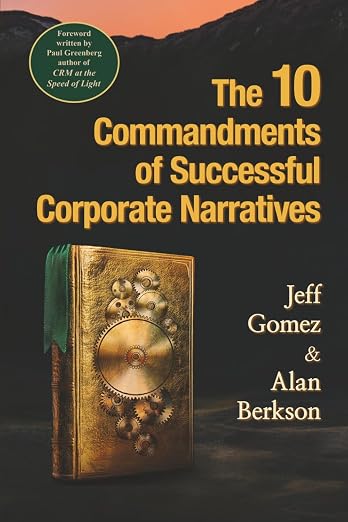 The 10 Commandments of Successful Corporate Narratives – Jeff Gomez & Alan Berkson – Intelligist Press – Paperback – 9798218853914 – 138 pages – $24.00 – February 15, 2026 – Kindle version $14.99 (Amazon only)
Jeff Gomez is an amazing guy. We met years ago in some now forgotten business connection, but I always remembered being impressed by his innate understanding of narrative. He seems to always have been able to use that understanding to engage in brilliantly executed world building for a range of brands and entertainment properties.
For the many years he has been in the entertainment industry, he has worked on some of the most iconic properties in the world with many brands and companies, including Coca-Cola, Hasbro, Pirates of the Caribbean, Spiderman, and many more. His work has doubtless touched the lives of millions of people.
Jeff has also recognized how much the media world has changed as the internet as grown and new media has arisen. Many of us recognize how different the media landscape is today, but most of us do not fully understand exactly what has changed and similarly, while we can feel that society and culture have changed inalterably, understanding how to operate in this new environment is deeply challenging, not only to creators and entertainment industries, but to all of us as consumers and citizens.
Jeff has written about this under the rubric “The Collective Journey: Storytelling architecture for the post-digital age.” Follow this link to read the entire piece. Here is a quote to get you started:
For centuries, every agency, company, studio, and writer has relied on the Hero’s Journey as a standard for storytelling. But nonlinear, trans-platform communication has entirely disrupted that model. To rising generations, the standard tropes of classic storytelling have begun to feel slow, obvious, and dated. We yearn for a new, far more dynamic and participative approach…
Society is grappling with seismic, accelerated, and seemingly chaotic change.”
Together with his long-time colleague Alan Berkson, Jeff has also written on this topic in the book we started out to discuss, The 10 Commandments of Successful Corporate Narratives. It’s a short book and is well worth reading. While it is directed at and oriented toward business executives trying to understand and navigate our fractured and challening media landscape, it is really useful for anyone who wants to grapple with the implications of a highly connected culture.t to
The core insight is that the now famous structure of “The Hero’s Journey” has been transformed into what they call “the lightning bolt” of the Collective Journey.
Jeff posits and I agree, that this understanding is crucial for all of us, not just as consumers of media, but more importantly as citizens in a democracy that is subject to all of the pressures and tensions of this new world. If you do not understand what is happening, you will not be able to work successfully to achieve your goals, whether they are cultural or political.
I hope you will enjoy listening to our conversation as an entry point to Jeff’s thinking and writing. The Collective Journey comprises an eight part series of essays published on Medium (available for free). I think it’s an important piece of writing that should be read more widely.
Jeff Gomez is the CEO of Starlight Runner, a transmedia entertainment company. He is a brand and cause-related consultant, producer of franchise storyworlds and transmedia entertainment properties.
Alan Berkson has provided top-tier service to companies from one-person firms to enterprise-level corporations—across Wall Street, the United Nations and Main Street—by wielding his own brand of non-traditional business strategy. Alan was named one of The Top 100 Most Social Customer Service Pros On Twitter and is the Director of Community Outreach for SaaS helpdesk company Freshdesk.
You can buy The 10 Commandments of Successful Corporate Narratives on Amazon.


Podcast: Play in new window | Download
Publishing Talks: Brooke Warner of She Writes Press 2026
July 29, 2026 by David
Filed under Publishing History, PublishingTalks, The Future
 I originally began Publishing Talks as a series of conversations with book industry professionals and others involved in media and technology, mostly talking about the future of publishing, books, and culture. I continue to enjoy my conversations with people in the book industry about the evolution of publishing in the context of technology, culture, and economics. This latest episode features a conversation I recently had with the wonderful Brooke Warner, publisher of She Writes Press (which is only one among the many other roles she somehow manages).
It was ten years ago that I first talked to Brooke for Publishing Talks about her work with She Writes (which she co-founded with Kamy Wicoff in 2012) when the publishing world was a very different place. She Writes was and is a hybrid publisher, requiring support from its author for the publishing process. Ten years ago that was far less common than it is today.
Since Brooke not only keeps a close watch on everything that is happening in independent and commercial publishing, she also writes, talks and podcasts herself about book matters, and now she is also publishing a weekly newsletter about writers, books, and writing. So she is an ideal person for me to talk to about what is happening in the book world today, and I think you will find our conversation to be interesting and educational, no matter your role – reader, writer, publisher, book marketer – or your degree of knowledge about books and publishing. I always enjoy speaking with knowledgeable publishing folk and I think you will enjoy hearing what Brooke has to say. Please have a listen.
Brooke is also is a memoir coach and author of Write On, Sisters!, Green-light Your Book, What’s Your Book?, and three books on memoir. She’s also a TEDx speaker (“Green-light Revolution”), weekly podcaster (of “Memoir Nation” with co-host Grant Faulkner), and publishes a weekly newsletter, Writerly Things, on Substack at brookewarner.substack.com.
In March 2025, SWP joined The Stable Book Group as one of the inaugural imprints in this new publishing collective. Brooke became Stable Book Group’s COO while maintaining her role as Publisher of She Writes Press.
During the course of its existence SWP has worked with over 1300 authors.
Brooke’s own website is here.
She Writes Press website.
The Stable Book Group website.


Podcast: Play in new window | Download
David Margolick: When Caesar Was King
June 30, 2026 by David
Filed under Non-Fiction, WritersCast
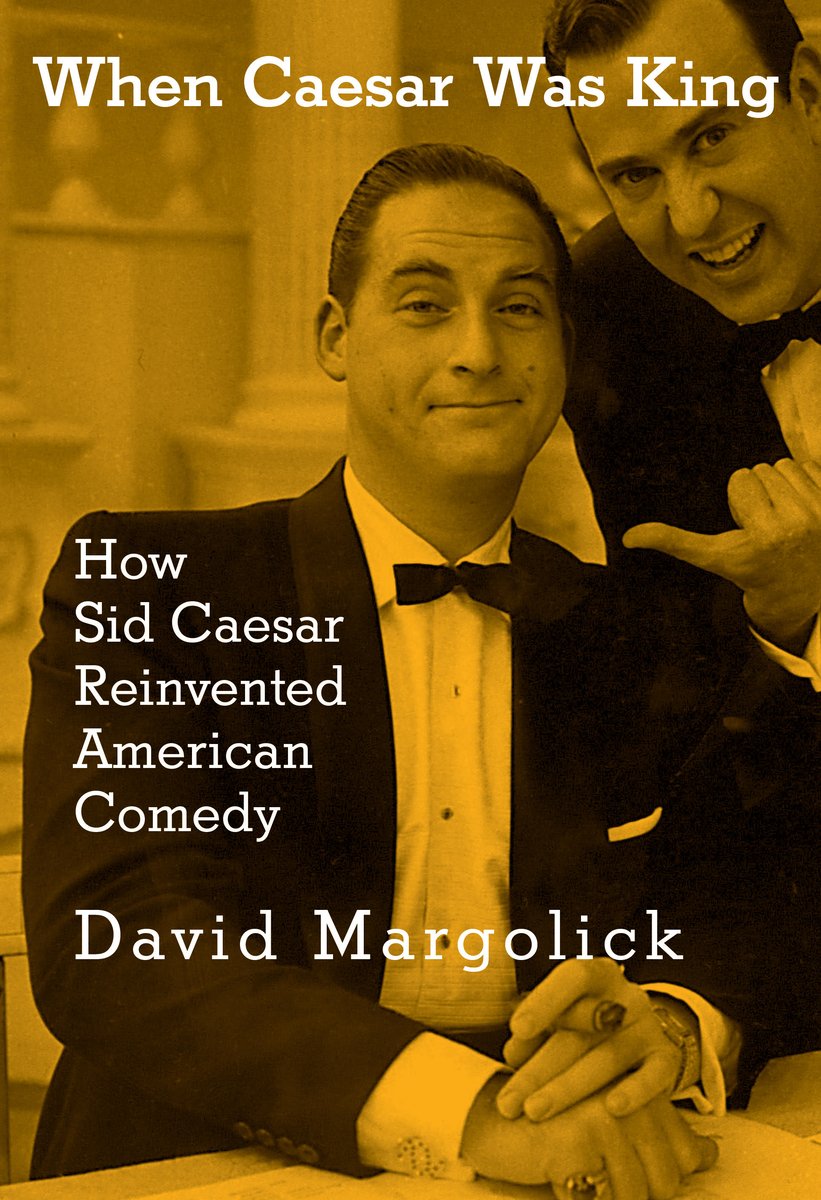 When Caesar Was King: How Sid Caesar Reinvented American Comedy – David Margolick – Shocken Books – Hardcover – 9780805242553 – 400 pages – $35.00 – November 11, 2025 – ebook edition available at lower cost, audio book also available.
I am almost the same age as author David Margolick, so was born too late to see any of Sid’s early classic shows that aired when he was establishing the way comedy would work on the then new medium, television. Growing up with a comedy writer father, Sid Caesar was legendary in our house as a revered progenitor of the current crop of television comedy, but by the time I was old enough to know who he was, Sid Caesar was no longer at the pinnacle of his success. Despite being active on TV through the sixties, seventies and beyond, he was no longer culturally relevant as he had been earlier in his career. Yet his impact on television and its audiences was massive, and I remember hearing my parents and their friends talk about Sid Caesar, Imogen Coca, Carl Reiner, and Mel Brooks and their less well-known writers, always with admiration and joy.
Whether you are lucky enough to have seen Sid Caesar in action in his early days, or know nothing about him at all, David Margolick’s biography brings Sid to life. He provides us with a vivid rendering of an extremely complicated actor/comedian. In the early 1950s, Caesar was television’s first real star, his show drawing am audience of twenty million people at a time before televisions were not even present in most homes in America. His sketches helped define the nature of television comedy for generations to come even to this day. (All you have to do is watch a Caesar sketch followed by a modern SNL sketch and you will get it.)
Most of Caesar’s writers and actors went on to their own successful and influential careers and helped define television culture for decades. His writers included Neil Simon (The Odd Couple), Larry Gelbart (M*A*S*H), Mel Tolkin (All in the Family), Woody Allen (too many to list), Mel Brooks (Blazing Saddles, The Producer) and Carl Reiner (Dick Van Dyke Show).
Sid Caesar success was relatively short-lived. As television moved to take over the heartland of America, other stars supplanted him. As Margolick makes clear, Caesar was a complicated, introverted, socially awkward person, completely unlike the public personae he portrayed in performance. He could not or would not adapt to the changing tastes of television audiences—perhaps because Caesar’s humor was based on and drawn from 20th century urban American Jewish experience, and was more sophisticated than what mass market television would support. And Caesar’s personality was not suited for the massive success he achieved.
Margolick’s research and attention to detail, interviews with key people involved in Caesar’s life and his obvious love for Caesar’s humor and culture all contribute to make this a highly readable and enjoyable book for anyone who is interested in American culture and especially television comedy.
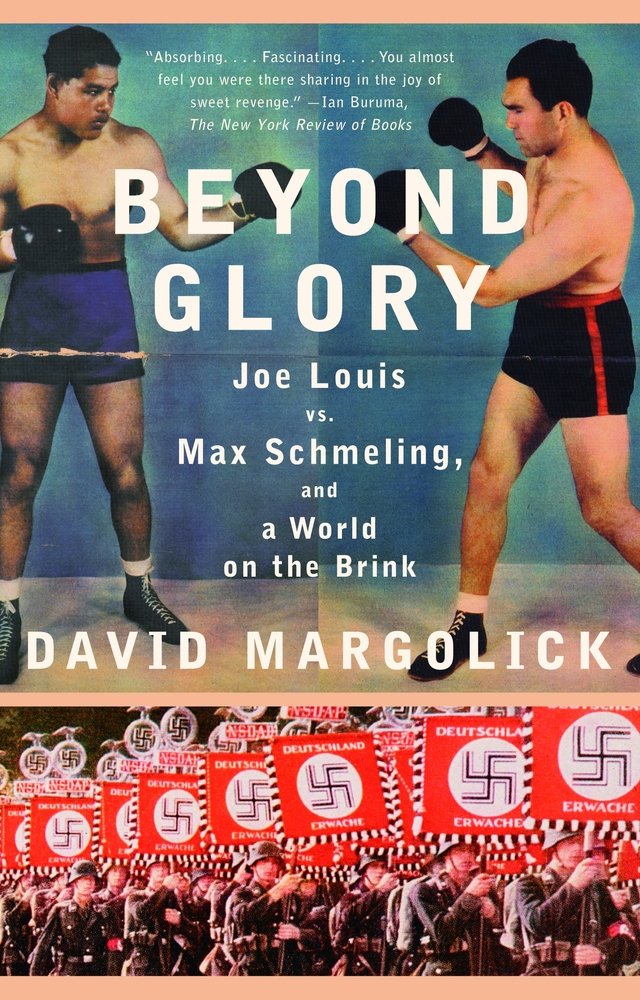
David Margolick was a reporter on legal affairs for the New York Times, where he wrote the weekly “At the Bar” column and covered, among other stories, the trial of O. J. Simpson. He was subsequently a contributing editor at Vanity Fair. His books include Beyond Glory: Joe Louis vs. Max Schmeling, At the Bar, Strange Fruit: The Biography of a Song, Dreadful: The Short Life and Gay Times of John Horne Burns; and Elizabeth and Hazel: Two Women of Little Rock, and The Promise and the Dream. He lives in New York City.
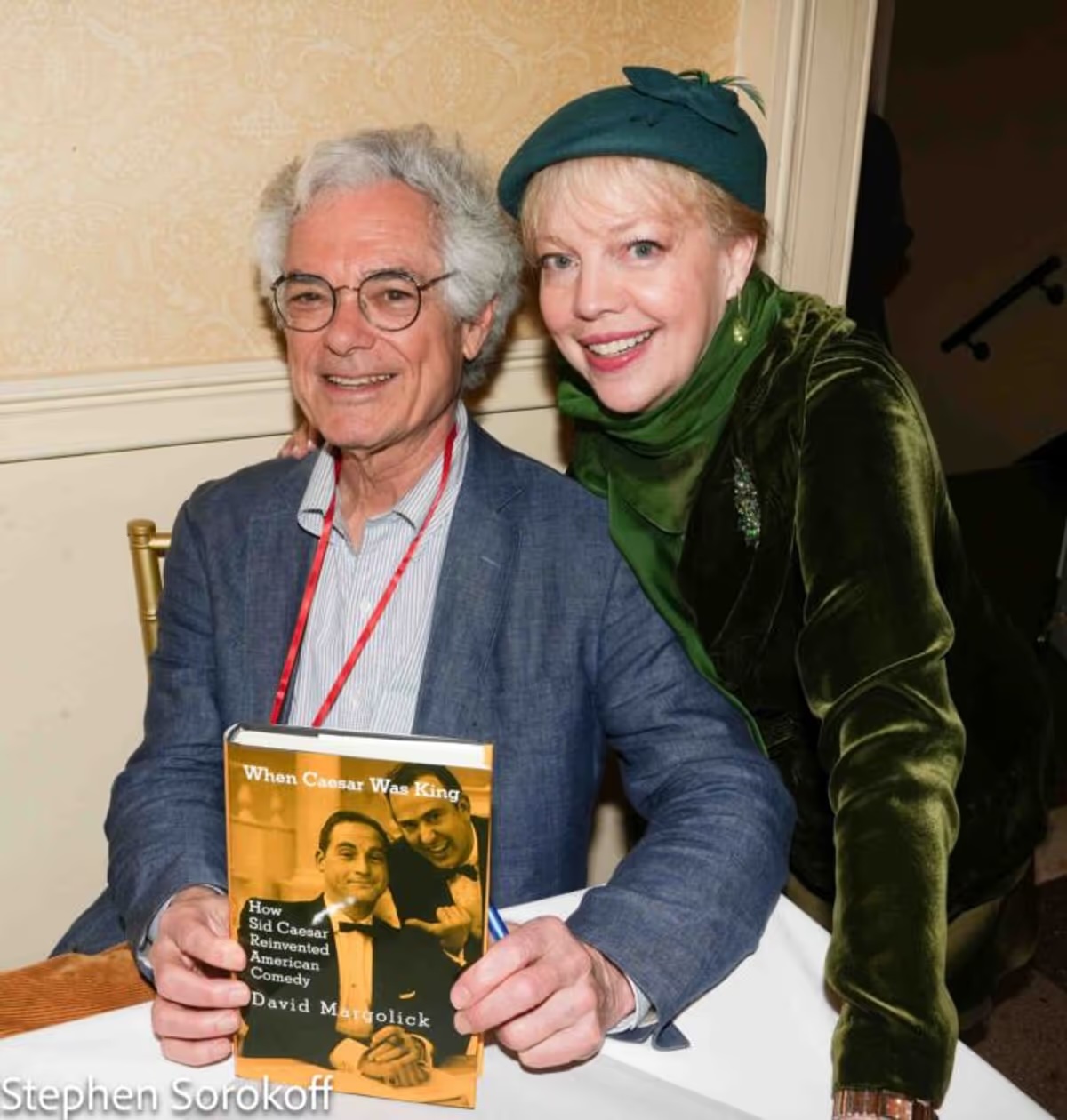
I very much enjoyed reading this biography, which is appropriately entertaining as well as informative. It broadened and deepened my appreciation for early television comedy, a milieu I enjoy. With the ubiquity of old television clips now available on YouTube, I was able to sample some of the sketches that are described in the book, including some I had never seen. Watching Caesar in action with his great supporting casts, while reading about those people in the book will change the way you see them now. David and I had a terrific conversation which I hope you will enjoy as much as I did.


Podcast: Play in new window | Download
Thomas W. Gilbert: Death in the Strike Zone
June 7, 2026 by David
Filed under Non-Fiction, WritersCast
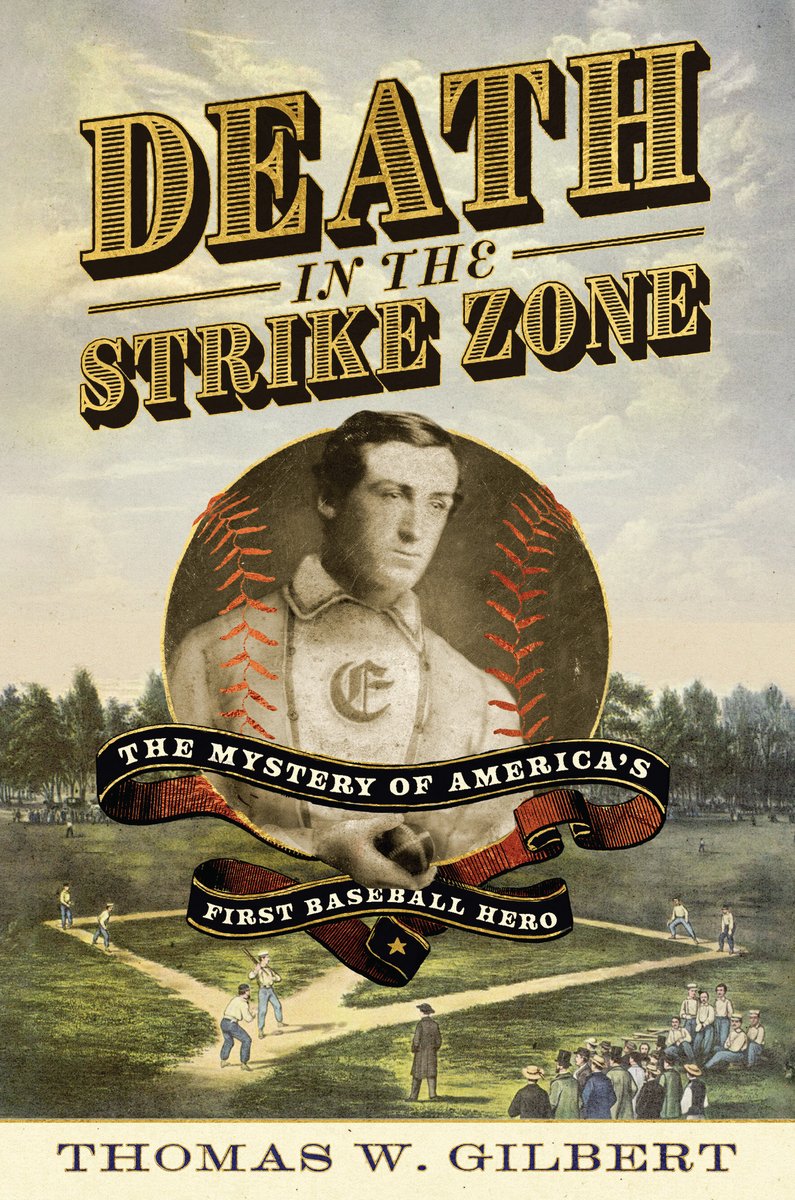 Death in the Strike Zone: The Mystery of America’s First Baseball Hero — Thomas W. Gilbert — David Godine — Hardcover — 978-1-56792-759-7 — 192 pages — $27.95 — March 24th, 2026 – ebook edition available at lower cost
As most of my listeners probably know by now, I love baseball and I really love books about baseball. At one time I thought I knew alot about baseball history, but I have come to realize that I am a rank amateur in a world where there are true baseball historians at work on almost any baseball related subject one could imagine.
I loved reading Tom Gilbert’s wonderful book about James Creighton, arguably the first true baseball star, whose brief career took place in the heated era of early baseball in New York City. Pre-Civil War baseball is really not the same game as the one we play today. It was a precursor even to the game played in the late 19th century and early twentieth century, an era that at least some rabid fans today know something about. But baseball as it was played in the 1850s and 1860s was far different, and perhaps no more so than how pitching was done.
Reading this vividly written book, we learn about an era that is both strangely foreign and similar to our own in many ways. Baseball this early was still being defined by its players, and the game was emerging from pure amateur club sport played only in the big eastern cities, showing signs of popularity that would enable baseball to become the dominant sport in the entire country in less than 50 years.
Creighton was his era’s Babe Ruth and Shohei Ohtani, someone whose skills and manner of playing changed the game completely. What I learned from Tom Gilbert is that in this early time, pitching was much more like today’s slow pitch softball than what we recognize as hardball pitching today. The mount was much closer to home plate, and there were no balls and strikes – hitters just waited for a pitch “served” to them that they could hit, and it was fielding and running that made the game interesting, not today’s “inside game” where the pitcher and hitter define so much of what will happen.
Even if you don’t care as much about baseball as I do, Gilbert’s narrative weaves together the history of nineteenth century America into his narrative in a way that will interest many in the story of American culture.
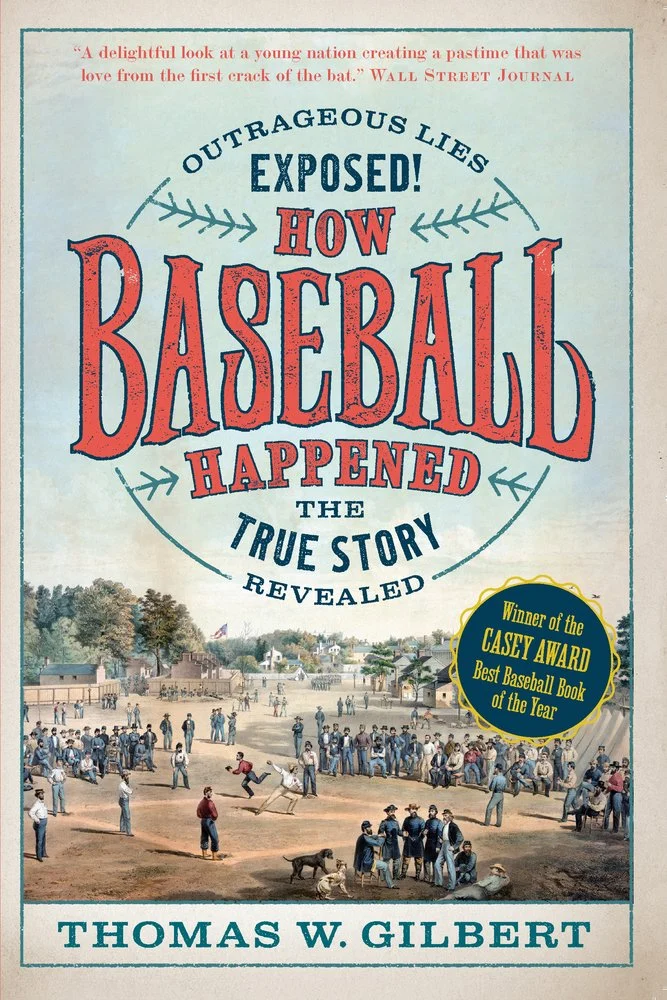
Thomas W. Gilbert is also the author of How Baseball Happened: Outrageous Lies Exposed, The Truth Revealed, Baseball and the Color Line, Roberto Clemente, and Playing First. He grew up in Connecticut and lives in Brooklyn, not far from where James Creighton played and is buried.
We had a great conversation I hope you will enjoy as much as I did.

Podcast: Play in new window | Download
Shirley C. Strum: Echoes of Our Origins: Baboons, Humans, and Nature
January 8, 2026 by David
Filed under Non-Fiction, WritersCast
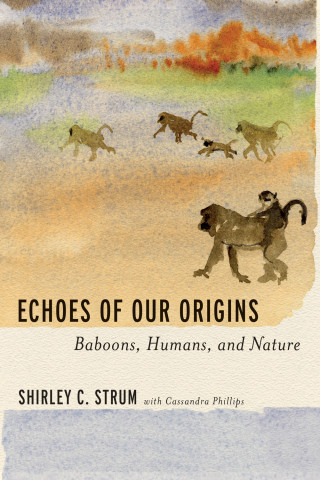 Echoes of Our Origins: Baboons, Humans, and Nature — Shirley C. Strum, with Cassandra Phillips — Johns Hopkins University Press — Hardcover — 978-1-4214-5203-6 — 376 pages — $32.95 — September 9, 2025 — ebook edition available.
This book was a fantastic discovery for me. I consider myself fairly well read; I’ve studied anthropology extensively and I even briefly went to graduate school to study biology, but my knowledge of primates is woefully poor. Shirley’s book was a great introduction for me to one part of a much wider field, and got me excited and engaged with baboons, who turn out to be incredibly interesting animals, and of course connect us not only to issues of human evolution, but also historical and modern ecology, issues of human/animal interactions, and human responsibilities in relation to other animals, especially primates.
I feel like I learned more from this book than almost anything I have read in the past year. Shirley Strum’s story of her fifty years studying baboons is completely compelling.
Her baboon story started in 1972, when as a graduate student, Strum traveled to Kenya to study the origins of human aggression by observing baboons. Her earliest discoveries completely changed the scientific study of baboons, and many long-held assumptions about primate behavior.
Living closely with a number of different populations of baboons over the past half century, and closely observing their lives, Strum has learned more than any other human about baboons’ complex strategies of negotiation, collaboration, and resilience. And through her work, Strum has had to deal with an array of challenges – not just within her field itself, but in the changing ecology and landscape of Africa, as more people have taken over former baboon (and many other animals’) territories, creating new forms of human/animal conflicts, and changing the evolution of baboon society itself.
In addition to illustrating the incredibly interesting lives of baboons, Strum’s experiences tell us a great deal about how human science works, and the challenges that we face in trying to deal with the massive effects of the anthropocene on our fellow beings in the world. I know it’s simplistic to say that baboons and other primates have a lot to teach homo sapiens about how to live cooperatively together, but I do think that understanding more about primate life can in fact teach us a great deal about ourselves, if only we can begin to see that we humans are not at the top of a hierarchy that makes us “better than” or “smarter than” our evolutionary cohort.
Echoes of Our Origins combines natural history, adventure, memoir, feminism and like some of the its best antecedents in nature writing, asks us to think about and empathize with the natural world in previously unfamiliar ways.
I hope you enjoy our wide-ranging conversation as much as I did. While it is doubtful that I will ever get to Africa to see baboons in the wild for myself, Echoes has given me an unmatched opportunity to imagine these incredible animals.
I’ve been recommending this book to anyone interested in humanity, ecology, our history and our future.
Dr. Shirley C. Strum is a Professor of Anthropology and a Professor of the Graduate Division, School of Social Sciences, at the University of California, San Diego, and Director of the Uaso Ngiro Baboon Project in Kenya. Her first book was Almost Human: A Journey into the World of Baboons.
More about Dr. Shirley C. Strum here.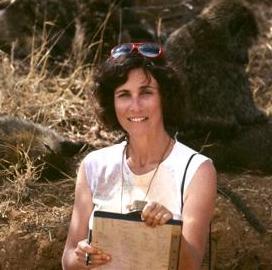
Podcast: Play in new window | Download
Publishing Talks Interviews Thad McIlroy-Future of Publishing
November 24, 2025 by David
Filed under PublishingTalks, Technology, The Future
 Publishing Talks started as a series of conversations with book industry professionals and others involved in media and technology, mostly talking about the future of publishing, books, and culture. It was great fun talking with people in the book industry about the evolution of publishing in the context of technology, culture, and economics.
In the past few years, I’ve talked with a variety of editors, publishers and others who have been innovators and leaders in independent publishing and bookselling in the past and into the present.
These conversations have been inspirational to me. I have had the pleasure of speaking with visionaries and entrepreneurs, editors, publishers and others who have influenced and changed contemporary literature and culture. I’ve also had the opportunity to speak with a number of friends and colleagues in the book business.
I really enjoy the opportunities to find out about the boundless creativity that motivates so many of us in the book business, and I also really enjoy talking to others in the business, who like me, have tried to make sense of it all in some way or another. That’s one of the reasons I have frequently sought out other publishing consultants, gurus, and observers over the years, to talk about various topics in publishing. Sometimes it is about the history of books, but more often during the past almost twenty years of this series, conversations have centered on change and the future of publishing.
And that brings me to Thad McIlroy, a publishing consultant and author whose aptly named website is The Future of Publishing. As you can imagine, Thad and I had a great time together, and I hope you will enjoy hearing what he has to say, especially about emerging technology. Thad is a really smart guy who understands publishing from multiple perspectives.
AI discussions cannot be avoided at this point. My current thinking is that the version of AI we have now (LLMs) is not going to be the AI technology that will eventually take over our world. In the meantime, human creativity is still valued and it would surprise no one if there is a massive backlash against this technology before too long, especially as it is applied to the creative arts. Would love to hear what listeners think, so feel free to comment.
Here’s what Thad sent me as a working bio: “Writing and publishing are in my blood—my father was an author and broadcaster, and Kenneth Grahame (The Wind in the Willows) was my third cousin. I began as a bookseller in Toronto, then founded Virgo Press (1977) and co-founded book distributor Beatty & Church (1979). In 1985, I created what I believe was the first trade book using desktop publishing technology.
Now based in San Francisco, I’m an electronic publishing consultant, and author. I co-founded Publishing Technology Partners and serve as contributing editor at Publishers Weekly, focusing on AI and innovation. My latest book is 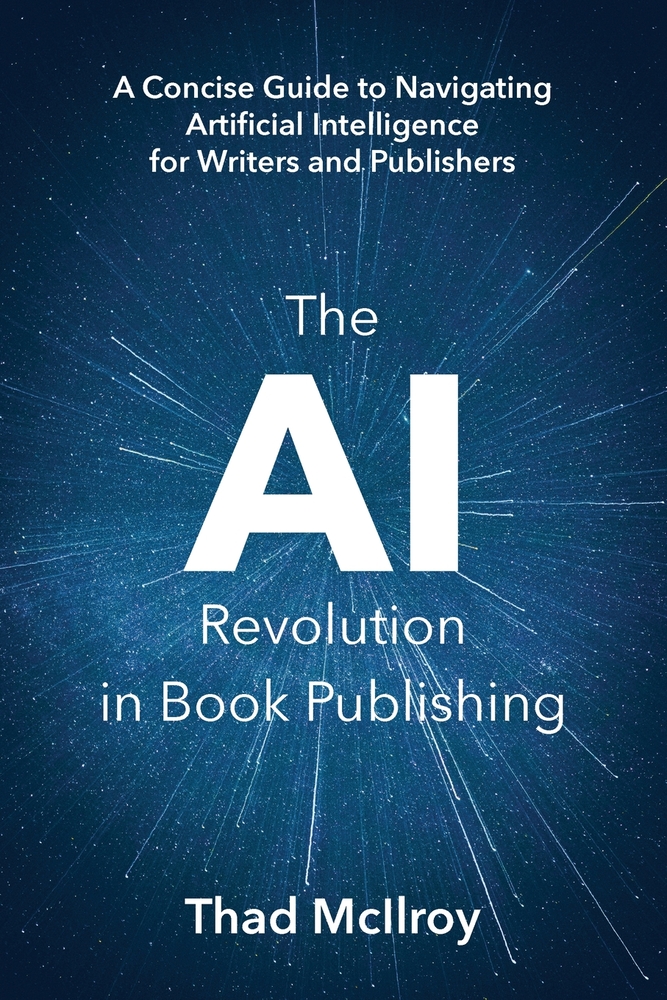 (2024, re 2025). I’ve authored dozens of books and articles exploring publishing technology, metadata, and industry transformation.”
Thad’s current interests are focused on AI. Here is a recent post of his on Onix 3 (if you’re not in the book business, this piece may be a bit in the weeds for you, but if you are in the business and care about data, search and findability, this matters – alot.)
Podcast: Play in new window | Download
Publishing Talks Interviews Derek Newton/Verify My Writing
October 24, 2025 by David
Filed under PublishingTalks, Technology, The Future
 Publishing Talks started as a series of conversations I had with book industry professionals and others involved in media and technology, talking about the future of publishing, books, and culture. It was great fun discussing the evolution of publishing in the context of technology, culture, and economics.
More recently, I’ve also had conversations with a variety of editors, publishers and others who have been innovators and leaders in independent publishing and bookselling in the past and into the present.
These conversations have been inspirational to me. I have had the pleasure of speaking with visionaries and entrepreneurs, editors, publishers, and others who have influenced and changed contemporary literature and culture. I’ve also had the opportunity to speak with a number of friends and colleagues in the book business about their work.
I really enjoy these opportunities to learn about the boundless creativity that motivates so many in the book business. I was approached recently by a PR firm who wanted me to talk to edtech writer Derek Newton about a new project he has undertaken. While my first reaction was to ignore what seemed to be yet another “pitch,” when I read further about the project, my interest was piqued and I decided I should talk to Derek to find out more about his ideas.
Derek Newton has written extensively about education and technology, including contributions to the Atlantic, Washington Post, USA Today, Money Magazine and many others. He’s also a contributing writer at Forbes and founder of the new and very interesting project that we talked about in this episode, Verify My Writing.
Verify My Writing allows writers to get a verified certification that their work is real, authentic, and human. In short, this enables them to certify that their work was not created by AI. The certification can help with submissions and pitches. Verify My Writing also certifies books and articles that have already been published with a “Human-Written” hallmark. And as Derek and I discussed, there other applications for this sort of certification as well. While writers certainly have self-interest in proving to magazines and publishers that their work is original, it seems to me that publishers will also want to verify for themselves when they receive submissions that the work they are reading is wholly or at least substantially original.
Book publishers and magazines with limited editorial resources are now dealing with a tsunami of submissions, with no practical way to determine the originality of the work they are considering for publication.
Given how good some AI-assisted writing can be, and how often AI is inaccurate (or completely wrong), there’s no question that all of us as readers will also appreciate knowing whether what we are reading online is human or machine written. This sort of validation may become a requirement in the not too distant future.
I found this conversation to be stimulating and thought provoking. Derek’s Verify My Writing seems interesting, and compelling in that it comes from a writer whose work experience inspired it. I hope you find this conversation as stimulating as I did.
Here’s the Verify My Writing website.
If you want to learn more, contact Derek directly: DNewton@VerifyMyWriting.com

Podcast: Play in new window | Download