
Publishing Talks: Interview with Jeremy Facknitz
October 2, 2026 by David
Filed under PublishingTalks, Technology, The Future
 Publishing Talks began as a series of conversations with book industry professionals and others involved in media and technology. Mostly we’ve talked with people in the book industry about the history and the evolution of publishing and books.
I’ve had the pleasure of speaking with editors, publishers, technologists, innovators, and leaders in independent publishing and bookselling past and present.
These conversations have been inspirational to me. I’ve learned a great deal from people who have influenced and changed contemporary literature and culture, as well as many interesting friends and colleagues in the book business.
Today’s Publishing Talks conversation is very different. Jeremy Facknitz is not in the book business. He is an independent songwriter and musician. Of course there are obvious differences between books and music—you can listen to music while you do other things, and people pay real money to hear singers and bands play live for them; whereas books require your full attention and reading is only rarely a shared public experience. But there are many similarities when you look at the actual business structures of book publishing and music distribution, especially for writers and musicians.
This is especially important now when technology has opened the floodgates of human creativity and enabled the creation and circulation of many more books and songs than was ever possible in the past. This outpouring has upended the economies of both the book business and the music business and inalterably changed how books and music are discovered by readers and listeners. And at the same time, this ocean of books and music has created massive challenges for creators (and their publishers and music labels) to reach audiences.
Jeremy stands out as someone who has found a meaningful path to creating a livelihood as a singer/songwriter, and that’s what got my attention.
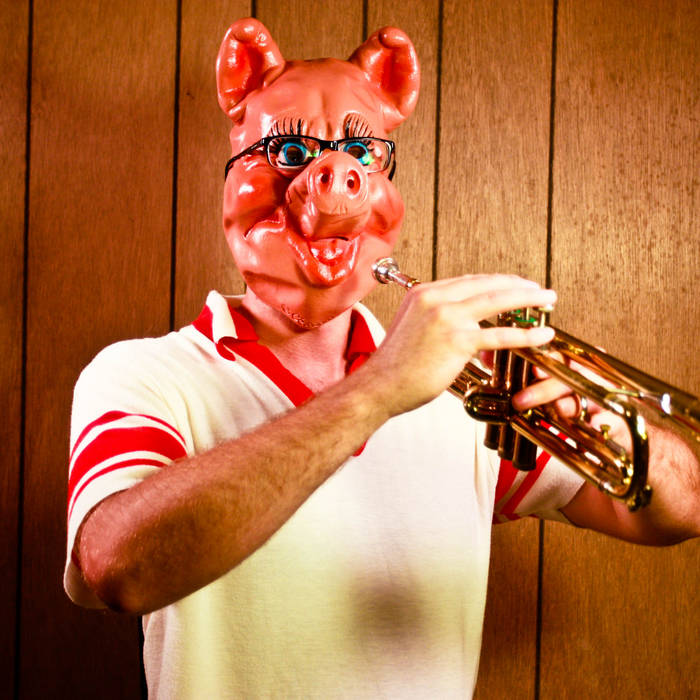
Jeremy has been active as singer/songwriter for a long time (see his bio below). While he started out in a band, like many other musicians, he worked in many different non-music jobs for a long time, but finally in his thirties decided to make a living as a performer. He discovered that doing house concerts could be his primary form of revenue. He does his own booking and has created his own unique form of audience building. He now performs over 100 concerts a year in people’s homes.
When I first learned about Jeremy’s work, I thought he would be perfect for this series. Even though his performing does not align exactly with the way authors and publishers work , there is alot to learn from what Jeremy does. His values and commitment to connecting with his audience in a human way is crucial.
So please have a listen and do let me know what you think. There are some links below so you can learn more about Jeremy. I hope you will listen to (and enjoy) his songs. You might want to host him for a house concert of your own!
I love Jeremy’s motto: The Revolution Will Not Be Streamed
TIDBITS AND ACCOMPLISHMENTS: Finalist for the 2020, 2022 and 2025 Grassy Hill Kerrville New Folk Songwriting Competitions at the Kerrville Folk Festival… Winner for the 2023 Empower Music Awards (formerly known as the Posi Awards)… Awarded 2nd place in the 2022 Indie International Songwriting Competition (“Unsung”)… Runner-up in the Renaissance Artists and Writers Association “Songs For Social Change Competition”, 2020 (“Land Fills”)… Member of “The Ottomans” from 1997 through 2002 (2001 Detroit Music Award Winner, “Best New Alternative Group”)… Member of “Standing Room Only” with brother Jarod Facknitz from 2001 through 2003… 2009 Pikes Peak Arts Council nominee for “Best Solo Performer of the Pikes Peak Region”… has opened as solo act for/performed with The Samples, Tim Reynolds (Dave Matthews Band), Pat Donahue (Prairie Home Companion), Edie Carey, Charlie Milo, Lindsay Weidmann… graduated from the Specs Howard School of Broadcast Arts in 1997 and was a radio DJ for 4 years (gospel and adult contemporary)… passed the series 7 test for license to sell securities in 2013 and one year later quit working in finance… loves baseball and is an avid fan of the Detroit Tigers baseball club… is married to singer-songwriter Lindsay Weidmann and together they have two children… is a U.S. citizen with Canadian permanent residency and will soon be based in the Vancouver area.
Video “As of This Morning”
Video “Smilin’ at the Future”

Podcast: Play in new window | Download
Interview with Nona Footz: A Mansion of Her Own
September 17, 2026 by David
Filed under Non-Fiction, WritersCast
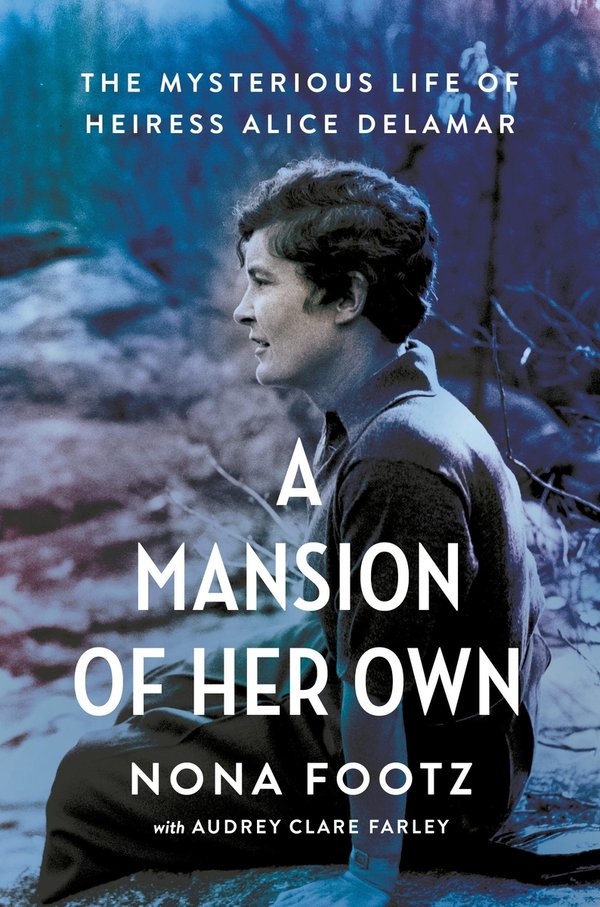 A Mansion of Her Own: The Mysterious Life of Heiress Alice Delamar – Nona Footz with Audrey Clare Farley – Grand Central Publishing – 9781538772072 – 272 pages – $32.50 – October 8, 2026 – ebook versions available at lower prices
It was impossible for me to resist a story about a reclusive heiress who lived only a few miles from where I grew up and lived in southwestern Connecticut. The towns there now are mostly well-to-do suburban enclaves, and best known for their wealth and well-known residents. But when I was growing up there, and earlier in the twentieth century, much of Fairfield County was quite rural. In those times, the area attracted many artists, writers, dancers and Bohemian types who found it a respite from the urban travails of nearby New York City. Only an hour by train or car (on roads with far less traffic than today), it was attractive to a wide range of people, some of whom were quite well off.
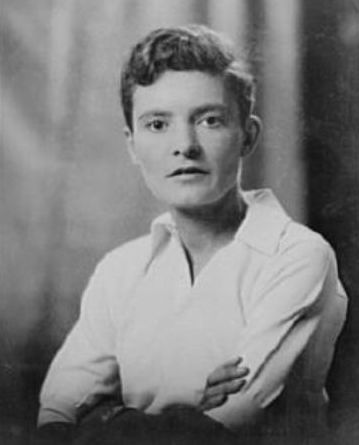
One of those very rich people was a secretive heiress, Alice DeLamar. In 1918 at age twenty-three, she inherited her mining magnate father’s massive wealth, making her the richest woman in America. She immediately became the target of the press, who wanted to know all about her, especially whom she would marry (of course).
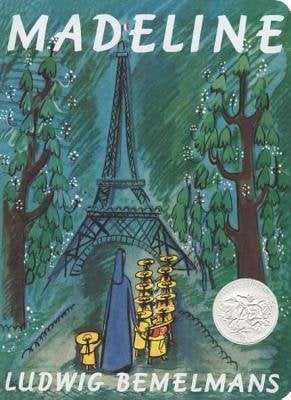
Alice was not the kind of person who enjoyed this attention. She found a piece of land in then rural Weston, Connecticut, and built an estate, where she spent time with an amazing array of interesting people, most of whom were in the arts and many of whom either were then or who are now, quite well-known. She sponsored the children’s writer Ludwig Bemelmans (Madeleine was created there), the actress and producer Eva LeGallienne (with whom she had a lengthy romantic relationship), hosted Vladimir Nabokov, Salvador Dali, George Balanchine (who also lived in Weston), Dave Brubeck, and many others at social gatherings and soirees.
While she kept her apartment in New York City, and eventually had another large home in Palm Beach and a townhouse in Paris too, Weston was always the center of her multifaceted and mostly unknown and undocumented life.
HR executive Nona Footz also lived in Weston for a number of years. She only accidentally learned about Alice Delamar after reading a biography of Eva Le Gallienne by Helen Sheehy. Nona found herself drawn to Alice, and became dedicated to finding out more about this reclusive, highly secretive woman. She spent a decade tracking down anyone she could find who had known Alice, interviewing them and researching her life, all the while in search of Alice’s original papers, including a memoir Alice was rumored to have written, all of which had disappeared upon Alice’s death in 1983.
Nona’s book is not only a mystery story, it is also a memoir as well, in which she recounts her own saga of trying to understand and uncover the true life and times of a remarkable woman. It’s a great story and it was really special for me to have the opportunity to speak with Nona about Alice and this book. I am certain you will enjoy this conversation as much as I did. It is a great story. Don’t miss it!
“A journey through the bedrooms and drawing rooms of the twentieth-century art world where luminaries expressed forbidden sexual desires and found inspiration for much of the art they created. The book is so good, I picked it up and barely breathed until I was finished.” -Mary Gabriel, author of Ninth Street Women
Nona Footz is currently an executive and board recruiter and has been a freelance writer for the magazines VENU and for Art New England. A native of Canada, Footz is an adjunct faculty member at New York University. This is her first book.
Co-author Audrey Clare Farley is the author of The Unfit Heiress and Girls and Their Monsters, which won the Michigan Notable Book Award and was named a New York Times Editors’ Choice.
Some interesting notes: a portion of what was the Delamar property is now the 21-acre Stonebridge Waterfowl Preserve in Weston, which she donated in 1969.
On her estate, Alice had a pool built that includes a tunnel leading from the basement. It is rumored that this was so she could swim in the nude without fear of being seen (or to walk outside).
Delamar funded the Civic Repertory Theatre established by Le Gallienne in New York City.
When she passed away, most of her estate went to Harvard, Columbia, and Johns Hopkins, per her father’s original will.

Podcast: Play in new window | Download
Ethan Mordden: When Broadway Went to Hollywood
February 26, 2017 by David
Filed under Non-Fiction, WritersCast
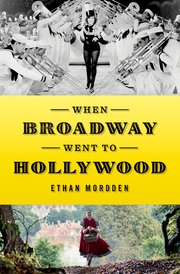 When Broadway Went to Hollywood – Ethan Mordden – Oxford University Press – Hardcover – 9780199395408 – 272 pages – $29.95 (ebook versions available at lower prices)
Ethan Mordden is probably our leading commentator and historian of Broadway musical theater, as well as their somewhat more fraught Hollywood musical cousins. This is a really fun and enlightening book for anyone who is interested in the history of this unique modern American art form. Even if you don’t love musicals, the history of musical theater and its relationship to the movie business is integral to an understanding of twentieth century mass entertainment and popular culture.
The success of the now iconic musical movie, The Jazz Singer, which was among the first films to integrate synchronized music into a storyline in the late 1920s, spurred many of the best songwriters of the “Great White Way” to go west in search of riches. The list included George and Ira Gershwin, Cole Porter, Richard Rodgers, and Lorenz Hart, among many others, who like many New York based playwrights, were enticed by the huge amounts of money paid by Hollywood producers for established east coast talent.
But when Broadway writers and songwriters ran into the very different business and production methods of the movie business, it did not always work out for the best. Movie producers did not want to follow the same structure and outlook of the theatrical forms, and had to aim their products to a very different kind of audience than attended musical theatre in New York City, which Mordden very brilliantly identifies as segmented by the geography and cultural divides of twentieth century America.
There are so many interesting themes to this book. Mordden discusses the various struggles that Broadway songsters had with the Hollywood system, traces the history of the musical in theater and film, and critiques the best and worst productions of both coasts. Reading this book, we get to think about some really interesting questions – did Hollywood create opportunities for storytelling with music, or is film simply antithetical to the musical form? Are movie musicals and theatrical productions really compatible at all?
Mordden has great stories to tell about so many of the people involved in both theater and film, has probably seen more movies than anyone you will ever meet, and knows enough about music to really talk about it technically in a way the average reader will understand. He makes sense of a lot of complicated history and along the way, we get to learn some behind the scenes stories about the great musicals most readers of this book love to watch, and some of the truly terrible musical films that Hollywood has managed to create over the years.
Ethan Mordden started out in theater, as both composer and lyricist; he wrote musicals, but he is best known as a prose writer. Mordden’s fiction output includes several gay themed novels in his “Buddies” cycle, as well as some excellent historical fiction, including The Jewcatcher, and most recently One Day in France. He is also a prolific writer of non-fiction, including six volumes detailing the history of the Broadway musical from the 1920s through the 1970s, guides to orchestral music and operatic recordings, and a cultural history of the American 1920s entitled That Jazz! He has also published Demented, an examination of the phenomenon of the operatic diva, and a coffee-table book on the works of Rodgers and Hammerstein. His Love Song: The Lives of Kurt Weill and Lotte Lenya is a dual biography chronicling the romance and professional collaboration of these two icons, and in 2013 he published Anything Goes: A History of American Musical Theatre. He has also written a number of books on film.
Having grown up in a family that lived some of the history in this book, talking to Ethan about the meeting of Broadway and Hollywood through musicals was tremendous fun for me. He is witty, charming and always entertaining. I think you will really enjoy listening to this conversation.
Podcast: Play in new window | Download
Publishing Talks: David Wilk interviews Andy Doe
March 6, 2013 by David
Filed under Ebooks and Digital Publishing, PublishingTalks, Technology, The Future
 In this series of interviews, called Publishing Talks, I have been talking to book industry professionals and other smart people about the future of publishing, books, and culture. This is a period of disruption and change for all media businesses. We must wonder now, how will publishing evolve as our culture is affected by technology, climate change, population density, and the ebb and flow of civilization and economics?
I hope these Publishing Talks conversations can help us understand the outlines of what is happening in the publishing industry, and how we might ourselves interact with and influence the future of publishing as it unfolds.
These interviews give people in and around the book business a chance to talk openly about ideas and concerns that are often only talked about “around the water cooler,” at industry conventions and events, and in emails between friends and they give people inside and outside the book industry a chance to hear first hand some of the most interesting and challenging thoughts, ideas and concepts being discussed by people in the book business.
I discovered Andy Doe’s writing quite by accident, and a happy accident that was. UK based, Andy comes from the music business. Most recently, he was the COO at classical music label Naxos from 2010-2012, and was head of classical music at iTunes from 2004-2010; now he freelances to help artists, labels and other organizations on recording and marketing activity, both on and offline. He also blogs brilliantly and with a great sense of humor at Proper Discord.
A piece he posted in November, 2012 caught my attention and is one I highly recommend to anyone interested in physical and digital media; it’s called What is Going on with the Record Industry (at New Music Box, a very cool site about new music). It’s a list of ten observations with explications of each. The first one is called “Almost everything you read about the state of the record industry is, at best, totally useless,” which should give you a good idea of where Andy is coming from and where this piece might be headed.
Naturally, I thought it would be fun to talk to Andy about his thinking about the record business and to draw him out on how what has happened and is happening in that industry might apply (or not apply) to the book business. We do tend to think that all entertainment media businesses, including books, music, television, radio, film, video games and even newspapers have similar enough structures and relationships between physical and digital media, as well as similar disruptive innovations as to make the experiences in one useful to the those who work in other creative industries. So we talked about that a bit, as well as how some of what Andy has observed and learned in the music business may not be relevant to book publishing. Overall, because he is such a smart and witty guy, I think this conversation should be of particular interest. As has happened recently, when discussions have been going well, we have gone a bit longer than podcasts usually go. This one is 47 minutes.
Another good reference point I should mention – here’s a written interview with Andy Doe by Tom Manoff you might enjoy as well.
And oh, by the way, this is the 200th interview I have posted on Writerscast since its inception just a few years ago. I’d like to thank all the wonderful writers, technologists and thinkers who have been willing to give me some of their valuable time to pepper them with questions and engage them in my enthusiasms and interests. And I’d also like to thank the individuals who have helped make this project work, my daughter, Emma Wilk, for editing my often poor efforts at recording, website builder and podcast expert Rob Simon of Burst Marketing, and his web guru, Jeremy Brieske.
And in particular I owe thanks to all of you who have listened and responded to this humble effort to contribute to the cultural and intellectual good of all. 
Podcast: Play in new window | Download
Michael Feinstein: The Gershwins and Me: A Personal History in Twelve Songs
January 13, 2013 by David
Filed under Non-Fiction, WritersCast
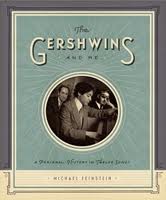 978-1451645309 – Simon & Schuster – Hardcover – $45 (ebook editions available at lower prices)
Michael Feinstein is doubtless the most active supporter and proponent of the Great American Songbook we have. Aside from his own inspiring performances, he is an incredible impresario of the music he loves and that he loves to share. His “Michael Feinstein’s American Songbook” show is on PBS (and past seasons are available on DVD). He performs more than 200 times a year, and records regularly.
Michael has been nominated for five Grammys, most recently in 2009 for The Sinatra Project and his TV special, Michael Feinstein – The Sinatra Legacy, is currently airing on PBS.
He is also the founder of the Feinstein Initiative, that preserves and promotes the Great American Songbook, and serves as Artistic Director of the Palladium Center for the Performing Arts, a $170 million, three-theatre venue in Carmel, Indiana, which opened in January 2011. The theater is home to an annual international Great American Arts festival, diverse live programming and a museum for his rare memorabilia and manuscripts. Starting in 2010, he became the director of the Jazz and Popular Song Series at New York’s Jazz at Lincoln Center. In 2013, he will replace the late Marvin Hamlisch as the lead conductor of the Pasadena Pops.
His many other credits include scoring the original music for the film Get Bruce and performing on the hits television series “Better With You,” “Caroline in the City,” “Melrose Place,” “Coach,” “Cybill“ and “7th Heaven.”
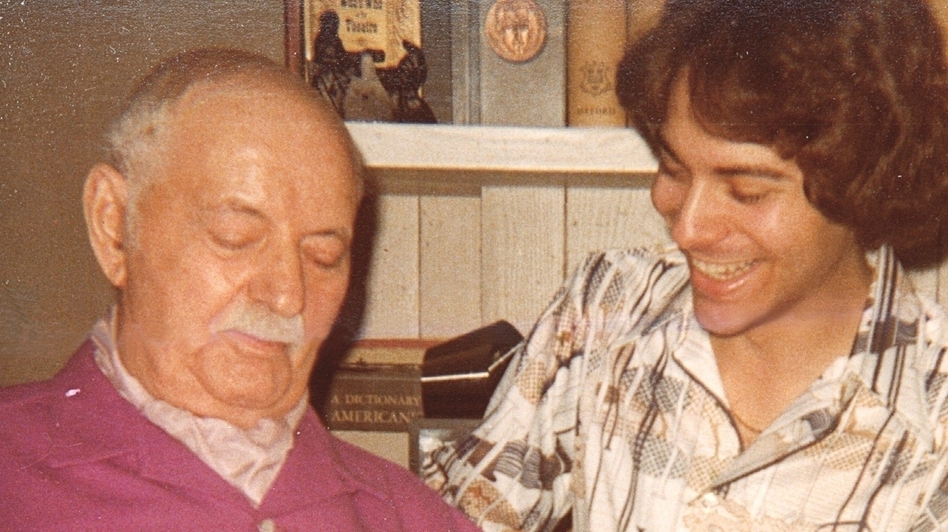
Feinstein was born in Columbus, Ohio, where he started playing piano by ear as a 5-year-old. After graduating from high school, he worked in local piano bars for two years, and then moved to Los Angeles when he was 20. The widow of legendary concert pianist-actor Oscar Levant introduced him to Ira Gershwin in July 1977. Feinstein became Gershwin’s assistant for six years, deeply influencing his life and setting him on the path that has become his life as a singer, songwriter and promoter of music.
In The Gershwins and Me, Feinstein tells a personal story in which each of the twelve chapters highlights one of the Gershwin classic songs, using them to tell the story of the Gershwin brothers and their family, illuminating their music and incredible creativity, and telling memorable personal stories throughout. In this unusual narrative, Feinstein tells a moving chronicle of his own life with the Gershwins and his vision of how their music inculcates so much of modern American life. It’s a wonderful, personal and special book that I very much enjoyed discussing with author Michael Feinstein, whose amazing website demonstrates the incredible breadth of his work in music.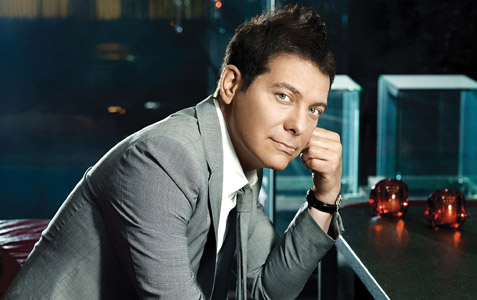
Podcast: Play in new window | Download
Publishing Talks: David Wilk interviews Allee Willis
December 28, 2010 by David
Filed under PublishingTalks, Technology, The Future
 In this series of interviews, called Publishing Talks, I have been talking to book industry professionals and other smart people about the future of publishing, books, and culture. This is a period of disruption and change for all media businesses. We must wonder now, how will publishing evolve as our culture is affected by technology, climate change, population density, and the ebb and flow of civilization and economics?
I hope these Publishing Talks conversations will help us understand the outlines of what is happening, and how we might ourselves interact with and influence the future of publishing as it unfolds.
These interviews give people in and around the book business a chance to talk openly about ideas and concerns that are often only talked about “around the water cooler,” at industry conventions and events, and in emails between friends and they give people inside and outside the book industry a chance to hear first hand some of the most interesting and challenging thoughts, ideas and concepts being discussed by people in the book business.
Allee Willis is one of my all-time favorite people. She is best known as a spectacular and hugely successful songwriter; her songs for Earth, Wind and Fire and the Pointer Sisters were giant hits, she wrote the theme song for “Friends,” the music for the Oprah Winfrey produced Broadway musical production of “The Color Purple, collaborated with the web sensation Pomplamoose (Jungle Music), and as of the date of this posting, her song “I’m Here” was sung by Jennifer Hudson for Oprah Winfrey’s Kennedy Center Honor Award. But all of this musical success notwithstanding, as she herself says, Allee is “a one-woman creative think-tank. A multi-disciplinary artist and visionary thinker whose range of imagination and productivity knows no bounds, her success exuberantly defies categorization-‘unique’ pales as a descriptor.” You have to visit her website to begin to get an idea of what a creative powerhouse she is. Her Allee Willis Museum of Kitsch is not to be missed. She’s constantly creating, integrating music, art, video, multi-media technology and lifestyle via a series of work which she co-composes, sings, plays, produces, draws, animates, directs, designs web worlds for and stars in. The first release, “Allee Willis Presents Bubbles & Cheesecake “It’s A Woman Thang”-part of a 6-song collaboration with singer-songwriter Holly Palmer (aka Cheesecake) was selected as Official Honoree in the 2008 Webby Awards, and won three 2008 W3 Awards. Her second video, “Allee Willis Presents Bubbles & Cheesecake “Editing Is Cool” was also ‘featured’ on YouTube. At one point, Willis’ 2009 video “Hey Jerrie,” co-starring 91-year-old female drummer on an oxygen tank Jerrie Thill, was the 12th most popular video in the world on YouTube.
I wanted to talk to Allee mainly because she has been working with the internet in her work almost since the ‘web went public – as she points out, the ‘web itself is her medium. She is the ultimate social being, her work itself is social art, her medium is her life. Anyone working in an artistic discipline today can learn from what she knows and how she conducts herself as an artist. I loved talking to Allee about her work and what she knows – which is a tremendous amount. And now I am addicted to her website too. Writers and publishers, please pay attention to what she has to say: art is social! books are bait!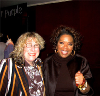
Podcast: Play in new window | Download
David Lehman: A Fine Romance: Jewish Songwriters, American Songs
May 6, 2010 by David
Filed under Non-Fiction, WritersCast
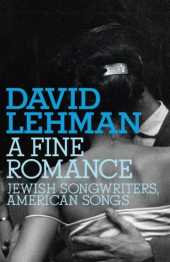 978-0805242508 – Shocken Books – Hardcover – $23.00 (also available in e-book format)
What a lovely book this is. David Lehman is an acclaimed anthologist and a poet (his most recent book of poems is Yeshiva Boys), and David’s approach to the great American songbook of the 20th century is complex and personal, written from an interior place, while at the same time, erudite and celebratory of the full glory of the words and music he writes about. Lehman brilliantly evokes the individual lyricists and composers who made this music, so many of whom were the first generation children of immigrants from eastern European countries and were somehow able to meld their art with the true soul of America. They created music that both evoked their era, and simultaneously defined it.
Lehman explores the rich complexity of American music in the early to mid-Twentieth Century, as the musical soul of Jewish songwriters melded itself to the African-American jazz and blues tradition to make something new and unique. All the greats are here, Berlin, both Gershwins, Rogers, Hart, Hammerstein, and many more. He tells the stories behind the songs, and brings to life the composers and lyricists who wrote them.
For David Lehman, this music is touchstone to his being, and that deeply felt connection shines through his words. Reading this book allows one then to connect to the author, also in a deeply felt way. Lehman is a fine writer, in full command of his subject. I liked what John Ashbery said about David: “David Lehman’s A Fine Romance wittily explores the enormous contribution of Jewish writers and composers to the American musical scene. Lehman finds Jewish influence, or what he calls ‘a plaintive undertow,’ even in such unlikely upbeat anthems as Gershwin’s ‘Love Walked In.’ His love-struck history is itself a major entertainment.”
Talking to this author about the stories and music, and especially the songwriters themselves was for me a natural extension of reading the book, and inhabiting the author’s personal life through its pages. We covered alot of ground, including much about the unusual, impressionistic style and structure of the book, and of course the music, the songwriters, his many anecdotes and stories, and David Lehman’s obvious love of his subject. I hope you will enjoy listening to it as much as I enjoyed the conversation with the author.
Podcast: Play in new window | Download
Arthur Phillips – The Song is You – Part 2 of a 2 Part Interview
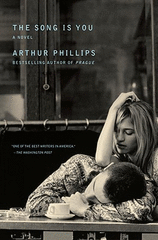 9781400066469 (hardcover)
Random House, $25.00
Writerscast host David Wilk continues his interview with Arthur Phillips, acclaimed author of Prague, The Egyptologist and Angelica. Phillips was born and raised in Minnesota, educated at Harvard, and now lives in Brooklyn, the setting for his newest novel The Song is You. It is a beautifully written, complicated, sometimes painful, often extremely funny and very modern novel. Music is a critical underpinning of the story, and the complexity of the relationship between listener and performer is deeply entwined with the unusual love story that is at the heart of the novel. Phillips is widely considered one of the best novelists writing today – and The Song is You is solid evidence of how good he really is. Kate Christensen’s New York Times review says it best: “the whole novel zings with fresh insight and inspired writing. “The Song Is You” is smaller, more focused and more character-driven than Phillips’s earlier books, and it’s not only a welcome new direction, but also a novel impossible to put down.”
In this second segment of a lively and revealing two part interview with Writerscast host David Wilk, Phillips continues to discuss his newest book, and how he wrote it, the role of music in the novel, what he is working on next and explores some of the interesting and interior elements of the novel and his life as a writer.
Podcast: Play in new window | Download
Arthur Phillips – The Song is You – part 1 of a 2 part interview
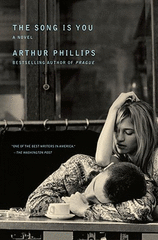 9781400066469 (hardcover)
Random House, $25.00
Writerscast host David Wilk interviews author Arthur Phillips, acclaimed author of Prague, The Egyptologist and Angelica. Phillips, who was born and raised in Minnesota, and educated at Harvard, now lives in Brooklyn, which is also the setting for his newest novel The Song is You. It is a beautifully written, complicated, sometimes painful, often extremely funny and very modern novel. Music is a critical underpinning of the story, and the complexity of the relationship between listener and performer is deeply entwined with the unusual love story that is at the heart of the novel. Phillips is widely considered one of the best novelists writing today – and The Song is You is solid evidence of how good he really is.
In this first segment of a lively two part interview with David Wilk, Phillips talks in detail about his new book The Song is You, what it is about, how he came to write it, what music means in the novel and for his main character, as well as what it has meant to him, how he writes, and how he sees his work in the context of his own daily life.
Podcast: Play in new window | Download