
Tamara Dean: Shelter and Storm: At Home in the Driftless
September 9, 2025 by David
Filed under Non-Fiction, WritersCast
 Shelter and Storm: At Home in the Driftless – Tamara Dean – University of Minnesota Press – 9781517918569 – Paperback – 224 pages – April 22, 2025 – $19.95 -ebook editions available at lower prices
Books like Shelter and Storm are all too often errantly categorized as “regional,” both by publishers and reviewers alike. That’s a problem, as if you think of this book as being “only” about the Driftless region, or Wisconsin, or even the Midwest as its “region,” too many readers might not be interested enough to read this book. It’s an irony for anyone writing from or about a specific place – it may be that through a deep understanding of a unique place that one can address and communicate the most universal issues of human life and the natural world.
Tamara Dean is a truly gifted writer, and I suspect that she can write well about almost anything. But this book is personal, and it gives her storytelling abilities the opportunity to shine. There are twelve “stories” in this book, really linked chapters that document on multiple levels, the time she spent during a “return to the land” experience not that many years ago in the truly unusual region called The Driftless because the glaciers that extended across this continent managed to miss this part of what is now mostly Wisconsin (and a bit in Iowa). It’s not flat there, but rather consists of steep hills and deep valleys, highly forested with a number of spring-fed streams.
While the stories are about Dean’s life there, she uses her own experiences to illuminate a variety of issues that matter to almost all of us, from climate change as it affects peoples lived lives (especially in farm communities), how people create community and mutuality, survive natural and household disasters, and citizen science (with a special interest in blue-glow fireflies). Dean’s personal experiences are transformative for her, and through her essays, for us as well
Tamara Dean’s Shelter and Storm is reminiscent of the best writing about nature and rural living, including works by Aldo Leopold, Edward Abbey, Wendell Berry and Gary Paul Nabhan. Tamara Dean’s writing will engage those many of us who care deeply about climate change and sustainability, and her stories will make you feel that it is possible and necessary to spend more time not only being in the natural world, but reflecting on what it means now for us in our alienated, disconnected, thoroughly modern world, and how we might forge a way of being that allows us to live better lives and preserve some level of nature still.
I do want to say that this book is one of the best of the many I have read this year. And I truly enjoyed having the opportunity to speak with Tamara about the book and her experiences in the Driftless, a place I now very much want to visit to experience for myself.
Tamara Dean’s essays and stories have been published in magazines including The American Scholar, The Georgia Review, the Guardian, One Story, Orion, and The Progressive. She is also the author of The Human-Powered Home: Choosing Muscles over Motors. She teaches writing independently in various locales.
“It may sound familiar, but Shelter and Storm is an engaging read largely because Dean is a very good writer.”—Big River Magazine
“Tamara Dean’s luminous essay collection paints a thoughtful portrait of the Driftless region of Wisconsin and the struggles it faces due to climate change.”—Shelf Awareness
“The essays collected in Shelter and Storm, grounded in Dean’s experience tending to and rewilding neglected farmland in the Driftless region, are a product of Dean’s lively, curious, meticulous mind, exploring topics as varied as the impacts of climate change, the challenges of sustainable living, brickmaking, prairie tending, and the history of abortion […] At their essence, these essays are informed by awe. They are about what happens when we make space in our lives for deep attention and wonder.”—Craft Magazine
Author website here.
Buy the book at Bookshop.org


Podcast: Play in new window | Download
Anders Dunker: Rediscovering Earth
May 18, 2021 by David
Filed under Non-Fiction, WritersCast
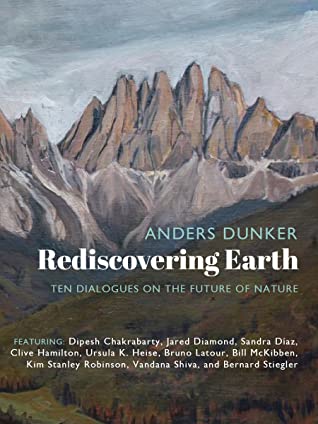 Rediscovering Earth: Ten Dialogues on the Future of Nature – conversations with Anders Dunker – OR Books – 9781682195086 – Paperback – 240 pages – $23 – ebook versions available at lower prices
Thinking about how to think about climate, earth, humans on it, and the future, are major challenges for all of us who care about the future of our planet. It may be that most of us alternate between despair and rage, and even with an optimist’s outlook, we have trouble dealing with the sheer scope of what is happening to our surroundings (I think using the words “environment” and “earth” and “planet” has now become counterproductive).
I am constantly searching for writing, whether it is in books, online or in magazines, that will offer me constructive perspectives, different and hopefully better conceptual frameworks than those we have developed, toward making it possible to be both continually engaged and continually energized. I don’t usually feel I can do that on my own.
Anders Dunker’s collection of conversations with some of the deeper thinkers about the future and us in it, turns out to be very useful. The diverse viewpoints, the language of thoughtfulness and care, the commitment to inquiry, are all inspiring elements of this short book. And with such a diverse set of outlooks, it is possible to not lose sight of the core reason for this book to exist – to inspire hope.
Dunkers poses this question: “if we know that we are destroying the planet, our habitat, why do we continue to do it?” His dialogues attempt to investigate this question, and thereby come to some sense of how we might go forward, not ourselves alone, but the nature that we rely on, together.
This is the challenge we face right now. The challenge will be different in a few years, the unfolding story will force a reckoning. For now, those who read the stories in Rediscovering Earth will be able to come to a better sense of what we can and must do together in this moment.
Dunkers proposes that our future, nature itself, will be based on how we navigate the realm of culture, including philosophy, art and literature, the groundwork of our being, as much as or more than in scientific and technological matters. In order to act, we must redefine ourselves, become truly planetary citizens, and recognize how we are all connected, and then act upon, from that, understanding.
We had a terrific conversation, not only about the book and the contributors to it, but about how we will uncover the future and live in it together. A very hopeful experience. I came away from our talk fully energized, and feeling stronger.
Anders Dunker bio (from his website): Born in Norway, raised in the countryside in a family much dedicated to wildlife and nature. Educated in humanistic subjects and Cultural History at the University of Oslo, with Philosophy, Comparative Religion and Comparative Literature as main subjects. Teacher of Aesthetics and other subjects at the University of Oslo, Philosophy and Cultural History in Rome and Barcelona.
Senior lecturer at Kulturakademiet (Norwegian private college) for 10 years, now writer for acclaimed Norwegian & international newspapers and magazines (Le Monde diplomatique, LA Review of Books, NyTid, Vagant, Samtiden, Modern Times Review, Agora). Board member of the Norwegian Writers’ Climate Campaign,
Series Editor of Futurum Collection at Existenz Publisher (Norway) and Editorial Board Member at Technophany, a journal for Philosophy and Technology.
His current book projects include an essay on the future as seen from California and a volume on Peter Sloterdijk’s philosophy. Anders currently lives with his wife, an environmentalist and animalist singer, in Los Angeles, California. He is also a plein air painter.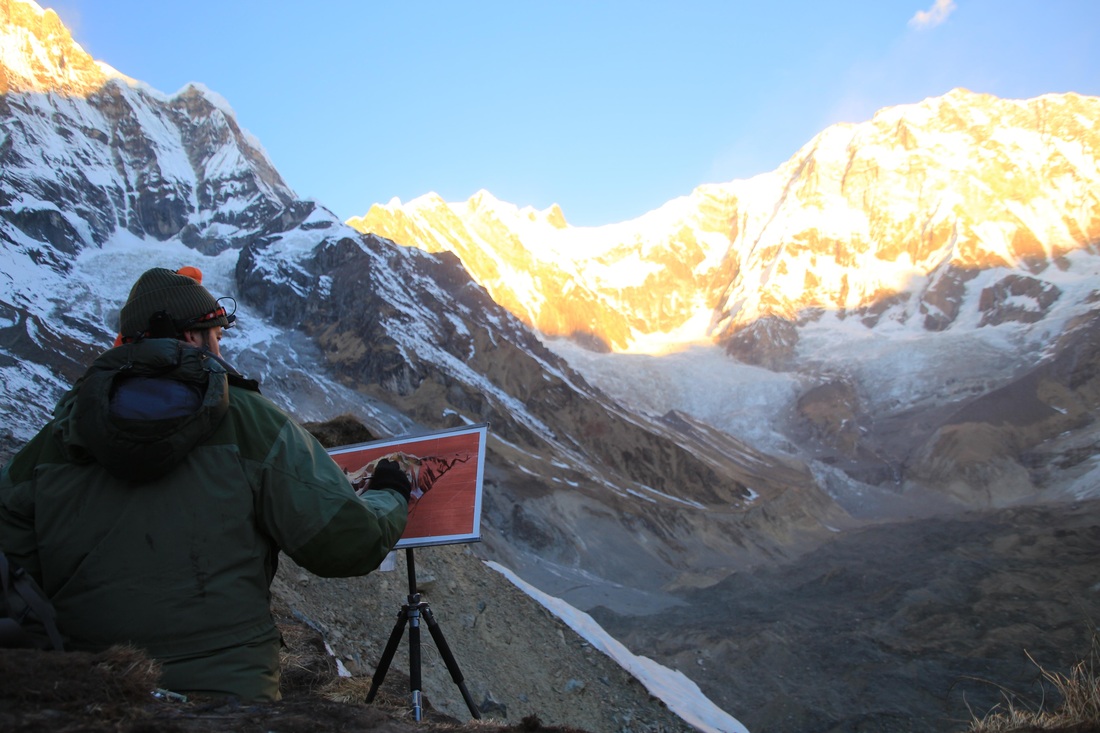
From Dialogue One: “The Rediscovery of the Earth—with Bruno Latour”
Anders Dunker (AD): Historically, the age of discovery is over. Are we none the less in a new age—an age of rediscovery—that can lift our spirits and propel us past the nagging feelings of tragedy?
Bruno Latour (BL): Well, it is my way of being optimistic. It is my way of not taking part in the sense of doom. Scientifically and technically, it is perfectly rational to be a pessimist, but I don’t think it makes much sense politically. Optimism has nothing to do with technoscience—DNA plus cognitive science plus robots plus outer space. Instead it is connected with exploring the world we thought we knew. I will borrow the term from you and call our time period an age of rediscovery, even if it is grandiose. What we call local has quite a different meaning in relation to Gaia than it previously had. It now has many different dimensions. The rediscovery of a place is in some ways a cliché—since ecologists have been talking about the same thing for years—but this concept also leads to a different way of framing the world, it leads to another geometry, so to speak. Water gets another meaning. Ice gets another meaning. Industry is considered in relation to the amount of CO₂ in the atmosphere. We see things in new ways. Antibiotics have a different kind of globalization than weeds, for example.
AD: Traditionally, the concept of the local has had a flavor of subjectivity—existence circumscribed by the immediate horizon—in contrast to the scientific gaze, which purports to see everything as if from outer space?
BL: And here lies the error. The local is objective. The gaze from inside the critical zone is completely objective, it is just objective in a different way. What we see is real, but this reality only becomes visible if we learn what different parties are up to, what they need, what they want, what they can accomplish.
Buy the book directly from the publisher, OR Books.
Podcast: Play in new window | Download
Amy Stross: The Suburban Micro-Farm
September 19, 2019 by David
Filed under Non-Fiction, WritersCast
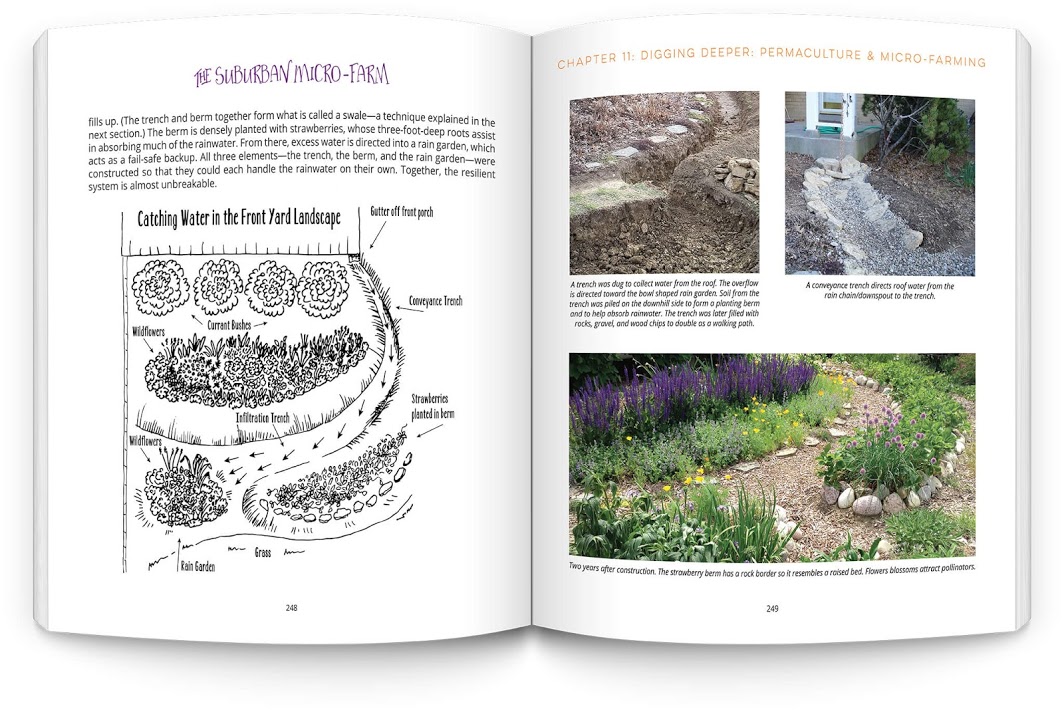
 The Suburban Micro-Farm: Modern Solutions for Busy People – Amy Stross – 9780997520835 – Twisted Creek Press – Paperback – 356 pages – $34.95 – March 23, 2018 – ebook versions available at reduced prices.
“…this book takes a permaculture approach to starting a micro-farm in the suburbs that speaks not just to a stay-at-home mom or dad, but to all busy people. Indeed, it is one of the few gardening books that is aware that you may not have a lot of time to start a garden, and shows you that it’s still possible anyway.” – Jesse Frost, Hobby Farms
I love gardening, gardens, and would be thrilled if every suburban lawn was turned into a vegetable garden, berry patch or orchard (or all of those things). I’m an enthusiastic gardener, but not a great planner, and I need the kind of help that Amy Stross provides in this truly excellent book. Even if you never pick up a hoe or dig in the dirt, you will learn a huge amount about food growing in relatively small spaces from this book and you will be able to explain to your neighbors, friends and family why they all should be outside right now working on their gardens.
There is so much good information, and reading this book is so inspiring, it is impossible to know where to begin in describing it. Suffice to say, while there are many great books about gardening, but this one deserves to be on every gardener’s bookshelf, and especially for any beginner who wonders how to get started, this book is essential. There is alot of work involved when you seriously grow vegetables and fruit in a small space, and planning is essential. This book provides the gardener, beginner or otherwise, with terrific tools for planning and organizing, and for avoiding the many mistakes that are easy to make along the way to growing your own fruit and vegetables.
Now that it’s fall, this is the perfect time to start planning your garden for next year. Read this book, lay out and build your garden beds, and order seeds for spring! If you’ve never gardened before, start with a small space you can handle and build from there.
Here are just a few things covered in The Suburban Micro-Farm:
How to make your landscape as productive as it is beautiful
Why the suburbs are primed with food-growing potential
How to choose the best crops for success
Why you don’t need the perfect yard to have a micro-farm
How to use easy permaculture techniques for abundant harvests
The idea of an edible yard is more than just romantic, it is a practicality for many of us. There are lots of benefits besides being able to grow your own food – getting rid of lawns and lawn maintenance is good for the natural environment and makes a dent in climate change mitigation, raising vegetables and fruit is healthy for your body in two ways – the work of gardening is good for your health and the food you eat from the work you put in is always better than what you can buy in a store, even an organic one.
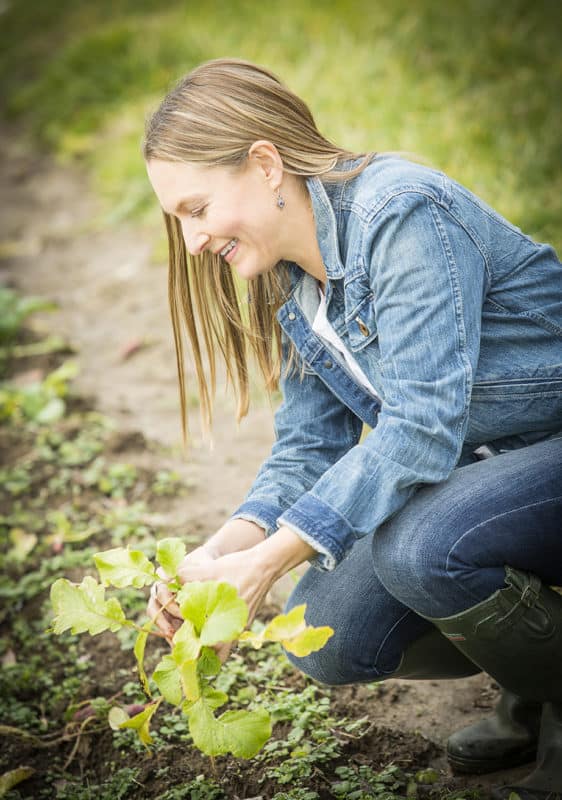
Amy is a terrific teacher, well organized, thoughtful and clear eyed.
I really enjoyed speaking with her and recommend this book to any and all who will listen. Visit her website here to learn more about Amy, her approach to gardening, and where to buy the book (though I recommend purchasing from my friends at Chelsea Green Press, who have been publishing books in this category for many years).
And have fun in the dirt! I was inspired by reading this book to build a bigger garden this year, which was very productive, and next year, we are planting blueberries and fruit trees in our very small front yard. Thank you Amy Stross!
Nonfiction Book Awards 2018 Gold Winner
Foreword INDIE Awards 2018 Gold Winner (Hobbies & Home category)
Nautilus Book Awards 2018 Silver Winner (Green Living & Sustainability category)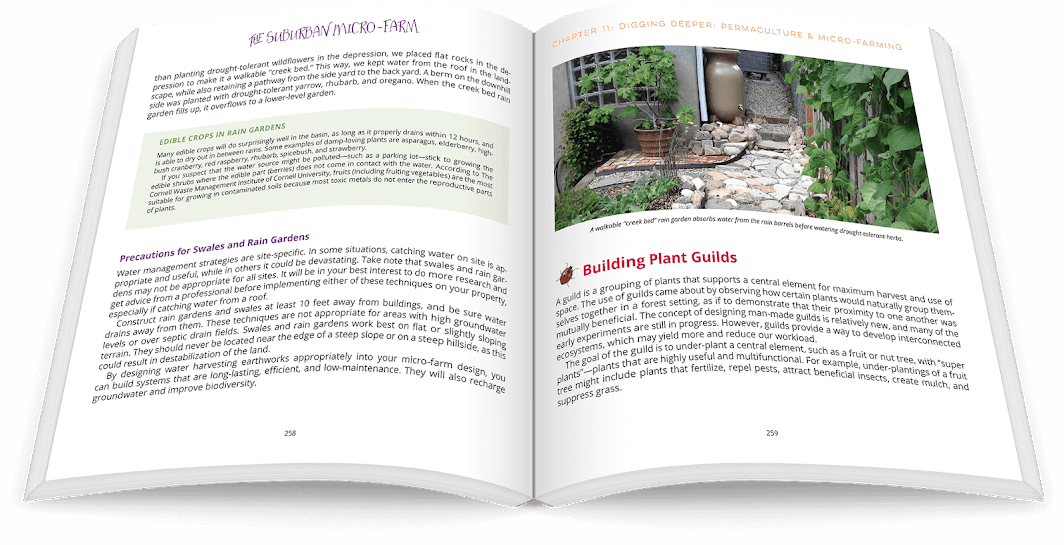
Podcast: Play in new window | Download
Jeremy Brecher: Against Doom: A Climate Insurgency Manual
September 1, 2017 by David
Filed under Non-Fiction, WritersCast
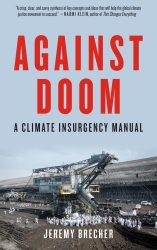 Against Doom: A Climate Insurgency Manual – Jeremy Brecher – PM Press – Paperback – 978-1-62963-385-5 – $12.95 – 128 pages – April 2017 – ebook versions available at lower prices.
For years leading up to the 2016 election, when Americans alarmingly voted (somehow) for a president who maintains the bizarre fiction that climate change is a hoax invented by the Chinese, we have been heavily propagandized and brainwashed by inaccurate and misleading information about climate science supplied by corporate financed sources. Only half of us believe that climate change is caused by human activities, something that scientists overwhelmingly recognize is true, based on actual data.
Still, millions of our fellow citizens do understand the danger to human life and our natural environment by human caused climate change. So many of us are searching for ways to make a real impact on the future through concrete actions. The scale and scope of what we face, and the impediments we face daily to rational thought and action are daunting and sometimes overwhelming.
We need tools – both to understand what is happening in our world, and to help us act positively to make change and to oppose those who seek to diminish and undermine our efforts.
Jeremy Brecher is a long time organizer and thinker about social change. He has been involved in environmental issues for almost thirty years. He puts much of what he has learned into Against Doom, this short but powerful book that I can recommend to any and all of us who want to join the global movement for change. What he calls “climate insurgency” is a strategy for using people power to realize our common interest in protecting the climate. It uses mass, global, nonviolent action to challenge the legitimacy of public and corporate officials who are perpetrating climate destruction. This may be our best hope for saving the planet and human civilization, while at the same time helping change that civilization for the better.
Against Doom: A Climate Insurgency Manual provides guidance in how we can put this strategy into action and succeed. It’s an essential read now. Listen to my optimistic conversation with Jeremy and go buy this book!
Jeremy Brecher is the author of more than a dozen books on labor and social movements, including Save the Humans? Common Preservation in Action and the now-classic labor history Strike!, recently published in a revised fortieth anniversary edition by PM Press. He has been writing about climate protection since 1988, most recently in his book Climate Insurgency: A Strategy for Survival (2015). Jeremy is a cofounder of the Labor Network for Sustainability and lives in rural northwest Connecticut. Jeremy was arrested in the early White House sit-ins against the Keystone XL pipeline.
There are many organizations and websites working on climate change insurgency efforts. Visit Jeremy’s own site for a good introduction or go here for a list of reputable climate change nonprofit organizations you can work with.

Podcast: Play in new window | Download
Elizabeth Hand: Fire
May 11, 2017 by David
Filed under Fiction, WritersCast
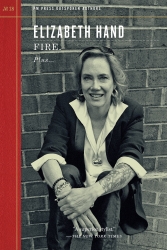 Fire (Outspoken Authors Series) – Elizabeth Hand – PM Press – paperback – 978-1-629632-34-6 – 128 pages – paperback – $12.98 (ebook version available at $9.99)
Over the years, I had heard of Elizabeth Hand, and knew she was a writer to be reckoned with, but I had never read her science fiction and mystery novels or stories. She was just not on my radar. Now, having read this fantastic short collection of some of her fiction and nonfiction, I have belatedly begun to understand the scope of her work and enjoyed the opportunity to experience her powerful writing.
Fire is a short book that packs a big punch. Maybe it is the ideal introduction to Hand’s work, and maybe that was PM Press’ intention in publishing it. The title story was written especially for this book. It is a powerful post-apocalyptic short story set in a world – our own – approaching global conflagration.
In a useful essay, “The Woman Men Couldn’t See,” Hand examines the work and life of Alice Sheldon, who wrote some stunning science fiction novels under the pseudonym “James Tiptree, Jr.” in order to conceal identity from both readers and her bosses at the CIA. In another nonfiction contribution called “Beyond Belief,” Hand talks about how she went from being a troubled teenager to a serious writer. Other pieces include some of her short fiction, a bibliography of her writing, and PM’s own interview with the author (which I tried to not replicate in my own conversation with Elizabeth).
After seeing Patti Smith perform, Hand became involved in the nascent punk scenes in DC and New York. She worked at the Smithsonian’s National Air and Space Museum in Washington, D.C. Hand is the author of a number of novels and three collections of stories and her work has been recognized by the Nebula, World Fantasy, Mythopoeic, Tiptree, and International Horror Guild Awards. Her novels have been chosen as notable books by both the New York Times and the Washington Post. Hand is a regular contributor to the Washington Post Book World and the Magazine of Fantasy and Science Fiction, and lives with her family on the coast of Maine.
Talking to Elizabeth Hand was great fun for me. She is as good a conversationalist as she is a writer, and has alot to say that I think listeners will find interesting. I hope this interview with Elizabeth Hand will be a useful and meaningful contribution to our literary landscape. Now that I have become familiar with her work I intend to add Elizabeth Hand’s fiction to my ever expanding list of “must-read” books. Thanks to PM Press for introducing me to this wonderful writer’s work.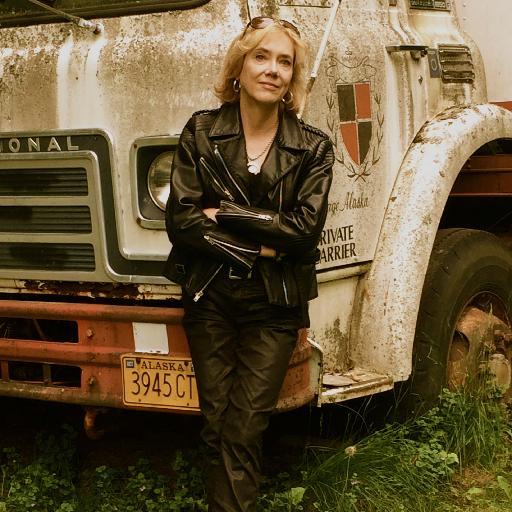
Podcast: Play in new window | Download
Courtney White: Two Percent Solutions for the Planet
October 22, 2015 by David
Filed under Non-Fiction, WritersCast
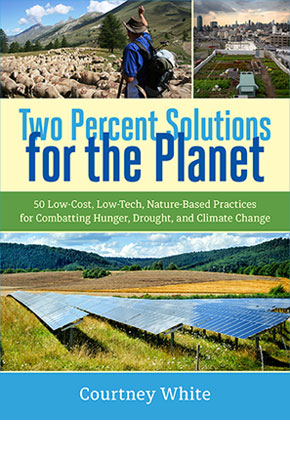 Two Percent Solutions for the Planet: 50 Low-Cost, Low-Tech, Nature-Based Practices for Combatting Hunger, Drought, and Climate Change – 9781603586177 – Chelsea Green Publishing – 240 pages – paperback – $24.95 – October 2015 (ebook versions available at lower prices)
It’s my belief that climate change and its consequences are the single most important issue of our time. I am almost continuously upset by the responses of our society to environmental and planetary matters, which usually range from denial to despair.
Part of the problem is simply its scope. Solving planetary scale problems is simply beyond the ability of most of us to comprehend, much less to try to accomplish anything meaningful for us.
When I ran across this book, published by my friends at Chelsea Green Publishing in Vermont, I knew it would be a book I would like. And having read it, I continue to be inspired by its simple practicality. I’ve learned a lot from author Courtney White and can recommend this book to all, regardless of whether you are actually in a position to apply any of the ideas here. Even if you are a couch potato or a city dweller, this book will help you understand what is possible and practical for us to do in order to make a meaningful change in how we live on this earth.
I lifted the following paragraph from Courtney’s website, A West That Works, because it best explains what this project is all about, and places it meaningfully in context.
We live in what sustainability pioneer Wes Jackson calls “the most important moment in human history,” meaning we live at a decisive moment of action. The various challenges confronting us are like a bright warning light shining in the dashboard of a speeding vehicle calledCivilization, accompanied by an insistent and annoying buzzing sound, requiring immediate attention.
I call this moment the Age of Consequences – a time when the worrying consequences of our hard partying over the past sixty years have begun to bite hard, raising difficult and anguished questions.
How do you explain to your children, for example, what we’ve done to the planet – to their planet? How do you explain to them not only our actions but our inaction as well? It’s not enough simply to say that adults behave in complex, confusing, and often contradictory ways because children today can see the warning light in Civilization’s dashboard for themselves. When they point, what do we say?
As a parent and as a writer, this anguished question created a strong desire to document the sequence of events that I was witnessing as well as attempt to explain our behavior as a society. Hopefully, we would manage to turn off the warning light in the dashboard, but if we did not I was certain that future generations would want an accounting of our behavior.
So, in 2008 I began to write, blending headlines, narrative with travel and research into chronological installments, crossing my fingers.
I think he has done an admirable piece of work toward giving us a better future. Our conversation should add to an understanding of what is possible. Do go buy this book!
A former archaeologist and Sierra Club activist, Courtney dropped out of the ‘conflict industry’ in 1997 to co-found The Quivira Coalition, a nonprofit dedicated to building bridges between ranchers, conservationists, public land managers, scientists and others around the idea of land health. Today, his work concentrates on building economic and ecological resilience on working landscapes, with a special emphasis on carbon ranching and the new agrarian movement. His writing has appeared in numerous publications, including Farming, Acres Magazine, Rangelands, and the Natural Resources Journal. His essay The Working Wilderness: a Call for a Land Health Movement was included by Wendell Berry in 2005 in his collection of essays titled The Way of Ignorance. Island Press published Courtney’s book Revolution on the Range: the Rise of a New Ranch in the American West and Courtney co-edited, with Dr. Rick Knight, Conservation for a New Generation, also published by Island Press. He lives in Santa Fe, New Mexico, with his family and a backyard full of chickens.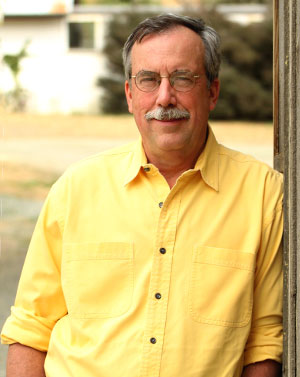
Podcast: Play in new window | Download
James Howard Kunstler Reading from an Unpublished Novel
March 20, 2013 by David
Filed under AuthorsVoices
 Genetically and biologically, we humans must still be heavily pre-literate, so the oral transmission of ideas, art and culture is powerful for us; we listen and concentrate on the words differently than we are used to doing when we consume written texts. I have always enjoyed hearing writers read their work. The author’s voice carries intonation and meaning that adds to the impact of the work and makes me feel closer to the writing.
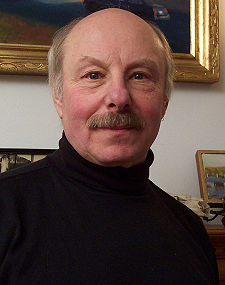
So it’s a great pleasure to feature one of my favorite writers, James Howard Kunstler, in the AuthorsVoices series here at Writerscast. Kunstler is the author of a long list of really interesting books. He started out as a novelist, publishing novels on a variety of topics and settings through the nineties, when he switched to publishing nonfiction books about social and geographical issues, focusing on the suburbanization of America for the most part. The in 2005, Grove Atlantic published his The Long Emergency, a brilliant and troubling book about climate change and the “converging catastrophes of the 21st Century.”
In February, 2011, I interviewed Jim about the post-apocalyptic World Made by Hand series of novels that are his imaginings of what life will be like in the world after the collapse he predicted in The Long Emergency. At that time, he had written and published two books in the series, World Made by Hand and The Witch of Hebron. That interview can be found here. The third book in the series is still in progress, and it is from that novel that Jim is reading in this recording.
Kunstler’s excellent and active website is here. He blogs weekly and always has something interesting to say. You can read about his newest book, Too Much Magic, here; this book tells us how and why the long emergency is already upon us. The world in the novels he imagines may get here sooner than we think.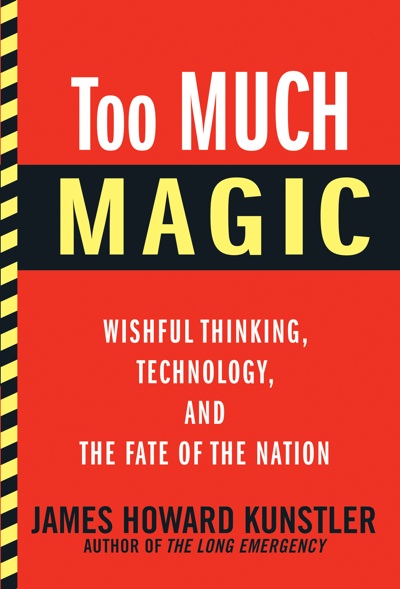
Podcast: Play in new window | Download
Anna Lappe: Diet for a Hot Planet
July 2, 2011 by David
Filed under Non-Fiction, WritersCast
 978-1-60819-465-0 – Bloomsbury – Paperback – $15.00 (ebook editions available)
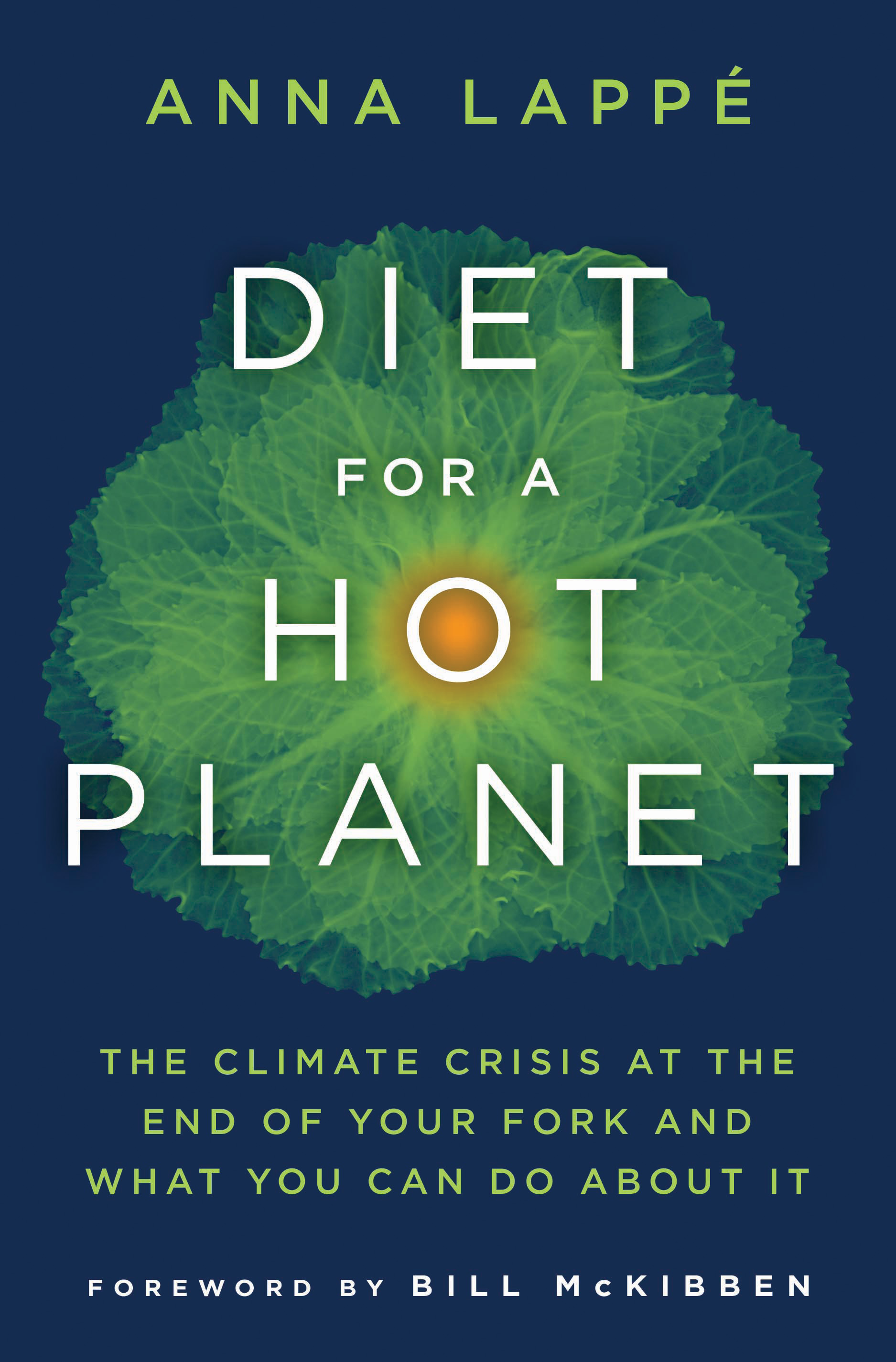
Anna Lappe´ is the daughter of the well-known activist and writer Frances Moore Lappe´, author of the classic Diet for a Small Planet, a book that introduced Americans to the idea of thinking about food and its role in ecology and the world economy, and how food is so deeply intertwined with economics and politics. Anna has therefore been involved in food issues since she was a child. She and her mother collaborated on another interesting and challenging book, Hope’s Edge in 2002. So it’s not a surprise that she is so thoroughly cogent and coherent writing and talking about food issues in the context of climate change.
As Anna says on one of her many website, takeabite.cc, “the food system is responsible for as much as one-third of all greenhouse gas emissions. These emissions are particularly alarming because the food sector is the biggest driver behind methane and nitrous oxide emissions, which have global warming effects many times more powerful than carbon dioxide.” In Diet for a Hot Planet, Lappe´ goes straight to the heart of the issue: if we are going to think about the global climate crisis, we have to think about our food system, and if we are going to make change to mitigate the effects of climate change, we must make changes (now) in the global industrialized food system that dominates most of the world today.
This book was extensively and deeply researched; Lappe´ talked to many scientists, went to UN, governmental, corporate, and grassroots agriculture conferences, worked her way through many lengthy and dense reports and studies, and also visited organic farms around the world.
In this book she has put together an impressive array of facts proving that global industrial agriculture—specifically the use of hazardous chemicals, concentrated animal feeding operations, biotech crops, and processed foods—is impoverishing the land, destroying rain forests, polluting waterways, and emitting nearly a third of the greenhouse gases that are heating the planet.
By contrast, intelligently designed and operated organic-farming methods reduce carbon emissions and toxic waste while at the same time nurture soil and biodiversity. Lappe´is convinced (and will likely convince you) that eating according to ecologically appropriate principles can not only influence the marketplace and help combat world hunger and climate change, but will make us healthier and safer as well. Lappé also decodes food labeling, exposes Big Ag’s “greenwashing” tactics, and offers “seven principles of a climate-friendly diet.”
With a terrific foreword by the brilliant Bill McKibben, Diet for a Hot Planet should be essential reading for anyone who is trying to grapple with making real change in the way we live on this fragile planet. Anna is a terrific public speaker and our talk for WritersCast is lively, full of information, and optimistic and positive as Anna herself.
Anna Lappe´related organizations and websites should be on your bookmark list:
Take a Bite Out of Climate Change

Podcast: Play in new window | Download
Dale Pendell: The Great Bay: Chronicles of the Collapse
August 21, 2010 by David
Filed under Fiction, WritersCast
 978-1556438950 – North Atlantic Books – Hardcover – $21.95
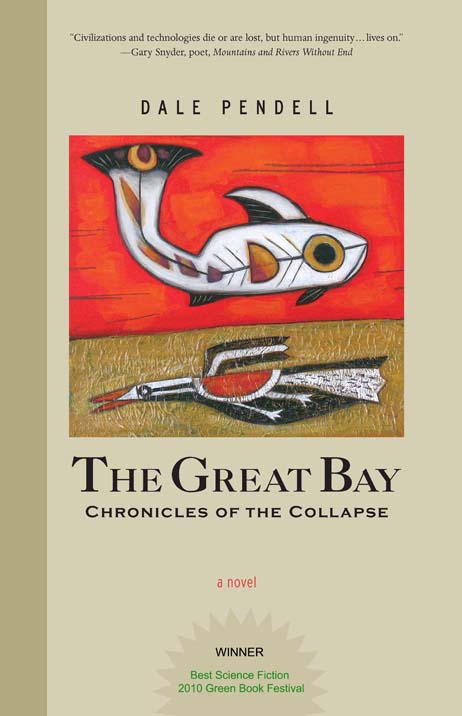
This is an amazing novel. Consider it a work of “ecological science fiction” as some have called it. I found it captivating, terrifying, incredibly emotive and reading it becomes almost a spiritual exercise. Pendell posits a worldwide collapse of population from a biological war gone amok. More than 95% of humanity disappears, almost overnight. He actually does not spend much time on this part of the story, horrific as it is, because that catastrophe is really just the lead in for the much bigger story of what happens next.
Aside from the critical principle of understanding, that modern human society will simply collapse, that going back to prior technologies becomes impossible because people no longer have the knowledge or skills, to live the way our ancestors did, and critically, cannot relearn them overnight in the face of societal collapse, the central tenet of this novel is that climate change will have been unleashed by what modern society *has already done* to the natural world. The computer models of planetary climate change are simply not able to fully contain and predict the massiveness of what is about to happen to the planet and the natural world that inhabits it.
The novel is essentially a brilliant imagining of what might or could be the future of the planet over the next hundreds, thousands of years, based on the supposition that humans have already begun this process of change. It’s a rich set of interlocking stories, mostly focused on the area that is known today as California, a bio-geographic landscape that author Pendell knows well, and imagines changing in profound and sometimes painful ways for the reader of his story.
This is a very unusual novel – really the main character is the planet and there are no traditional heroic human characters at its center. While we might search for and find labels for it (“dystopian” or “utopian,” “science fiction” or even “parable”), I’d rather think of it as a kind of vision-telling, a myth in the making, that seeks to change the way we think about ourselves. Indeed, there is a great deal of suffering and difficulty in the book, and at the same time, a powerful sense of continuity, what truly sustains. As the great poet Gary Snyder (who is a fictionalized character in the book, as it happens), says about the novel: “Civilizations and technologies die or are lost, but human ingenuity–families, tribes, and villages, the musicians, shamans, philosophers, and people of power–live on.” I’d add that not only does human ingenuity live on, so does Gaia, our planet home, adjusting and re-adjusting its inner and outer being, regardless of which or how many humans may be hanging on for dear life.
In my conversation with Dale, we talked about his background as a writer, poet, biologist, and how this brilliant vision of a book came into being. It’s an interview and a book I’d recommend to all my friends and colleagues – it’s impossible to read and not do alot of thinking about the future, as well as what we need to do about it – right now.
Podcast: Play in new window | Download
James Gustav Speth: The Bridge at the Edge of the World: Capitalism, the Environment, and Crossing from Crisis to Sustainability
August 30, 2009 by David
Filed under Non-Fiction
 978-0300151152 – paperback – Yale University Press – $18.00
While I was reading The Bridge at the Edge of the World, I often would exclaim out loud as so many of the ideas the author talks about are ones I believe in and feel are important to the dialog about the future of our planet. This is an important book that should be widely read, discussed and used as the basis of action – and soon!
Co-founder of the NRDC, former Yale University dean, and former White House advisor James Gustave Speth has been a leader in the environmental movement for more than 30 years.
Now, faced with overwhelming evidence of galloping degradation of the planet, Speth has concluded that the environmental project—his project—has failed. No matter how hard environmentalists work, the current of destruction against which they are swimming is simply too swift. In order to preserve a livable planet for future generations, Speth argues in The Bridge at the Edge of the World that the current itself must be altered. And the current is that untouchable edifice, American-style consumer capitalism.
I found this book to be powerful and compelling and wanted to talk to “Gus” Speth about the implications of his thinking. How should we go forward when we know that the way we live today is putting us on a collision course with the natural world? How do we build new ways of living that are sustainable? And how are we going to do this in the face of so many entrenched interests that will oppose the essential changes we feel are necessary for human survival and for the preservation natural systems in a viable planet earth?
While this interview is perhaps all too brief, Speth talks in depth about some of his ideas and answers my questions with his typical incisiveness and intelligence.
Podcast: Play in new window | Download