
Jack El-Hai: The Nazi and the Psychiatrist
March 31, 2026 by David
Filed under Non-Fiction, WritersCast
 The Nazi and the Psychiatrist: Hermann Göring, Dr. Douglas M. Kelley, and a Fatal Meeting of Minds at the End of WWII — Jack El-Hai — PublicAffairs — 9781610394635 — 304 pages — Published September 2, 2014 — Paperback — $21.99 (ebook available at lower prices; audiobook download also available)
The Nazi and the Psychiatrist was originally published more than ten years ago. It had some terrific reviews, and then became, like most books published today, a “backlist” title mostly available from online retailers. But now that it has become the basis of the well received film, Nuremburg, directed by James Vanderbilt, with a star studded cast, including Rami Malek, Russell Crowe, and Michael Shannon, the book has been re-issued in paperback and has deservedly found many new readers.
In my conversation with its author, Jack El-Hai, we talked mostly about the book itself, and not so much about what it is like for an author to find his book rediscovered because of a movie, though Jack did explain that the film only focuses on a small part of the story El-Hai explored in the book. The Nazi and the Psychiatrist takes on what was a complex relationship between the American psychiatrist Douglas M. Kelley and the 22 Nazis who became his patients as they were imprisoned before their trial as war criminals in the 1945-46 International Military Tribunal at Nuremberg. Of course the key figure among the Nazis was Herman Göring, who was not only an important early supporter of Hitler, as well as one of the central figures in the rise of Nazism, the conduct of WWII as head of the Luftwaffe, and of course one of the architects of the Holocaust. At the time he was captured by the Americans, he expected to become the next leader of Germany.
Kelley was brought in to examine the Nazi leaders who were to be the first tried for war crimes by the Allies – the idea being to determine whether they were each rational enough to stand trial for their horrific actions. As a psychiatrist, this gave him an exceptional opportunity – to gather information about the psychology of Nazis and to understand whether they were indeed within the range of normal human behavior or pathological.
Kelley became especially close with Göring, a formidable figure, who ultimately committed suicide rather than experience the humiliating death by hanging to which he was sentenced by the Tribunal. Kelley’s life was deeply influenced by his experiences with the Nazis, and El-Hai, who had access to Kelley’s files and talked extensively with his surviving children, paints a compelling portrait of a man whose suffering was extreme and led ultimately to his own unfortunate suicide some years later.
Given our present circumstances, a book about the psychological components of authoritarianism and the individuals who led Germany’s fascist enterprise cannot help to resonate. Reading this book will make you think about the nature of evil (and Arendt’s calling it “banal”) as well as the way that fascism masks the personal greed and pursuit of power that drove it.
I do recommend this book at anyone who is trying to grapple with what is happening to us now. And this conversation will be illuminating as well.
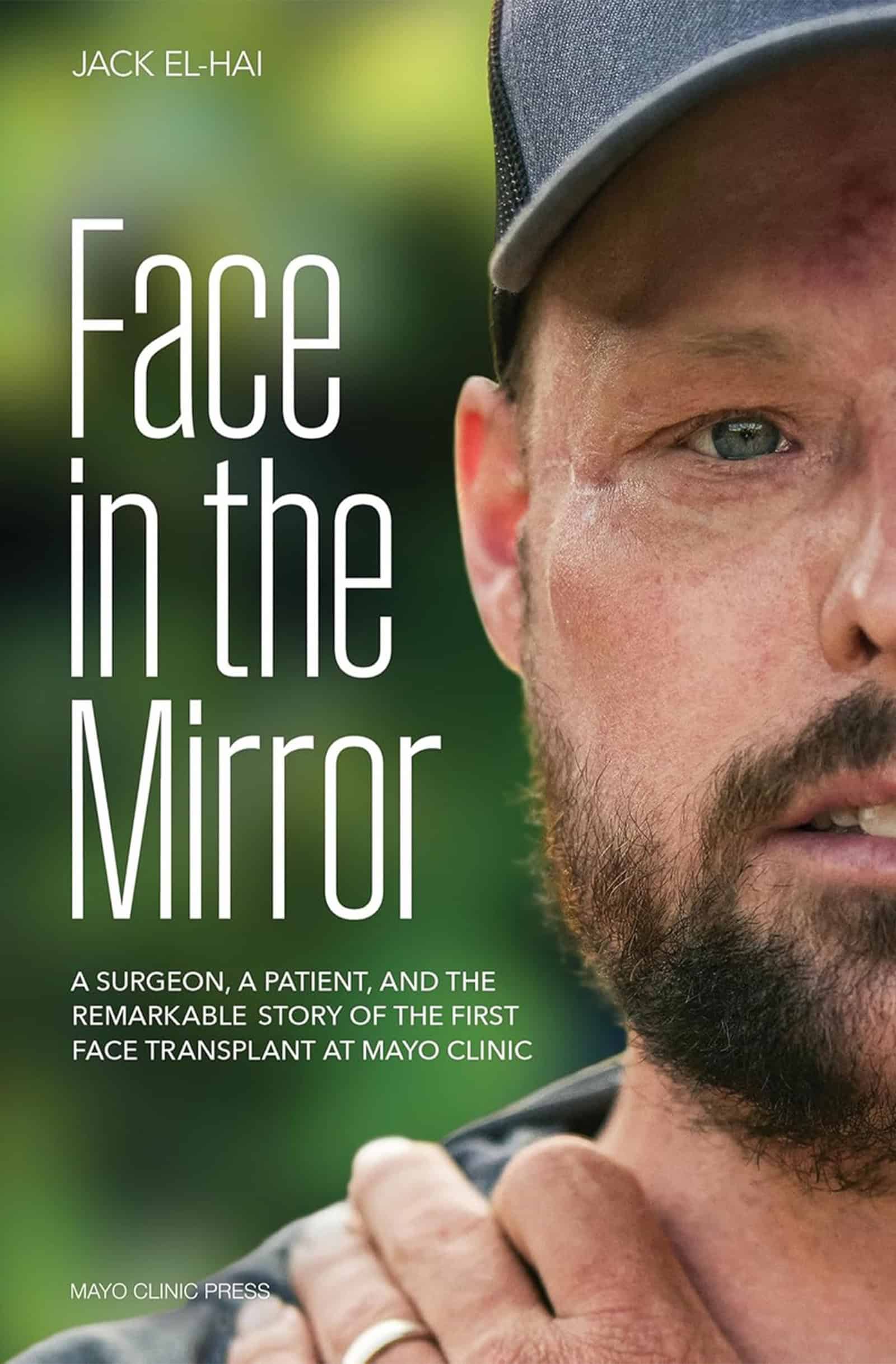
Jack El-Hai is an award-winning writer who has published innumerable articles and more than a dozen books. Jack’s other books include Face in the Mirror, The Lost Brothers, and The Lobotomist: A Maverick Medical Genius and His Tragic Quest to Rid the World of Mental Illness.
He has contributed articles to Scientific American, Wired, Discover, GQ, The Atlantic, Smithsonian, Aeon, The Washington Post Magazine, and many other publications. He lives in Minneapolis.
“This intimate and insightful portrait of two intersecting, outsized personalities‑‑one an exemplar of public service and the other an avatar of evil‑‑is as suspenseful as a classic Hitchcock film that hinges on an eerie psychological secret. Readers of The Nazi and the Psychiatrist will be riveted by Jack El‑Hai’s moving study of how good and evil can converge in a heightened instant and across a lifetime.”—Andrew Solomon, National Book Award winning author of Far from the Tree

Podcast: Play in new window | Download
Publishing Talks Interview: Kathleen Schmidt, Publishing Confidential
March 9, 2026 by David
Filed under Publishing History, PublishingTalks, The Future
 I started Publishing Talks as a series of conversations with book industry professionals and others involved in media and technology, mostly talking about the future of publishing, books, and culture. It has been great fun talking with people in the book industry about the evolution of publishing in the context of technology, culture, and economics.
These conversations have been inspirational to me. I have had the pleasure of speaking with visionaries and entrepreneurs, editors, publishers and others who have influenced and changed contemporary literature and culture. I’ve also had the opportunity to speak with a number of friends and colleagues in the book business.
I really enjoy the opportunities to find out about the boundless creativity that motivates so many of us in the book business, and I also really enjoy talking to others in the business, who like me, have tried to make sense of it all in some way or another.
Today’s conversation is with Kathleen Schmidt, a long time book publicist whose Substack newsletter Publishing Confidential, is widely read within the book business. Her newsletter is always a great source of thoughtful ideas and commentary about the current state of publishing and book marketing and promotion. I was inspired to speak with her after reading one of her truly great posts this past December, “Marketing + Publicity in 2026: Change Needs to Happen: The good, the bad, and the ugly.”
Here’s a key quote from that piece that caught my attention right away:
“The industry must accept that some books absolutely will not get attention from legacy media and move towards what works for each book, whether that’s a marketing-heavy campaign or just pitching podcasts. Why are we still creating arbitrary publicity plans for every title when we know most of it is b.s.?”
She went on from there to provide a meaningful list of ideas and practices that any publisher, publicist or author can learn from, be inspired by, and adapt for their own best practices. I appreciate her honesty, willingness to try new things, and her understanding that failure is not a bad thing, but a way to learn and get better at what we do. Everyone in the book business is frustrated by the current media landscape and by the massive number of new (and old) book titles that makes getting attention for any new book so difficult, not to mention the competition from other media forms, social media included, that take attention away from books and reading. But that frustration needs to be converted into positive energy. Otherwise you may as well quit doing what you love to do.
Having a chance to speak with Kathleen was rewarding for me, and I am sure will be for you as well. She’s smart, creative and realistic. I am sure she is a good marketer too. We need more radical honesty, more innovation and more enjoyment in book marketing!
Her bio: Kathleen is the founder and CEO of Kathleen Schmidt Public Relations with three decades of experience spanning publicity, literary representation, acquisitions editing, and ghostwriting. She has worked on more than 50 New York Times bestsellers and led global media and branding campaigns for politicians, A-list celebrities, athletes, and other high-profile figures.
I found another recent interview with Kathleen by Christelle Lujan at She Writes Magazine. In that interviewsays: “First and foremost, I want Publishing Confidential to be a resource for authors to learn about the publishing industry.”
And here are a couple more of her posts:
30 Years in Book Publishing: What I’ve Learned
Why Advertising Doesn’t Work for Books
And here is her business website, Kathleen Schmidt Public Relations.
Podcast: Play in new window | Download
Todd Goddard: Devouring Time: Jim Harrison a Writer’s Life
February 1, 2026 by David
Filed under Fiction, Non-Fiction, WritersCast
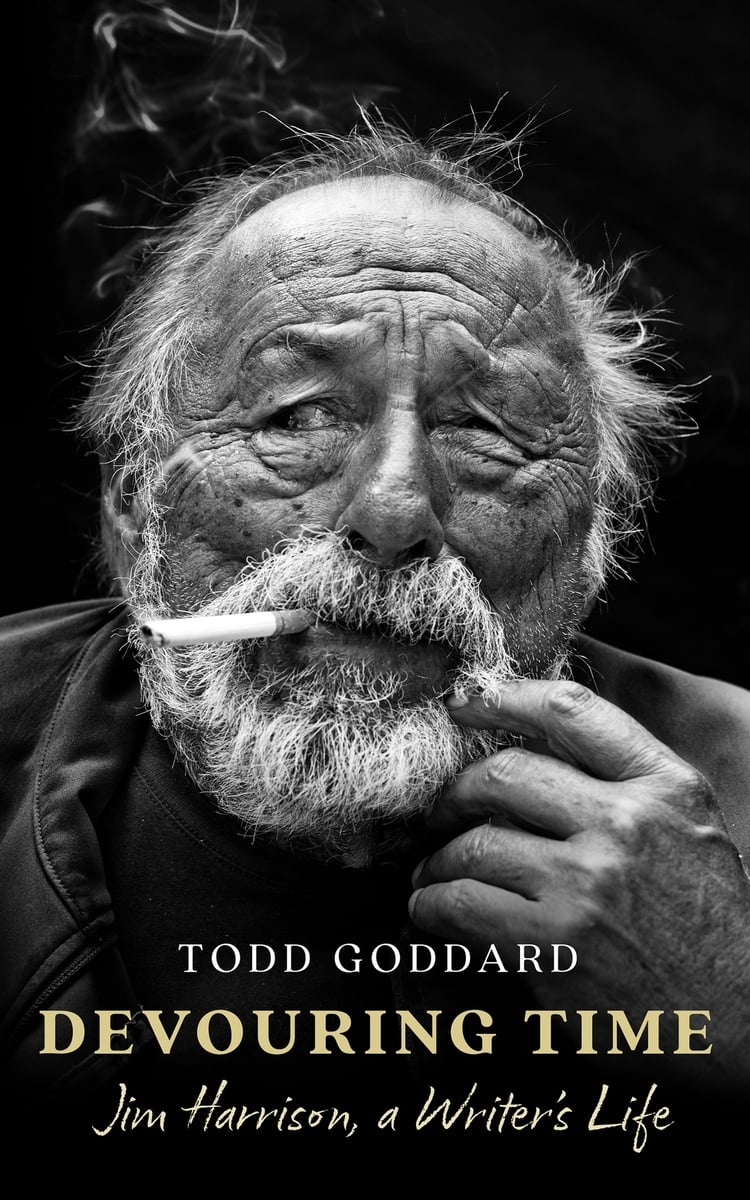 Devouring Time: Jim Harrison, a Writer’s Life — Todd Goddard — 9781799902362 – Blackstone Publishing — Hardcover — 558 pages — $29.99 — November 4, 2025
Jim Harrison was for so many readers – and other writers – one of the central voices of American literature for the last half century. When Harrison began writing, it was as a poet, and most readers came to his fiction and nonfiction much later. It was the novels and many novellas that drew large numbers of readers to him, while his first hand style nonfiction writing about food and his many adventures introduced him to a completely different audience who in many case, I am sure, also read his fiction. And then there was the film writing and the stories of fishing, carousing and gourmand like intake of food, alchohol, and drugs with friends like Thomas McGuane, Peter Matthiessen, Jimmy Buffett, and Jack Nicholson in Key West, Montana and Hollywood. Harrison became more than a writer, but also a publicly imagined character much like Ernest Hemingway and F. Scott Fitzgerald, whose persona became entwined with his writing and made him that much more attractive to some of his readers.
His output as a writer was amazing: poetry, novels, novellas, short stories, magazine nonfiction, film scripts. His appetite for life was immense. His friendships were legendary and he was loved by many whose lives he touched. Fittingly, he died alone while in the midst of writing a poem.
In Devouring Time, Todd Goddard presents a meaningful account of this writer’s life, from beginning to end, including much about his persona that many readers could not have otherwise known. I’ve read much of Jim Harrison’s writing, and knew more than a little about his life. But I learned much more from this book, feeling after reading it that I understood Harrison more clearly both as a writer and a person. This is not a celebratory paean to someone’s hero, or the work of a starry eyed fan. Nor is it a reductionist scholarly account. This book is a carefully constructed narrative worthy of the subject’s complicated, sometimes very painful, but always meaningful life. Goddard refuses to turn away from Harrison as a human being whose life included physical and emotional challenges, who suffered, who lived a full life also of joy and beauty, and despite his foibles, his accomplishments were immense and lasting.
Jim Harrison was born in Michigan in 1937 and died Patagonia, Arizona in 2016. He wrote twenty-one books of fiction and fourteen books of poetry that influenced many other writers of all kinds and won him legions of readers. Harrison helped shape the course of contemporary American literature, revitalizing in particular the novella, a form he mastered and reinvigorated.
Though it was his fiction, nonfiction, and film writing that made him famous (and by which he made his living), it was always poetry that he loved most, and while he was a thoroughly social writer who enjoyed the company of many friends (and lovers), he was simultaneously a private person who cherished remoteness, the singularity of the wilderness, and solitude, and also the company of his wife and children at home.
Todd Goddard conducted over a hundred interviews and had full access to Harrison’s collected papers, as well as the cooperation of Harrison’s family to create this fully formed literary biography of one of our most important writers of the last half century.
I very much enjoyed the opportunity to speak with Todd. We talked about Harrison, of course, but also about the art of biography and the process of writing a book with so much depth of attention and detail. Whether you are a reader of Jim Harrison’s poetry or prose, this biography will capture your attention and in all likelihood, lead you to want to read further in Harrison’s extensive body of work.
“Todd Goddard tells the story of this bon vivant, outdoorsman, hellion, and great poet from his ancestors to his end with grace, momentum, generosity, and insight…and what a great American life it was, wreckage, glory, gifts, and ALL.”—Rebecca Solnit, author of Orwell’s Roses
Calendars
Back in the blue chair in front of the green studio
another year has passed, or so they say, but calendars lie.
They’re a kind of cosmic business machine like
their cousin clocks but break down at inoppormne times.
Fifty years ago I learned to jump off the calendar
but I kept getting drawn back on for reasons
of greed and my imperishable stupidity.
Of late I’ve escaped those fatal squares
with their razor-sharp numbers for longer and longer.
I had to become the moving water I already am,
falling back into the human shape in order
not to frighten my children, grandchildren, dogs and friends.
Our old cat doesn’t care. He laps the water where my face used to be.
from IN SEARCH OF SMALL GODS, Copper Canyon Press, 2010

Podcast: Play in new window | Download
Publishing Talks Interviews Jordan Fleming, Owlcrate Press
December 18, 2025 by David
Filed under PublishingTalks, The Future
 Publishing Talks started as a series of conversations with book industry professionals and others involved in media and technology, mostly talking about the future of publishing, books, and culture. It has been great fun talking with people in the book industry about the evolution of publishing in the context of technology, culture, and economics. Today’s episode is an interview with Jordan Fleming of Owlcrate Press, who joins the many editors, publishers and others I have spoken with, who have been innovators and leaders in independent publishing and bookselling in the past and into the present.
These conversations have been inspirational to me. I have had the pleasure of speaking with visionaries and entrepreneurs, editors, publishers and others who have influenced and changed contemporary literature and culture. I’ve also had the opportunity to speak with a number of friends and colleagues in the book business.
I really enjoy the opportunities to find out about the boundless creativity that motivates so many of us in the book business, and I also really enjoy talking to others in the business, who like me, have tried to make sense of it all in some way or another.
I was spurred to seek out Jordan by a story I read in Jane Friedman’s illustrious industry newsletter. Here’s the headline – “Subscription box service OwlCrate launches publishing arm: is this a glimpse of the future of publishing?”
That’s a pretty great entry point for a conversation.
In case you are not yet aware of the subscription box industry (for that is what it has become), “book box” subscription services offer readers in various genres selections of interesting and compelling books the companies think their fanbases will be interested in reading. Fans get rewarded with unique, special, and of course hopefully, surprising products related to their interests.
There are a good number of such services, including The Book Drop (literary fiction, curated by indie booksellers), Owlcrate and Fairyloot (YA, fantasy and romantasy), Bookish Box, Once Upon a Book Club, Literati Kids, and The Wordy Traveler.
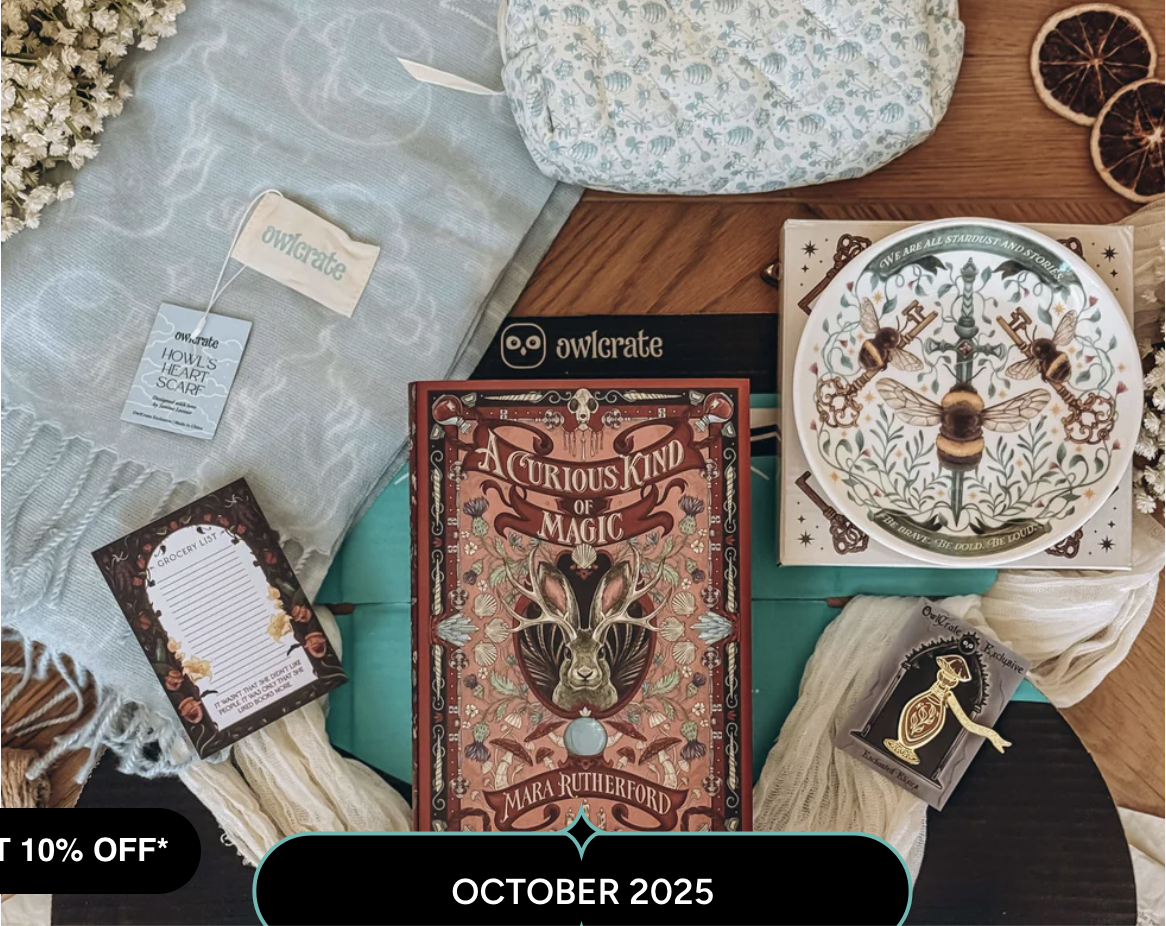
Owlcrate stands out for its exclusive designs, signed hardcovers, and other bookish items that appeal to its dedicated audiences, and having been founded in 2015, appears to be the first of its kind in this area (not counting its historical forebears like the old Book of the Month Club and other similar continuation services).
And now, they are jumping from their massive success in serving readers to what might be considered a natural evolution, becoming publishers of original titles. It makes sense – with a direct to consumer business, they know their readers bettwe than anyone (other than perhaps the giant retailer who shall not be named here).
As Jordan Fleming wrote recently on the Owlcrate site: “We’ve always centered readers. We’ve always spotlighted artists. We’ve always made space.”
I really enjoyed learning about this business from Jordan, and was especially struck by not only her boundless energy and enthusiasm, but by what she said about placing Owlcrate and the other subscription services not as competitors, but as collaborators in growing communities. I think that is a truly powerful approach to what they do and will help them continue their success.
This is what Owlcrate says about their publishing endeavor: “Every title we select is read, debated, and championed by a member of our curation team who loved it. We don’t rely on algorithms. We don’t chase trends. We rely on readers and curate our own art. OwlCrate Press simply lets us keep doing what we’ve always done; only now, we are inviting our community to help us create the stories they want to see.”
Owlcrate Press’s debut fantasy/horror anthology was Monsters in Masquerade, in which they reserved space for unpublished authors, furthering their values of supporting emerging writers.
“OwlCrate Press opens the door for new and emerging authors at a time when publishing risks becoming monopolized by a select few. As established book subscription services like OwlCrate move into publishing, they decentralize a gatekept industry and offer more equitable options for authors, from bestselling names to debut voices. With one of the highest-paying anthology models I’ve seen, alongside open submissions and an emphasis on diverse backgrounds, OwlCrate Press represents a new kind of publishing: reader-powered, author-prioritized, and built for the future.”—Sarah Mughal Rana, MPhil, University of Oxford, contributor to the anthology
Jordan Fleming is head of community for Owlcrate, and is now the head of publishing for Owlcrate Press. Their journey began with the highly-regarded Words & Whimsy Book Club, where they built strong connections with hundreds of authors and fostered a vibrant literary community. Jordan brings their deep expertise and unwavering passion for ethical publishing to OwlCrate Press.
Korinna Ede is the founder of Owlcrate, which is headquartered in Vancouver, British Columbia, Canada. Its book subscription boxes are packed and shipped from a fulfillment center in Portland, Oregon, USA.
Link to Owlcrate and Owlcrate Press
Article in The Bookseller about the launch
Monsters in Masquerade (Exclusive Edition)
Podcast: Play in new window | Download
Publishing Talks Interviews Derek Newton/Verify My Writing
October 24, 2025 by David
Filed under PublishingTalks, Technology, The Future
 Publishing Talks started as a series of conversations I had with book industry professionals and others involved in media and technology, talking about the future of publishing, books, and culture. It was great fun discussing the evolution of publishing in the context of technology, culture, and economics.
More recently, I’ve also had conversations with a variety of editors, publishers and others who have been innovators and leaders in independent publishing and bookselling in the past and into the present.
These conversations have been inspirational to me. I have had the pleasure of speaking with visionaries and entrepreneurs, editors, publishers, and others who have influenced and changed contemporary literature and culture. I’ve also had the opportunity to speak with a number of friends and colleagues in the book business about their work.
I really enjoy these opportunities to learn about the boundless creativity that motivates so many in the book business. I was approached recently by a PR firm who wanted me to talk to edtech writer Derek Newton about a new project he has undertaken. While my first reaction was to ignore what seemed to be yet another “pitch,” when I read further about the project, my interest was piqued and I decided I should talk to Derek to find out more about his ideas.
Derek Newton has written extensively about education and technology, including contributions to the Atlantic, Washington Post, USA Today, Money Magazine and many others. He’s also a contributing writer at Forbes and founder of the new and very interesting project that we talked about in this episode, Verify My Writing.
Verify My Writing allows writers to get a verified certification that their work is real, authentic, and human. In short, this enables them to certify that their work was not created by AI. The certification can help with submissions and pitches. Verify My Writing also certifies books and articles that have already been published with a “Human-Written” hallmark. And as Derek and I discussed, there other applications for this sort of certification as well. While writers certainly have self-interest in proving to magazines and publishers that their work is original, it seems to me that publishers will also want to verify for themselves when they receive submissions that the work they are reading is wholly or at least substantially original.
Book publishers and magazines with limited editorial resources are now dealing with a tsunami of submissions, with no practical way to determine the originality of the work they are considering for publication.
Given how good some AI-assisted writing can be, and how often AI is inaccurate (or completely wrong), there’s no question that all of us as readers will also appreciate knowing whether what we are reading online is human or machine written. This sort of validation may become a requirement in the not too distant future.
I found this conversation to be stimulating and thought provoking. Derek’s Verify My Writing seems interesting, and compelling in that it comes from a writer whose work experience inspired it. I hope you find this conversation as stimulating as I did.
Here’s the Verify My Writing website.
If you want to learn more, contact Derek directly: DNewton@VerifyMyWriting.com
Podcast: Play in new window | Download
Publishing Talks Interview with Carol Fitzgerald of The Book Report Network
September 23, 2025 by David
Filed under PublishingTalks
 Publishing Talks started as a series of conversations with book industry professionals and others involved in media and technology, mostly talking about the future of publishing, books, and culture. It was great fun talking with people in the book industry about the evolution of publishing in the context of technology, culture, and economics.
In the past few years, I’ve talked with a variety of editors, publishers and others who have been innovators and leaders in independent publishing and bookselling in the past and into the present.
These conversations have been inspirational to me. I have had the pleasure of speaking with visionaries and entrepreneurs, editors, publishers and others who have influenced and changed contemporary literature and culture. I’ve also had the opportunity to speak with a number of friends and colleagues in the book business.
The Publishing Talks series of interviews enables me to talk to some really interesting people who have made an impact of all kinds on books and book publishing. Carol Fitzgerald is a good example. She started out working for Conde Nast and then moved into the book business, founding
The Book Report Network (TBRN) at the very beginning of the online universe in 1996. Bookreporter.com and ReadingGroupGuides.com are now gathering places for a large and devoted community of booklovers and TBRN is recognized as an online leader of informed, contemporary book news, reviews and author interviews. With 30 years of constant innovation, Carol has remained deeply engaged with the constantly evolving interaction of book readers, authors and publishers. She is always great to talk to and if you’re not familiar with her sites, you should check them out.
We had a great conversation about a the past, present, and imminent future of the book publishing world. I think you will enjoy this episode of Publishing Talks. Carol is knowledgeable, engaged, and in touch with so much of what matters to the future of books and publishing.
Read Carol’s most recent book reviews here. She is a dedicated reader with incisive views about the books she consumes.
Check out the Book Reporter’s video interviews with authors on YouTube. Very cool.

Podcast: Play in new window | Download
Publishing Talks Interview with Lauren Woods of LitBox
August 20, 2025 by David
Filed under PublishingTalks, Technology
 Publishing Talks started as a series of conversations with book industry professionals and others involved in media and technology, mostly talking about the future of publishing, books, and culture. It was great fun talking with people in the book industry about the evolution of publishing in the context of technology, culture, and economics. In the past few years, I’ve talked with a variety of editors, publishers and others who have been innovators and leaders in independent publishing and bookselling in the past and into the present. These conversations have been inspirational to me. I have had the pleasure of speaking with visionaries and entrepreneurs, editors, publishers and others who have influenced and changed contemporary literature and culture. I’ve also had the opportunity to speak with a number of friends and colleagues in the book business.
I really enjoy the opportunities to find out about the boundless creativity that motivates so many of us in the book business. When I read about Lauren Wood and her cool new project, Litbox, a book vending machine in Washington, DC, I had to reach out to her to find out more about it. Lauren’s goal was to create an innovative way to promote local readership with local authors, something that writers always feel strongly about. Even the best independent bookstores do not focus as much attention on local authors as most of us wish they would. “I want to give writers and people in this town something to feel excited about,” she says. “I wanted to bring a little bit of optimism into an otherwise bleak moment….Great literature is really about empathy and kind of deeply getting outside of your own framework and inhabiting another person’s consciousness.”
LitBox launched in May, 2025. Lauren made it work with a Kickstarter campaign that raised seed capital of $5000.
Almost everyone in the book business recognizes how challenging it is to connect books with readers in our media’s overwhelmingly saturated information deluge. Any project that can connect writers and books to readers in a personalized, area-specific way is worthy of our support. I am hopeful that Litbox will not be a one-off, and could inspire others to try out the idea. It seems to have worked successfully in England, where there are book vending machines in subway stations and many other locales.
If you’re in the DC area, look for a Litbox and try it out. It’s in the Western Market.
And here’s a good local story about the Litbox launch on the “Inchy’s Bookworm Vending Machine” website. It looks like they are encouraging others to use their machine wherever books could be sold by machine. I hope this idea catches on!

Reggie Van Lee buying the first book from LitBox.


Podcast: Play in new window | Download
Dennis James Sweeney: How to Submit: Getting Your Writing Published with Literary Magazines and Small Presses
March 20, 2025 by David
Filed under Non-Fiction, WritersCast
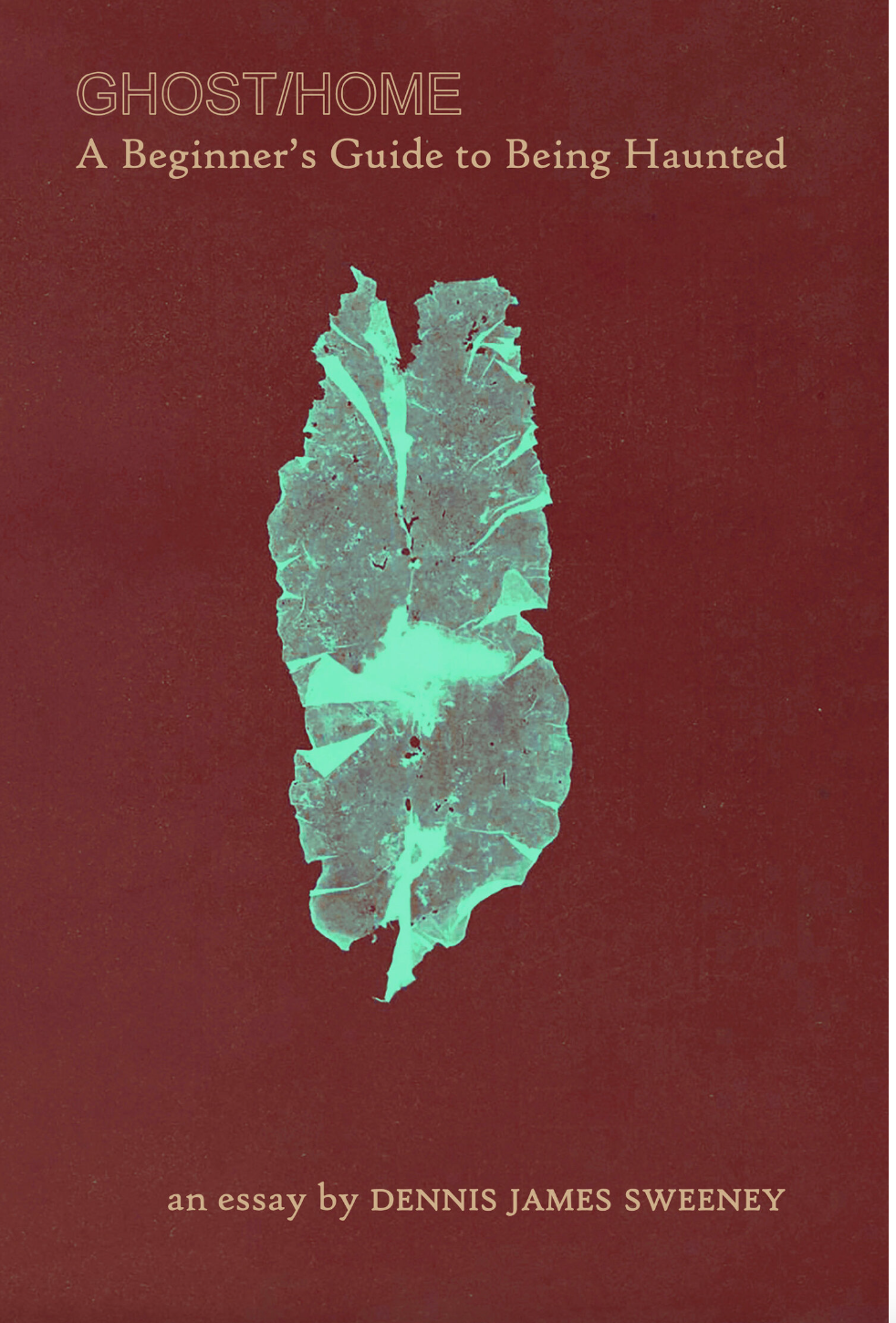
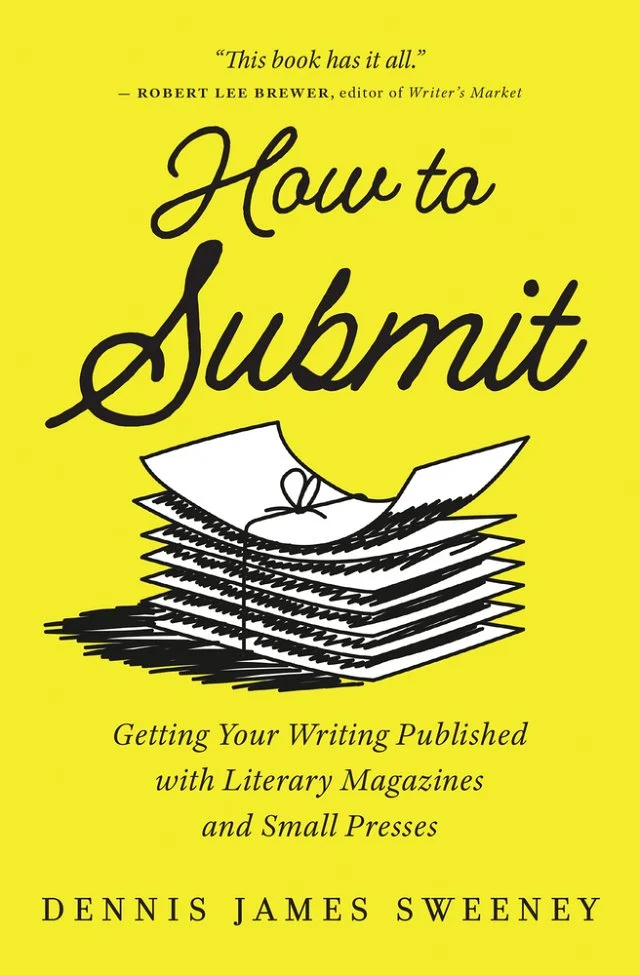 How to Submit: Getting Your Writing Published with Literary Magazines and Small Presses – Dennis James Sweeney – New World Library – Paperback – 9781608689361 – 216 pages – $18.95 – February 25, 2025 – ebook versions available at lower prices
This book is described by its publisher as “A comprehensive guide to getting published and building a literary reputation through small presses and magazines — and taking ownership of your own publishing life.” While I am very familiar with publishing marketing lingo, I think this description, while literally accurate, actually undervalues Sweeney’s book. He does offer us much more than just a “guide to getting published.” By talking to writers as a colleague and exploring his own journey as a writer, he turns what could have been a mechanical self help guide into something much more interesting and engaging.
I’ve been on both sides of the process this book is about – as a writer submitting work for publication and more often as a publisher and editor, combing through submissions of all kinds and qualities. This book provides much more than simply guidance, tools and support for writers. In it, Sweeney personalizes what is so often a depersonalized process, and helps writers see themselves as active agents in a complex ecosystem with many levels and activities. And in many ways, he reveals the process of “submitting” one’s work as an almost spiritual practice, not just a means to an end.
All of the podcast interviews I do are unstructured and informal – I like to start without notes or an agenda and see where the conversation goes. Talking to Dennis was truly a pleasure, and I think we ended up having a wonderfully organic and interesting conversation about the independent literary world, contemporary writing, and the role of the writer in that community. Whether you are already a published author, or a publisher or magazine that works with author submissions, this book has a great deal to offer you.
Dennis James Sweeney is a writer and teacher. His books have been published by small independent presses, including Autumn House Press, Essay Press, Ricochet Editions, and Stillhouse Press, and his writing has appeared in Ecotone, The Southern Review, Witness, and The New York Times. Sweeney lives, writes, and teaches in Amherst, Massachusetts. Author website here.
But the book here.

Podcast: Play in new window | Download
Oliver Radclyffe: Frighten the Horse (A Memoir)
November 19, 2024 by David
Filed under Non-Fiction, WritersCast
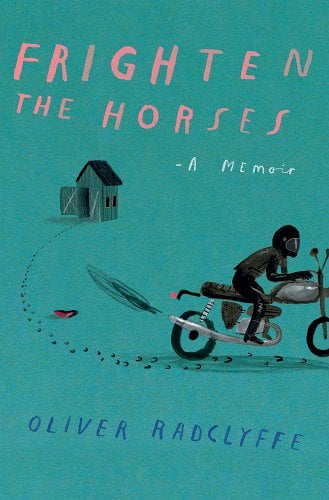 Frighten the Horses – Oliver Radclyffe – Roxane Gay Books – 978-0-8021-6315-8 – Hardcover – 352 pages – $28.00 – September 17, 2024 – ebook versions available at lower prices
This is flat out a remarkable story told by a remarkable person. We live in a time when people are so often simply categorized into identities, as if the naming of a version of self somehow explains who a person is. Labels do not tell stories: gay, straight, queer, trans. All are too reductive to have any meaning whatsoever. Every person is a complicated being, and most of us contain multiple versions of ourselves. Sometimes those versions simply do not make sense.
Oliver Radclyffe started out life as a relatively protected and very privileged girl in England, who married a man and had four children, moved to a wealthy Connecticut suburb and had what seemed to be a perfect life. But his inner life was far from resolved and the tensions of an emerging self could not be reconciled until he eventually came out as a lesbian, risking a great deal in order to establish an identity that reflected his inner being.
But that turned out to be a way station on his ultimate journey. There was still more work he had to do before his ultimate transformation to being a man, one who is also an active parent, still learning from his children, still in the process of becoming. As we all should be.
Aside from this being an incredibly engaging story that takes place in the same town I grew up in, the courageously deep and honest sharing of his story was for me a journey toward understanding, both for the writer and for me, the reader. By exposing so much of his story and his struggles to become himself, Oliver has created what is truly an essential guide to understanding the trans experience. Even for the many of us who believe in the multitude of human identity and being need to understand as fully as possible what it actually means to be a trans person. If you are fortunate enough to have a trans person in your life, this book should be the next book you pick up.
While I am certain that every person’s story is unique and that Oliver is not a stand in for every gay or trans person, female or male, knowing so much about his ongoing journey to becoming his authentic self is incredibly valuable for others, whether we are ourselves gay, straight, trans or something else.
I can’t recommend this book enough. Go read it right now. Let me know what you think of it.
This review blurb says it all for me: “The finest literary telling of the experience of gender transition that I’ve ever read. It’s a terrific, expansive story because the focus of this warm-hearted man always returns to his children. He’s simply a wonderful parent, and that’s what keeps the reader turning the pages.”—Kate Bornstein, author of Gender Outlaw

Author photo by Lev Rose Water
Podcast: Play in new window | Download
Publishing Talks Interview with Ken Whyte of Sutherland House
October 22, 2024 by David
Filed under Publishing History, PublishingTalks, The Future
 I began Publishing Talks a number of years ago as a series of conversations with book industry professionals and others involved in media and technology. Most of these interviews originally involved the future of publishing, books, and culture, talking with people in the book industry about how publishing is evolving in the context of technology, culture, and economics.
Later this series broadened to include conversations to go beyond the future of publishing. In an effort to document the literary world, I’ve talked with a variety of editors, publishers and others who have been innovators and leaders in independent publishing in the past and into the present.
These conversations have been inspirational to me on many levels. I have gotten to speak with visionaries and entrepreneurs, as well as editors and publishers who have influenced and changed contemporary literature and culture. I’ve also had the opportunity to speak with a number of friends and colleagues I have met or worked with during the many years I have been in the book business.
More recently, I’ve been talking to book folks about what is going on in publishing today, quite often about the changes in marketing and promotion that have marked all media industries as social media has overwhelmed traditional media, creating an extremely complex and constantly changing environment.
One thing is certain about publishing – there are no final answers, but there are many really important questions that we should be asking all the time.
I recently had the opportunity to (virtually) meet and talk to Kenneth (Ken) Whyte, founder and president of the Toronto based Sutherland House publishing company. I discovered Ken through his excellent and thoughtful newsletter called SHuSh, where he writes about a wide range of book industry matters as well as people and books he is connected to or has published. Ken started in journalism and magazine writing and publishing, wrote nonfiction books himself, and then started Sutherland House. One might reasonably question why any sane person would start a commercial publishing house in the current troubled media environment, but Sutherland House appears to be successful and is clearly well run and intelligently managed. I thought it would be interesting and valuable to talk to Ken about his thinking about books and publishing. He is an innovator and clearly a smart publisher who has figured out how to sell books.
We talked about a wide range of subjects and concerns that will be of interest to anyone who follows current publishing and media trends. We talked about the current state of Canadian publishing, which is simultaneously similar and very different from the US publishing scene. And we talked as well about many of the challenges and opportunities that exist for publishers and authors in Canada and the USA alike. We talked about AI and its actual uses in publishing, consolidation in retail and how publishers must navigate markets, author income issues, ebooks, book pricing, changes in the overall media landscape, and much more.
From the Sutherland House website:
At Sutherland House, we believe in the power of a distinct aesthetic, and each of our publications reflects the unique essence of our brand. From inception to launch, every title undergoes meticulous market testing to ensure its resonance with our discerning readership. All of our books are simultaneously published in both Canada and the United States, supported by robust sales and distribution channels in both countries.
Kenneth Whyte was editor-in-chief of Saturday Night Magazine, founding editor of The National Post, editor and publisher of Maclean’s, president of Rogers Publishing, and founding president of Next Issue Canada. He is the author of The Sack of Detroit: General Motors and the End of American Enterprise and The Uncrowned King: The Sensational Rise of Willian Randolph Hearst.



Podcast: Play in new window | Download