
Thomas W. Gilbert: Death in the Strike Zone
June 7, 2026 by David
Filed under Non-Fiction, WritersCast
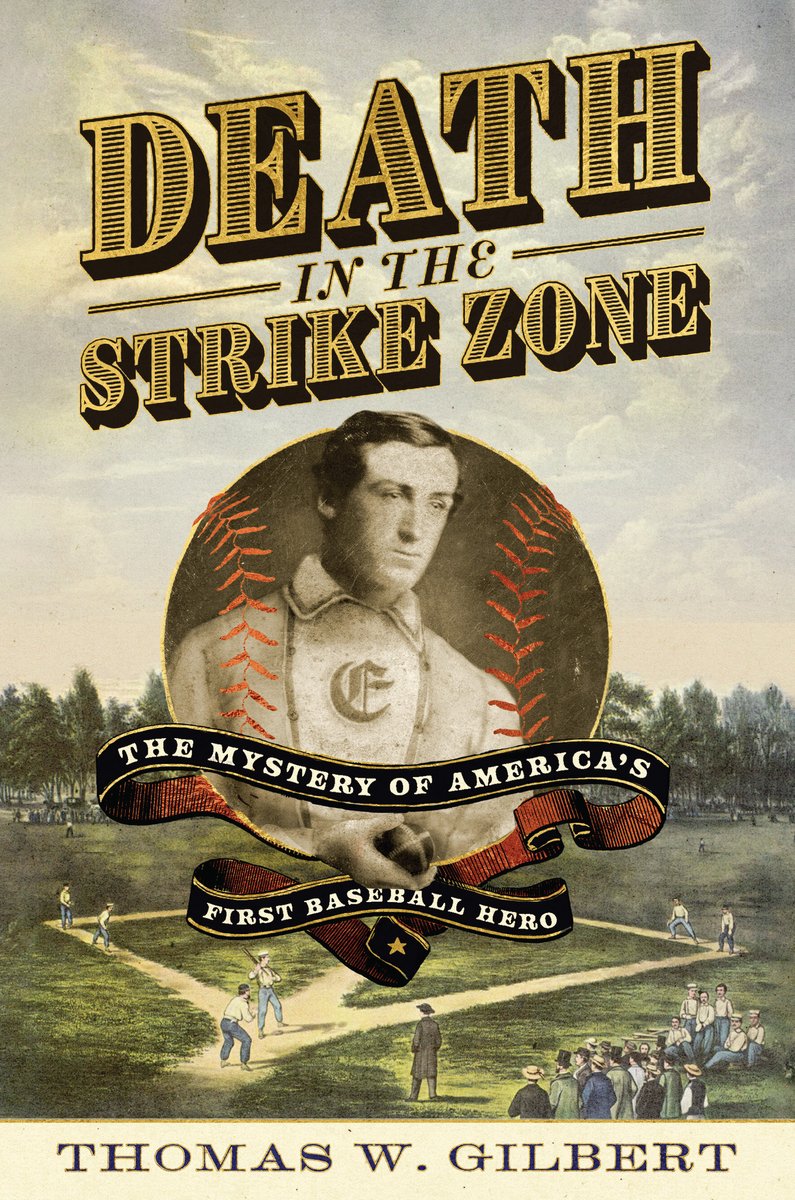 Death in the Strike Zone: The Mystery of America’s First Baseball Hero — Thomas W. Gilbert — David Godine — Hardcover — 978-1-56792-759-7 — 192 pages — $27.95 — March 24th, 2026 – ebook edition available at lower cost
As most of my listeners probably know by now, I love baseball and I really love books about baseball. At one time I thought I knew alot about baseball history, but I have come to realize that I am a rank amateur in a world where there are true baseball historians at work on almost any baseball related subject one could imagine.
I loved reading Tom Gilbert’s wonderful book about James Creighton, arguably the first true baseball star, whose brief career took place in the heated era of early baseball in New York City. Pre-Civil War baseball is really not the same game as the one we play today. It was a precursor even to the game played in the late 19th century and early twentieth century, an era that at least some rabid fans today know something about. But baseball as it was played in the 1850s and 1860s was far different, and perhaps no more so than how pitching was done.
Reading this vividly written book, we learn about an era that is both strangely foreign and similar to our own in many ways. Baseball this early was still being defined by its players, and the game was emerging from pure amateur club sport played only in the big eastern cities, showing signs of popularity that would enable baseball to become the dominant sport in the entire country in less than 50 years.
Creighton was his era’s Babe Ruth and Shohei Ohtani, someone whose skills and manner of playing changed the game completely. What I learned from Tom Gilbert is that in this early time, pitching was much more like today’s slow pitch softball than what we recognize as hardball pitching today. The mount was much closer to home plate, and there were no balls and strikes – hitters just waited for a pitch “served” to them that they could hit, and it was fielding and running that made the game interesting, not today’s “inside game” where the pitcher and hitter define so much of what will happen.
Even if you don’t care as much about baseball as I do, Gilbert’s narrative weaves together the history of nineteenth century America into his narrative in a way that will interest many in the story of American culture.
Thomas W. Gilbert is also the author of How Baseball Happened: Outrageous Lies Exposed, The Truth Revealed, Baseball and the Color Line, Roberto Clemente, and Playing First. He grew up in Connecticut and lives in Brooklyn, not far from where James Creighton played and is buried.
We had a great conversation I hope you will enjoy as much as I did.

Podcast: Play in new window | Download
Kevin Baker: The New York Game: Baseball and the Rise of a New City
July 30, 2024 by David
Filed under Non-Fiction, WritersCast
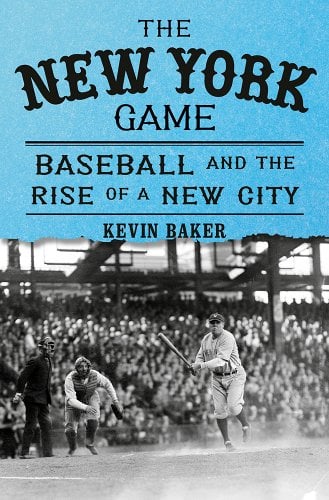 The New York Game: Baseball and the Rise of a New City — Kevin Baker — Knopf Publishing – 9780375421839 – Hardcover — 528 pages — $35.00 — March 5, 2024 — ebook versions available at lower prices
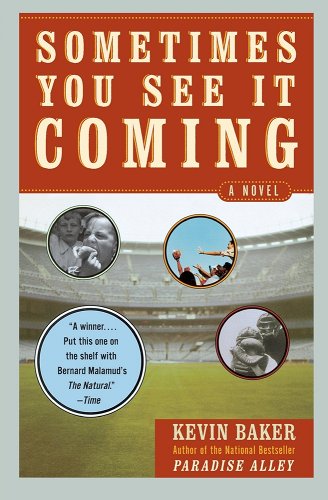
I am guessing that anyone who knows me well will be aware that baseball has been a lifelong passion. I’ve written baseball poetry and stories, interviewed former players, and talked to writers about baseball many times over the years. I’ve read hundreds of baseball books, and published a few as well. Among the legion of great baseball novels, Kevin Baker’s Sometimes You See it Coming is one of my all time favorites. And of all the nonfiction baseball books I’ve come across, his newest book, The New York Game is among the very best.
In this The New York Game, Kevin tells the history of America’s greatest city through the lens of America’s greatest game. He is a masterful story teller, weaving together multiple strands of cultural, political, economic, and geographic history to create a brilliant tapestry from the beginning era that baseball was invented in the New York City environs, through its glory years, ending with World War II (and leaving us waiting for the sequel that will cover the 80 years since).
One element that sets this book apart from so many other books about baseball history is that Baker seamlessly writes about the often overlooked stories of Black and Hispanic baseball players and particularly the crucial importance of the Negro Leagues in American sports history. Race and sports reflect back all the flaws and foibles of the American experiment in sometimes painful and jarring ways. Understanding (and facing) how baseball – its ownership, management, players, and fans – dealt with race and racialism over the course of American history is crucial to understanding who we are today.
Even readers who think they know all about New York City baseball will learn from this book, and will enjoy Baker’s stories about the game, always cast in his fast-moving, highly literate style. There are so many stories, vignettes, portraits and analyses, it is impossible to list them all, not just the already famous, but many figures even those of us who have studied baseball or grew up in New York will have heard of before.
I’ve interviewed Kevin twice before for Writerscast, including for his excellent socio-political economic book about modern New York City, The Fall of a Great American City. (co-published by City Point Press and Harper’s Magazine in 2019).
I cannot recommend this new book more highly, even for those who do not identify as baseball fans. Not only will you gain a deeper understanding of the history of our largest and most dynamic city, you’ll be entertained throughout by a master storyteller. It’s one of those rare books you will have trouble putting down once you start reading.
Writerscast interview with Kevin about The Fall of a Great American City


Podcast: Play in new window | Download
Writerscast: David Wilk interviews Roger Angell
October 1, 2020 by David
Filed under Non-Fiction, WritersCast
 A couple years ago, in the process of researching the mostly unknown and under-appreciated New Yorker writer Robert M. Coates, I reached out to Roger Angell, who knew Coates during his many years of writing for and working at The New Yorker (and whose mother, Katharine Sergeant Angell White, and stepfather, E.B. White, knew Coates well from the earliest days of the magazine in New York and elsewhere). I wanted to learn as much as I could about Coates, and in the process, had the distinct pleasure of talking to one of the greatest writers of our time.
After telling me some interesting first-hand remembrances of Coates, Roger was kind enough to sit or an in-person interview with me in his apartment in New York along with his wife Peggy Moorman. It’s my honor to publish this interview now to celebrate Roger Angell’s 100th birthday. His prodigious, meticulous, and far-ranging memory is a match for his remarkable abilities as a writer.
Roger has always lived in New York City, and spent summers in Brooklin, Maine. He graduated from Pomfret School and Harvard University, served in the Air Force in World War II, first as an instructor in machine guns and power turrets, and then, in the Pacific, as an editor and reporter for the GI magazine Brief.
In 2014 Roger was inducted into the writers’ section of the Baseball Hall of Fame, and then in 2015 he was deservedly elected to the American Academy of Arts and Letters.
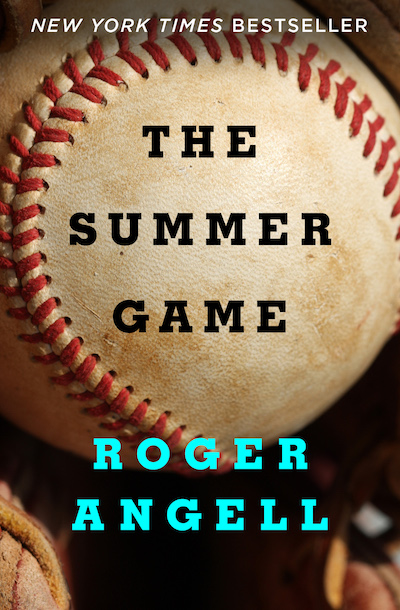
It is impossible to speak about and with Roger Angell without mentioning his writing about baseball, for which he is best known, including the classic books, The Summer Game and Five Seasons: A Baseball Companion, as well as a number of great shorter pieces that appeared first in the The New Yorker.
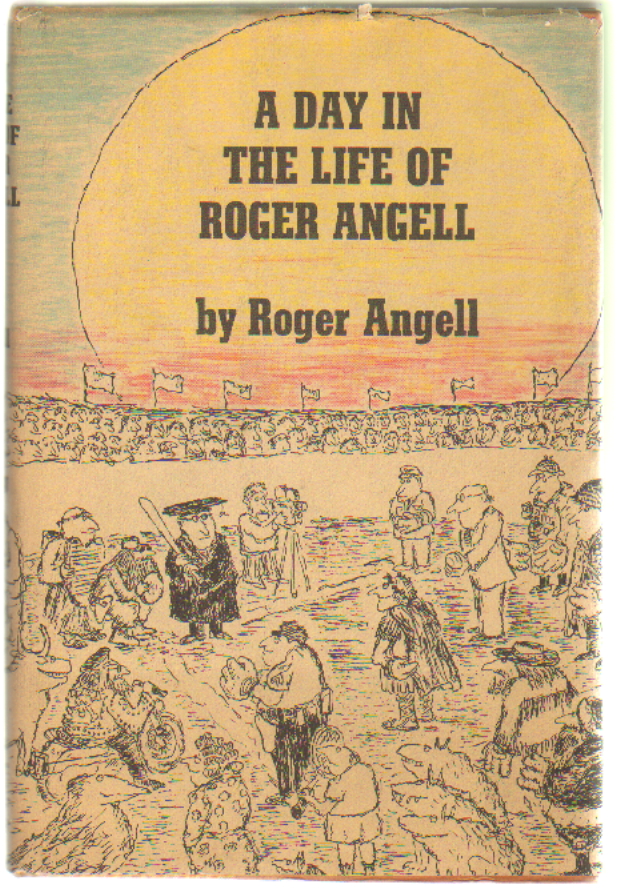
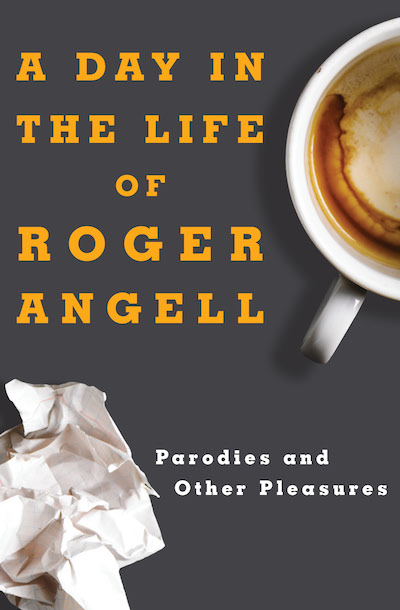
Angell’s earliest published works of short fiction and personal narratives. Several of these pieces were collected in early books, The Stone Arbor and Other Stories (1960) and A Day in the Life of Roger Angell (1970).
Roger first contributed to the The New Yorker in March 1944. He began writing about baseball in 1962, when William Shawn, then the editor of The New Yorker sent him to Florida to write about spring training and over the course of several decades produced some of the best baseball books ever written, inspiring countless readers with his brilliant descriptions of baseball games and players, and of course, fans of the game.
In a review of Once More Around the Park for the Journal of Sport History, Richard C. Crepeau wrote that “Gone for Good”, Angell’s essay on the career of Steve Blass,”may be the best piece that anyone has ever written on baseball or any other sport”.
While Angell has been praised fulsomely for his baseball writing, I’d prefer to think of him as simply one of the better literary stylists of our time. Listening to Roger Angell talk about books, writers and his writing life was one of the great pleasures of my own literary life, which I am pleased to share with you here.
Roger turned 100 on September 19, 2020. Happy Birthday Roger! And thank you and Peggy, for giving me the opportunity to speak with one of my literary heroes.
“Angell writes about baseball the way M.F.K. Fisher did about food, as a metaphor for life’s complexities of desire, defeat, utility and beauty.” — Phillip Lopate
This article in The New Yorker by David Remnick – “Roger Angell Turns 100” – is a must-read piece.
7 Must-Read Roger Angell Books: Legendary essays on baseball, reflections on aging, and so much more. Stephen Lovely, The Archive. 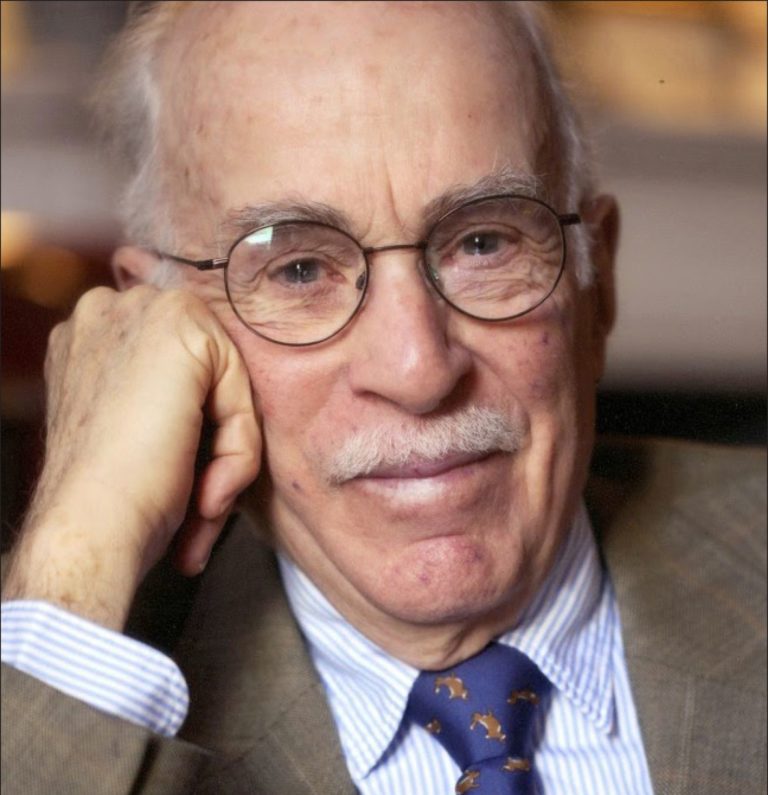
List of Roger Angell’s Books
A Day in the Life of Roger Angell
Five Seasons: A Baseball Companion
Game Time
Late Innings
Let Me Finish
This Old Man: All in Pieces
Once More Around the Park: A Baseball Reader
A Pitcher’s Story: Innings with David Cone
Season Ticket
Selected Shorts: Baseball, a Celebration of the Short Story
The Summer Game
Roger Angell Day – Celebrating Roger Angell – a 100th birthday celebration was held at the Friend Memorial Public Library in Brooklin, Maine, August 8, 2020 Photo by Bill Ray

Podcast: Play in new window | Download
Steve Steinberg: Urban Shocker: Silent Hero of Baseball’s Golden Age
April 15, 2018 by David
Filed under Non-Fiction, WritersCast
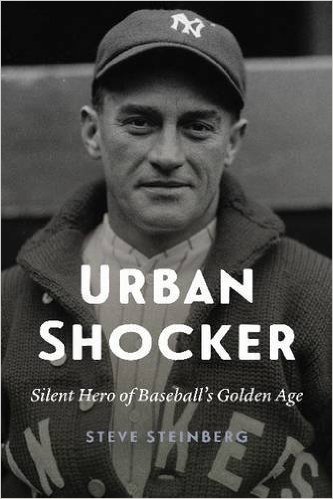 Urban Shocker: Silent Hero of Baseball’s Golden Age – Steve Steinberg – University of Nebraska Press – Hardcover – 9780803295995 – 352 pages – $32.95 – ebook versions available at lower prices – April 1, 2017
Even avid baseball fans may be forgiven for not knowing much about Urban Shocker, one of the best pitchers of major league baseball’s early modern era. It is no surprise that Shocker is not as famous as he could and should be. Shocker’s best years were spent in St. Louis, playing for the perennially mediocre Browns. And his time as a Yankee teammate of Babe Ruth was tragically cut short by ill health. Furthermore, he was a star player at a time when baseball was much more of a local sport – no television to memorialize his achievements – his face and skill as a pitcher is virtually invisible to us, now almost 100 years since his glory years.
Steve Steinberg is a talented baseball historian and writer. His work in uncovering the story of this undeservedly ignored pitcher is admirable. Baseball history can be a rich vein to mine, but it requires talented and dedicated individuals to do the incredibly time consuming work of research, and then to transform those details into a compelling narrative arc. Steinberg succeeds in both respects, and with this fine book, he brings Urban Shocker to life for contemporary readers.
Even if you are not a diehard baseball fan, Shocker’s life reveals a great deal about baseball and its players as part of the culture and daily life of America in the immediate post World War I (Roaring Twenties) era. Baseball players lived much more difficult lives than their modern descendants, it seems. And of course, the business of baseball was very different then – players were tied to their teams for life, and had very little control over their own destinies. While they were paid well compared to the average worker of the day, in relative terms, their paychecks were not usually life changing and most players had to work other jobs during the off seasons.
Little is known of Shocker’s early life, and he did not make it to the big leagues until he was in his early twenties. Like many players of the day, his path to success was not an easy one. And once he reached the majors, playing for the Yankees before their great success years, he was quickly traded away to the St. Louis Browns in 1918. It was not until 1925, after four straight seasons with at least twenty wins for the lowly Browns that Urban was finally traded back to the Yankees. He finally had the opportunity to play in the World Series with the 1926 Yankees.
In the almost mythological 1927 season, often considered to be among best in baseball history, Shocker pitched brilliantly to compile 18 wins against only 6 losses, this at a time when his skills were clearly in decline. Shocker was suffering from a then incurable heart disease that would kill him less than a year later. He kept his illness to himself, and managed to excel as a pitcher using his years of experience to substitute for physical dominance before he finally had to quit the game altogether, surprising the baseball world at the time.
Steinberg has given us a deftly written, detailed and sensitive portrait of a complicated man, whose brilliant baseball career was cut all too short. I enjoyed reading this compelling biography immensely – it brought me back to a period of baseball history I have long been interested in – and I had a great time speaking with author Steinberg about this book and his work in baseball history.
Steve Steinberg is known as a baseball historian of the early 20th century. He was fortunate to have sold a family business, allowing him to explore a new career as a baseball writer. He focuses his work on portraying long-forgotten players, bringing them to the attention of contemporary baseball fans and readers. He is the author or co-author of several books and many articles, including with Lyle Spatz, 1921: The Yankees, the Giants, and the Battle for Baseball Supremacy in New York. Steve’s web site is a wealth of baseball history. He lives in Seattle with his wife, Colleen.
Podcast: Play in new window | Download
David Wilk interviews Hungry Minds Bookstore Founder David Unowsky
May 31, 2017 by David
Filed under Publishing History, PublishingTalks
 Publishing Talks began as a series of conversations with book industry professionals about the future of publishing, books, and culture. As we continue to experience disruption and change in all media businesses, I’ve been talking with some of the people involved in our industry about how the book business might evolve as our culture is continues to be affected by technology and macro-economic factors.
I’ve now expanded this series to include conversations that go beyond the future of books and publishing. I’ve talked with editors, publishers, booksellers and others who have been innovators and leaders in independent publishing, and will continue to explore the ebb and flow of writing, books, and publishing in all sorts of forms and formats, as change continues to be the one constant we can count on.
For the past several years, I’ve been talking to editors and publishers of independent presses about their work, including a number of important literary publishers. In this conversation, I am speaking with an old friend and colleague, David Unowsky, founder of the outstanding St. Paul bookstore, the Hungry Mind, which evolved into many other book related ventures, including a literary review and a successful independent press.
The store eventually sold its name to help stay in business in the face of ever increasing financial pressures, and ultimately, under its new name, Ruminator Books, closed in 2004. Which means it was in business for over 30 years, and was for most of that time an incredibly important place, not only to Twin Cities residents, but for the many writers and publishers whose work the store supported, and importantly provided an entry point into the book business for many individuals who have gone on to a wide variety of positions in the book industry.
The Hungry Mind was and remains for many, a special place, and David Unowsky was its beating heart and soul. I’m really pleased to have the chance here for David to talk about his work as a bookseller, communitarian, publisher and entrepreneur. David and “the Mind” – and all the wonderful people and books that passed through its doors – are central to our understanding of what might eventually be considered a “golden age” of books in our country.
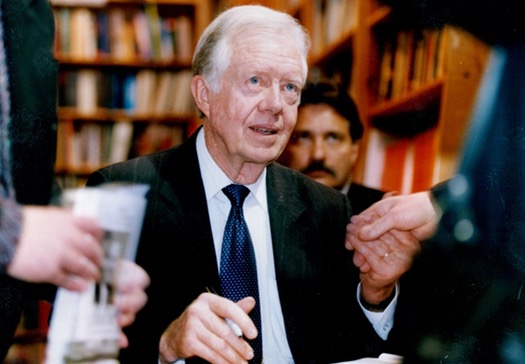
Jan. 12, 1994: Former President Jimmy Carter made an appearance at the Hungry Mind Bookstore in St. Paul to sign his latest book,”Turning Point: A Candidate, a State and a Nation Come of Age.” In the book, Carter describes how his first race in the pre-civil-rights South almost was taken away by a political boss.
Photo: Minneapolis Star Tribune.

Screen shot from a 1998 C-Span program about Hungry Mind
Podcast: Play in new window | Download
George Gmelch: Playing With Tigers, A Minor League Chronicle of the Sixties
August 1, 2016 by David
Filed under Non-Fiction, WritersCast
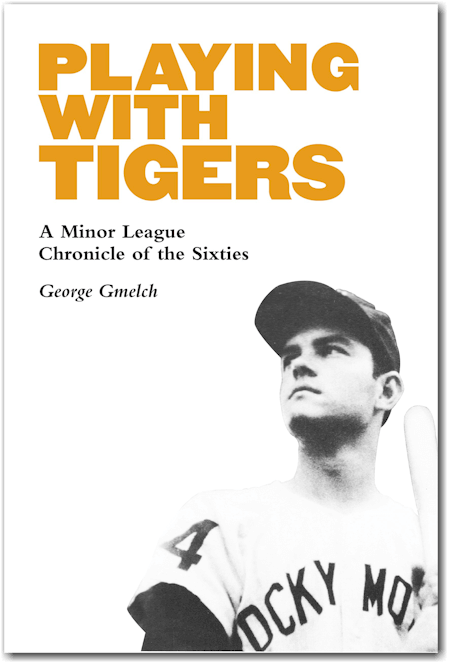 9780803276819 – University of Nebraska Press – 288 pages – Hardcover – $26.95 (ebook versions available at roughly similar prices)
Today, George Gmelch is a successful anthropologist, with a number of books to his credit. But when he was a young man, he was a very good baseball player, with the typical dreams so many shared of becoming a professional baseball player and making it to the Major Leagues. Growing up in an all-white suburb in California in the late fifties and early sixties, George led a fairly sheltered childhood, playing ball and having fun. In 1965 he signed a contract to play professional baseball with the Detroit Tigers organization and so began a four year period of coming of age, during which George experienced the challenges of life in baseball’s minor leagues.
While learning to be a professional athlete, he also became aware of the realities of race and class; minor league baseball in the nineteen sixties was often played in small towns in the south where segregation was still in effect, despite the advances of the civil rights movement. And as an adolescent on his own with other boys in the cocoon like world of pro sports, he also had his first experiences of sex and romance, living, traveling and playing ball. Somewhat unlike most of his teammates, George paid attention to the events of the era, including the Vietnam War, the rise of the counter culture, and civil rights protests.
Playing with Tigers is a memoir certainly unlike most others written by baseball players. The sixties was a time of turmoil involving young people of all backgrounds and professional baseball was not immune from its disruption. George was likely more socially aware than most of his compatriots, and his direct experience of racial issues ultimately led to the end of his professional baseball career.
To write this book, George relied on the journals he kept as a player, as well as letters from that time, and in addition he used his skills and experience as an anthropologist to interview thirty former teammates, coaches, club officials – and even some former girlfriends. This is a unique story, documenting a socially disrupted period in American history through the lives of many of the young people who lived through it. We get to experience first hand the naivete, frustrations and joys of a young man trying to find his way in a complex time. And clearly, some of the motivation for writing this book was unfinished business, events, relationships with people, his baseball experience, on which George wanted to gain some closure.
I read alot of baseball books, as many listeners know. Among the many I have read the past couple years, I found Playing With Tigers extremely compelling, and one I had fun reading. I very much enjoyed the opportunity to speak with George Gmelch for the second time – in 2013, George and I talked for Writerscast about another of his baseball books, Inside Pitch. In addition to being an intensely personal memoir, Playing With Tigers opens a door to a period in our history that deserves a lot more exploration than it seems to have been given. George has some great stories and a deep understanding and love for the people and places he’s experienced. This is a fine book and you do not need to know anything about baseball to like it.
George Gmelch is a professor of anthropology at the University of San Francisco and at Union College in Schenectady, New York. His books include In the Ballpark: The Working Lives of Baseball People, with J. J. Weiner (Bison Books, 2006), and Inside Pitch: Life in Professional Baseball (Bison Books, 2006). He is the editor of Baseball without Borders: The International Pastime (Nebraska, 2006). His writing has also appeared in the New York Times, the Washington Post, Psychology Today, Society, and Natural History.
Podcast: Play in new window | Download
Jim Kaat: If These Walls Could Talk: New York Yankees
June 14, 2015 by David
Filed under Non-Fiction, WritersCast
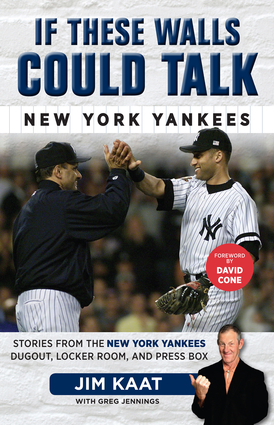 978-1-62937-024-8 – Paperback – Triumph Books – $14.95 – written with Greg Jennings, foreword by David Cone (ebook editions available at lower prices).
Doing this podcast has been great fun for me. I’ve gotten to read some wonderful books, and have met and talked to well over 200 interesting and intelligent writers. Now I can add having a conversation with one of my favorite baseball pitchers to the rewards of being a literary podcaster not long after having the honor of interviewing a Man Booker award winning author (Anne Enright).
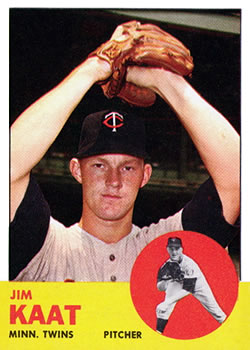
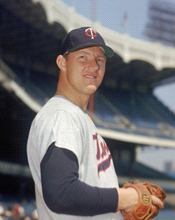
Jim Kaat was a Major League pitcher from 1959-83 with the Washington Senators (1959-60), Minnesota Twins (1961-73), Chicago White Sox (1973-75), Philadelphia Phillies (1976-79), New York Yankees (1979-80) and St. Louis Cardinals (1980-1983).
Kaat was an amazingly durable left-handed pitcher, winning 283 games against 237 losses, with an ERA of only 3.45 (that’s average runs allowed over nine innings) and 2,461 strikeouts in 4,530 innings. Kaat had his best year in 1966 while with the Twins, going 25-13 with a 2.75 ERA and 205 strikeouts in 304 innings over 41 starts. Jim was a three-time All-Star and a winner of 16 Rawlings Gold Glove Awards for best fielder at his position, 12 of which ran consecutively from 1962-73. Both Gold Glove marks were long-standing records for pitchers until being eclipsed by Greg Maddux (13 consecutive from 1990-2002, 18 overall).
Kaat’s career spanned four decades and seven U.S. Presidential administrations, and at the time of his retirement in 1983, his 25 years of Major League service were a record. Since then, only Nolan Ryan (27) and Tommy John (26) have logged more seasons.
After all those years of playing baseball at a really high level, Jim went on to become a talented and skilled baseball announcer. He worked first in the minor leagues but showing a natural skill as an observer of the game, he quickly moved up to the big leagues, broadcasting first for the Minnesota Twins and later many years for the New York Yankees. After he retired from his second career, he made another comeback and is still working today as an announcer for the MLB network. For his broadcasting work, Kaat won an Emmy in 2006 for “On-Camera Achievement” after being nominated for two Emmys the previous year for “Outstanding Live Sports Coverage.”
If These Walls Could Talk is an enjoyable collection of anecdotes and stories, organized loosely around the positions on a baseball team. It’s mostly about the Yankees, and New York fans will love this book, of course. But there is much more in this book than Yankees stories – in it, Kaat tells his own story in his natural and appealing manner. Anyone who appreciates baseball will find these stories told from the perspective of a 60 year veteran of the game to be compelling and engrossing.
It was great fun for me to have the chance to talk to one of my heroes, Jim, “Kitty” Kaat. Thanks Triumph Books for publishing this fun book. And to those Hall of Fame voters on the Golden Era committee – please vote Jim Kaat into the Baseball Hall of Fame – he deserves to be there!
Podcast: Play in new window | Download
Mark Chiusano: Marine Park (Stories)
October 12, 2014 by David
Filed under Fiction, WritersCast
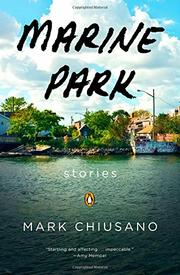 Marine Park: Stories – 978-0143124603 – paperback original – Penguin Books – $15.00 – ebook versions available at lower prices
Mark Chiusano grew up in Marine Park, perhaps the most isolated and least well known neighborhood of the now hip New York borough of Brooklyn. He spent some of his summers playing baseball in Switzerland.
He went to Harvard University, where he was the recipient of a Hoopes Prize for outstanding undergraduate fiction. Mark is still young – mid-twenties – but has been a prolific writer of short stories since college, some of which have appeared in literary magazines, including Guernica, Narrative, Harvard Review, and online at Tin House and The Paris Review Daily.
This first book is a collection of stories called Marine Park, after his boyhood neighborhood. It’s a diverse collection, but linked by tone, perspective, and some recurring characters. Stories revolve around kids growing up in the tight-knit neighborhood, portraits of its denizens, adventures and misadventures. Eight of the stories, perhaps the core of the book, revolve around the brothers Jamison and Lorris, as they grow up from late childhood into adults in the almost present. Overall, these are really well written stories, any one of which can stand alone, but collected, create a cohesive outlook and impact on the reader. There’s a palpable love and joy that shines through the narratives without ever falling prey to sentimentalism.
This is clearly a first book, with some stories seeming to experiment with different manners and tropes, as the author is feeling his way toward his authentic voice. But Chiusano is such a fine stylist, we tend to forgive any missteps or methodological repetitions. He is an original voice in many ways and we can expect more great writing from him as his work continues to grow.
Chiusano is now an editor at Vintage Books and is working on his next book.I’m guessing that his work, where he must spend time reading and editing other writers’ work will help make him even better than he already is. I’m looking forward to reading more from this fine new writer. I think you will find our conversation both interesting and revealing of how a wonderfully creative writer thinks about the work.
This interview was recorded at John Marshall Media, New York City in summer 2014.
Author website – where you can find a great quote about the book: “Here’s the spirit of dear Sherwood Anderson in Mark Chiusano’s Marine Park.”—Ron Carlson
Podcast: Play in new window | Download
George Gmelch: Inside Pitch
March 28, 2013 by David
Filed under Non-Fiction, WritersCast
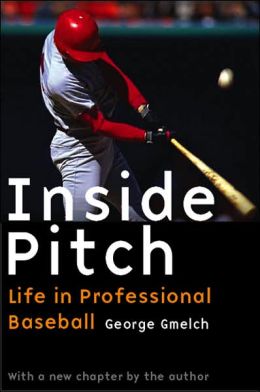 978-0803271289 – University of Nebraska Press Bison Books – paperback – $16 (no ebook edition available!)
Given my longstanding interest in baseball and an early background in anthropology, it’s kind of surprising to me that I missed knowing about the work of George Gmelch until very recently.
I ran across George’s books in some random searching having to do with baseball, and happily was able to get an introduction to him through my anthropologist brother. When he was young, George was a baseball player, and a pretty good one. Like so many others, he played for several years in the lower minor leagues, but never made it to the Major Leagues. It’s possible he quit too early, but it’s also likely that he made the right choice to quit baseball and go back to school (and got his Ph.D. at UC Santa Barbara) and then became an accomplished cultural anthropologist, studying tourism, sport cultures, and migration. He has worked among and written about Irish Travellers, English Gypsies, return migrants in Ireland and Newfoundland, commercial fishermen, Alaska natives, and Caribbean villagers and tourism workers, and has taught at several universities.
Given his training as an anthropologist and his unusual background as a minor league baseball player, it made sense that he could study baseball players, perhaps in ways that non-players could never manage. So some 30 years after his playing days ended, George arranged with friends still in the game to spend time with major and minor league players as an observer. Over the course of five years, he interviewed more than 100 players, coaches and managers, and got to experience and document the inner workings and social milieu of modern day baseball as it is lived by its participants.
Inside Pitch: Life in Professional Baseball is nothing like a typical anthropological ethnography. There’s a great deal of George’s personal story throughout, and it’s neither dry nor academic. But the observational techniques and abilities of the trained anthropologist are brought to bear, as George ruminates on the differences between modern players and those of his own era.
It’s unusual for us to get an insider’s view of the game that gets past the public relations walls that the institution and all its participants have build around it to protect the image of the game. Minor league players, though rarely interested in George’s own experience as a player, were always willing to tell him about their experiences, and even normally wary major leaguers were willing to talk to him once he explained that he was a former player doing anthropology, not a reporter looking for an angle.
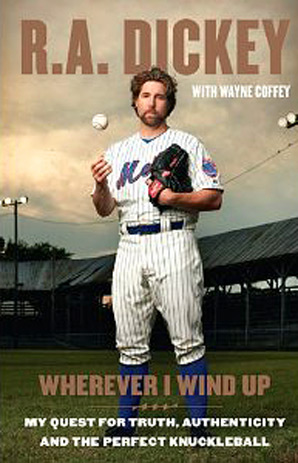
So if you love baseball, Inside Pitch is a terrific read, and will enrich your understanding of what it is really like to play professional baseball. I was especially taken with the writing about and the interviews with players that illustrated the psychological struggles that players go through. I recently read the excellent RA Dickey memoir, Wherever I Wind Up: My Quest for Truth, Authenticity, and the Perfect Knuckleball, which is a terrific complement to Inside Pitch, as so much of Dickey’s story is about how he managed to conquer his personal demons and harness his inner being to finally become a successful pitcher after years of struggle. Gmelch both give us many quotes of players talking about their mental struggles and writes about these issues perceptively.
Baseball is generally considered a cerebral game because of its complexity and pace. That, and the fact that there are so many games in a very long season, create a very challenging emotional and psychological environment for players. We rarely, if ever, get to see close up what that can mean for them. And because the vast majority of players who play in the minor leagues never make it to the majors or only get there for a brief time, reading about their struggles can change the way you think about the players who do get to the majors and stay there for any length of time. They really do have to be special, lucky and to have developed a solid psyche in order to be able to survive and thrive in such a difficult and fraught environment.
George Gmelch has written eleven books and now teaches at the University of San Francisco, where he co-directs the anthropology program. I’ve now got an earlier book of his, In the Ballpark: The Working Lives of Baseball People on my reading list as well. Talking to him about his experiences as a player, anthropologist and writer was a terrific pleasure for me.
 Alert to listeners: we had such a good conversation that I lost track of time, and this is a longer than average podcast at 54 minutes.
Podcast: Play in new window | Download
E. Ethelbert Miller: The Fifth Inning
June 21, 2012 by David
Filed under Non-Fiction, WritersCast
 978-1604865219 – PM Press – Paperback – $15.95 (ebook versions available at lower prices)
E. Ethelbert Miller is a writer and literary activist. He is currently the board chairperson of the Institute for Policy Studies (IPS). Since 1974, he has been the director of the African American Resource Center at Howard University. Ethelbert is also the former chair of the Humanities Council of Washington, D.C. and a former core faculty member of the Bennington Writing Seminars at Bennington College. He’s published more than ten books, in both poetry and prose, has edited a number of anthologies, and his writing is widely anthologized. He’s won all sorts of awards and recognition for his writing and for his longstanding work in support of writing as a community and cultural effort. In addition, for several years he hosted the popular weekly radio program Maiden Voyage on WDCU-FM, as well as Vertigo On The Air on WPFW.
Ethelbert has long been a favorite poet of mine, whom I got to know years ago when I lived in Washington, D.C., where Eth still resides. We’re of a similar age and share various passions, not the least of which is baseball.
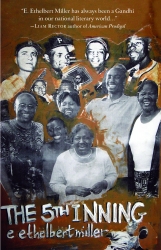
So it is no wonder that I jumped at the chance to read his memoir, The Fifth Inning, and then to talk to him about it on Writerscast. This is a terrific book, unusual in its shape and structure, which is both poetically charged and carefully built. Ethelbert allows himself to write honestly and purely about his own life, his insecurities, pain and suffering, but without ever becoming self indulgent or overwrought. There is always hope, and the sense that something good, or even great, will come from all this “stuff” we go through in life.
Thinking of a baseball game, the fifth inning out of nine is, of course, the turning point. After the fifth inning, a game can end early but still be considered an official game – a life lived, though abbreviated. So here he is, in the fifth inning of his imagination, looking back at the beginning of the game, and at the present where it’s about to start the last stretch toward the end and the final score. It’s a good time to take stock and get ready to see what you can do to get past the hitters coming up to bat. When you’re pitching you need to pace yourself, remember what worked and didn’t work in the early innings, and use what you have learned to keep the hitters off stride and getting the outs you need to win the game.
Poets’ memoirs are sometimes brittle and too carefully built to sustain a personal story. Ethelbert is not that kind of poet. He’s active and alive in every moment, and brings his readers right into his head and heart. This is a beautifully constructed and written piece of personal writing that I hope will find a audience far beyond the literary community. What Ethelbert has to say about being human and growing older is important for all of us to hear.
Ethelbert’s website is here, well worth a visit. And I wanted to mention that this is a Busboys & Poets book published by PM Press, a publisher I hope readers will learn about and support. Buy the book direct from the publisher to support independent publishing and alternative culture.
Podcast: Play in new window | Download