
Shirley C. Strum: Echoes of Our Origins: Baboons, Humans, and Nature
January 8, 2026 by David
Filed under Non-Fiction, WritersCast
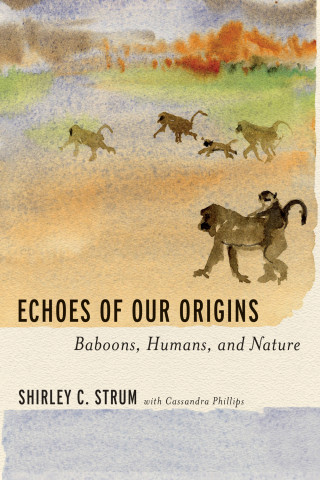 Echoes of Our Origins: Baboons, Humans, and Nature — Shirley C. Strum, with Cassandra Phillips — Johns Hopkins University Press — Hardcover — 978-1-4214-5203-6 — 376 pages — $32.95 — September 9, 2025 — ebook edition available.
This book was a fantastic discovery for me. I consider myself fairly well read; I’ve studied anthropology extensively and I even briefly went to graduate school to study biology, but my knowledge of primates is woefully poor. Shirley’s book was a great introduction for me to one part of a much wider field, and got me excited and engaged with baboons, who turn out to be incredibly interesting animals, and of course connect us not only to issues of human evolution, but also historical and modern ecology, issues of human/animal interactions, and human responsibilities in relation to other animals, especially primates.
I feel like I learned more from this book than almost anything I have read in the past year. Shirley Strum’s story of her fifty years studying baboons is completely compelling.
Her baboon story started in 1972, when as a graduate student, Strum traveled to Kenya to study the origins of human aggression by observing baboons. Her earliest discoveries completely changed the scientific study of baboons, and many long-held assumptions about primate behavior.
Living closely with a number of different populations of baboons over the past half century, and closely observing their lives, Strum has learned more than any other human about baboons’ complex strategies of negotiation, collaboration, and resilience. And through her work, Strum has had to deal with an array of challenges – not just within her field itself, but in the changing ecology and landscape of Africa, as more people have taken over former baboon (and many other animals’) territories, creating new forms of human/animal conflicts, and changing the evolution of baboon society itself.
In addition to illustrating the incredibly interesting lives of baboons, Strum’s experiences tell us a great deal about how human science works, and the challenges that we face in trying to deal with the massive effects of the anthropocene on our fellow beings in the world. I know it’s simplistic to say that baboons and other primates have a lot to teach homo sapiens about how to live cooperatively together, but I do think that understanding more about primate life can in fact teach us a great deal about ourselves, if only we can begin to see that we humans are not at the top of a hierarchy that makes us “better than” or “smarter than” our evolutionary cohort.
Echoes of Our Origins combines natural history, adventure, memoir, feminism and like some of the its best antecedents in nature writing, asks us to think about and empathize with the natural world in previously unfamiliar ways.
I hope you enjoy our wide-ranging conversation as much as I did. While it is doubtful that I will ever get to Africa to see baboons in the wild for myself, Echoes has given me an unmatched opportunity to imagine these incredible animals.
I’ve been recommending this book to anyone interested in humanity, ecology, our history and our future.
Dr. Shirley C. Strum is a Professor of Anthropology and a Professor of the Graduate Division, School of Social Sciences, at the University of California, San Diego, and Director of the Uaso Ngiro Baboon Project in Kenya. Her first book was Almost Human: A Journey into the World of Baboons.
More about Dr. Shirley C. Strum here.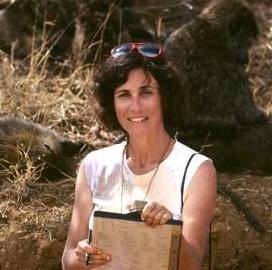
Podcast: Play in new window | Download
Christina Thompson: Sea People: The Puzzle of Polynesia
January 14, 2020 by David
Filed under Non-Fiction, WritersCast
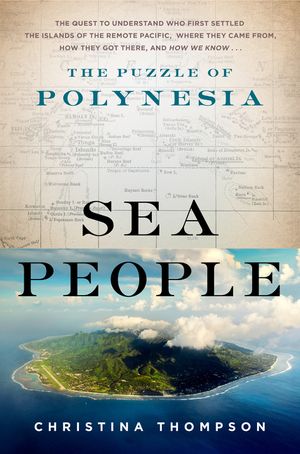 Sea People: The Puzzle of Polynesia – Christina Thompson – 9780062060877 – Harper – Hardcover – 384 pages – $29.99 – March 12, 2019 – ebook editions also available at lower prices, varying by outlet.
“I loved this book. I found Sea People the most intelligent, empathic, engaging, wide-ranging, informative, and authoritative treatment of Polynesian mysteries that I have ever read. Christina Thompson’s gorgeous writing arises from a deep well of research and succeeds in conjuring a lost world.”
– Dava Sobel, bestselling author of Longitude and The Glass Universe
I completely agree with Dava Sobel. This is an incredible book, probably the best introduction to the ancient and modern world of the Polynesian people of the Pacific islands you could ever read. She starts with an anecdote of modern Polynesia that aptly sets the scene for the entire story. Thompson is married to a Maori (her first book, Come on Shore and We Will Kill and Eat You, tells the history of the Maori people of New Zealand, who are among the many groups of Polynesians). When she and her husband are in Hawaii about to rent a kayak, the Hawaiian managing the concession tells them it rents for “thirty dollars….but twenty for you, brother.” It’s a striking moment, giving Thompson the opportunity to explain the entire outline and genesis of the book. Polynesians all over the Pacific from New Zealand to Hawaii to the Easter Islands are related to one another. They all instantly recognize the cultural connection, and while many of the lifeways and life skills that existed hundreds or a thousand years ago have disappeared, and European and Asian influences have spread throughout the region, the ocean environment is what it always was. The mystery is, of course, how did the Polynesians navigate the open ocean for over 1000 years to populate the vast majority of the Pacific Ocean? Sea People tells that story brilliantly.
Through the course of this deftly written book, Thompson tells us how the earliest identifiable Polynesians settled this vast region. She explores what was once called the “Problem of Polynesian Origins” that fascinated the thinking of many European scientists during the late nineteenth century and into the modern era, where a variety of theories have competed to explain who the Polynesians are and how they got there (from the east or from the west, for example.)
This book is a comprehensive telling of history, geography, anthropology, and includes a great deal about the science of navigation. It’s a completely engrossing and riveting read, making it one of the more satisfying nonfiction books I have read in a long time.
Christina is a great person to talk to, so knowledgeable and comfortable with her material and never dry or pedantic in her approach to communicating so much of what she knows. It was a pleasure to speak with her for Writerscast.
My interview with Christina Thompson about her (wonderful) previous book, Come on Shore and We Will Kill and Eat You All can be found here on Writerscast, (originally posted in December, 2011.)
Christina’s author website is here.
The book is available for purchase from independent bookseller RJ Julia here.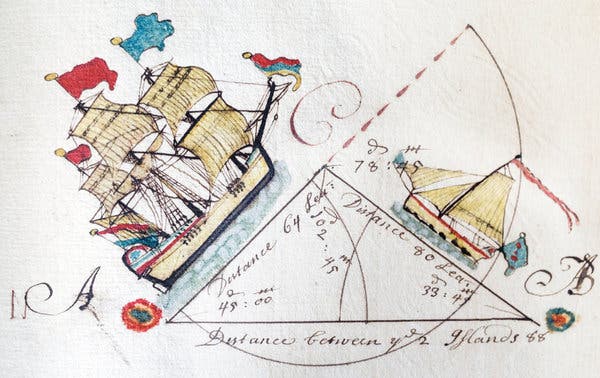

Podcast: Play in new window | Download
George Gmelch: Inside Pitch
March 28, 2013 by David
Filed under Non-Fiction, WritersCast
 978-0803271289 – University of Nebraska Press Bison Books – paperback – $16 (no ebook edition available!)
Given my longstanding interest in baseball and an early background in anthropology, it’s kind of surprising to me that I missed knowing about the work of George Gmelch until very recently.
I ran across George’s books in some random searching having to do with baseball, and happily was able to get an introduction to him through my anthropologist brother. When he was young, George was a baseball player, and a pretty good one. Like so many others, he played for several years in the lower minor leagues, but never made it to the Major Leagues. It’s possible he quit too early, but it’s also likely that he made the right choice to quit baseball and go back to school (and got his Ph.D. at UC Santa Barbara) and then became an accomplished cultural anthropologist, studying tourism, sport cultures, and migration. He has worked among and written about Irish Travellers, English Gypsies, return migrants in Ireland and Newfoundland, commercial fishermen, Alaska natives, and Caribbean villagers and tourism workers, and has taught at several universities.
Given his training as an anthropologist and his unusual background as a minor league baseball player, it made sense that he could study baseball players, perhaps in ways that non-players could never manage. So some 30 years after his playing days ended, George arranged with friends still in the game to spend time with major and minor league players as an observer. Over the course of five years, he interviewed more than 100 players, coaches and managers, and got to experience and document the inner workings and social milieu of modern day baseball as it is lived by its participants.
Inside Pitch: Life in Professional Baseball is nothing like a typical anthropological ethnography. There’s a great deal of George’s personal story throughout, and it’s neither dry nor academic. But the observational techniques and abilities of the trained anthropologist are brought to bear, as George ruminates on the differences between modern players and those of his own era.
It’s unusual for us to get an insider’s view of the game that gets past the public relations walls that the institution and all its participants have build around it to protect the image of the game. Minor league players, though rarely interested in George’s own experience as a player, were always willing to tell him about their experiences, and even normally wary major leaguers were willing to talk to him once he explained that he was a former player doing anthropology, not a reporter looking for an angle.
So if you love baseball, Inside Pitch is a terrific read, and will enrich your understanding of what it is really like to play professional baseball. I was especially taken with the writing about and the interviews with players that illustrated the psychological struggles that players go through. I recently read the excellent RA Dickey memoir, Wherever I Wind Up: My Quest for Truth, Authenticity, and the Perfect Knuckleball, which is a terrific complement to Inside Pitch, as so much of Dickey’s story is about how he managed to conquer his personal demons and harness his inner being to finally become a successful pitcher after years of struggle. Gmelch both give us many quotes of players talking about their mental struggles and writes about these issues perceptively.
Baseball is generally considered a cerebral game because of its complexity and pace. That, and the fact that there are so many games in a very long season, create a very challenging emotional and psychological environment for players. We rarely, if ever, get to see close up what that can mean for them. And because the vast majority of players who play in the minor leagues never make it to the majors or only get there for a brief time, reading about their struggles can change the way you think about the players who do get to the majors and stay there for any length of time. They really do have to be special, lucky and to have developed a solid psyche in order to be able to survive and thrive in such a difficult and fraught environment.
George Gmelch has written eleven books and now teaches at the University of San Francisco, where he co-directs the anthropology program. I’ve now got an earlier book of his, In the Ballpark: The Working Lives of Baseball People on my reading list as well. Talking to him about his experiences as a player, anthropologist and writer was a terrific pleasure for me.
 Alert to listeners: we had such a good conversation that I lost track of time, and this is a longer than average podcast at 54 minutes.
Podcast: Play in new window | Download