
Publishing Talks: David Wilk interviews Ishmael Reed
January 31, 2013 by David
Filed under Ebooks and Digital Publishing, Publishing History, PublishingTalks, The Future
 In this series of interviews, called Publishing Talks, I have been talking to book industry professionals and other smart people about the future of publishing, books, and culture. This is a period of disruption and change for all media businesses. We must wonder now, how will publishing evolve as our culture is affected by technology, climate change, population density, and the ebb and flow of civilization and economics?
I hope these Publishing Talks conversations can help us understand the outlines of what is happening in the publishing industry, and how we might ourselves interact with and influence the future of publishing as it unfolds.
These interviews give people in and around the book business a chance to talk openly about ideas and concerns that are often only talked about “around the water cooler,” at industry conventions and events, and in emails between friends and they give people inside and outside the book industry a chance to hear first hand some of the most interesting and challenging thoughts, ideas and concepts being discussed by people in the book business.
Ishmael Reed is not only one of my favorite writers (fiction, poetry, theater and a wide range of nonfiction), he is an editor, publisher, literary activist and one of the founders of the Before Columbus Foundation, which has sponsored the American Book Awards since 1980. His latest publishing venture is Ishmael Reed Publishing Company, sponsoring the work of a diverse set of writers from many continents, including an online magazine, Konch. He blogs for the San Francisco Chronicle at www.sfgate.com.
His own books include the now classic Yellow Back Radio Brokedown, Mumbo Jumbo, The Freelance Pallbearers (a book I like to re-read at least once every five years), Flight to Canada as well as an amazing number of collections of essays, plays and poems, and recently, Powwow: Charting the Fault Lines in the American Experience, an anthology he co-edited with Carla Blank. Forthcoming books include The Fighter and the Writer: Two American Stories (Random House), and Brawls, a new collection of Ishmael’s always provocative and on point essays. Ishmael Reed is a massively prolific writer in a wide range of forms.
You can read a complete biography of Ishmael here. It’s pretty impressive, but listen to this interview I did with him to get a real sense of what he has done to support and promote the full breadth of writing and creativity in this country (and around the world). Ishmael Reed gives voice to the heart and soul of the river of creativity that flows out of and through the great American continent, and never fails to tell truth to power, expose alternative views of accepted wisdom, and makes us think long and hard about who we really are.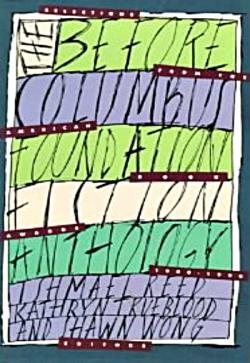 This conversation covers a wide range of topics, and includes much about the history of independent publishing in the last several decades, and much more.
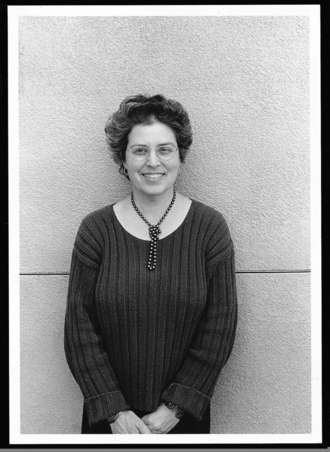 A guest appearance by editor, writer and professor Carla Blank near the end of our talk.
Carla Blank
Podcast: Play in new window | Download
Publishing Talks: David Wilk Interviews Kathy Meis of Bublish
July 15, 2012 by David
Filed under Ebooks and Digital Publishing, PublishingTalks, Technology, The Future
 In this series of interviews, called Publishing Talks, I talk to book industry professionals and other smart people about the future of publishing, books, and culture. This is a period of disruption and change for all media businesses. How will publishing evolve as our culture is affected by technology, climate change, population density, and the ebb and flow of civilization and economics?
I hope these Publishing Talks conversations will help us better understand the outlines of what is happening in publishing, books and reading culture, and how we can ourselves both understand and influence the future of books and reading.
There has been alot of talk around the publishing business this year about “book discovery” as it is clear that the decline of bricks and mortar bookstores has lessened the opportunity for readers to discover books they want to read through the kinds of browsing and personal recommending that have been the hallmarks of physical bookselling up to now. Online bookselling and even social media have thus far been less than perfect mechanisms for either writers or readers, with lots of frustration expressed especially by publishers and writers about the whole process. We’re not sure we know what readers think about all this, but there is doubtless much to be inferred.
The relatively steep decline in overall sales of print books, and the increase in the concentration of sales to best sellers (witness 50 Shades of Gray, among others) suggest that readers are not finding it easy or practical to take advantage of the online availability of just about every book in print. There are too many books and not enough connection tools for most of them.
Meanwhile, there are intelligent people out there seeking to solve these twin “problems” of too many choices for readers, and ineffective online marketing tools for authors and publishers. One new project that is the result of some deep thinking about both issues is Bublish, which seeks to create opportunities for social discovery of books by readers. One of the founders is Kathy Meis, whom I met briefly at this year’s IDPF summit at Book Expo in New York City.
Here is what Kathy said about Bublish in an online interview she did recently with Madison Woods:
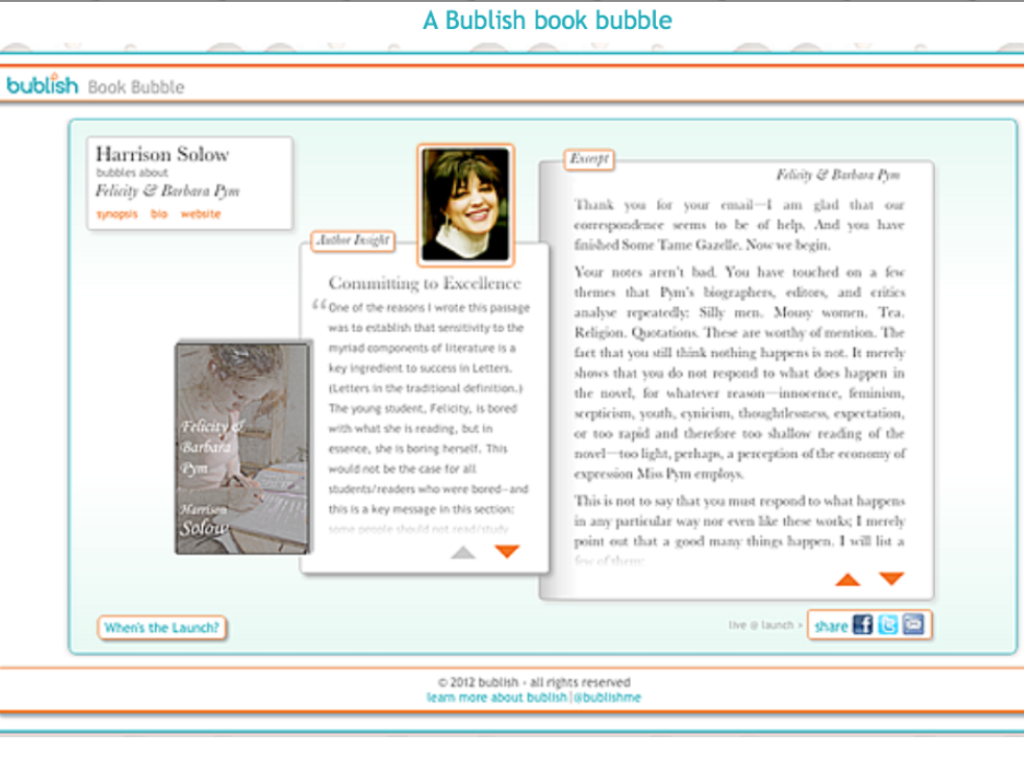
With Bublish, authors share book bubbles, and readers get to browse through them. A book bubble consists of an excerpt and an author’s insight about that excerpt. We call this the story behind the story. Both of these elements are presented in a beautifully designed book bubble that also includes the author’s photo and bio, the book’s cover and synopsis as well as links to the author’s website. It’s about as close to the bookstore discovery experience as you can get online. And because we match writers and readers by genre and keywords, we can connect the right authors and books with the right readers without ruining the serendipity of browsing. In an age of immense content abundance, you need a few filters when you’re looking for good books.
Bublish is designed to solve a number of problems for writers and readers. For authors, Bublish will let them repurpose their best writing, the content of their books, and enrich it with the story behind the story. This creates an entirely fresh piece of content for authors to share across multiple social networks. Authors have a lot of demands on their time. We think it’s important to make it as easy and effective as possible for them to facilitate discovery of their work without feeling like salespeople. With Bublish, the social conversation starts with the voice of the author, just like it does in the bookstore. And since authors can create and share book bubbles in seconds, Bublish significantly lightens the author’s promotional content load.
For readers, Bublish recreates online all the pleasure of the bookstore discovery experience. No ads, no algorithms, no distractions…just browsing. Of course, once a reader finds a book or author they love, they’ll want to share it. Word-of-mouth continues to be the most popular way for readers to find new books. That’s why book bubbles are highly shareable across multiple social networks. Finally, Bublish will create a wonderful community for writers and readers to engage around stories. Imagine getting an invitation to chat with one of your favorite authors or being able to follow the book bubbles of an author you’ve never even heard of before.
In my interview with Kathy we talked about Bublish and also about many of the perplexing issues surrounding writing and reading, as we enter a new stage in the ways that writers, publishers and readers will relate to each other, indeed a very exciting and challenging time for us all.
 Kathy Meis has been a professional writer for more than twenty years. She founded Serendipite Studios to empower those who create and enhance quality content. You can follow her on Twitter @katmeis or @BublishMe.
Podcast: Play in new window | Download
Publishing Talks: David Wilk interviews Dan Blank
April 26, 2012 by David
Filed under Ebooks and Digital Publishing, PublishingTalks, The Future
 In this series of interviews, called Publishing Talks, I talk to book industry professionals and other smart people about the future of publishing, books, and culture. This is a period of disruption and change for all media businesses. How will publishing evolve as our culture is affected by technology, climate change, population density, and the ebb and flow of civilization and economics?
I hope these Publishing Talks conversations will help us better understand the outlines of what is happening in publishing, books and reading culture, and how we can ourselves both understand and influence the future of books and reading.
Dan Blank is a very smart and perceptive guy. He works with writers and publishers – as he says on his website, to “make an impact and build their legacies.” Through his company, We Grow Media, he offers a great deal of really valuable free advice – a terrific email newsletter and always interesting blog – along with paid courses and speaking engagements. I’ve assiduously read just about everything he has written for quite a while now, and have watched some of his presentations on video as well.
Marketing is a tough subject for most authors and many publishers. Dan always has clear and sensible advice and ideas for writers and publishers. His ideas and perceptions have influenced my own thinking about how writers can operate in the new media environment.
So I am really pleased and honored to have had the opportunity to talk to him for Publishing Talks and bring what he has to say to my audience about marketing for writers and publishers. I am certain that you will hear more than one actionable piece of advice or a cogent idea that will make you think, and question your assumptions.  And if you get a chance to hear Dan speak in public, make sure you do, it will be well worth your while.
Podcast: Play in new window | Download
Hurricane Irene delays Writerscast posting
 Just like millions of other Americans we were hammered pretty hard by this hurricane, in our small Connecticut town 99% of homes lost power, and as of today, September 2, still more than 55% of homes are without power. We got ours back last night, thankfully, but still do not have internet. Without a good connection, posting interviews is painfully difficult. I have several great interviews ready to post, next being with Dean Bakopoulos about his excellent novel My American Unhappiness. I hope to have a new Publishing Talks interview posted by next week also.
Our other big news is that Livewriters, our book and author video site, had its best traffic month in August, surpassing 70,000 unique visitors. We are posting ever more interesting interviews, readings and discussions with authors about their books there, plus featuring just about every book trailer there is. And if you want to enjoy a lively literary blog experience, visit Livewires, a fresh look at the literary landscape.
During the storm, I had plenty of time to read (print books by candlelight and flashlight, ebooks with the device’s own light) and am looking forward to talking to the authors of quite a few wonderful books, including My Green Manifesto, Just Bill, Confronting Collapse, and Duet.
My best wishes to all who suffered in and after the storm, and condolences to all those who died in it.
Publishing Talks: David Wilk Interviews Betsy Lerner
December 9, 2010 by David
Filed under Publishing History, PublishingTalks, The Future
 In this series of interviews, called Publishing Talks, I have been talking to book industry professionals and other smart people about the future of publishing, books, and culture. This is a period of disruption and change for all media businesses. We must wonder now, how will publishing evolve as our culture is affected by technology, climate change, population density, and the ebb and flow of civilization and economics?
I hope these Publishing Talks conversations will help us understand the outlines of what is happening, and how we might ourselves interact with and influence the future of publishing as it unfolds.
These interviews give people in and around the book business a chance to talk openly about ideas and concerns that are often only talked about “around the water cooler,” at industry conventions and events, and in emails between friends and they give people inside and outside the book industry a chance to hear first hand some of the most interesting and challenging thoughts, ideas and concepts being discussed by people in the book business.
A few weeks ago I read a piece by Betsy Lerner in Publishing Perspectives, the excellent online newsletter about the publishing business edited by Ed Nawotka. It was called “Should I Tweet” and was adapted from the new updated edition of Betsy’s book “The Forest for the Trees: An Editor’s Advice for Writers.” It’s a great piece, that says some important things about marketing and publishing aimed at writers (but good for everyone else in publishing to read too), and instantly made me want to talk to her (and buy her book). This little quote from near the end of the essay really grabbed me:
“I’m not saying that everyone can or should be creating a personal literary dynasty, but it’s essential for authors to be thinking about how to market themselves. Always has been. Sometimes they cry, “but I’m no good at marketing,” or “Isn’t that the publisher’s job?” I think publishers should help authors think about what they can do early on in the process, whether it’s creating a blog, developing mailing lists, or getting speaking engagements lined up. If you’re lucky enough to be signed up without a platform, start working on one! Marketing and selling books is not for the faint of heart. Whitman knew that. Palahniuk knows it. Jay Conrad Levinson preaches it.
But no one knew it better than P.T. Barnum, “Without promotion something terrible happens,” he said. “Nothing!”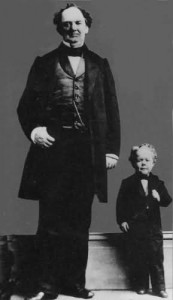
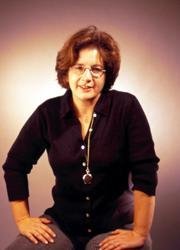
Betsy is herself of course, a terrific writer, as well as being a successful agent. I admire her blog, where she extends the work she did in The Forest for the Trees. She is funny and smart, entertaining and instructive, and obviously talented. Her opinions are definitely worth knowing, and her advice for writers is always great stuff. She’s a poet, and was for many years a successful commercial editor, and then became an agent with a great list of client writers; she is a partner at the Dunow, Carlson and Lerner Literary Agency. She wrote another book called Food and Loathing about her issues with eating and depression. She received an MFA from Columbia University in Poetry and was the recipient of a Thomas Wolfe Poetry Prize, an Academy of American Poets Poetry Prize, and was one of PEN’s Emerging Writers in 1987. She also received the Tony Godwin Publishing Prize for Editors Under 35. And Betsy also gives talks on every aspect of the publishing process from her perspective as a writer, former editor and agent.
We had a great conversation about books, publishing and marketing, during which I learned a few things and gained some valuable insights. A key point she makes is how important it is for writers to understand their role in the publishing process. While we are certainly in a period of heightened difficulties, the challenges writers (and publishers) face today are really not that different from what they have always been. The specific tools we use may change, but the principles of marketing books remain the same. Writers are in fact entrepreneurs, and not just “writers” and they must always be engaged in the public process of publishing, in a measure most likely equal to their own actual abilities. And she also reminds us of the central matter: that the quality of the work must always be the focus of everything. Everything else is secondary.
After talking to Betsy, I’m now looking forward to reading The Forest for the Trees – and sooner rather than later.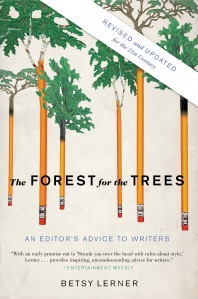
Podcast: Play in new window | Download
Corinne Demas: The Writing Circle
November 8, 2010 by David
Filed under Fiction, WritersCast
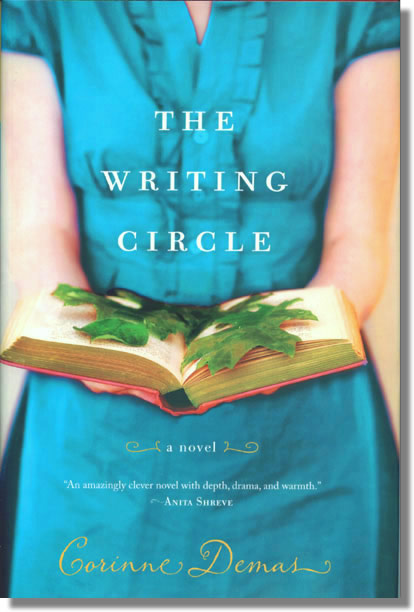 978-1401341145 – Hardcover – $23.99 (e-book edition available $11.99)
In choosing books for Writerscast, I have been trying to read as many books as possible from different styles, genres and viewpoints, to make an eclectic and interesting selection both for myself and for an audience of listeners. I suspect that if it had not been for that effort, I simply would never have discovered Corinne Demas and her new novel The Writing Circle.
It’s not so much that this novel is outside the scope of my literary tastes, as in fact, I really like well written novels that explore character and whose narrative is subtle and skillfully enough handled that I can’t feel ahead what is going to happen. I suppose in one way that just means I like to lose myself in a novel and not feel like I can feel the wheels and levers turning as I follow on. But I just may not have picked this book off of a book display in a bookstore to read, maybe because it’s a book about writers and that might normally seem sort of self reflexive to me. Thus the lesson, if there is one, is to remain open to surprises and to not make judgments about a book just from it’s title. A funny idea indeed.
I definitely enjoyed reading this novel quite a bit. Corinne Demas is a very fine writer. I think the word that comes to mind for me is “deft.” There are a number of characters here, all of whom are important, and the way the story is told reminded me of an ever tightening spiral, as we start from the seeming mundane outside and move ever closer into the lives of these people around a series of events that provides the structure of the book. This is a very well put together novel. After reading it, I wanted to rush out and talk to Corinne Demas about the book and how she imagined it, and all the characters (guessing of course that she had been in writing circles herself).
I always feel that when I am talking to a novelist it’s critical to balance between talking engagingly about a book I just read and that I feel excited about, and not giving away too much to anyone who might be listening and themselves eventually read the same book. That certainly applied in this talk, as we danced around the story outline while talking in depth about the book’s structure and her involvement with these very compelling characters. That was fun too and I hope listeners will enjoy that balancing act.
Corinne Demas is a talented and accomplished writer – she’s written adult novels, short stories, children’s picture books and chapter books, a play and she writes poetry as well. In addition, she teaches full time at Mt. Holyoke, which we also talked about a bit in this conversation. 
Podcast: Play in new window | Download
Lev Raphael – My Germany: A Jewish Writer Returns to the World his Parents Escaped
July 19, 2009 by David
Filed under Non-Fiction
 978-0299231507 – Hardcover
University of Wisconsin Press $26.95
Lev Raphael grew up loathing everything German. A son of Holocaust survivors, haunted by his parents’ suffering and traumatic losses under Nazi rule, he was certain that Germany was one place in the world he would never visit. Those feelings shaped his Jewish and gay identity, his life, and his career. In “My Germany.” Raphael explores many layers of his personal life, including his visits to Germany, his complex relationships with his parents and his inner self. My interview with this interesting and engaging writer ranges across a variety of subjects, including the author’s writing methods, a discussion about this new book and his life as a writer, the nature of memoir, memory, and the discovery of self.
Podcast: Play in new window | Download