
Paul Ingram: The Lost Clerihews of Paul Ingram
October 25, 2014 by David
Filed under Poetry, WritersCast
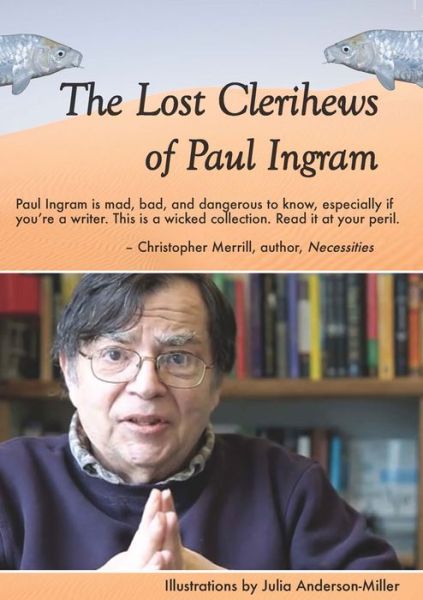 The Lost Clerihews of Paul Ingram – 978-1-888160-77-2 – paperback original – Ice Cube Press – $19.95 (no ebook edition!)
The clerihew is a somewhat obscure form of poetry invented by the English writer Edmund Clerihew Bentley as an alternative to the limerick. It has a particular focus, which is to skewer or make fun of a famous person, is only four lines long, with irregular line length and meter. Rhymes follow the AABB structure with as much humorous contrivance as possible to do what needs to be done to accomplish the goal of the poem – fun at the expense of a well known individual.
I first was introduced to this form by my old friend and mentor, Jonathan Williams, whose quirky and creative sense of humor was perfectly fit for this fun form. He wrote a wonderful book called the Fifty Two Clerihews of Clara Hughes, which is well worth seeking out (produced in a limited edition and long out of print, but should be available in a few libraries, and I found a audio version of it online.)
Brits invented the form and seem to like it a lot. Auden wrote clerihews and so did Bentley’s friend G.K. Chesterton. One of Bentley’s earliest clerihews is still one of his best:
Sir Christopher Wren
Said, “I am going to dine with some men.
If anyone calls
Say I am designing St. Paul’s.
And now we have another great collection of clerihews, written by the hilarious and well read Iowa City based bookseller, Paul Ingram. Paul has been a friend of mine (and of hundreds of writers) for a long time. He’s known far and wide as one of the great booksellers and talkers about books and visitors to Iowa City seek him out at the wonderful Prairie Lights Bookstore* to talk to him about books.
As he tells us in the introduction to his book, Paul has been writing clerihews for more than twenty years, mostly as the spirit struck, often on tiny pieces of paper that seemed to disappear. Thus the “lost” in the title of the book. We can only be grateful that this packrat managed to keep and find most of the poems he wrote so that we can enjoy them here. As Roz Chast says “after you read it, you will need to put aside whatever important work you are doing and write several of your own.” Clerihews are like candy.
Almost all of Paul’s clerihews are fun, hilarious, some are political, and some are much more weighty than the form suggests, like this one:
General Custer
Lost all of his luster,
And most of his pride
On his final ride
It is difficult to resist consuming this book like candy. I enjoyed having the chance to hear Paul about his own writing, poetry and book selling. You will too. This is a fun book with alot to say. Like the author himself.
Paul’s book has wonderful illustrations by the Chicago artist Julia Anderson-Miller. Publisher website here.
*I interviewed Jan Weissmiller, proprietor of Prairie Lights, for Writerscast a few years ago,
Podcast: Play in new window | Download
David Wilk and Thomas Meyer talking about Jargon Society
May 26, 2014 by David
Filed under Publishing History, PublishingTalks
 Publishing Talks began as a series of conversations with book industry professionals and others involved in media and technology about the future of publishing, books, and culture. As we continue to experience disruption and change in all media businesses, I’ve been talking with some of the people involved in our industry about how they believe publishing might evolve as our culture is affected by technology and the ebb and flow of civilization and economics.
I’ve now expanded the series to include conversations that go beyond the future of publishing. I’ve talked with editors and publishers who have been innovators and leaders in independent publishing in the past and into the present, and will continue to explore the ebb and flow of writing, books, and publishing in all sorts of forms and formats, as change continues to be the one constant we can count on.
It’s my hope that these conversations can help us understand the outlines of what is happening in publishing and writing, and how we might ourselves interact with and influence the future of publishing as it unfolds. This new interview reflects my interest in the history of independent literary publishing, an area in which I have been active for a long time. And this particular conversation reflects some longstanding personal relationships as well.
Jargon Society, founded in 1951 by poet, essayist and photographer Jonathan Williams (1929-2008), was operated for many years by Jonathan alone, then with friends and associates, and later with his life partner, the poet Thomas Meyer. The long list of Jargon publications reflects the aesthetics, thinking, whimsy and artistic vision of Jonathan Williams, for whom the press was, along with his own writing and deep friendships, his life’s work. Jonathan’s commitment was singularly to find and present the unusual, mostly brilliant, sometimes quirky work of writers, artists and photographers those he believed in and found exalting, transformative, and sometimes just plain strange.
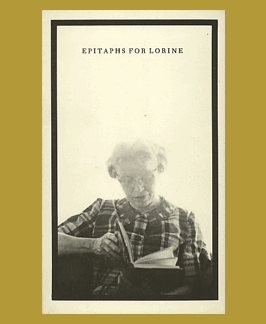
Over the course of a half century, beginning when he was a student at Black Mountain College in North Carolina studying with Charles Olson and other mid-century writers, artists and thinkers, Jargon published an incredible range of highly individualized creators, some now famous and fully accepted into the American canon. The list of books and broadsides and other works published by Jargon numbers 115 pieces, and wonderfully reflects the enthusiasms of Jonathan’s life. Included are early works by Black Mountain identified writers like Charles Olson, Robert Duncan, Robert Creeley and Joel Oppenheimer, then unknown but now well known writers like Denise Levertov, Kenneth Patchen, Michael McClure, Guy Davenport, Gilbert Sorrentino, Louis Zukofsky, Buckminister Fuller and Larry Eigner, and outliers like Douglas Woolf, Peyton Houston, Alfred Starr Hamilton and Bill Anthony. Still others must be accounted to Jonathan’s indefatigable championing of the then virtually unknown writers whom he felt must be shared, including Lorine Niedecker and Mina Loy.
The photography books on the list represent JW’s brilliant visual sensibilities, and include work by Doris Ulmann, Lyle Bonge, Ralph Eugene Meatyard, John Menapace and Elizabeth Matheson, among others, altogether a meaningful aesthetic contribution to photographic publishing. And so do the books on outsider art (which Jonathan was following long before the popular culture caught on).
In all cases, at all times, Jargon books were reflective of Jonathan Williams’ extreme commitment to making beautiful books whose look and feel would always do justice to the writing, photography and art within.
Williams and Meyer, along with a diverse cast of supporters throughout the world, devoted an immense amount of time and energy raising money for the varied endeavors of the Jargon Society. Fundraising was, it seemed, almost as much work for the press’ principals as creating great books. Asking people with money to support the kind of literature and art they might not themselves find compelling is not an easy thing to do. Making pleas for money year after year can be exhausting and it is rare today to find an arts organization whose founder maintains the role of chief fundraiser throughout its history.
Jonathan Williams and Tom Meyer have been hugely influential to my own work as a writer, editor, and publisher. For me they each exemplify the committed life of the artist. Over the years I published two books of Jonathan’s poems and will soon publish his third and final collection of essays. Over the years I often visited Jonathan and Tom in Highlands, North Carolina, and learned a tremendous amount from both of them, as well as developing deep and long lasting friendships with both. And for a number of years, Inland Book Company, the company I co-founded, was the primary distributor for Jargon, a great and sometimes sobering experience for all of us whose responsibility was to sell these quirky and decidedly noncommercial creations.
Jonathan Williams was always a prolific letter writer; correspondence with the ever witty Williams was a deep and abiding pleasure.
Jargon is an exemplar of what a modern literary press can be: individualistic in the extreme, with a compelling vision of the breadth of art and and our experience of its varied forms, expanding the horizons of all who have the opportunity to be touched by the works and their beautiful singularities.
Recently, in order to continue the legacy of the Jargon Society, Tom has gifted the press and its books to the Black Mountain College Museum and Art Center, where its work can continue in a new context.
I wish I had been working on this interview series long enough ago to have talked to Jonathan Williams with the recorder running. But it was my great pleasure to talk to Tom Meyer about Jargon Society, and of course Jonathan himself, with whom he partnered and worked for forty years. This is a one hour conversation packed with information, evoking the history of one of the great literary accomplishments of the twentieth century.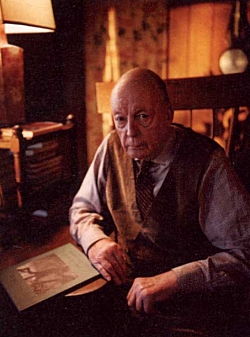
A Jargon Society bibliography checklist was published by the extraordinary and wonderful Jacket online magazine.
Appreciation of Jonathan and Jargon by Ron Silliman; an interview with Jonathan by Leverett T. Smith here; feature on JW in Jacket 38.
(Photos of Tom Meyer and Jonathan Williams by Reuben Cox)
Podcast: Play in new window | Download
David Wilk Interviews Charles Bernstein of L=A=N=G=U=A=G=E Magazine
April 12, 2014 by David
Filed under Publishing History, PublishingTalks
 Publishing Talks began as a series of conversations with book industry professionals and others involved in media and technology about the future of publishing, books, and culture. As we continue to experience disruption and change in all media businesses, I’ve been talking with some of the people involved in our industry about how they believe publishing might evolve as our culture is affected by technology and the ebb and flow of civilization and economics.
Recently, the series has expanded to include conversations that go beyond the future of publishing. I’ve talked with editors and publishers who have been innovators and leaders in independent publishing in the past and into the present, and will continue to explore the past, present and future of writing, books, and publishing in all sorts of forms and formats, as change continues to be the one constant we can count on.
It’s my hope that these conversations can help us understand the outlines of what is happening in publishing and writing, and how we might ourselves interact with and influence the future of publishing as it unfolds. Some of my latest interviews reflect my interest in the history of independent literary publishing, an area I have been involved in for a very long time.
Charles Bernstein has been a poet, editor, theorist and teacher of poetry and poetics, and is best known as a leader of what has become known as the LANGUAGE school of poetry. Between 1978 and 1981, Charles and poet Bruce Andrews edited the truly extraordinary journal they called L=A=N=G=U=A=G=E, that has become one of the most influential literary magazines of the last half century. That magazine, which circulated a relatively small number of copies during a relatively short period of time (13 issues), helped to establish and define what was then mostly an outsider and alternative challenge to contemporary poetry and thinking about reading poetry and which has now become a fixture in modern poetry and poetics. All the issues of the magazine are available online here.
Since that time, Charles has taught and continued to help establish influential organizations. He was the David Gray Professor of Poetry and Letters at the SUNY Buffalo and Director of the Poetics Program, which he co-founded with poet Robert Creeley. At SUNY, he co-founded the Electronic Poetry Center and is currently the Donald T. Regan Professor of English and Comparative Literature at the University Pennsylvania. He also is a co-founder of the outstanding and wonderful poetry audio archive at UPenn called PennSound (there’s a Writerscast interview with Charles, Al Filreis and Michael Hennessey here).
Our conversation about L=A=N=G=U=A=G=E continues my effort to document at least a small portion of the creative work of independent literary publishing of the late 20th century, that has been so important to the development of contemporary literary culture.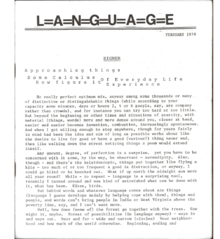
The anthology mentioned in the talk, The L=A=N=G=U=A=G=E Book (Poetics of the New), was published by Southern Illinois University Press, and is in print and available.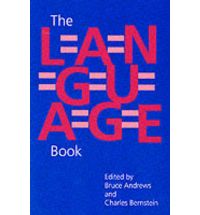 Note to listeners: as with all these historically based conversations about literary publishing, this is a relatively long listen, at about 48 minutes.
Podcast: Play in new window | Download
Publishing Talks: David Wilk interviews DeWitt Henry of Ploughshares
February 10, 2014 by David
Filed under Publishing History, PublishingTalks
 Publishing Talks began as a series of conversations with book industry professionals and other smart people about the future of publishing, books, and culture. As we continue to experience disruption and change in all media businesses, I’ve been talking with some of the people involved in our industry about how they believe publishing might evolve as our culture is affected by technology, climate change, population density, and the ebb and flow of civilization and economics.
Recently, the series has been expanding to include conversations about a wider range of subjects beyond my initial interest in the future of publishing. I’ve talked with editors and publishers who have been innovators and leaders in independent publishing in the past and into the present, and will continue to explore the past, present and future of writing, books, and publishing in all sorts of forms and formats, as change continues to be the one constant we can count on.
It’s my hope that these conversations can help us understand the outlines of what is happening in publishing and writing, and how we might ourselves interact with and influence the future of publishing as it unfolds. This week’s interview reflects my interest in comic art, illustrated story telling and new technology as a platform for expanding story telling in interesting and challenging ways.
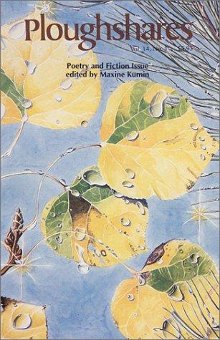
Ploughshares is one of the great literary magazines of the last fifty years. Founded in 1971 in Boston by writer, teacher and scholar DeWitt Henry and writer and bar owner Peter O’Malley, it has gone on brilliantly from very humble beginnings to publish an extraordinary range of writing. Founded in a bar called the Plough and the Stars in Cambridge, Massachusetts, Ploughshares to give the young and upcoming writers of its time a voice and a platform, the magazine has been a literal breeding ground for great writers of fiction, poetry and nonfiction as well.
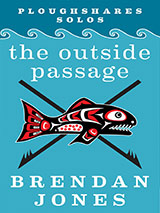
One of its innovations was to invite writers to guest edit individual issues. The list of editors is pretty incredible, including Seamus Heaney, Derek Walcott, Rita Dove, James Alan McPherson, Philip Levine, Gerald Stern, Raymond Carver, Rosellen Brown, Maxine Kumin, Donald Hall, Marilyn Hacker, Mark Doty, Richard Ford, Sherman Alexie, and many others. Ploughshares editors have received almost every award given in American writing. Throughout its now celebrated history, Ploughshares has managed to maintain a high level of excellence in writing and has avoided being trapped by the narrowness of a particular school or narrow vision of what American writing can be. It has consistently nurtured new talent, and continues today to bring attention to new writers. And lately, Ploughshares has broadened the definition of what a literary magazine can be with an innovative series of ebooks called Ploughshares Solos.
Interviewing DeWitt Henry about the history of the magazine, bis work as editor and writer, and the current and future of Ploughshares was a great pleasure for me. Having been involved in literary publishing and distribution myself, I know how incredibly difficult it is to sustain both the artistic and structural vision in this kind of publishing. Ploughshares truly represents an extraordinary accomplishment for those who have worked on it, published in it, and of course read the magazine during the many years of its existence.
There’s an excellent history of the magazine on it website. And you might want to visit DeWitt Henry’s own website to learn more about him as well. He is am accomplished and interesting writer too. Alert to listeners, as this is part of an effort to document the oral history of literary publishing, this is a longer than usual podcast – but worth your time to listen.
Podcast: Play in new window | Download
Publishing Talks: David Wilk interviews Charles Bernstein and Al Filreis of PennSound
December 4, 2013 by David
Filed under Publishing History, PublishingTalks, Technology
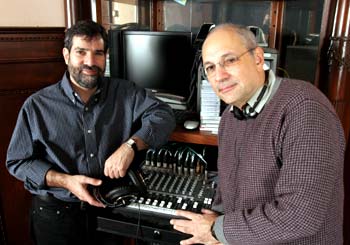 In this series of interviews, called Publishing Talks, I have been talking to book industry professionals and other smart people about the future of publishing, books, and culture. This is a period of disruption and change for all media businesses. We must wonder now, how will publishing evolve as our culture is affected by technology, climate change, population density, and the ebb and flow of civilization and economics?
It’s my hope that these conversations can help us understand the outlines of what is happening in publishing and writing, and how we might ourselves interact with and influence the future of publishing as it unfolds.
PennSound is a very special online resource that was instigated by founders Al Filreis and Charles Bernstein with the incredible support of the University of Pennsylvania in Philadelphia. There is really nothing like it in the world, and for anyone interested in poetry, poetics, or the literary world of the past 100 years, it is an incredibly important resource. The energy and dedication that has gone into this unmatched collection of recordings of poets reading, lecturing and talking about poetry is a gift whose impact will be felt for many years to come.
Filreis wears many hats – he is Kelly Professor at UPenn, Director, Center for Programs in Contemporary Writing, Co-Director, PennSound, Publisher of the literary magazine Jacket2 as well as Faculty Director, Kelly Writers House. In addition, he is the author of a number of books of criticism. Charles Bernstein, an old friend of mine, is one of the most important poets and critical thinkers of his generation of writers. He was the David Gray Professor of Poetry and Letters at the SUNY Buffalo and Director of the Poetics Program, which he co-founded with poet Robert Creeley. At SUNY, he co-founded the Electronic Poetry Center with Loss Glazier. Charles is currently the Donald T. Regan Professor of English and Comparative Literature at the University Pennsylvania. He was a co-founder also of the important literary magazine L-A-N-G-U-A-G-E and is the author of many books of poetry and theoretical writings about poetry, language and thinking. Also in this discussion is Michael Hennessey, the editor of PennSound, and author of the “PennSound Daily” column. Michael holds an MFA in Creative Writing from Emerson College and has published critical work in magazines and anthologies.
I wanted to talk to Filreis, Bernstein and Hennessey about how PennSound came into being, to learn more about its scope and breadth, and to hear first hand their plans for the future. My hope is that our discussion will draw as much attention and support to PennSound as possible. And I can’t help enjoying the appropriateness of presenting an audio experience of this essential audio resource. There is something new and compelling posted at PennSound almost every day. Please visit, spend some time, and enjoy the rich trove of poetry as spoken and discussed by the poets themselves. Even those who don’t read or even like poetry have their minds changed by the experience of hearing the words out loud.


Podcast: Play in new window | Download
Douglas Trevor: Girls I Know (A Novel)
October 2, 2013 by David
Filed under Fiction, WritersCast
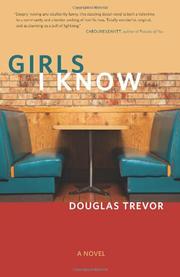 978-0983150534 – Sixoneseven Books – paperback – May 1, 2013 – $15.95 (ebook versions available at lower prices)
A debut novel set in Boston, Girls I Know has an unusual narrative structure that sometimes feels like a love song to the city of Boston as much as a novel about the protagonist, tortured failed graduate student, Walt Steadman. Walt is a classic nebbish – dropped out of graduate school writing a thesis on an obscure poetic subject, making his living now as a sperm donor and doing odd jobs.
Walt is painfully obsessive – as a way to channel his feelings of failure and indirection. He goes to the same small coffee shop for breakfast almost every day, where he befriends the owners and their daughter, Mercedes. He loves Boston in an obsessive way too. The real story of the novel begins when Walt is survives a terrible shooting at his favorite restaurant which leaves four people dead, including his friends.
Now he is forced to confront himself and in his recovery, try to find the self he has buried in his self indulgent lifestyle. The girls he knows are both complicated – the effervescent Ginger Newton, Harvard undergraduate – another obsessive, but a much more active one, she is writing a book called Girls I Know about women and their jobs and the heartbroken and speechless Mercedes, whose parents are now dead. How he interacts with these two “girls” on his path to self discovery and redemption are what this book is really about.
I liked this book much more than I initially thought I would (coming of age stories are not usually my forte as a reader). Trevor is a very good storyteller, and his characters are all interesting and well drawn. And his Boston comes to life throughout the book. Trevor knows his way around characters and places and his writing is strong. His collection of short fiction, The Thin Tear In The Fabric Of Space, won the Iowa Short Fiction award in 2005. Author website here. Kudos to this independent publisher, Sixoneseven, for doing an excellent production job and a serious effort to market and promote a very good book.
Podcast: Play in new window | Download
Sites We Like: PennSound
PennSound is an incredible project established by Al Filreis and Charles Bernstein with tremendous support from the University of Pennsylvania, collecting poetry in audio form from an incredible array of sources. There really isn’t anything like it anywhere. There are historical recordings, so many of which are fantastic and powerful, that it is almost impossible to know where to start. All the poets whose work matters to me are here. And there are many voices from the recent past and the present as well. You can spend hours on this site and of course you will never be able to experience the full range of what they have, there is just too much. And there is new work added or highlighted every day! Amazing. For anyone interested in the sound of writing, this is a site you must visit.
Al Filreis and Charles Bernstein at PennSound (photo by Mark Stehle)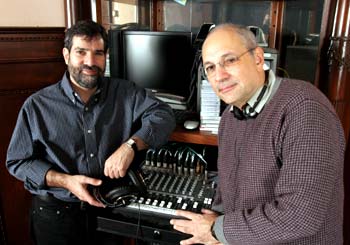
PennSound Daily is written by Michael S. Hennessey.
Want to read more?
- Control the number of PennSound Daily entries you’re viewing with the drop-down box at the top of the page, or
- visit the PennSound Daily archive.
You can subscribe to  PennSound Daily with your favorite RSS feed reader. Or, use this link
  to add PennSound Daily to your Google Reader or iGoogle homepage.
Luis J. Rodriguez: It Calls You Back: An Odyssey through Love, Addiction, Revolutions, and Healing
December 13, 2012 by David
Filed under Non-Fiction, WritersCast
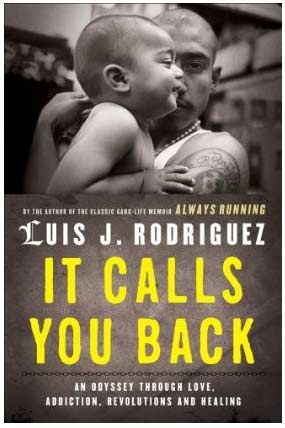 978-1-416584162 – Touchstone – Hardcover – $24.99 (978-1-416584179, paperback $15.99; ebook editions available at lower prices)
This is flat out a stunning book. Luis tells his life story pulling no punches, avoiding no pain, either that he has given to others or that others gave to him. Years ago, when I read his first memoir Always Running (some pieces of which are repeated or retold here), I knew that he was a great storyteller. His poetry is crystal-like, full of shards of emotion and insight.
Rodriguez is a powerful writer. His prose flows like a river and carries you along with Luis, as he makes terrible mistakes, strives to become better, to understand who he is in a terrible, painful and challenging world. He grew up in California, child of immigrants, always struggling, and early on in life, unlike anyone else in his family, was drawn into the gang life, engaged in all sorts of crime, did drugs, was violent, full of rage and sorrow. But he was always a reader, always smart enough, emotionally engaged enough, to want more, to be engaged, to struggle. In It Calls You Back, Rodriguez documents everything, how he became a writer, politically engaged, an activist working with gangs, a lover, husband and father, whose own son makes the dramatic and terrible mistake that changes his life forever, despite everything Luis thought he had done to help his son escape La Vida Loca (the crazy life) of the gangs.
It has taken years for Rodriguez to become who he is today, but his past life is always with him, always running inside his heart and soul. His life’s work is all about engagement, transformation, and social change. I admire what he has done to turn his experiences into such powerful action. Reading this book is as transformative for the reader as it was for the author. I hope my conversation with Luis will help illuminate and amplify the story he has to tell.
Visit the author’s website here and that of his independent Tia Chucha Press, learning and cultural center here.
Podcast: Play in new window | Download
Publishing Talks: David Wilk interviews Coffee House Press Founder Allan Kornblum
December 5, 2012 by David
Filed under Publishing History, PublishingTalks
 In this series of interviews, called Publishing Talks, I talk to book industry professionals and other smart people about the future of publishing, books, and culture. This is a period of disruption and change for all media businesses. How will publishing evolve as our culture is affected by technology, climate change, population density, and the ebb and flow of civilization and economics?
I hope these Publishing Talks conversations will help us better understand the outlines of what is happening in publishing, books and reading culture, and how we can ourselves both understand and influence the future of books and reading. Over the past couple of years, I’ve been talking to a wide variety of people in the book business, mostly about the future of writing, publishing, and reading. But the future is always built on what has gone before now. And there has been so much incredibly creative and wonderful publishing work done in recent years, I’ve wanted to share some of the experiences of people who have accomplished so much, with vision, talent and amazing effort.
I’ve known Allan Kornblum, founder of Coffee House Press (and its predecessor, Toothpaste Press), a long, long time. He and I started out in publishing in similar ways and around the same time, the early 1970s. Allan started out as many of us did in those days publishing a handmade mimeo magazine. But he discovered fine printing by taking classes at the University of Iowa with the renowned Harry Duncan (Cummington Press – there is a great interview with him in a wonderful book called Against the Grain, interviews with independent publishers, you can access this book online through Project Muse). Allan’s Toothpaste Press used letterpress printing to create beautiful poetry books and chapbooks for ten years beginning in 1973, when Allan and his wife Cinda lived in West Branch, Iowa (home of Herbert Hoover).
The Kornblums eventually faced an existential crisis with Toothpaste, to either become a letterpress “art press,” producing limited editions at high prices, with limited readership and distribution, or to aim for a broader audience, which for a low margin literary press, requires financial support. Kornblum elected to create a nonprofit publishing venture, renamed Coffee House Press, and moved to the Twin Cities in Minnesota, the literary mecca of the midwest (then as now), where the press has thrived along with several other excellent publishers, with a literary arts center, and an extremely supportive community of readers and writers. Now having published there for almost thirty years, Coffee House is an established an active organization, with a strong board and staff, and a tremendous list of books to its credit, many of which have won awards and have sold extremely well. Coffee House has maintained consistently high editorial and production standards, but it has also been a successful and innovative book marketer, embracing a wealth of tools and approaches to finding audiences for its books.
Interviewing Allan for Publishing Talks was a pleasure for me. I’d also like to recommend listeners to a written interview with Allan from 2006 that can be found at NewPages.com. And visit the Coffee House Press website to see their latest books as well as their exceptional and impressive backlist. Listener alert! These interviews with independent publishers, documenting their history and experiences, are longer than usual. This one is 53 minutes long. Pull up a chair….
Podcast: Play in new window | Download
E. Ethelbert Miller: The Fifth Inning
June 21, 2012 by David
Filed under Non-Fiction, WritersCast
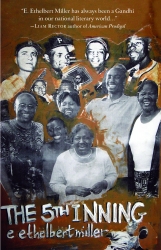 978-1604865219 – PM Press – Paperback – $15.95 (ebook versions available at lower prices)
E. Ethelbert Miller is a writer and literary activist. He is currently the board chairperson of the Institute for Policy Studies (IPS). Since 1974, he has been the director of the African American Resource Center at Howard University. Ethelbert is also the former chair of the Humanities Council of Washington, D.C. and a former core faculty member of the Bennington Writing Seminars at Bennington College. He’s published more than ten books, in both poetry and prose, has edited a number of anthologies, and his writing is widely anthologized. He’s won all sorts of awards and recognition for his writing and for his longstanding work in support of writing as a community and cultural effort. In addition, for several years he hosted the popular weekly radio program Maiden Voyage on WDCU-FM, as well as Vertigo On The Air on WPFW.
Ethelbert has long been a favorite poet of mine, whom I got to know years ago when I lived in Washington, D.C., where Eth still resides. We’re of a similar age and share various passions, not the least of which is baseball.
So it is no wonder that I jumped at the chance to read his memoir, The Fifth Inning, and then to talk to him about it on Writerscast. This is a terrific book, unusual in its shape and structure, which is both poetically charged and carefully built. Ethelbert allows himself to write honestly and purely about his own life, his insecurities, pain and suffering, but without ever becoming self indulgent or overwrought. There is always hope, and the sense that something good, or even great, will come from all this “stuff” we go through in life.
Thinking of a baseball game, the fifth inning out of nine is, of course, the turning point. After the fifth inning, a game can end early but still be considered an official game – a life lived, though abbreviated. So here he is, in the fifth inning of his imagination, looking back at the beginning of the game, and at the present where it’s about to start the last stretch toward the end and the final score. It’s a good time to take stock and get ready to see what you can do to get past the hitters coming up to bat. When you’re pitching you need to pace yourself, remember what worked and didn’t work in the early innings, and use what you have learned to keep the hitters off stride and getting the outs you need to win the game.
Poets’ memoirs are sometimes brittle and too carefully built to sustain a personal story. Ethelbert is not that kind of poet. He’s active and alive in every moment, and brings his readers right into his head and heart. This is a beautifully constructed and written piece of personal writing that I hope will find a audience far beyond the literary community. What Ethelbert has to say about being human and growing older is important for all of us to hear.
Ethelbert’s website is here, well worth a visit. And I wanted to mention that this is a Busboys & Poets book published by PM Press, a publisher I hope readers will learn about and support. Buy the book direct from the publisher to support independent publishing and alternative culture.
Podcast: Play in new window | Download