
Dale Pendell: The Great Bay: Chronicles of the Collapse
August 21, 2010 by David
Filed under Fiction, WritersCast
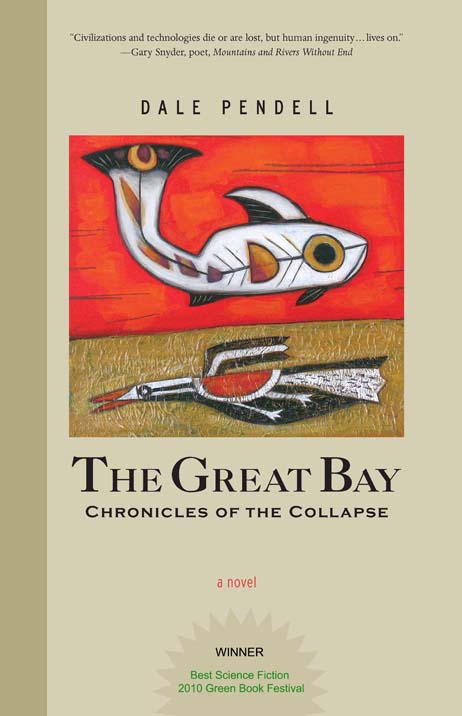 978-1556438950 – North Atlantic Books – Hardcover – $21.95
This is an amazing novel. Consider it a work of “ecological science fiction” as some have called it. I found it captivating, terrifying, incredibly emotive and reading it becomes almost a spiritual exercise. Pendell posits a worldwide collapse of population from a biological war gone amok. More than 95% of humanity disappears, almost overnight. He actually does not spend much time on this part of the story, horrific as it is, because that catastrophe is really just the lead in for the much bigger story of what happens next.
Aside from the critical principle of understanding, that modern human society will simply collapse, that going back to prior technologies becomes impossible because people no longer have the knowledge or skills, to live the way our ancestors did, and critically, cannot relearn them overnight in the face of societal collapse, the central tenet of this novel is that climate change will have been unleashed by what modern society *has already done* to the natural world. The computer models of planetary climate change are simply not able to fully contain and predict the massiveness of what is about to happen to the planet and the natural world that inhabits it.
The novel is essentially a brilliant imagining of what might or could be the future of the planet over the next hundreds, thousands of years, based on the supposition that humans have already begun this process of change. It’s a rich set of interlocking stories, mostly focused on the area that is known today as California, a bio-geographic landscape that author Pendell knows well, and imagines changing in profound and sometimes painful ways for the reader of his story.
This is a very unusual novel – really the main character is the planet and there are no traditional heroic human characters at its center. While we might search for and find labels for it (“dystopian” or “utopian,” “science fiction” or even “parable”), I’d rather think of it as a kind of vision-telling, a myth in the making, that seeks to change the way we think about ourselves. Indeed, there is a great deal of suffering and difficulty in the book, and at the same time, a powerful sense of continuity, what truly sustains. As the great poet Gary Snyder (who is a fictionalized character in the book, as it happens), says about the novel: “Civilizations and technologies die or are lost, but human ingenuity–families, tribes, and villages, the musicians, shamans, philosophers, and people of power–live on.” I’d add that not only does human ingenuity live on, so does Gaia, our planet home, adjusting and re-adjusting its inner and outer being, regardless of which or how many humans may be hanging on for dear life.
In my conversation with Dale, we talked about his background as a writer, poet, biologist, and how this brilliant vision of a book came into being. It’s an interview and a book I’d recommend to all my friends and colleagues – it’s impossible to read and not do alot of thinking about the future, as well as what we need to do about it – right now.
Podcast: Play in new window | Download
Publishing Talks: David Wilk interviews Deborah Emin
August 16, 2010 by David
Filed under Ebooks and Digital Publishing, PublishingTalks, The Future
 In this series of interviews, called Publishing Talks, I have been talking to book industry professionals about the future of publishing, books, and culture. This is a period of disruption and change for all media businesses. How will publishing evolve as our culture is affected by technology, climate change, population density, and the ebb and flow of civilization and its economics?
I hope these Publishing Talks conversations will help us understand the outlines of what is happening, and how we might ourselves interact with and influence the future of publishing as it unfolds.
These interviews give people in the book business a chance to talk openly about ideas and concerns that are often only talked about “around the water cooler,” at industry conventions and events, and in emails between friends and they give people inside and outside the book industry a chance to hear first hand some of the most interesting and challenging thoughts, ideas and concepts being discussed by people in the book business.
I learned about Deborah Emin from an article about Sullivan Street Press and her “throwback” program called the Itinerant Book Show. Deborah and colleagues (they call themselves “bookies”) travel to towns in the midwest as far as Iowa bringing books they select to events in art galleries, bars, coffee shops and the like. Because they are featuring only books they have read and liked, it’s pretty easy to understand how they are connecting successfully with audiences. And as she points out on the Sullivan Street website, the real key is what Deborah as a publisher and writer can learn about audiences. Face to face, one to one. It’s invaluable intelligence for anyone concerned with understanding how a literary community works.
All of this resonates for me. Her story reminded me of work some of us were doing more than thirty years ago, bringing books by new authors and publishers to booksellers and audiences around the country. In the late 1970’s what was then called the Coordinating Council of Literary Magazines (still going strong and known as CLMP) sponsored a number of grassroots efforts to bring independently published poets and writers into bookstores, which involved personal visits to bookstores, libraries, schools and even bars to sell books.
There were programs in North Dakota (where a budding young writer named Louise Erdrich interned), Rochester, NY, Minneapolis-St. Paul (where I was) and other locales, all sharing a commitment to connecting innovative new writers to new audiences, sometimes, one person at a time. Many then young publishers still publishing today, were introduced to their audiences through those early efforts.
So is everything old new again? I think the spirit of independent publishing continues. Writers find their readers, and readers their books one at a time, after all. The magic of literary discovery still requires the kind of personal effort that Deborah Emin and the Itinerant Book Show put forth. Which is also the kind of personal connection forged by booksellers with their customers. Whether the books are printed by hand on custom paper using handpresses, or created digitally using HTML or ePub, learning about a book you will love is ultimately about a deep connection between the writer, and the reader, with one or more intermediaries making the hand off.
Sullivan Street Press consists of Deborah Emin, an editor and writer, Ron Lebow, a computer technologist, a business development professional and also a writer. It’s a pretty interesting and obviously fertile group of minds and talents. The work they are doing is challenging and rewarding, and offers valuable lessons for publishers of any size and ambition.
Podcast: Play in new window | Download
Justin Kramon: Finny (A Novel)
August 5, 2010 by David
Filed under Fiction, WritersCast
 978-0812980233 – Random House – Paperback – $15.00 (also available as an ebook at $9.99 or less)
Finny is a wonderful first novel, a coming of age novel (and more), at the center of which is a wonderful character – Delphine “Finny” Short of course. This is Justin Kramon’s first novel, and he is a very good writer. He’s been writing and publishing short stories up to now, in literary magazines like Glimmer Train, TriQuarterly and elsewhere, but I think his future lies in the longer form a novel affords.
This novel begins when Finny is 14, and continues on through many more years of her life, with many adventures, and a large cast of really well drawn characters. Many reviewers have mentioned Dickens as a comparative, and that is apt, as Justin himself makes clear that the Dickensian model was on his mind when he was writing this book. He does very well with the large story arc, which gives the author enough room to really explore the inner life of his major characters.
Life is complicated, relationships that seem to have promise fall apart, and sometimes we have to deal with surprises in the way things actually work out. As Finny says herself about life, it is “hilariously funny and devastatingly sad. And only if you saw both things could you ever have a realistic idea of the subject.’’ It’s hard not to agree with the author and his character on this point, especially after spending time with Finny and her life story.
So even though there’s much in Finny’s life that is difficult, sad or disappointing, in both family relationships, love life and friendships, overall, her character comes through as positive about life and how she has lived it, somewhat idiosyncratically, and with a good bit of humor. That’s probably true of the author as well, and it’s a compelling journey for the reader. There’s a lot of richness here, and a thoroughly enjoyable novel it is.
I also enjoyed talking to Justin about his book, its characters, how he came to write this novel, his work as a writer and where he is going in the future. He’s got a really good sense of himself as a writer,an engaging personality, and a fine command of his craft at this early stage of his career. I think there’s much more good work to come from this novelist, work I will certainly be looking forward to reading.
I do also want to mention Justin’s website, which is one of the better author or book sites I have seen lately. There’s alot of fun stuff there, especially fun is the section called “Finny’s World” where the characters in the novel are drawn as imagined by artist David Ostow. It’s definitely worth a visit.
Podcast: Play in new window | Download
Publishing Talks: David Wilk Interviews Adam Hodgkin
August 2, 2010 by David
Filed under Ebooks and Digital Publishing, PublishingTalks, Technology, The Future
 In this series of interviews, called Publishing Talks, I have been talking to book industry professionals about the future of publishing, books, and culture. This is a period of disruption and change for all media businesses. How will publishing evolve as our culture is affected by technology, climate change, population density, and the ebb and flow of civilization and its economics?
I hope these Publishing Talks conversations will help us understand the outlines of what is happening, and how we might ourselves interact with and influence the future of publishing as it unfolds.
These interviews give people in the book business a chance to talk openly about ideas and concerns that are often only talked about “around the water cooler,” at industry conventions and events, and in emails between friends and they give people inside and outside the book industry a chance to hear first hand some of the most interesting and challenging thoughts, ideas and concepts being discussed by people in the book business.
Adam Hodgkin is one of the three publishing and technology experienced founders of Exact Editions, which started as a digital publishing solution for magazines to run on the iPhone (and of course now on the iPad as well). Exact Editions enables magazine publishers to sell “in-app” subscriptions, and notably, preserves the notion of the designed page, something that has been a concern for many publishers of illustrated books as well. I’ve been reading the Exact Editions blog for some time and have been impressed with Adam’s understanding of the emerging digital publishing universe. Something he wrote recently caught my attention immediately, as I have long been interested in the ways that authors, publishers and readers will learn to connect with one another in the online environment. Here’s what Adam wrote about the Apple environment upon which EE is built:
“The Apple e-commerce system works extremely well in my view and with the freemium method that we are adopting at Exact Editions it works in a way in which the ratios between ‘sampling’ and ‘purchasing’ are extremely informative. And as we get more data and get on top of it and learn how to do SRO (SampleRevisionOptimisation – a bit like SEO and it will be an equally dark art) the business of presenting the right amount of content to optimise sales will be established. We currently recommend working at about 8-15% exposure, but its guesstimatory at this point. Amazon must know quite a lot about this from their system, but I am not sure if they have issued any guidance to publishers.
The Apple system is better than most physical bookshops because it can put ‘samples’ in the hands of thousands (many thousands) of potential subscribers/purchasers much more efficiently than can be done with printed paper pages. The economics of this are pretty compelling even if the ‘sample’ to ‘purchase’ ratio is as low as 1%. And in most cases its quite a bit higher than that.
Will probably blog something a bit more informative about this in the next few days. But just let me say that I am simply ASTONISHED by how much more takeup there is for the iPad than for the iPhone. More in absolute terms, by quite a margin, even though there are maybe 40X as many iPhone/IPod touches in the market than iPads.
The iPad is turning out to be a hugely strong reading environment. Absolutely no question about it. And its darn easy to buy stuff on it that you might want to read.”
I thought it would be interesting to talk to Adam about Exact Editions and some of the things he and his colleagues have learned through the experience of working in the Apple environment, not only with magazine publishers but now as they are expanding into working with book publishers as well. My discussion with Adam covered his background and experience in traditional publishing, technology, and some of the lessons learned by the Exact Editions team in their work in digital publishing apps and proved to be as compelling as I had expected.
Podcast: Play in new window | Download
Michael Burke: Swan Dive
July 29, 2010 by David
Filed under Fiction, WritersCast
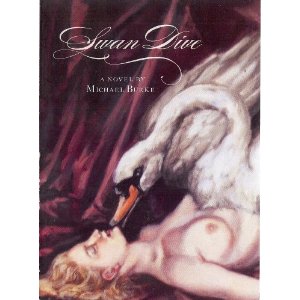 978-1929355501 – Pleasure Boat Studio/Caravel Books – paperback – $15.00 (also available as an e-book at $9.99)
This is Michael Burke’s first novel, and it’s a good one. He is probably much better known as a sculptor and graphic artist; he is clearly an accomplished writer as well, and as with his art, there is a great deal of thought behind the manifestation he has chosen for this story. Michael Burke is also the son of renowned philosopher and poet Kenneth Burke, which may help explain some of his accomplishments.
While I was preparing to interview Michael about his very well written and entertaining novel, I read a fascinating profile of him and his work as an artist in the Harvard Alumni Magazine, an article that in itself is well worth reading.
This is an intellectual novel, but it is never heavy handed. The dialogue is smooth, funny, and vibrant. The story pays homage to Leda and the Swan but that motif never gets in the way of the story, and it’s not even necessary to know any Greek mythology to enjoy the book, which unfolds naturally. Of course we know there is a denouement coming, it’s a murder mystery after all, but there is plenty of complexity to keep us interested and engaged.
Swan Dive‘s main character, Johnny “Blue” Heron, is a modernized Dash Hammett sort of hero, smart, mouthy and alot more in need of help than he realizes. The book has many interesting and engaging characters, an unpredictable narrative, some sex, and an overall verve and political awareness that makes clear the author is socially engaged and has something important to say about the world we live in. You can read this book purely for fun, or as a neo-noir genre revival novel, but there’s alot more going on here for anyone who wants to delve into its many layers.
Swan Dive is a book I will recommend to mystery lovers who want a book with depth, a fast paced narrative and interesting characters. In my discussion with author Michael Burke, we had a lively discussion about this book and how he came to write it, his background as an artist, and where he is headed as a writer (there’s another Blue Heron novel in the works). I’m definitely looking forward to reading more of his writing.
Podcast: Play in new window | Download
Publishing Talks: David Wilk interviews Bob Stein
July 18, 2010 by David
Filed under Ebooks and Digital Publishing, PublishingTalks, Technology, The Future
 In this series of interviews, called Publishing Talks, I have been talking to book industry professionals about the future of publishing, books, and culture. This is a period of disruption and change for all media businesses. How will publishing evolve as our culture is affected by technology, climate change, population density, and the ebb and flow of civilization and its economics?
I hope these Publishing Talks conversations will help us understand the outlines of what is happening, and how we might ourselves interact with and influence the future of publishing as it unfolds.
These interviews give people in the book business a chance to talk openly about ideas and concerns that are often only talked about “around the water cooler,” at industry conventions and events, and in emails between friends and they give people inside and outside the book industry a chance to hear first hand some of the most interesting and challenging thoughts, ideas and concepts being discussed by people in the book business.
Bob Stein is for me one of the great visionary innovators and someone I greatly admire. He most recently co-founded The Institute for the Future of the Book, which quite modestly describes itself as “a small think-and-do tank investigating the evolution of intellectual discourse as it shifts from printed pages to networked screens. We are funded generously by the MacArthur Foundation, and affiliated with the University of Southern California. We are located in Brooklyn, NY and London, UK.” Bob’s bio includes founding the excellent Criterion Collection of classic films, which he ran for 13 years, as well as The Voyager Company, which produced more than 75 innovative multi-media projects in CD-ROM formats. Subsequently, Stein started Night Kitchen to develop authoring tools for the next generation of electronic publishing. That work is now being continued at the Institute for the Future of the Book.
In our conversation Bob talked a bit about his background and his history of working in publishing as lead in to a wide ranging discussion of digital publishing issues. Bob’s vision of how reading and books work in the digital, networked social environment – “books as conversation” as well as or perhaps instead of “books as objects” – and how authors and readers interact in the emerging environment is compelling. Bob has a deep experience that combines conceptual and hands-on work on so many of the issues that concern anyone interested in books and reading which for me makes his point of view so important to experience.
Podcast: Play in new window | Download
Lee Kravitz: Unfinished Business
July 15, 2010 by David
Filed under Non-Fiction, WritersCast
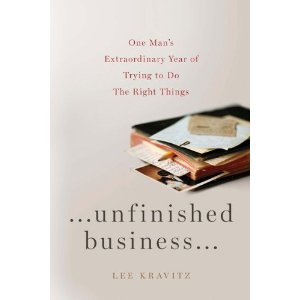 978-1596916753 – Bloomsbury – Hardcover – $25.00 (also available as e-book in various formats $9.99)
Well admittedly I might have liked Unfinished Business because I am roughly the same age as the author, have been through similar experiences in the same era, and like Lee Kravitz, have to confess to being something of a workaholic. Like him, when I look back on my past, I worry about some of the people I used to be friends with I no longer see, and doubtless, like him, have some “unfinished business” in my life that I’d be better off dealing with.
Today there must be literally thousands, hundreds of thousands of people who share many of Lee Kravitz’s experience of losing his job and having a crisis of identity, of being, and who like he did, feel a desperate need to reintegrate their lives, and their singular sense of self. Not everyone will have the opportunity to take the journey that he did, a full year of exploration and reconnecting with family, friends, teachers, people who literally made him who he is today.
I don’t think you have to literally share Lee’s direct experience, or feel as fragmented as lost as he did then to gain deeply from reading his book and sharing his journey. Lee spent many years as a journalist and editor, and writing seems to come easily to him. Many of his experiences are brilliantly described, and his honesty and clarity go a long way to making this book work for readers. This book can be transformative for many people who feel that modern life has separated them from those they once felt closest to, perhaps inspiring them to close their own circles and remake their own lives. Enough people have responded that way for the author to create a website “My Unfinished Business” on just that subject. I suspect that if you like this book, or even our conversation about it, his site is well worth a visit.
I very much enjoyed talked to Lee about his book and some of the stories about his family, friends and others whose stories he told in Unfinished Business. He’s as good a storyteller talking as he is writing.
Podcast: Play in new window | Download
Publishing Talks: David Wilk interviews Jim Mairs about The Red Book
July 11, 2010 by David
Filed under Publishing History, PublishingTalks
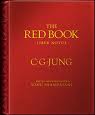 In this series of interviews, called Publishing Talks, I have been talking to book industry professionals about the future of publishing, books, and culture. This is a period of disruption and change for all media businesses. How will publishing evolve as our culture is affected by technology, climate change, population density, and the ebb and flow of civilization and its economics? Publishing Talks interviews help us understand the outlines of what is happening, and how we might ourselves interact with and influence the future of publishing as it unfolds.
These interviews give people in the book business a chance to talk openly about ideas and concerns that are often only talked about “around the water cooler,” at industry conventions and events, and in emails between friends and they give people inside and outside the book industry a chance to hear first hand some of the most interesting and challenging thoughts, ideas and concepts being discussed by people in the book business.
After nearly 40 years with W.W. Norton, former v-p, senior editor and director of production Jim Mairs left the company in 2002 to found his own company, Quantuck Lane Press, which is distributed by W.W. Norton. He is mainly responsible for the existence of this stunning and important publishing project, The Red Book. This is how it is described in the Norton catalog: “The most influential unpublished work in the history of psychology.”
And this is Jung himself, describing his work on this book from 1914 to 1930:
“The years, of which I have spoken to you, when I pursued the inner images, were the most important time of my life. Everything else is to be derived from this. It began at that time, and the later details hardly matter anymore. My entire life consisted in elaborating what had burst forth from the unconscious and flooded me like an enigmatic stream and threatened to break me. That was the stuff and material for more than only one life. Everything later was merely the outer classification, the scientific elaboration, and the integration into life. But the numinous beginning, which contained everything, was then.”
I’ve had the pleasure of knowing Jim Mairs for many years and wanted to talk to him about the “inside story” of this incredible publishing project, from the physical to the almost spiritual elements of the project. For anyone interested in the way truly special books can still be published in this modern era of publishing, or for anyone interested in The Red Book as an icon of Jungian psychology, I hope this discussion will be valuable and interesting, as it was for me.
Podcast: Play in new window | Download
Gene Kritsky: The Quest for the Perfect Hive
July 8, 2010 by David
Filed under Non-Fiction, WritersCast
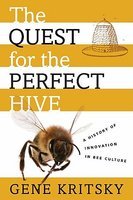 978-0195385441 – Oxford University Press – Hardcover – $24.95
I have never kept bees, but am in love with honey, and the idea of beekeeping has always fascinated me. Gene Kritsky, who describes himself as “stung with the love of bees,” has written a wonderful book that will appeal to serious beekeepers, amateur bee lovers and even general readers with an interest in the history of humanity’s relationship with nature. The book is beautifully illustrated with amazing photographs, drawings and woodcuts representing hundreds of years of beekeping history.
Humans discovered honey thousands of years ago and have been working with these amazing insects for a very long time. What is interesting to the novice reader is how little beekeeping has changed. There have been many innovations in beekeeping, especially so during the past couple hundred years, but traditional beekeeping methods still exist in many parts of the world. And there is much that we can learn from past practices to help us understand how to stave off the epidemic of hive collapse that has become prevalent in so many places during the past few years.
Kritsky uggests that beekeeping’s long history may provide us with clues to help modern beekeepers fight the decline in honey bee numbers. Kritsky takes readers through the history of beekeeping, from early mud-based horizontal hives to the ascent of the simple straw skep (the inverted basket which has been in use for over 1,500 years), from the Golden Age of hive design in Victorian England up to and into the present day. In concise terms, aided by illustrated exampes, he talks about what has worked, what has not worked, and sometimes the things we have forgotten about hives of the past that might help counter the threats to modern bees and beekeeping. While scientists have now sequenced the honey bee genome and advanced our knowledge, we still keep bees in hives that have not changed very much during the past hundred years. Kritsky argues that we must start inventing again if we are going to save our bees. Thus the search for the “perfect hive” continues.
Gene Kritsky is a master of his subject in both depth and breadth, and thus is an easy author to interview. Doubtless he could talk in depth for hours about bees and maintain the listener’s interest. It was a pleasure to talk to him about this interesting and unusual book, and I am confident that listeners will enjoy our conversation as well.
Podcast: Play in new window | Download
Publishing Talks: David Wilk interviews David Steinberger
July 4, 2010 by David
Filed under Publishing History, PublishingTalks, The Future
 In this series of interviews, called Publishing Talks, I have been talking to book industry professionals about the future of publishing, books, and culture. This is a period of disruption and change for all media businesses. How will publishing evolve as our culture is affected by technology, climate change, population density, and the ebb and flow of civilization and its economics? Publishing Talks interviews help us understand the outlines of what is happening, and how we might ourselves interact with and influence the future of publishing as it unfolds.
These interviews give people in the book business a chance to talk openly about ideas and concerns that are often only talked about “around the water cooler,” at industry conventions and events, and in emails between friends and they give people inside and outside the book industry a chance to hear first hand some of the most interesting and challenging thoughts, ideas and concepts being discussed by people in the book business.
David Steinberger is well known now as the CEO and President of The Perseus Books Group. Perseus is in many ways, a creation of the unusual business conditions that have marked the book industry over the past dozen years. The company began as a relatively small independent book publisher, growing over time via acquisitions of usually unwanted or under appreciated business units of other companies. Today it is made up of about 10 seperate imprints. Its six main publishing divisions include PublicAffairs (non-fiction), Running Press (fiction and non-fiction titles), Basic Books (non-fiction), Da Capo (non-fiction), Vanguard (fiction and non-fiction), and Avalon Travel (travel guides). Perseus also publishes academic books, including college textbooks from Westview Press.
In addition to publishing, Perseus acquired Client Distribution Services (renamed Perseus Distribution), Consortium (specializing in mostly independent literary and political presses) and most of the assets of Publishers Group West (PGW) in daring and innovative bankruptcy purchase, so that today it is by far the largest distributor of client publishers in the North American market. With Steinberger as CEO and Joe Mangan as COO (and aided by strong financing from its parent company), Perseus has crafted what appears to be a very successful strategy for navigating changeful times, including an early and deep commitment to digital publishing, a diverse set of publishing imprints, a decentralized management system based around a set of core services shared by internal resources as well as clients, and a willingness to experiment with new ideas (including Vanguard’s no-advance, high royalty publishing program as well as a variety of interesting digital initiatives).
In my conversation with David Steinberger, I wanted to learn more about how he sees Perseus today, as well as a sense of his vision for the future, not only of Perseus itself, but the publishing industry as a whole. I think listeners interested in the future of publishing and book distribution will find this discussion useful and interesting on a number of levels.
Podcast: Play in new window | Download