
Dale Pendell: The Great Bay: Chronicles of the Collapse
August 21, 2010 by David
Filed under Fiction, WritersCast
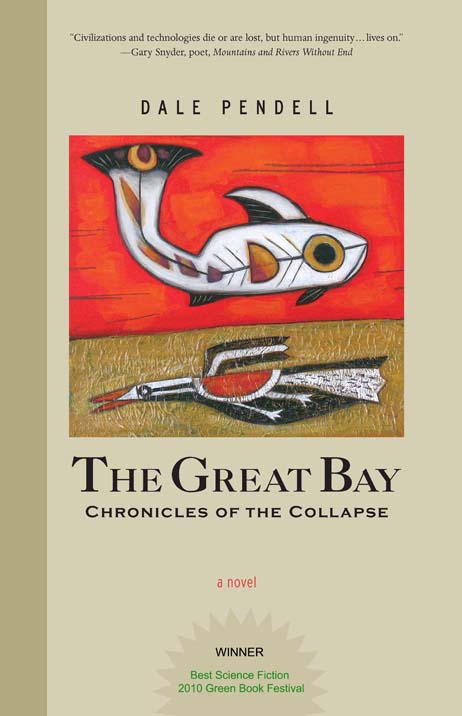 978-1556438950 – North Atlantic Books – Hardcover – $21.95
This is an amazing novel. Consider it a work of “ecological science fiction” as some have called it. I found it captivating, terrifying, incredibly emotive and reading it becomes almost a spiritual exercise. Pendell posits a worldwide collapse of population from a biological war gone amok. More than 95% of humanity disappears, almost overnight. He actually does not spend much time on this part of the story, horrific as it is, because that catastrophe is really just the lead in for the much bigger story of what happens next.
Aside from the critical principle of understanding, that modern human society will simply collapse, that going back to prior technologies becomes impossible because people no longer have the knowledge or skills, to live the way our ancestors did, and critically, cannot relearn them overnight in the face of societal collapse, the central tenet of this novel is that climate change will have been unleashed by what modern society *has already done* to the natural world. The computer models of planetary climate change are simply not able to fully contain and predict the massiveness of what is about to happen to the planet and the natural world that inhabits it.
The novel is essentially a brilliant imagining of what might or could be the future of the planet over the next hundreds, thousands of years, based on the supposition that humans have already begun this process of change. It’s a rich set of interlocking stories, mostly focused on the area that is known today as California, a bio-geographic landscape that author Pendell knows well, and imagines changing in profound and sometimes painful ways for the reader of his story.
This is a very unusual novel – really the main character is the planet and there are no traditional heroic human characters at its center. While we might search for and find labels for it (“dystopian” or “utopian,” “science fiction” or even “parable”), I’d rather think of it as a kind of vision-telling, a myth in the making, that seeks to change the way we think about ourselves. Indeed, there is a great deal of suffering and difficulty in the book, and at the same time, a powerful sense of continuity, what truly sustains. As the great poet Gary Snyder (who is a fictionalized character in the book, as it happens), says about the novel: “Civilizations and technologies die or are lost, but human ingenuity–families, tribes, and villages, the musicians, shamans, philosophers, and people of power–live on.” I’d add that not only does human ingenuity live on, so does Gaia, our planet home, adjusting and re-adjusting its inner and outer being, regardless of which or how many humans may be hanging on for dear life.
In my conversation with Dale, we talked about his background as a writer, poet, biologist, and how this brilliant vision of a book came into being. It’s an interview and a book I’d recommend to all my friends and colleagues – it’s impossible to read and not do alot of thinking about the future, as well as what we need to do about it – right now.
Podcast: Play in new window | Download
Gayle Brandeis reading from “Delta Girls”
August 15, 2010 by David
Filed under AuthorsVoices
978-0345492623 – Ballantine – Paperback – $15.00 (also available as an e-book at $9.99)
Writerscast is proud to present the third in a series of authors reading from their work, called AuthorsVoices. I hope you will agree that hearing these works read aloud by the original authors adds to your experience of the writing.
I love getting a sense of the author’s distinct sense of her or his own words. With writers touring in support of their books less frequently now, these podcasts should provide readers with an opportunity to hear some of our best contemporary authors reading from, and sometimes performing their own works.
Gayle Brandeis’ Delta Girls was a great discovery for me. I loved her writing, her characters, and the pace and flow of the novel. I particularly enjoyed the way Gayle set up the alternating stories of the two women, Izzy and Karen and of course brought them together with what was for me a very surprising climax to the story. In this reading from the novel, Gayle reads the opening two chapters, where the two characters are introduced and their ultimately intertwining stories begin.
Gayle has a terrific website where you can learn more about her and her work. Her’s her brief bio as a writer:
Gayle Brandeis grew up in the Chicago area and has been writing poems and stories since she was four years old. She is the author of Fruitflesh: Seeds of Inspiration for Women Who Write (HarperOne), Dictionary Poems (Pudding House Publications), the novels The Book of Dead Birds (HarperCollins), which won Barbara Kingsolver’s Bellwether Prize for Fiction in Support of a Literature of Social Change, Self Storage (Ballantine) and Delta Girls (Ballantine), and her first novel for young readers, My Life with the Lincolns (Holt). It’s great hearing her own voice here speaking the words she has written.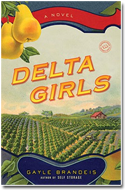
Podcast: Play in new window | Download
Gayle Brandeis: Delta Girls
August 10, 2010 by David
Filed under Fiction, WritersCast
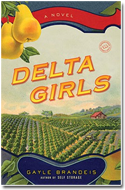 978-0345492623 – Ballantine – Paperback – $15.00 (also available as an e-book at $9.99)
I think I have been lucky lately – I keep finding new novelists I have never heard of before, whose work turns out to be really good. Literary discovery is very exciting. Gayle Brandeis is one of those novelists whose work is completely new to me. Delta Girls is her third novel for adults, and she has one other for young adults. Her social awareness as a writer has been recognized for a previous novel (that I now want to read) called The Book of Dead Birds – it won Barbara Kingsolver’s Bellwether Prize for Fiction in Support of a Literature of Social Change, which I consider high praise indeed. One of Gayle’s great accomplishments in Delta Girls is to include a strong undercurrent of social awareness in a way that enhances the story and does not in any way intrude on one’s enjoyment of the novel and its characters.
Delta Girls is a terrific novel (great cover too, and yes, I do think the overall book package does contribute to the experience for the reader). Its construct is unusual – each chapter is the alternating story of two characters whose relationship is not divulged until nearly the end of the book. First is Izzy, who with her nine year old daughter Quinn, is constantly on the move as an itinerant fruit picker in California. As the story opens, they arrive at a pear orchard in the Sacramento River Delta. As with all her stops, Izzy has no intention of staying very long. But the orchard, its locale, and the family that owns it has a strong attraction for both Izzy and Quinn, and they both allow themselves to become involved and attached to the orchard and its people. We know that Izzy has a secret in her past, and that she has worked hard to stay away from the public eye, but events occur that put her in the middle of developments in the Delta and she will have to risk everything to save the ones she loves.
In the alternating narrative of the book, we meet Karen, a rising young star in figure skating with a pushy mother and a powerful and attractive new skating partner. Nathan is sexy, dangerous, and deeply attractive to Karen. As she reaches her 18th birthday, events come to a head in an unexpected and very public way.
Each main character is faced with a sudden thrust into the spotlight, and of course their narratives become more connected — but you will need to read the book to find out the surprising way their lives will intersect.
This is a very satisfying novel to read, with great characters, and of course the pear orchard and the Delta of the Sacramento River is a terrific backdrop for the book. The author’s deep love for her characters as well as her understanding of the power of place, and its influence on people’s lives show constantly throughout the novel.
Gayle is a thoughtful and accomplished writer whose work I am really pleased to have discovered. It is writing I want to explore more deeply. Talking to her about this book was a pleasure I am happy to share here. You can visit Gayle’s website here to learn more about her work.
Podcast: Play in new window | Download
Tatjana Soli reading from “The Lotus Eaters”
June 16, 2010 by David
Filed under AuthorsVoices
 978-0312611576 – St. Martin’s Press – Hardcover – $24.99 (also available as an e-book)
Writerscast is proud to present the third in a series of authors reading from their work, called AuthorsVoices. I hope you will agree that hearing these works read aloud by the original authors adds to your experience of the writing.
I love getting a sense of the author’s distinct sense of her or his own words. With writers touring in support of their books less frequently now, these podcasts should provide readers with an opportunity to hear some of our best contemporary authors reading from, and sometimes performing their own works.
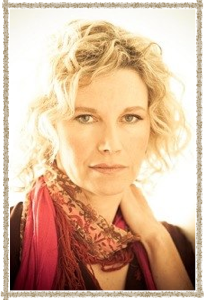
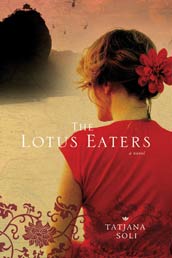
Tatjana Soli’s The Lotus Eaters is one of my favorite out of a pretty long list of some really great books I have read recently. Her book tells the story of Helen, a photographer who goes to Vietnam early in the war to try to understand how her brother died. She ends up staying for many reasons. There are a couple of different love stories entwined around her, and Soli captures brilliantly the intensity of Southeast Asia at war, the various cultures involved, and some incredibly powerful and vivid characters. Tom O’Brien, who wrote another great Vietnam novel, The Things They Carried, praised Tatjana’s “spare, lucid prose” that “helps us to see and hear and feel the terrible human costs of that conflagration.” He’s right about the book. But there is also incredible beauty, and much love in this book.
Soli reads from the opening chapter of The Lotus Eaters in this terrific reading. It’s captivating.
Podcast: Play in new window | Download
Tatjana Soli: The Lotus Eaters: A Novel
June 4, 2010 by David
Filed under Fiction, WritersCast
 978-0312611576 – St. Martin’s Press – Hardcover – $24.99 (also available as an e-book)
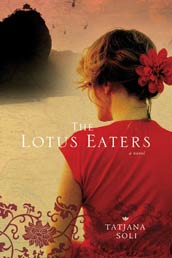
I know I am not alone having read both Tatjana Soli’s The Lotus Eaters and Karl Marlantes’ Matterhorn – they are unavoidably linked as both are set in Vietnam during the American war. Of course they are incredibly different in outlook, approach and story, but reading them together is a wonderful experience. As Writerscast listeners know, I loved Matterhorn – I do think it is the great novel of the Vietnam War that we have been waiting to experience for several decades.
At the same time, Tatjana’s novel is simply remarkable. She writes beautifully, inhabits her characters, their place and time, their suffering, challenges and transcendent moments. As she told me in her interview, she fell in love with the Vietnam of that era from afar, and learned everything she could about it in order to be able to write this story. Her main character is a young photographer, Helen, who comes to Vietnam early in the war, mainly because her brother died there, and she is drawn to the place where he lost his life, to figuratively solve the mystery of his death. But that is just the beginning of her journey. The war, the soldiers and other journalists, and the people of Vietnam overtake her. She becomes deeply connected to this place and time. Soli brilliantly portrays the landscape and the people of Vietnam, the suffering and horror of a seemingly endless war, and the way that war overtakes every element of human and natural life.
Helen falls in love with another photographer, Sam Darrow, a grizzled veteran who teaches her how to cope with war, survive, thrive, document, participate, suffer and love the danger and energy of men at war. But the truest, and deepest story is her love for Linh, an exceptionally complicated Vietnamese former soldier, who has gone to work for the American news agency Helen works for. At the end of the book, which thankfully avoids the cliched approach of much modern fiction, Helen and Linh journey out of Vietnam through Cambodia, an even more horrendous landscape of death and together find their way to safety, a harrowing journey that mirrors where they have traveled emotionally through the course of the novel.
A woman among men sees war more clearly than most, I think; in this book, that vision focuses and transforms the reader as well. Tatjana Soli’s story about writing this book and what it means to her is great to hear. I think she is a terrific writer, worth reading, and well worth listening to as well.
Podcast: Play in new window | Download
Kelli Stanley reading from City of Dragons
May 26, 2010 by David
Filed under AuthorsVoices
 978-0312-60360-1 – Hardcover – Minotaur – $24.99 (also available as an e-book at $11.99)
Writerscast is proud to present the second in our series of authors reading from their work called AuthorsVoices. I hope you will agree that hearing these works read aloud, especially by the original authors, will add greatly to the experience of the writing and the authors’ distinct sense of their own words. With writers touring for books less frequently now, these podcasts should provide readers with an opportunity to hear some of our best contemporary authors reading from, and sometimes performing their own works.
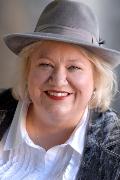
Kelli Stanley’s City of Dragons is a great noir mystery novel with a great woman detective main character. The novel is set in Stanley’s meticulously recreated 1940’s era San Francisco that she plainly deeply loves. I read this book a few months ago, thought it was terrific, and interviewed Kelli (here). For AuthorsVoices Kelli provides an introduction to the book and does a terrific reading of Chapter 1 of her novel in full. Note to listeners: language in this piece does include some words not allowed on broadcast radio or television.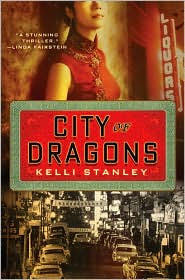
Podcast: Play in new window | Download
Alice Lichtenstein: Lost: A Novel
May 24, 2010 by David
Filed under Fiction, WritersCast
 978-1439159828 – Scribner – Hardcover – $24.00 (also available as an e-book)
Some books are painful but must be read; the suffering of the characters we identify , endured, the story absorbed into one’s bones. I found that to be the case with Lost: A Novel by Alice Lichtenstein. This story operates on a number of levels, as a good novel should. Its three main characters are “lost” but each in different ways. And unlike the television show of the same name (I wonder how that congruency affects the potential readership of this novel?), the core of the story is not hidden away from us, the literal losses in this novel are by far not the deepest pain the characters endure, nor we the readers with them.
But don’t get wrong, this is not a novel so full of pain that it drives you away, or causes you to wonder why you are there. It’s not a book that is simply devoted to misery, and certainly not the kind of suffering that drives us away from the book or its characters. I was immediately drawn into the story, attracted to the characters, especially Susan, whose husband suffers from acute dementia, and has walked away into the winter, and Christopher, whose wife has left him. Their losses and their relationship is at the heart of the novel, and will ultimately unite them in redemption. I really liked the carefully woven web which connects the three key characters and the various subplots that eventually lead into the fullness of the novel.
And this is definitely a novel of winter in a cold country, which ironically provides much of the heat of the story. The coldness in the book is palpable – the author does live in and deeply feels the north country; she describes the cold like a native.
As much as I enjoyed the novel, I also very much enjoyed talking to the author, Alice Lichtenstein. In our conversation, we explored the complexity of the novel and her characters’ desires, their connections and the meaning of their losses. This is a book I recommend to friends, and an author whom I think has alot to say about human life and emotion, and importantly, who writes really well. Plus she is a good conversationalist. It’s not that easy a combination to find. 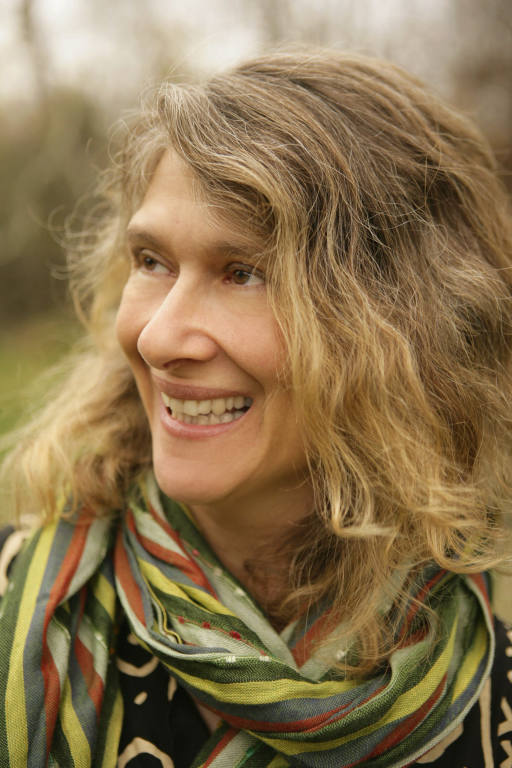
Podcast: Play in new window | Download
Aharon Appelfeld: Blooms of Darkness
May 15, 2010 by David
Filed under Fiction, WritersCast
 978-0805242805 – Shocken Books – Hardcover – $25.95
Aharon Appelfeld’s Blooms of Darkness is a powerful, majestic and triumphant coming of age novel. It’s told entirely in the first person, in sentences that are short, sharp, clear and beautifully composed. And since we know that it was written originally in Hebrew, the translator, Jeffrey M. Green, deserves special mention for the excellent English version we have here.
The book takes place in an unnamed city in Ukraine from 1943 to the end of the war, not even three years. The narrator and central character is Hugo, 11 years old at the outset of the novel, taken by his mother to stay with her closest friend Mariana, who turns out to be a prostitute living in a brothel. Much of the novel, therefore, takes place in the closet and room they share, under constant threat of exposure and death. The sense of living in a highly charged atmosphere, in such an internal space, is almost palpably claustrophobic, and inhabits every element of the story. The relationship between Hugo and Mariana is the core of the novel; they each suffer, they depend entirely upon each other. Their relationship grows and deepens through the course of the novel and its experience becomes a powerful transformative force for Hugo, who, like the author, survives the war as a completely different person than he was when his story begins.
Aharon Appelfeld has lived in Jerusalem for more than sixty years. He speaks many languages, but now writes only in Hebrew, which he learned only as an adult. We talked in depth about the events and characters in this beautiful novel, the nature of fiction as opposed to memoir, and about the author’s life as a Holocaust survivor and Jewish writer and teacher. Blooms of Darkness is a novel that has stayed with me since I read it; its story is one of hope and survival, as is the life of its author. This novel was transformative for me, as was my discussion with its brilliant author.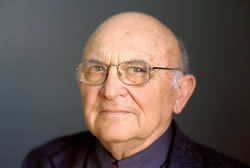
Podcast: Play in new window | Download
Joanna Smith Rakoff: A Fortunate Age
April 22, 2010 by David
Filed under Fiction, WritersCast
 978-1416590804 – Paperback – Scribner – $15.00
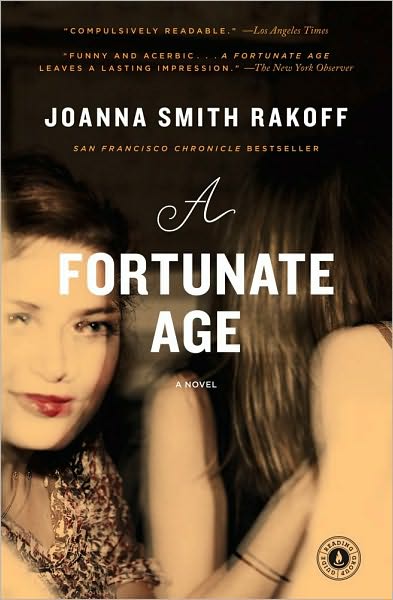
Joanna Smith Rakoff is a wonderful writer – she’s a poet and an essayist, and her skill as a writer shines throughout her novel A Fortunate Age. This was not a book I expected to enjoy as much as I did; Rakoff won me over with the details of her sprawling story, and her characters, whom I similarly did not expect to like so much. The book is modeled directly on Mary McCarthy’s now classic, The Group, whose characters were Vassar women, in a story set in the 1930s and 1940s, whereas Rakoff’s characters are all friends from Oberlin, living in New York City in the late 1990s and the early years of the new century.
Like the novel Rakoff used for inspiration, this is a complicated story with a number of characters told over a number of years. This novel is set mostly in New York City with flashbacks to her characters’ earlier lives, especially their time in college in Oberlin, and some side stories as well. Essentially, it’s a coming of age story, and based on the supposition, I think, that for so many of us, the decade crossing from our twenties to our early thirties truly marks the painful bridge from still youthful adulthood to “real” life. It’s not an easy transition, and for many has the sense of hyper-focused reality that makes it all the more powerful for those experiencing it.
In talking with Joanna, I wanted to explore her interest in Mary McCarthy and her novel that A Fortunate Age is based on (and The Group is also a book I recommend to modern readers, it is a book that is probably more neglected than it should be). Joanna talks about the striking similarities she felt between the lives of her own age group and that of McCarthy’s and how that led her to write her own book. We also talked about the way her book is imagined and how through fiction she worked to represent a particular time and place, a milieu that she evokes through this story, the breadth of her characters and their individual linked stories. As she points out, this novel is, for her almost Victorian in the way its characters function against and within an overall cultural structure toward understanding their social being. There is alot going on in her book, which Rakoff manages quite masterfully, and her ability to handle complexity of story and persona shines in this interview as well. I’m certainly looking forward to reading her next book and to talking to her again.
Podcast: Play in new window | Download
Katharine Weber: True Confections
April 15, 2010 by David
Filed under Fiction, WritersCast
 978-0307395863 – Hardcover – Shaye Areheart Books – $22.00
What a fun (and challenging) book! Any novel that takes place in my favorite city, New Haven, Connecticut, is a book I will want to read. And I did really enjoy reading this book. Katharine Weber has created a wonderful main character, the complicated and challenging Alice Tatnall Ziplinsky, who has married into the family that runs the famous Zip’s Candy Company. True Confections is her story, and through her, it is also the story of an immigrant family in America, the romance of candy, family secrets, and the complexity of relationships. Because the entire story is told by Alice, we don’t ever quite know what is real and what is not, and we are forced to confront actual meaning of narrative.
So it turns out that this this funny, warm, and sometimes poignant novel masks an underlying depth of transposed loves, where family becomes defined by relationship rather than blood. In fact, almost every important character in the book has to deal with displacement. It’s great to read a book with depth and complexity. As the author says: “… at its heart, True Confections is about timeless and universal themes: love, betrayal, and of course, sweets.” I should also add that fire – of the destructive kind – also plays an important role in this story, so it’s not all about the sugar.
I enjoyed the opportunity to interview Katharine Weber about the novel, her characters, and of course, New Haven, where she lives, and where this novel is set. The book is rich in subjects and so is our discussion; we talked extensively about her novel, New Haven, the unreliability of narrators, candy, Jewish families and their businesses, and of course, candy. True Confections is a terrific novel; Katharine Weber is a fine writer who also knows how to talk engagingly about her work.
Podcast: Play in new window | Download