
Yet another blog?
 Well not really. I’ve been posting author and book industry interviews at Writerscast now for just about two years, and while I like to feel that the work speaks for itself, I’ve often felt the need to share information and news with my (growing) audience. Aside from Twitter, which is lovely but oh-so-brief, there really has been no way for me to talk about matters related to the site and its content here.
By introducing this little section of Writerscast dubbed “Pipeline,” I can let you know when I come across interesting publishing related news, talk about books that may not be among those whose authors I interview, or just tell you when I am going on vacation and won’t be posting new interviews for a few days. I’ll spare you any thought pieces or pontifications about publishing here (saving that for www.booktrix.com.)
In Pipeline I can also tell you about some of the upcoming posts on Writerscast, or other sites I have discovered I think you should know about, information I hope will be helpful to everyone who visits this site.
For example, my next author interview is with Mickey Leigh about his memoir, I Slept with Joey Ramone. My next Publishing Talks interview is with the always interesting Rick Richter, who has founded a new digital publishing company called Ruckus Media. I think you will enjoy both of these talks.
Please feel free to email me, David Wilk, at david@booktrix.com. Your suggestions, comments, complaints, etc. are always welcome. Praise too, if you hear something you really like at Writerscast. I’m always looking for interesting people to interview, so let me know who is out there I should be talking to and how to reach them.
And for those of you, like me, buried in snow, just remember that spring is less than 60 days away!
Publishing Talks: David Wilk interviews Rich Freese
November 22, 2010 by David
Filed under Ebooks and Digital Publishing, PublishingTalks, The Future
 In this series of interviews, called Publishing Talks, I have been talking to book industry professionals and other smart people about the future of publishing, books, and culture. This is a period of disruption and change for all media businesses. We must wonder now, how will publishing evolve as our culture is affected by technology, climate change, population density, and the ebb and flow of civilization and economics?
I hope these Publishing Talks conversations will help us understand the outlines of what is happening, and how we might ourselves interact with and influence the future of publishing as it unfolds.
These interviews give people in and around the book business a chance to talk openly about ideas and concerns that are often only talked about “around the water cooler,” at industry conventions and events, and in emails between friends and they give people inside and outside the book industry a chance to hear first hand some of the most interesting and challenging thoughts, ideas and concepts being discussed by people in the book business.
Rich Freese is well known in the book business as a successful member of a very small “fraternity” of distribution experts who work in and understand the intricacies of sales, marketing, warehousing, logistics, and balancing customer and client relationships. He has worked in publishing for his entire adult life. He’s a smart, dedicated and forward looking professional. Rich worked for independent publisher distributor National Book Network for a number of years, moved on to run Motorbooks International, a specialist publisher and distributor, then became President of west coast based Publishers Group West, and after a brief stop establishing a distribution division for the printer, Bookmasters, and has now returned to be the President of NBN, which is based in Lanham, Maryland.
Because book distributors stand in the middle of the supply chain, their worldview is often broader than other entities within the book business. Rich’s breadth and depth of experience in publishing and distribution gives him a unique vantage point from which to view and understand the publishing industry. I thought it would be interesting to talk to him broadly about his current perspective on the ongoing changes in the industry, with some special reference to developing e-book distribution models, the particular issues for independent publishers, and the evolution of publishing models. This talk ought to be particularly useful for independent publishers and anyone interested in their future in a chaotic, challenging marketplace for books.
Podcast: Play in new window | Download
Publishing Talks: David Wilk interviews Andrew Steeves
November 11, 2010 by David
Filed under PublishingTalks, Technology, The Future
 In this series of interviews, called Publishing Talks, I have been talking to book industry professionals and other smart people about the future of publishing, books, and culture. This is a period of disruption and change for all media businesses. We must wonder now, how will publishing evolve as our culture is affected by technology, climate change, population density, and the ebb and flow of civilization and economics?
I hope these Publishing Talks conversations will help us understand the outlines of what is happening, and how we might ourselves interact with and influence the future of publishing as it unfolds.
These interviews give people in and around the book business a chance to talk openly about ideas and concerns that are often only talked about “around the water cooler,” at industry conventions and events, and in emails between friends and they give people inside and outside the book industry a chance to hear first hand some of the most interesting and challenging thoughts, ideas and concepts being discussed by people in the book business.
Andrew Steeves and his partner Gary Dunfield, founded Gaspereau Press in Nova Scotia in 1997, starting out, as many have done, with a literary quarterly and moving into publishing books, three in their first year, eight by 2000 when they moved to the small town of Kentfield. In Canada, there is a long tradition of government funding of the arts, including literature, through support grants to publishers of all sizes and kinds. Bordering the giant culture machine to the south, this is an important mechanism to keep in place a vibrant and local Canadian literary scene. Gaspereau publishes in the tradition of the long running Coach House Press (founded by Stan Bevington in 1965 and still going strong) and the wonderful Montreal based Vehicule Press, among other highly successful independent Canadian literary presses.
But there’s much more going on here than a well run independent literary press putting out a small number of excellent books each year. Gaspereau is also, significantly, a printer, not only of their own books, but for commercial and private customers as well. The operation maintains a great deal of equipment too, from hand set metal type printed on hand cranked proof presses, to semi-modern offset presses that have alot of miles on them.
I’ve been deeply interested in and have admired Canadian publishing and writing for a long time. But I only heard about Gaspereau fairly recently, when reports started circulating about one of their new books, Johanna Skibsrud’s The Sentimentalists. was nominated for the major Canadian literary prize, the ScotiaBank Giller award. I looked up the Gaspereau site, and was immediately taken with their approach to publishing and book design, and contacted Andrew Steeves to talk about the work of the Gaspereau and its fierce commitment to publishing books by hand. We had a great talk, and that is the interview presented here.
If course a couple of days later, the big news hit – The Sentimentalists, perhaps a dark horse previously, won the Giller for its 30 year old author and her publisher. Now in the midst of a great deal of celebrating and joy, Gaspereau is trying to keep up with the almost unbelievable demand for the book that the award has spurred. Canada’s National Post headlined “Literary community weighs in on Gaspereau’s Giller dilemma.” There’s a huge uproar in Canada and alot of ire directed at Gaspereau for not being able to instantly print the thousands of books needed by stores to meet demand. Author Skibsrud is on vacation in Istanbul happily celebrating her good fortune (a $50,000 CN prize comes with the recognition) so we don’t know what she thinks about any of this.
Andrew and Gary do not want to sell the book to a bigger publisher to meet demand. They want to maintain it as a Gaspereau book. Personally I am on their side, but I understand the difficulty for everyone involved, including the author, and of course the many readers out there who want to read the book now. On the one hand, selling the book off solves lots of problems, makes readers happy, puts many thousands of dollars in the hands of the author and Gaspereau, but loses them an author they have discovered and takes them out of the publishing equation, just because they are small and committed to high quality, hands on publishing.
I’d love to hear from listeners on this question: should Gaspereau stay its course, remain committed to its mission, and refuse to sell off The Sentimentalists to another publisher? Or should they accept that the demand of mass culture is too great for an artisanal press, and maybe keep their own edition in print as the original, and license a lesser trade edition to a larger house that is built for this sort of publishing?
In any case, please listen to Andrew Steeves talking about Gaspereau, its mission, history and vision for the future. And keep in mind that when we talked, he had no idea what was about to happen to his life.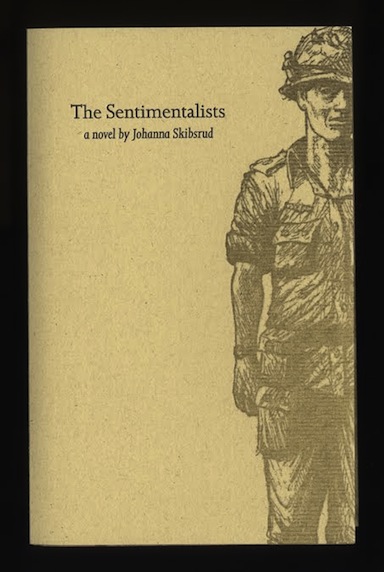 And by the way, The Sentimentalists sounds like a truly wonderful novel, and like thousands of readers north of our border, I want to read it as soon as possible! I’m guessing I might be waiting awhile…
Podcast: Play in new window | Download
Publishing Talks: David Wilk interviews Liza Daly
November 5, 2010 by David
Filed under Ebooks and Digital Publishing, PublishingTalks, Technology, The Future
 In this series of interviews, called Publishing Talks, I have been talking to book industry professionals and other smart people about the future of publishing, books, and culture. This is a period of disruption and change for all media businesses. We must wonder now, how will publishing evolve as our culture is affected by technology, climate change, population density, and the ebb and flow of civilization and economics?
I hope these Publishing Talks conversations will help us understand the outlines of what is happening, and how we might ourselves interact with and influence the future of publishing as it unfolds.
These interviews give people in and around the book business a chance to talk openly about ideas and concerns that are often only talked about “around the water cooler,” at industry conventions and events, and in emails between friends and they give people inside and outside the book industry a chance to hear first hand some of the most interesting and challenging thoughts, ideas and concepts being discussed by people in the book business.
Liza Daly and her partner Keith Fahlgren work together as ThreePress Consulting, providing “expert consulting services and software engineering in digital publishing.” Liza’s name comes up constantly in discussions about ebooks and the emerging technology of publishing. Recently I’ve become interested in how HTML5 operates, as this new standard appears to have a great deal of potential use for handling online display and consumption of digital publishing in a web browser environment and elsewhere. Liza created Bookworm as a free platform for reading ePub format ebooks online and now with Keith, she has developed Ibis Reader, which enables reading ebooks on computers and devices without having to download ebook files or even understand how ebook files and devices work (and Ibis is written in HTML5).
In addition Liza and Keith are active in the open source technology community and are strong advocates for experimentation, agile development, and innovation in publishing. In April of 2010, Liza was elected to the IDPF Board of Directors. Both Keith and Liza are members of various IDPF EPUB Working Groups, including the EPUB 3.0 Working Group. Liza was a member of the advisory board for the Web 2.0 Expo NYC conference in 2008 and 2009, and was also on the board for O’Reilly’s digital publishing conference, Tools of Change 2009-2011.
I wanted to talk to Liza to better understand the emerging landscape of ebooks and e-reading as she sees it from her perspective. She is so deeply involved in new technologies and also has a terrific understanding of use and useability, which of course are critical for the future of digital publishing. I’ve used Ibis Reader now and it works really well. What comes next will be very interesting to see and hopefully this talk with Liza will be useful to listeners who are interested, as I am, in how new technologies will create opportunities for publishers, writers and readers in the near future. It’s critical that we understand how we interact with new software, how its use affects our comprehension of information and ideas, and how we can in turn influence the emerging future we are about to inhabit. Since Liza is one of the proverbial “smartest people in the room” I can’t think of anyone better from which to learn.
Podcast: Play in new window | Download
Publishing Talks: David Wilk interviews Vikram Narayan
October 18, 2010 by David
Filed under Ebooks and Digital Publishing, PublishingTalks, The Future
 In this series of interviews, called Publishing Talks, I have been talking to book industry professionals and other smart people about the future of publishing, books, and culture. This is a period of disruption and change for all media businesses. We must wonder now, how will publishing evolve as our culture is affected by technology, climate change, population density, and the ebb and flow of civilization and economics?
I hope these Publishing Talks conversations will help us understand the outlines of what is happening, and how we might ourselves interact with and influence the future of publishing as it unfolds.
These interviews give people in and around the book business a chance to talk openly about ideas and concerns that are often only talked about “around the water cooler,” at industry conventions and events, and in emails between friends and they give people inside and outside the book industry a chance to hear first hand some of the most interesting and challenging thoughts, ideas and concepts being discussed by people in the book business.
It’s more or less common knowledge that today more books are written and published than at any time in human history, and the current rate of production certainly shows no sign of slowing anytime soon. This is true of all other art forms as well – we are surrounded by more music, video and every other form of art. Being found, heard, seen, and ultimately having one’s work experienced by an audience in an environment of vast abundance must therefore be the goal of all creators, writers, musicians, film-makers, etc. All content is competing for the valuable time that audiences have to give. This “attention economy” is at the heart of how the web affects the business of publishing.
For some writers, the social sphere, the engagement with readers, and the marketing work they undertake is a natural extension of their creative work. There are many other writers, of course, for whom marketing is a foreign concept, or who simply do not understand or feel comfortable with the emerging social network of the web. Whether they are sophisticated marketers or novices just starting to figure out how to find their communities, writers who are trying to take their work from the private to the public sphere are faced with a vast and sometimes opaque ecosystem of human culture.
Of course in this environment, tools have emerged to help them navigate this fluid and highly challenging environment, and learning how to use those tools becomes another challenge for writers.
A couple years ago I met Vikram Narayan, a young technologist from India, who was setting out to launch a business dedicated to creating marketing easier for writers and publishers. He started with one automated tool that would enable writers to make their books more visible on the web, and over the past couple of years, the business, now called BookBuzzr, has continued to evolve interesting, fun and easy-to-use tools that writers can use to better understand how they can connect with readers and to help them make that process more efficient and less daunting. Vikram recently sent me a PDF booklet called “The 10 Book Marketing Mistakes that Authors Make” and that spurred me to talk to him about his work.
Vikram is the founder of BookBuzzr Book Marketing Technologies Pvt. Ltd. based in Bangalore. His company provides a variety of book marketing and book promotion technologies to authors including the popular and free BookBuzzr Widget which has been referred to as a “portable author website” or “the calling card for the social Internet.” BookBuzzr also owns and operates Freado.com – the world’s biggest book-winning site with hundreds of books to be won (which is a cool way for authors to be discovered). Vikram has an MBA from Carnegie Mellon University. I recently talked to Vikram over Skype to hear some of his thoughts about marketing and books, what amounts to news from the front lines, where writers and readers are continually engaging, where the future of writing and reading can begin to be understood.
Podcast: Play in new window | Download
Publishing Talks: David Wilk interviews Peter Brantley
September 12, 2010 by David
Filed under Ebooks and Digital Publishing, PublishingTalks, The Future
 In this series of interviews, called Publishing Talks, I have been talking to book industry professionals and other smart people about the future of publishing, books, and culture. This is a period of disruption and change for all media businesses. We must wonder now, how will publishing evolve as our culture is affected by technology, climate change, population density, and the ebb and flow of civilization and economics?
I hope these Publishing Talks conversations will help us understand the outlines of what is happening, and how we might ourselves interact with and influence the future of publishing as it unfolds.
These interviews give people in and around the book business a chance to talk openly about ideas and concerns that are often only talked about “around the water cooler,” at industry conventions and events, and in emails between friends and they give people inside and outside the book industry a chance to hear first hand some of the most interesting and challenging thoughts, ideas and concepts being discussed by people in the book business.
Peter Brantley is the Director of the Bookserver Project at the (totally cool) Internet Archive, a San Francisco-based not for profit library. He contributes regularly to several blogs on libraries and publishing, discussing transformations in media and information access. He serves on the board of the International Digital Publishing Forum, the standards setting body for digital books. Peter has significant experience with academic research libraries and digital library development programs, and was previously the Executive Director of the Digital Library Federation, a not for profit membership organization of research and national libraries.
As Peter pointed out to me recently, the word “rant” is a part of his name. So we could expect him to have something interesting to say about almost any subject related to books and the digital landscape. I think that comes across well in our talk. He brings to bear his experience as a librarian but also has a broad perspective on many subjects simply because he pays attention to so many ideas and developments across a wide spectrum of subject areas and interest groups. We had a lot of fun talking together, and hope listeners will enjoy our talk as well.
I am happy to say that this is the 100th post on Writerscast, a milestone of sorts, I suppose.
Podcast: Play in new window | Download
Publishing Talks: David Wilk interviews Bob Stein
July 18, 2010 by David
Filed under Ebooks and Digital Publishing, PublishingTalks, Technology, The Future
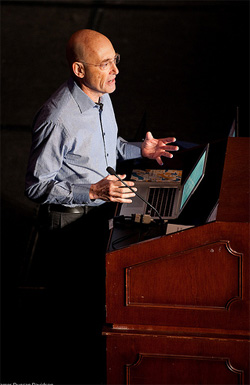 In this series of interviews, called Publishing Talks, I have been talking to book industry professionals about the future of publishing, books, and culture. This is a period of disruption and change for all media businesses. How will publishing evolve as our culture is affected by technology, climate change, population density, and the ebb and flow of civilization and its economics?
I hope these Publishing Talks conversations will help us understand the outlines of what is happening, and how we might ourselves interact with and influence the future of publishing as it unfolds.
These interviews give people in the book business a chance to talk openly about ideas and concerns that are often only talked about “around the water cooler,” at industry conventions and events, and in emails between friends and they give people inside and outside the book industry a chance to hear first hand some of the most interesting and challenging thoughts, ideas and concepts being discussed by people in the book business.
Bob Stein is for me one of the great visionary innovators and someone I greatly admire. He most recently co-founded The Institute for the Future of the Book, which quite modestly describes itself as “a small think-and-do tank investigating the evolution of intellectual discourse as it shifts from printed pages to networked screens. We are funded generously by the MacArthur Foundation, and affiliated with the University of Southern California. We are located in Brooklyn, NY and London, UK.” Bob’s bio includes founding the excellent Criterion Collection of classic films, which he ran for 13 years, as well as The Voyager Company, which produced more than 75 innovative multi-media projects in CD-ROM formats. Subsequently, Stein started Night Kitchen to develop authoring tools for the next generation of electronic publishing. That work is now being continued at the Institute for the Future of the Book.
In our conversation Bob talked a bit about his background and his history of working in publishing as lead in to a wide ranging discussion of digital publishing issues. Bob’s vision of how reading and books work in the digital, networked social environment – “books as conversation” as well as or perhaps instead of “books as objects” – and how authors and readers interact in the emerging environment is compelling. Bob has a deep experience that combines conceptual and hands-on work on so many of the issues that concern anyone interested in books and reading which for me makes his point of view so important to experience.
Podcast: Play in new window | Download
Publishing Talks: David Wilk interviews David Steinberger
July 4, 2010 by David
Filed under Publishing History, PublishingTalks, The Future
 In this series of interviews, called Publishing Talks, I have been talking to book industry professionals about the future of publishing, books, and culture. This is a period of disruption and change for all media businesses. How will publishing evolve as our culture is affected by technology, climate change, population density, and the ebb and flow of civilization and its economics? Publishing Talks interviews help us understand the outlines of what is happening, and how we might ourselves interact with and influence the future of publishing as it unfolds.
These interviews give people in the book business a chance to talk openly about ideas and concerns that are often only talked about “around the water cooler,” at industry conventions and events, and in emails between friends and they give people inside and outside the book industry a chance to hear first hand some of the most interesting and challenging thoughts, ideas and concepts being discussed by people in the book business.
David Steinberger is well known now as the CEO and President of The Perseus Books Group. Perseus is in many ways, a creation of the unusual business conditions that have marked the book industry over the past dozen years. The company began as a relatively small independent book publisher, growing over time via acquisitions of usually unwanted or under appreciated business units of other companies. Today it is made up of about 10 seperate imprints. Its six main publishing divisions include PublicAffairs (non-fiction), Running Press (fiction and non-fiction titles), Basic Books (non-fiction), Da Capo (non-fiction), Vanguard (fiction and non-fiction), and Avalon Travel (travel guides). Perseus also publishes academic books, including college textbooks from Westview Press.
In addition to publishing, Perseus acquired Client Distribution Services (renamed Perseus Distribution), Consortium (specializing in mostly independent literary and political presses) and most of the assets of Publishers Group West (PGW) in daring and innovative bankruptcy purchase, so that today it is by far the largest distributor of client publishers in the North American market. With Steinberger as CEO and Joe Mangan as COO (and aided by strong financing from its parent company), Perseus has crafted what appears to be a very successful strategy for navigating changeful times, including an early and deep commitment to digital publishing, a diverse set of publishing imprints, a decentralized management system based around a set of core services shared by internal resources as well as clients, and a willingness to experiment with new ideas (including Vanguard’s no-advance, high royalty publishing program as well as a variety of interesting digital initiatives).
In my conversation with David Steinberger, I wanted to learn more about how he sees Perseus today, as well as a sense of his vision for the future, not only of Perseus itself, but the publishing industry as a whole. I think listeners interested in the future of publishing and book distribution will find this discussion useful and interesting on a number of levels.
Podcast: Play in new window | Download
Publishing Talks: David Wilk interviews Jason Allen Ashlock
May 31, 2010 by David
Filed under PublishingTalks, The Future
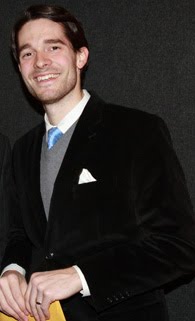 In this series of interviews, called Publishing Talks, I have been talking to book industry professionals about the future of publishing, books, and culture. This is a period of disruption and change for all media businesses. How will publishing evolve as our culture is affected by technology, climate change, population density, and the ebb and flow of civilization and its economics? Publishing Talks interviews help us understand the outlines of what is happening, and how we might ourselves interact with and influence the future of publishing as it unfolds.
These interviews give people in the book business a chance to talk openly about ideas and concerns that are often only talked about “around the water cooler,” at industry conventions and events, and in emails between friends and they give people inside and outside the book industry a chance to hear first hand some of the most interesting and challenging thoughts, ideas and concepts being discussed by people in the book business.
I first read about the new literary agency, Movable Type Literary Group established by Jason Ashlock and his partner Meredith Dawson a few months ago. I’ve wondered for awhile now about the role of agents in the changing landscape of book publishing, and evidently so have Jason and Meredith. Along with an NEA based graph on their home page “Books are not dead,” they have composed the following statement of purpose and occasion:
“We have arrived, as Harold Bloom might say, belatedly.
The scene is established, the paradigms rigid, the machine stubborn and aging. Now more than half a millennium removed from the prima typographicae incunabula, “the first infancy of printing,” a chorus now announces the swift and coming death of the published word and the end of book history. But crisis and opportunity are concurrent, and the instability of one paradigm leads to the creation of another. We work in publishing at a moment of both belatedness and birth, when the trend of all future events is being determined. We aim, with many of our friends and colleagues, to confront the crisis of the moment and from the upheaval to design and shape a future.”
When I ran across Jason at a publishing event in Manhattan, we arranged to talk. I wanted to hear in his own words what this new agency will be all about. I think alot of what he says here will resonate for listeners of this podcast. Certainly, it makes sense for the role of the agent to be transformed, and to help lead the transformation of relationships between author, publisher and audience that is emerging now. It looks like Movable Type has an opportunity to create a new model for its own clients, and by example, for others as well. Maybe because, like many others looking at an established industry with new eyes, Jason Ashlock has an opportunity to create a new paradigm.
Podcast: Play in new window | Download
Publishing Talks: David Wilk interviews Eoin Purcell
May 21, 2010 by David
Filed under Ebooks and Digital Publishing, PublishingTalks, Technology, The Future
 In this series of interviews, called Publishing Talks, I have been talking to book industry professionals about the future of publishing, books, and culture. This is a period of disruption and change for all media businesses. How will publishing evolve as our culture is affected by technology, climate change, population density, and the ebb and flow of civilization and its economics? Publishing Talks interviews help us understand the outlines of what is happening, and how we might ourselves interact with and influence the future of publishing as it unfolds.
These interviews give people in the book business a chance to talk openly about ideas and concerns that are often only talked about “around the water cooler,” at industry conventions and events, and in emails between friends. I believe these interviews give people inside and outside the book industry a chance to hear first hand some of the most interesting and challenging thoughts, ideas and concepts being discussed within the industry.
Eoin Purcell works and lives in Dublin, Ireland. He is a publishing industry analyst and commentator. He runs Green Lamp Media, a publishing and publishing services company and also edits Irish Publishing News.
He has worked as Commissioning Editor with one of Ireland’s oldest independent publishers Mercier Press and at Nonsuch Ireland (now The History Press Ireland). He writes occasional blog posts and columns on the Irish book trade for The Bookseller magazine.
I was prompted to talk to Eoin by his persuasive and cogent article that appeared in (Ed Nawotka’s highly recommended online newsletter) Publishing Perspectives called “E-Books are a Cul-de-sac: Why Publishing Needs to Rethink its Digital Strategy.” In my view, Eoin consistently thinks and writes clearly about the unfolding future of a digital publishing future. In this conversation we talked mainly about how publishers (and authors) can and must adapt to the emerging environment created by new technology (and new distribution models), including practical ideas and actions they can take to embrace new tools and methods of reaching readers in a profitable way. He expressed his view that publishers need to focus on longer term trends, the values they can provide to readers (and writers) and then build their businesses around identifiable communities of readers. We also talked about the differences in marketing paradigms that digital publishing establishes for publishers, the idea of “publishing as community” and much more.
Eoin provides a fresh, incisive perspective along with realistic ideas and strategies for publishers who want to embrace a new paradigm of publishing based on a web-centric environment. I think this conversation will be valuable to anyone (publisher or author) who is interested in creating a successful digital strategy for the long term future.
Podcast: Play in new window | Download