
Publishing Talks: David Wilk Interviews John Sundman
January 5, 2012 by David
Filed under Ebooks and Digital Publishing, PublishingTalks, Technology, The Future
 In this series of interviews, called Publishing Talks, I talk to book industry professionals and other smart people about the future of publishing, books, and culture. This is a period of disruption and change for all media businesses. How will publishing evolve as our culture is affected by technology, climate change, population density, and the ebb and flow of civilization and economics?
I hope these Publishing Talks conversations will help us better understand the outlines of what is happening in publishing, books and reading culture, and how we can ourselves both understand and influence the future of books and reading.
I’ve had the pleasure of knowing John Sundman for only a brief period of time, but value my emerging friendship with him greatly. He’s been a writer in a variety of forms, and a visionary thinker about many things I am interested in. He’s been a self publisher for quite some time, and I thought his experience doing his own publishing would be a good starting point for a conversation about where publishing appears to be going. Here’s his bio (from his Smashwords page):
John Sundman is a freelance technical writer, essayist, novelist, self-publisher, volunteer firefighter, food pantry co-director, former Peace Corps Volunteer, husband, father, and advocate for people with disabilities who resides on the island of Martha’s Vineyard, very near to Massachusetts, USA. He has spent more than 20 of the last 30 years somehow connected to the Silicon Valley/Boston high-tech/computer industry. He also has experience as a farmer, student of agricultural economics, and worker in rural African agricultural development. His books are more subtle than they appear.
John blogs with a number of other free thinking visionaries at Wetmachine (“we write about, mostly, the nexus of technology, science and social policy in the USA. We also write about software praxis, technoparanoia, the craft of writing, self-publishing, politics, and random bullshit. Sundman and Gray, in particular, are leaders in the “random bullshit” category.”)
John’s books are quite good and well worth reading (here’s a review of his first book, Acts of the Apostles, that more or less set him on a successful path of self-publishing, an early web story, which serves as precursor for so many other stories of discovery). I could have interviewed him about one of his books, but I thought talking to him about publishing would give us a chance to talk more broadly. Do take a look at his books (widely available in online retail stores). And he’s finally doing a book with a publisher other than himself, an overhauled and rewritten Acts of the Apostles with the esteemed Underland Press. 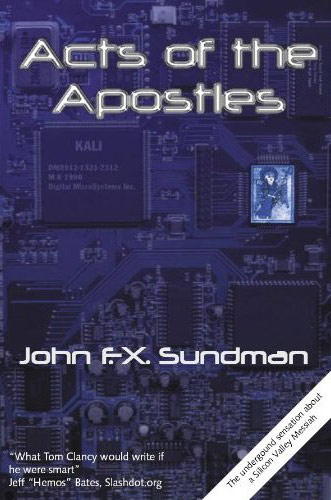
John and I had a great talk. I’ll be interested to hear from listeners what you think of some of his ideas.
.
Podcast: Play in new window | Download
Publishing Talks: David Wilk interviews Miral Sattar about BiblioCrunch
November 28, 2011 by David
Filed under Ebooks and Digital Publishing, PublishingTalks, Technology, The Future
 In this series of interviews, called Publishing Talks, I talk to book industry professionals and other smart people about the future of publishing, books, and culture. This is a period of disruption and change for all media businesses. How will publishing evolve as our culture is affected by technology, climate change, population density, and the ebb and flow of civilization and economics?
I hope these Publishing Talks conversations will help us better understand the outlines of what is happening in publishing, books and reading culture, and how we can ourselves both understand and influence the future of books and reading.
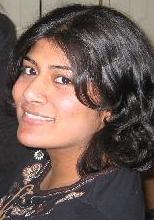
Miral Sattar is a young serial entrepreneur with roots in the publishing business. She is the Founder of Divanee.com and Weddings.Divanee.com and has worked in the media industry for 10 years. Ms. Sattar is a contributor for Time, teaches entrepreneurial journalism sessions at CUNY, and has contributed to Metro and Jane Magazine. She graduated from Columbia University’s School of Engineering and Applied Science, and recently earned an M.S. in Digital + Print Media.
In many ways Miral represents the future of the book business. She’s had innovative and smart ideas for new products and new uses of digital technology to create new ways for readers and writers to interact. Failing to gain any traction for her ideas within traditional publishing institutions, she set out on her own to build what she believes writers and readers want and need, a new and different publishing/reading platform called BiblioCrunch. There’s alot to be interested in here if you are looking for ways that online publishing can be made simple.
From the BiblioCrunch.com website:
What is BiblioCrunch.com?
BiblioCrunch.com is a platform that empowers writers and publishers to create and market their own manuscripts, completed works, digital books and bookazines. Through our platform anyone – bloggers, authors, aspiring writers, students, writers, journalists, publishers – can share their stories.
• You can create all your great books online through our easy interface in any format any eReader!
• Once you’ve written all the chapters for your book you can either post it for FREE or start SELLING.
• You can start SHARING your book via social media so others can download your book.
• VOTE your book to the top by sharing it with all your friends.
• Need to hire an EDITOR or DESIGNER? Why not connect with someone in the MEMBERS community to help edit your book and design an awesome cover.
Why use BiblioCrunch.com?
• BiblioCrunch is the place for you to write, read, and distribute your favorite books in just a few steps.
• Create virtual bookshelves, discover new books, connect with friends and learn more about your favorite books – all for free.
• On BiblioCrunch.com you can connect with writers, publishers, readers, editors, copyeditors, and designers to create the best books.
• We’re also cheaper than other services that take 30% of each book sold.
•
How can I share my books?
• Each book has it’s own public download page that you can share on Twitter and Facebook.
Building tools that make it easy for people to publish their work and for readers to read it is really a publishing function. As with many other sites, the idea here is that readers can decide for themselves what they want to read. It will be interesting to see if, as some traditionally minded digerati have suggested, that the editorial or curatorial role will be needed, perhaps more than ever, but if so, my guess is that it will develop in different ways, based on the different understanding of the editorial function that today’s writers and readers have developed.
I wanted to talk to Miral about BiblioCrunch because I am always interested in new ideas and constructs, and also because I think the story she tells about the genesis and plans for this site will be instructive and valuable to others in the book universe. And hopefully, her ideas might generate some additional thinking about how platforms, innovation and audiences for reading will develop in the near future. Creating a new publishing platform is no small feat, but the real challenge will be to attract readers and writers in significant numbers. I’m hoping this site will succeed through innovation and creativity, as a healthy publishing ecosystem requires a wide variety of niches, large and small.
Podcast: Play in new window | Download
Hurricane Irene delays Writerscast posting
 Just like millions of other Americans we were hammered pretty hard by this hurricane, in our small Connecticut town 99% of homes lost power, and as of today, September 2, still more than 55% of homes are without power. We got ours back last night, thankfully, but still do not have internet. Without a good connection, posting interviews is painfully difficult. I have several great interviews ready to post, next being with Dean Bakopoulos about his excellent novel My American Unhappiness. I hope to have a new Publishing Talks interview posted by next week also.
Our other big news is that Livewriters, our book and author video site, had its best traffic month in August, surpassing 70,000 unique visitors. We are posting ever more interesting interviews, readings and discussions with authors about their books there, plus featuring just about every book trailer there is. And if you want to enjoy a lively literary blog experience, visit Livewires, a fresh look at the literary landscape.
During the storm, I had plenty of time to read (print books by candlelight and flashlight, ebooks with the device’s own light) and am looking forward to talking to the authors of quite a few wonderful books, including My Green Manifesto, Just Bill, Confronting Collapse, and Duet.
My best wishes to all who suffered in and after the storm, and condolences to all those who died in it.
Publishing Talks: David Wilk interviews Kate Wilson
July 11, 2011 by David
Filed under Ebooks and Digital Publishing, PublishingTalks, The Future
 In this ongoing series of interviews, called Publishing Talks, I have been talking to book industry professionals and other smart people about the future of publishing, books, and culture. This is a period of disruption and change for all media businesses. We must wonder now, how will publishing evolve as our culture is affected by technology, climate change, population density, and the ebb and flow of civilization and economics?
I believe that these Publishing Talks conversations can help us understand the outlines of what is happening in the publishing industry, and how we might ourselves interact with and influence the future of publishing as it unfolds.
These interviews give people in and around the book business a chance to talk openly about ideas and concerns that are often only talked about “around the water cooler,” at industry conventions and events, and in emails between friends and they give people inside and outside the book industry a chance to hear first hand some of the most interesting and challenging thoughts, ideas and concepts being discussed by people in the book business.
I was recently introduced to the apps and books created by the new UK based children’s publisher Nosy Crow. I bought their first app, the Three Little Pigs and immediately understood that this company had a vision and an approach that made sense to me. Here is the message from their website that caught my attention right way:
“We make innovative, multimedia, highly interactive apps for tablets, smart phones and other touchscreen devices. These apps are not existing books squashed onto phones, but instead are specially created to take advantage of the devices to tell stories and provide information to children in new and engaging ways.” Books too by the way.
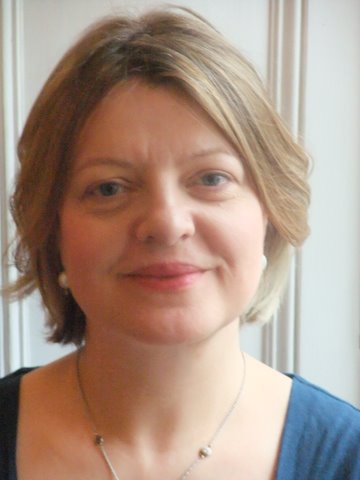
When I finally got a chance to talk to company founder Kate Wilson, I found out right away why the company is so smart, and off to such a great start. I believe that Kate deeply understands how technology and publishing can and will intersect for the creation of great experiences for children readers. She has a vision, one that makes sense, and she has combined creativity with a keen sense of what parents and children want both from new technologies and from traditional books. And her experience in publishing has taught her important lessons which she is now applying in this new publishing space (after attending Oxford University, she worked for a number of UK children’s publishers, including Macmillan Children’s and Scholastic UK, both of which she ran. If you are interested in how children’s publishing is going to evolve, I suggest paying close attention to Nosy Crow, and of course listening to this conversation with Kate Wilson.
Podcast: Play in new window | Download
Slowing Down for the Summer
 I have been posting two podcasts a week for the better part of the last year, which has been great fun. But with the summer in full swing, weather wonderful and plenty of work in the hopper, it looks like I may be posting slightly less frequently for the next couple of months. I’m not reading fewer books, but scheduling interviews seems to be more difficult in the summer too. And publishers and technologists take vacations! I do have some really good interviews coming along soon: Anna Lappe, Nick Mamatas, Dean Bakopoulos among other writers, and Kate Wilson of the great new kids publisher Nosy Crow for Publishing Talks. And there will be more.
I’ve also started a new website I hope you will visit – it’s called New Book Media (newbookmedia.com) featuring a long list of digital book events around the world, and a steady stream of news and information about the wildly expanding world of digital publishing. Livewriters.com now has more than 2500 book and author related videos, and is still the only website focused exclusively on video about books, along with an entertaining and original literary blog called LiveWires.
If you’ve read a great book lately I want to know about it. Direct message your recommendations to @writerscast.
Nina Sankovitch: Tolstoy and the Purple Chair
June 5, 2011 by David
Filed under Non-Fiction, WritersCast
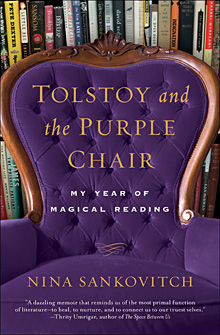 978-0061999840 – Harper – $23.99 – Hardcover (ebook version also available)
This is truly a wonderful book by an exceptional writer. Nina Sankovitch was living a full, active life as an environmental lawyer, happily married with four children, when her beloved sister became ill with cancer and died far too young. As she recounts in Tolstoy and the Purple Chair: My Year of Magical Reading, her initial response to her sister’s death was to “live her life double,” doing everything she could to try to make up for her terrible and painful loss. After three frantic years she realized what she was doing was unsustainable.
Ironically, her apparent retreat from doing to experiencing through reading was in some ways no less radical. Nina committed to reading a book a day for an entire year, no small commitment in itself, but further, she committed herself to writing a review or think piece about every book she read. That is a very high bar to set for any modern parent, even with a patient and understanding family (when I started Writerscast, I committed myself to read at least one book each week and to interview its author, a far lesser commitment, and after two years of doing it, I know how difficult, even impossible it would be for me to read a book a day, for a short period of time, much less a full year).
But Nina turned to reading because reading has always been central to her life and experience. Her immigrant parents read and loved books, as did Nina, from an early age. In Tolstoy and the Purple Chair, Nina tells the story of both her families, the vibrant one she grew up in, and the supportive and happy one she has raised. Many of the books she read in her magical year of reading are discussed here, as the stories of these books are part of the weave of how she transformed her experience of death into a celebration of life. And that is the crux of this memoir. By leaving her own experience to enter the realms of literally hundreds of writers, and making a place for those other stories in her own life, Nina was able to recreate and restore her own psyche – that’s the magic, the alchemy, of her magical year.
I should mention that Nina lives near me and has become a valued friend, partly through books we’ve read and discussed, including a couple I gave her to read and which are included in her year of reading. During that year she started an excellent blog called Read All Day where you can find all of her well written and exceptionally perceptive book reviews and essays.
Podcast: Play in new window | Download
Publishing Talks: David Wilk interviews Phil Ollila
March 9, 2011 by David
Filed under Ebooks and Digital Publishing, Publishing History, PublishingTalks, Technology, The Future
 In this series of interviews, called Publishing Talks, I have been talking to book industry professionals and other smart people about the future of publishing, books, and culture. This is a period of disruption and change for all media businesses. We must wonder now, how will publishing evolve as our culture is affected by technology, climate change, population density, and the ebb and flow of civilization and economics?
I hope these Publishing Talks conversations can help us understand the outlines of what is happening in the publishing industry, and how we might ourselves interact with and influence the future of publishing as it unfolds.
These interviews give people in and around the book business a chance to talk openly about ideas and concerns that are often only talked about “around the water cooler,” at industry conventions and events, and in emails between friends and they give people inside and outside the book industry a chance to hear first hand some of the most interesting and challenging thoughts, ideas and concepts being discussed by people in the book business.
Philip Ollila (widely known as Phil in the book industry) is the Chief Content Officer of Ingram Content Group Inc., one of the largest distributors of book content and providers of digital printing in the North American book industry. Phil is responsible for Ingram Content Group’s publisher facing business, and has been instrumental in leading the transformation of Ingram from a traditional wholesale service provider, into what is now a fully integrated solutions company for clients. Ingram combines wholesale distribution, print-on-demand, digital distribution, inventory management and comprehensive worldwide services for both physical and digital content.
Phil leads a number of Ingram business units including wholesale merchandising, Lightning Source, Ingram Publisher Services and digital distribution through CoreSource® and also heads up Ingram Content Group marketing. Before joining Ingram, where he has held several leadership positions, he was Vice President of Marketing and Merchandising for Borders.
Anyone in the book business, and many people outside it know about Ingram. It is one of the two large book wholesalers transitioning from a key role in the physical supply chain between publishers and retailers. Perhaps earlier than any other large company in the industry, Ingram had the foresight to invest in a range of services that would enhance their offerings to both their suppliers (mainly publishers) and their customers (bookstores, libraries and many other retailers). In many ways, it is only the two large former traditional wholesalers, Ingram and its competitor Baker & Taylor that have the unique perspective and ability to act as really powerful and influential transformative agencies as the book business evolves into a combination of print and digital products.
Phil Ollila is therefore now in a key role at a tremendously interesting and fast moving business that possesses a great deal of information valuable to publishers and to anyone interested in how publishing, books and readers will interact in the future, both near term and much, much farther into the future.
Podcast: Play in new window | Download
Publishing Talks: David Wilk interviews Mike Shatzkin
February 28, 2011 by David
Filed under Ebooks and Digital Publishing, Publishing History, PublishingTalks, Technology, The Future
 In this series of interviews, called Publishing Talks, I have been talking to book industry professionals and other smart people about the future of publishing, books, and culture. This is a period of disruption and change for all media businesses. We must wonder now, how will publishing evolve as our culture is affected by technology, climate change, population density, and the ebb and flow of civilization and economics?
I hope these Publishing Talks conversations can help us understand the outlines of what is happening in the publishing industry, and how we might ourselves interact with and influence the future of publishing as it unfolds.
These interviews give people in and around the book business a chance to talk openly about ideas and concerns that are often only talked about “around the water cooler,” at industry conventions and events, and in emails between friends and they give people inside and outside the book industry a chance to hear first hand some of the most interesting and challenging thoughts, ideas and concepts being discussed by people in the book business.
Mike Shatzkin, is the founder and operator of a well known book industry consulting business called The Idea Logical Company. He’s also a blogger extraordinaire who writes incisively about issues in the book industry at The Shatzkin Files and who is never afraid to make public predictions about the future of books and the book business he knows so well, having essentially grown up in the business from an early age. He is an organizer of conferences, and a frequent speaker at publishing industry gatherings large and small.
The description of Idea Logical on its website sums up Mike’s role pretty succinctly: “The Idea Logical Company consults to book publishers and their trading partners about the changes engendered by digital transformation to every component of the value chain.” Mike has spent thirty years addressing all sorts of issues and problems for publishing and retailing clients of all sizes. In recent years, his work has focused on the changes created for the publishing industry by a variety of new and emerging digital technologies. He was an early advocate of digital publishing, and also established the concept of “verticality” or subject specific publishing as a way to organize publishing around digital technologies.
Beyond his interest and expertise in publishing, Mike is also a writer and an active entrepreneur. In this interview, we did not discuss any of his baseball related writing, editing, publishing and website development – if we had, it’s likely we would have used up all our time talking about our mutually shared passion, a subject in which Mike has also had an entire career simultaneously with his consulting work and constant thinking and analysis about books, publishers, readers and the business that serves them.
In my opinion, Mike talks just as clearly and intelligently, if not more so, than he writes, which given his writing talents, is saying alot. We certainly had a lot of fun in this conversation, which I think will be useful and interesting to anyone interested in the future of books and reading. As Mike says in his latest blog post: “Sometimes, and it would seem quite often these days, the future comes faster than you expected it.”
Podcast: Play in new window | Download
Read All Day
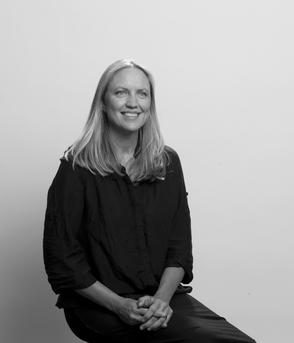 Nina Sankovitch has been an inspiration for me. From October 2008 to October 2009 she read a book a day and wrote about it (intelligently and cogently) at her website ReadAllDay. Here’s what she says about why she did it: “I began my year in an effort to come to terms with the tragic death of my oldest sister, Anne-Marie, and to find purpose and meaning in my life. I called my year of reading The 365 Project.”
I’ve sent her some books to read and she has given me lots of suggestions for books I have read, and in some cases then interviewed authors for Writerscast. We’ve liked some of the same books, but judging from her site, she and I have very different reading interests. Knowing that has helped me choose some new directions, which I think is a great way to keep from falling into a reading rut.
Meanwhile, Nina’s year of reading adventure was discovered and written about by the New York Times and a number of other media outlets, and she even got a book deal. Her book is called Tolstoy and the Magic Chair: My year of magical reading will be published in June by Harper. I certainly plan to read it and interview her about it too. I’m jealous and dumbstruck with admiration for what she has done.
Anyway, the reason I am writing about Nina is because she has launched a redesigned website that I think is worth a visit. She is continuing to read and write reviews about books of all sizes and shapes – not every day of course, but more books than most people can read and write about intelligently. Here’s how she does it:
HOW TO READ All DAY
Always have a book with you.
Read while waiting.
Read while eating.
Read while exercising.
Read before bed.
Read before getting out of bed.
Read instead of updating FB.
Read instead of watching TV.
Read instead of vacuuming.
Read while vacuuming.
Read with a book group.
Read with your kid.
Read with your cat.
Read to your dog.
Read on a schedule.
Always have a book with you.
Thank you Nina!
Publishing Talks: David Wilk interviews Rick Richter
February 2, 2011 by David
Filed under Ebooks and Digital Publishing, PublishingTalks, The Future
 In this series of interviews, called Publishing Talks, I have been talking to book industry professionals and other smart people about the future of publishing, books, and culture. This is a period of disruption and change for all media businesses. We must wonder now, how will publishing evolve as our culture is affected by technology, climate change, population density, and the ebb and flow of civilization and economics?
I believe these Publishing Talks conversations can help us understand the outlines of what is happening in the publishing industry, and how we might ourselves interact with and influence the future of publishing as it unfolds.
These interviews give people in and around the book business a chance to talk openly about ideas and concerns that are often only talked about “around the water cooler,” at industry conventions and events, and in emails between friends and they give people inside and outside the book industry a chance to hear first hand some of the most interesting and challenging thoughts, ideas and concepts being discussed by people in the book business.
I’ve known Rick Richter for a number of years. He is smart, energetic and incredibly creative. I am told he plays a mean guitar too. He’s unusual in publishing for having been a leader in both sales and editorial, and for being at heart, an innovator and entrepreneur. I have talked to him a number of times over the past couple of years about his thinking and ideas, and have been interested in his new venture, Ruckus Media since it was still a brainstorm generated idea. Unlike many brainstormed ideas, this one has become real, and very quickly too.
Ruckus represents at least one budding trend in publishing for kids – which is to be born digital and to stay that way. Print, ink and paper will be someone else’s job. At a recent Digital Book World presentation, Rick’s signature statement about his new work was this: “books you can play with and games you can read.”
Rick is currently President, CEO, and Chair, Ruckus Media Group. Previous to founding Ruckus, he was President and Publisher of the Simon & Schuster Children’s Division (1996 – 2008). In 1990, Rick co-founded Candlewick Press, the prestigious children’s publisher based in Boston.
“The goal of Ruckus is to combine the most creative minds in children’s media with tremendously exciting new mobile devices. We’ll be satisfied when a mom or dad can hand their phone or tablet to their child without one ounce of guilt, knowing that the experience the child is about to have will entertain them, challenge them, perhaps make them giggle, and be utterly satisfying.” Beginning in May, Rick will be an adjunct professor at the NYU Master of Science Program in Publishing.
Rick and I had a great talk, not just about what he is doing at Ruckus to make change and create a new way of publishing for kids, but also about the future of digital publishing and much more. Ruckus, along with a number of other new digital publishers are in the process of establishing new ways for children to experience books and reading in some very exciting ways. And it looks like they are having alot of fun doing it.
Podcast: Play in new window | Download