
Michael Burke: Swan Dive
July 29, 2010 by David
Filed under Fiction, WritersCast
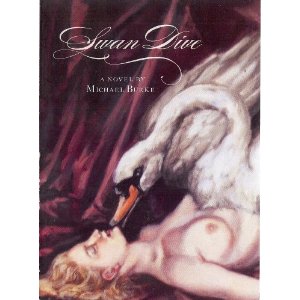 978-1929355501 – Pleasure Boat Studio/Caravel Books – paperback – $15.00 (also available as an e-book at $9.99)
This is Michael Burke’s first novel, and it’s a good one. He is probably much better known as a sculptor and graphic artist; he is clearly an accomplished writer as well, and as with his art, there is a great deal of thought behind the manifestation he has chosen for this story. Michael Burke is also the son of renowned philosopher and poet Kenneth Burke, which may help explain some of his accomplishments.
While I was preparing to interview Michael about his very well written and entertaining novel, I read a fascinating profile of him and his work as an artist in the Harvard Alumni Magazine, an article that in itself is well worth reading.
This is an intellectual novel, but it is never heavy handed. The dialogue is smooth, funny, and vibrant. The story pays homage to Leda and the Swan but that motif never gets in the way of the story, and it’s not even necessary to know any Greek mythology to enjoy the book, which unfolds naturally. Of course we know there is a denouement coming, it’s a murder mystery after all, but there is plenty of complexity to keep us interested and engaged.
Swan Dive‘s main character, Johnny “Blue” Heron, is a modernized Dash Hammett sort of hero, smart, mouthy and alot more in need of help than he realizes. The book has many interesting and engaging characters, an unpredictable narrative, some sex, and an overall verve and political awareness that makes clear the author is socially engaged and has something important to say about the world we live in. You can read this book purely for fun, or as a neo-noir genre revival novel, but there’s alot more going on here for anyone who wants to delve into its many layers.
Swan Dive is a book I will recommend to mystery lovers who want a book with depth, a fast paced narrative and interesting characters. In my discussion with author Michael Burke, we had a lively discussion about this book and how he came to write it, his background as an artist, and where he is headed as a writer (there’s another Blue Heron novel in the works). I’m definitely looking forward to reading more of his writing.
Podcast: Play in new window | Download
Tatjana Soli: The Lotus Eaters: A Novel
June 4, 2010 by David
Filed under Fiction, WritersCast
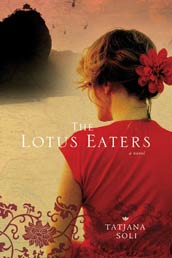 978-0312611576 – St. Martin’s Press – Hardcover – $24.99 (also available as an e-book)
I know I am not alone having read both Tatjana Soli’s The Lotus Eaters and Karl Marlantes’ Matterhorn – they are unavoidably linked as both are set in Vietnam during the American war. Of course they are incredibly different in outlook, approach and story, but reading them together is a wonderful experience. As Writerscast listeners know, I loved Matterhorn – I do think it is the great novel of the Vietnam War that we have been waiting to experience for several decades.
At the same time, Tatjana’s novel is simply remarkable. She writes beautifully, inhabits her characters, their place and time, their suffering, challenges and transcendent moments. As she told me in her interview, she fell in love with the Vietnam of that era from afar, and learned everything she could about it in order to be able to write this story. Her main character is a young photographer, Helen, who comes to Vietnam early in the war, mainly because her brother died there, and she is drawn to the place where he lost his life, to figuratively solve the mystery of his death. But that is just the beginning of her journey. The war, the soldiers and other journalists, and the people of Vietnam overtake her. She becomes deeply connected to this place and time. Soli brilliantly portrays the landscape and the people of Vietnam, the suffering and horror of a seemingly endless war, and the way that war overtakes every element of human and natural life.
Helen falls in love with another photographer, Sam Darrow, a grizzled veteran who teaches her how to cope with war, survive, thrive, document, participate, suffer and love the danger and energy of men at war. But the truest, and deepest story is her love for Linh, an exceptionally complicated Vietnamese former soldier, who has gone to work for the American news agency Helen works for. At the end of the book, which thankfully avoids the cliched approach of much modern fiction, Helen and Linh journey out of Vietnam through Cambodia, an even more horrendous landscape of death and together find their way to safety, a harrowing journey that mirrors where they have traveled emotionally through the course of the novel.
A woman among men sees war more clearly than most, I think; in this book, that vision focuses and transforms the reader as well. Tatjana Soli’s story about writing this book and what it means to her is great to hear. I think she is a terrific writer, worth reading, and well worth listening to as well.
Podcast: Play in new window | Download
Alice Lichtenstein: Lost: A Novel
May 24, 2010 by David
Filed under Fiction, WritersCast
 978-1439159828 – Scribner – Hardcover – $24.00 (also available as an e-book)
Some books are painful but must be read; the suffering of the characters we identify , endured, the story absorbed into one’s bones. I found that to be the case with Lost: A Novel by Alice Lichtenstein. This story operates on a number of levels, as a good novel should. Its three main characters are “lost” but each in different ways. And unlike the television show of the same name (I wonder how that congruency affects the potential readership of this novel?), the core of the story is not hidden away from us, the literal losses in this novel are by far not the deepest pain the characters endure, nor we the readers with them.
But don’t get wrong, this is not a novel so full of pain that it drives you away, or causes you to wonder why you are there. It’s not a book that is simply devoted to misery, and certainly not the kind of suffering that drives us away from the book or its characters. I was immediately drawn into the story, attracted to the characters, especially Susan, whose husband suffers from acute dementia, and has walked away into the winter, and Christopher, whose wife has left him. Their losses and their relationship is at the heart of the novel, and will ultimately unite them in redemption. I really liked the carefully woven web which connects the three key characters and the various subplots that eventually lead into the fullness of the novel.
And this is definitely a novel of winter in a cold country, which ironically provides much of the heat of the story. The coldness in the book is palpable – the author does live in and deeply feels the north country; she describes the cold like a native.
As much as I enjoyed the novel, I also very much enjoyed talking to the author, Alice Lichtenstein. In our conversation, we explored the complexity of the novel and her characters’ desires, their connections and the meaning of their losses. This is a book I recommend to friends, and an author whom I think has alot to say about human life and emotion, and importantly, who writes really well. Plus she is a good conversationalist. It’s not that easy a combination to find. 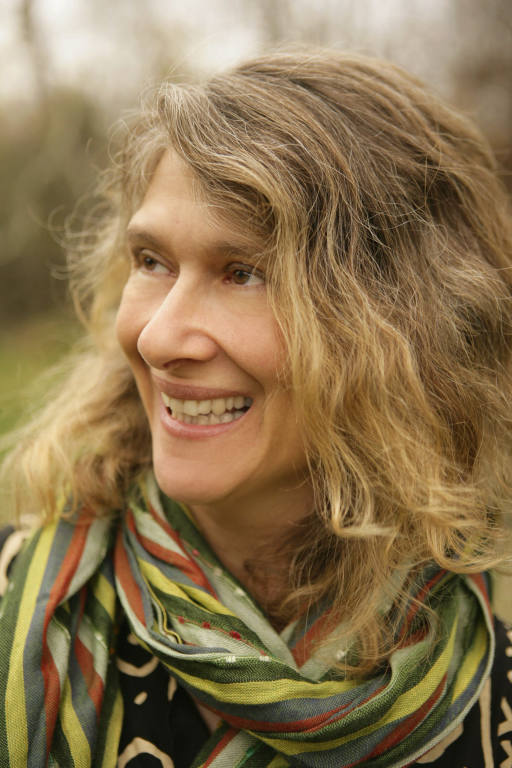
Podcast: Play in new window | Download
Aharon Appelfeld: Blooms of Darkness
May 15, 2010 by David
Filed under Fiction, WritersCast
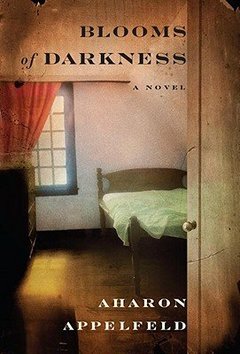 978-0805242805 – Shocken Books – Hardcover – $25.95
Aharon Appelfeld’s Blooms of Darkness is a powerful, majestic and triumphant coming of age novel. It’s told entirely in the first person, in sentences that are short, sharp, clear and beautifully composed. And since we know that it was written originally in Hebrew, the translator, Jeffrey M. Green, deserves special mention for the excellent English version we have here.
The book takes place in an unnamed city in Ukraine from 1943 to the end of the war, not even three years. The narrator and central character is Hugo, 11 years old at the outset of the novel, taken by his mother to stay with her closest friend Mariana, who turns out to be a prostitute living in a brothel. Much of the novel, therefore, takes place in the closet and room they share, under constant threat of exposure and death. The sense of living in a highly charged atmosphere, in such an internal space, is almost palpably claustrophobic, and inhabits every element of the story. The relationship between Hugo and Mariana is the core of the novel; they each suffer, they depend entirely upon each other. Their relationship grows and deepens through the course of the novel and its experience becomes a powerful transformative force for Hugo, who, like the author, survives the war as a completely different person than he was when his story begins.
Aharon Appelfeld has lived in Jerusalem for more than sixty years. He speaks many languages, but now writes only in Hebrew, which he learned only as an adult. We talked in depth about the events and characters in this beautiful novel, the nature of fiction as opposed to memoir, and about the author’s life as a Holocaust survivor and Jewish writer and teacher. Blooms of Darkness is a novel that has stayed with me since I read it; its story is one of hope and survival, as is the life of its author. This novel was transformative for me, as was my discussion with its brilliant author.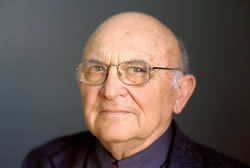
Podcast: Play in new window | Download
Joanna Smith Rakoff: A Fortunate Age
April 22, 2010 by David
Filed under Fiction, WritersCast
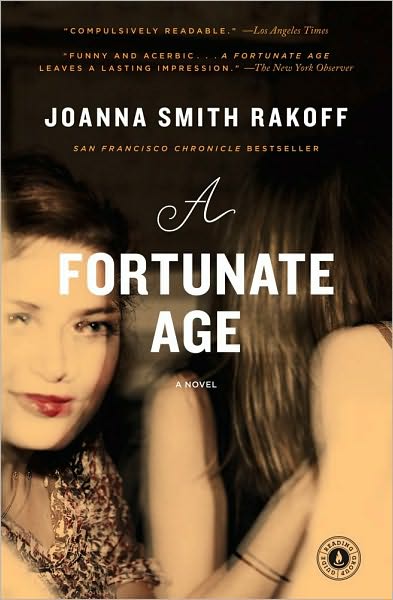 978-1416590804 – Paperback – Scribner – $15.00
Joanna Smith Rakoff is a wonderful writer – she’s a poet and an essayist, and her skill as a writer shines throughout her novel A Fortunate Age. This was not a book I expected to enjoy as much as I did; Rakoff won me over with the details of her sprawling story, and her characters, whom I similarly did not expect to like so much. The book is modeled directly on Mary McCarthy’s now classic, The Group, whose characters were Vassar women, in a story set in the 1930s and 1940s, whereas Rakoff’s characters are all friends from Oberlin, living in New York City in the late 1990s and the early years of the new century.
Like the novel Rakoff used for inspiration, this is a complicated story with a number of characters told over a number of years. This novel is set mostly in New York City with flashbacks to her characters’ earlier lives, especially their time in college in Oberlin, and some side stories as well. Essentially, it’s a coming of age story, and based on the supposition, I think, that for so many of us, the decade crossing from our twenties to our early thirties truly marks the painful bridge from still youthful adulthood to “real” life. It’s not an easy transition, and for many has the sense of hyper-focused reality that makes it all the more powerful for those experiencing it.
In talking with Joanna, I wanted to explore her interest in Mary McCarthy and her novel that A Fortunate Age is based on (and The Group is also a book I recommend to modern readers, it is a book that is probably more neglected than it should be). Joanna talks about the striking similarities she felt between the lives of her own age group and that of McCarthy’s and how that led her to write her own book. We also talked about the way her book is imagined and how through fiction she worked to represent a particular time and place, a milieu that she evokes through this story, the breadth of her characters and their individual linked stories. As she points out, this novel is, for her almost Victorian in the way its characters function against and within an overall cultural structure toward understanding their social being. There is alot going on in her book, which Rakoff manages quite masterfully, and her ability to handle complexity of story and persona shines in this interview as well. I’m certainly looking forward to reading her next book and to talking to her again.
Podcast: Play in new window | Download
Katharine Weber: True Confections
April 15, 2010 by David
Filed under Fiction, WritersCast
 978-0307395863 – Hardcover – Shaye Areheart Books – $22.00
What a fun (and challenging) book! Any novel that takes place in my favorite city, New Haven, Connecticut, is a book I will want to read. And I did really enjoy reading this book. Katharine Weber has created a wonderful main character, the complicated and challenging Alice Tatnall Ziplinsky, who has married into the family that runs the famous Zip’s Candy Company. True Confections is her story, and through her, it is also the story of an immigrant family in America, the romance of candy, family secrets, and the complexity of relationships. Because the entire story is told by Alice, we don’t ever quite know what is real and what is not, and we are forced to confront actual meaning of narrative.
So it turns out that this this funny, warm, and sometimes poignant novel masks an underlying depth of transposed loves, where family becomes defined by relationship rather than blood. In fact, almost every important character in the book has to deal with displacement. It’s great to read a book with depth and complexity. As the author says: “… at its heart, True Confections is about timeless and universal themes: love, betrayal, and of course, sweets.” I should also add that fire – of the destructive kind – also plays an important role in this story, so it’s not all about the sugar.
I enjoyed the opportunity to interview Katharine Weber about the novel, her characters, and of course, New Haven, where she lives, and where this novel is set. The book is rich in subjects and so is our discussion; we talked extensively about her novel, New Haven, the unreliability of narrators, candy, Jewish families and their businesses, and of course, candy. True Confections is a terrific novel; Katharine Weber is a fine writer who also knows how to talk engagingly about her work.
Podcast: Play in new window | Download
Karl Marlantes: Matterhorn: A Novel of the Vietnam War
April 10, 2010 by David
Filed under Fiction, WritersCast
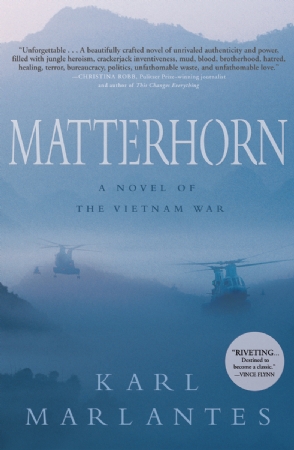 978-0802119285 – Hardcover – Grove/Atlantic – $24.95 (e-book edition available).
When I started reading books and interviewing authors for Writerscast, I made a commitment to only interviewing writers whose books I liked. In the year since, I’ve started quite a few I could not finish, but have read and liked a good fifty books of all different kinds. Several of them kept me up well past my already late bedtime, which is always a great feeling, even if it does make me tired.
I have to say that Matterhorn: A Novel of the Vietnam War, at 590 pages, kept me up later and longer than any book I have read in the past year. It’s just impossible to put down. Karl Marlantes takes you right into the psyche of a young, smart, scared Marine lieutenant, landing in ‘Nam for his first tour of duty early in the war, and keeps you with him and the soldiers he fights and dies with all the way through to the end of the book. There’s no doubt that the war in Vietnam was an unforgettable, painful, and highly charged experience for the men and women who were there.
Most of us who are old enough either to have been there, or to have lived through the war at home, have had difficulty finding a voice for what happened, and there has been precious little fiction to come out of that period in America’s history that has resonated as great art. I believe this book qualifies as such a thing. Marlantes has captured so much of what America was in the mid-to-late sixties, it becomes possible to inhabit that world, and most importantly, to understand it. Fiction transforms experience into transcendent understanding; a greater truth emerges. Through the terrible grind of war, the intensity of combat, individual heroism and pain, Marlantes has created a great work of art that celebrates the human spirit, a brilliantly glowing prism of suffering and soul.
Karl Marlantes went to Yale, was a Rhodes Scholar, and like his main character, was a Marine infantry officer in Vietnam where he was awarded the Navy Cross, the Bronze Star, two Navy Commendation Medals for valor, two Purple Hearts, and ten air medals. He wrote Matterhorn over a long period of time – 35 years at least – in many drafts and many forms. At various times, he attempted to have the novel published commercially, but it was never “the right time” for any publisher, until the tiny El Leon Literary Arts agreed to publish earlier this year. When they submitted the novel to Barnes & Noble’s Discover New Authors series, and the book was read by that company’s fiction buyer, Sessalee Hensley, who knew that this book would need a larger publisher to help bring it to the large audience it deserves.
Morgan Entrekin (whom I interviewed for Publishing Talks a few weeks ago and who told me about this book when I talked to him) brilliantly chose to put the full resources of Grove/Atlantic behind this book, and I believe it will end up being recognized as one of the great war novels America has produced. In our conversation, Karl Marlantes tells the story of his life and how this book came to be written, what it took to write it, and what it means for him now that it has been published. He is a terrific writer, and one who well deserves the accolades he and his novel are receiving now.
Podcast: Play in new window | Download
Derrick Jensen: Lives Less Valuable
April 4, 2010 by David
Filed under Fiction, WritersCast
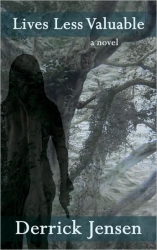 978-1-60486-045-0 – paperback – Flashpoint Press/PM Press – $18.00
Derrick Jensen is one of the most intelligent nonfiction writers around. His intellectual ability, brilliant writing and passionate voice for nature, for the powerless (not just people, but our fellow plant and animal species), and for the wounded, have made him a hero for many who oppose the structures of modern society. I was not familiar with his fiction before reading Lives Less Valuable. It’s very difficult to write fiction with a political message, but Jensen succeeds here. Even though the reader knows there is a political subtext, the story and the characters work well, they’re both believable and instructive.
The story centers on Malia, an environmental activist in a modern city where people are dying from a toxic river. The corporation that is at the root of the problem does everything possible to maximize its profits and does not care about the environmental cost borne by the poor people of the city. She is drawn into a complex web of events that forces her to make choices about her beliefs and what she must do to make meaningful change, and when she does, the effects of her choices resonate through the lives of many others. And they do make a difference.
Talking to Derrick Jensen was a great experience for me. He has so much to say about human beings, our relationship to nature, and the meaning of political action, not to mention writing and story telling. In this interview he talked about many subjects, including the nature of activism, the difference between writing fiction and nonfiction, and the details of the writing of this book. He’s as eloquent and brilliant a speaker as he is a writer. Derrick Jensen truly is one of our great public intellectuals. Please note that this interview is longer than usual at 32 minutes, but should reward the listener with a worthwhile experience.
Podcast: Play in new window | Download
E.M. Broner: The Red Squad
March 28, 2010 by David
Filed under Fiction, WritersCast
 978-0307-37791-3 – Hardcover – Pantheon – $24.00 (also available as an e-book; a paperback edition will be out in July 2010 – 978-0307-45584-0 – $15.00)
This is a sometimes hilarious, always engaging, warm and sexy novel about a group of midwestern academics from the sixties, told from the vantage point of Anka Pappas, who, forty years after this fraught period in her life, finds out the entire group was under surveillance by the federal, state and local governments. The story weaves together past and present, as Anka reconnects with her friends and associates – much drama, emotion, and memory unfolds, demonstrating that the past is not at all a dead or forgotten issue. It’s a complicated story that Ms. Broner tells quite skillfully, keeping alot of balls in the air (it does help to have a cast of characters in the front of the book to which the reader can refer, as there is alot of perspective changing going on, sometimes at very high speed).
Broner knows that the political engagement of the sixties and early seventies can not be seen as an isolated period. It is deeply connected to our present. And through this book, she shows us that the issues that engaged the young activists of that earlier period are still with us today. The power relationships in our society ultimately have not been changed; there is much work to be done, and much more engaged life to be lived.
There’s no preaching here, this is a book written by a smart, accomplished writer, who knows how to make a story work, and who clearly had a great time writing this book. Talking to Esther Broner about the book was alot of fun for me. In this interview, she talks about this book and how it relates to her own life. We talk about politics, the nature of fiction and nonfiction, memoir and story, reality and imagination, appearance and reality, and of course the connection between the activism of the 1960’s and how it relates to us today.
This is an enjoyable, funny book that carries a powerful political and emotional punch, written by a skilled and experienced author whose work deserves a wide audience.
Podcast: Play in new window | Download
Mary Sharratt: Daughters of the Witching Hill
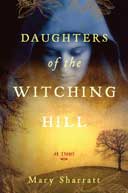
978-0547069678 – Hardcover – Houghton Mifflin Harcourt – $24.00
I really enjoyed reading this book and came to admire its author, not only for her writing skills, which are very good indeed, but because she was able to so deeply and movingly inhabit her characters in a place and time so foreign from our own. Mary Sharratt’s novel is transcendent in many ways. It centers around the years leading up to the 1612 Lancashire, England, witch trials that resulted in the executions of nine supposed witches. Mary Sharratt has brilliantly imagined her story, in which witchcraft is real, albeit not evil in the way the accusers made out. It’s much more complicated – in fact this witchcraft is the folk medicine and healing power of the local spirits of pre-Christian England. Never preachy, Sharratt gives us a countryside where politics and money separate people from one another, and crushing poverty is the lot of so many.
Widowed mother Bess Southerns supports her family and friends by healing the sick, telling fortunes, and blessing those facing misfortune, conjuring charmes that combine forbidden Catholic ritual, medicinal herbs, and guidance provided by her spirit-friend, Tibb. Bess is always careful, knowing the dangers her powers create for her but eventually everything unravels in a series of events that finally gets Bess, her family, friends and supporters into inevitable trouble with the law. Sharratt has crafted a beautiful historical novel that brings this era to life and gives its people she writes about a deep and complex life that many will find surprising. The conflicts between religions, as well as the conflicts between class are here, as well as mystery and suffering and beauty too. The book is set in the English countryside where the author, an American, currently lives. It’s clear to me that Mary Sharratt has allowed this place to inhabit her, as much as she it. She has put together a beautifully crafted story, full of complexity and compelling characters, and even knowing how the book must end, I was hooked from beginning to end.
As a reader I was transported there with her, and found her story uplifting, painful, and beautiful all at the same time. This is a wonderful book.
In my interview with Mary, we talked about her experience as an American living in the English countryside, and how she came to write this book. We talked about the story itself, her characters, their lives, the nature of English witchcraft of the 16th century, power and politics and the warp and weave of her excellent story.
Podcast: Play in new window | Download