
Publishing Talks: David Wilk interviews Matt Bell
April 10, 2011 by David
Filed under Ebooks and Digital Publishing, PublishingTalks, The Future
 In this series of interviews, called Publishing Talks, I have been talking to book industry professionals and other smart people about the future of publishing, books, and culture. This is a period of disruption and change for all media businesses. We must wonder now, how will publishing evolve as our culture is affected by technology, climate change, population density, and the ebb and flow of civilization and economics?
I hope these Publishing Talks conversations can help us understand the outlines of what is happening in the publishing industry, and how we might ourselves interact with and influence the future of publishing as it unfolds.
These interviews give people in and around the book business a chance to talk openly about ideas and concerns that are often only talked about “around the water cooler,” at industry conventions and events, and in emails between friends and they give people inside and outside the book industry a chance to hear first hand some of the most interesting and challenging thoughts, ideas and concepts being discussed by people in the book business.
Dzanc Books is an amazing collaboration of a number of relatively young writers, editors and literary activists. Founded only a few years ago (2006), it has now brought under its very broad umbrella, a large number of really interesting literary groups and activities, taking advantage of its nonprofit status to raise money for its work. Here’s a brief description of all the projects they are involved with now (taken from the Dzanc website):
• Publishes innovative and award-winning literary fiction, including short story collections and novels.
• Supports several editorially-independent imprints and literary journals, including Black Lawrence Press, OV Books, Keyhole Press, Starcherone, Monkeybicycle, and Absinthe: New European Writing
• Publishes The Collagist, a monthly online literary journal launched in August 2009
• Recognizes the best stories, poems, and non-fiction published online each year through the Best of the Web anthology series, now in its third year
• Provides low-cost writing instruction to beginning and emerging writers by connecting them with accomplished writers through the innovative Dzanc Creative Writing Sessions
• Funds the Dzanc Writers-in-Residence Program, which places published authors in public schools to teach creative writing to elementary and secondary students
• Conducts the yearly Dzanc Prize, which recognizes a single writer for both literary excellence and community service, as well as an annual short story collection competition
• Offers the Disquiet International Literary Program, a writing conference held in Lisbon, Portugal
• Creates internship opportunities for students looking to gain valuable experience in independent publishing
Dzanc has been on my radar for a while, and I subscribed to their really interesting e-book club, which is not only a cool idea for an independent press to undertake, but is also a great way for readers to easily find some new writers to read and enjoy. This particular project represents some great new thinking about ways that digital technology can create new opportunities for publishers to interact with readers. But Dzanc’s nonprofit model, and ability to foster new projects across a broad range of literary activities, and to almost amoeba-like, absorb new energy and ideas into its structure is a powerful organizational model that may offer hopeful lessons for literary writing across the country. Another corollary may be McSweeney’s, which has a similar umbrella approach to innovative and energetic literary projects.
I talked to Matt Bell, who is not only Editor for Dzanc Books, The Collagist and of Dzanc’s Best of the Web anthology series, but is himself a very interesting writer, author of How They Were Found, and three chapbooks and a number of magazines and anthologies. His book reviews and critical essays have appeared in The Los Angeles Times, American Book Review, and The Quarterly Conversation. We discussed the plethora of Dzanc activities, their overall business model, and in particular their digital publishing program, all of which I think is valuable for anyone thinking about how publishing and writing are evolving into a new and vibrant future. 
Podcast: Play in new window | Download
Publishing Talks: David Wilk interviews Charles Alexander
March 28, 2011 by David
Filed under Ebooks and Digital Publishing, Publishing History, PublishingTalks, Technology, The Future
 In this series of interviews, called Publishing Talks, I have been talking to book industry professionals and other smart people about the future of publishing, books, and culture. This is a period of disruption and change for all media businesses. We must wonder now, how will publishing evolve as our culture is affected by technology, climate change, population density, and the ebb and flow of civilization and economics?
I hope these Publishing Talks conversations can help us understand the outlines of what is happening in the publishing industry, and how we might ourselves interact with and influence the future of publishing as it unfolds.
These interviews give people in and around the book business a chance to talk openly about ideas and concerns that are often only talked about “around the water cooler,” at industry conventions and events, and in emails between friends and they give people inside and outside the book industry a chance to hear first hand some of the most interesting and challenging thoughts, ideas and concepts being discussed by people in the book business.
Charles Alexander is the founder and prime mover behind Chax Press, a nonprofit publisher and studio. As he describes it on the website Chax “publishes writing that does not take things for granted — things like “what is a poem,””what is an author,” or “what does it mean to read?” Walt Whitman said, “Reading is a gymnast’s act.” We strive to make books that reward such exercise in stunning ways.”
Whether working with handset type, Vandercook proof press, carved wood blocks, linen threads and fine papers, or with computers, Chax Press books celebrate the changing shape of American poetry by presenting experimental works with humanist commitment. Chax also brings its work to the public in ways other than in books, sponsoring poetry readings, writers- and artists-in-residence, exhibitions, and more events that encourage a public investigation as to the nature and importance of contemporary poetry and book arts.
Chax Press was founded in 1984 in Tucson. More than 50 books have followed between then and the present, including several published during Chax’s three years (1993-96) in Minneapolis, where Alexander served as Executive Director of Minnesota Center for Book Arts.
In general, Chax Press publishes experimentalist works that share a strong humanist commitment. Chax Press chapbooks are published in small editions and mix desktop publishing technologies with hand bookbinding practices and, at times, fine art papers.
I’ve known Charles Alexander for many years and love the work he has done with Chax. I thought it would be extremely rewarding to talk to him about modern publishing and his vision of books and readers, especially now, when the current talk about digital publishing dominates our environment. Anyone who has set type, printed pages and made paper by hand for a living is certain to possess a valuable perspective on the literal relationship between word and eye that still is so important to the work of publishers in any environment. Charles and I had a great time talking about Chax and its wonderful work.
The Chax website is well worth a visit, as is Charles’ blog, and if you find yourself in Tucson, go see the Chax Press facility, which is a wonderful and central hub of the Tucson poetry and arts community.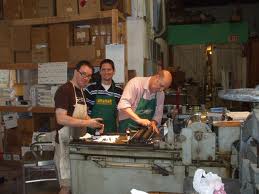

Podcast: Play in new window | Download
Publishing Talks: David Wilk interviews Michael Jacobs
March 19, 2011 by David
Filed under Ebooks and Digital Publishing, Publishing History, PublishingTalks, The Future
 In this series of interviews, called Publishing Talks, I have been talking to book industry professionals and other smart people about the future of publishing, books, and culture. This is a period of disruption and change for all media businesses. We must wonder now, how will publishing evolve as our culture is affected by technology, climate change, population density, and the ebb and flow of civilization and economics?
I hope these Publishing Talks conversations can help us understand the outlines of what is happening in the publishing industry, and how we might ourselves interact with and influence the future of publishing as it unfolds.
These interviews give people in and around the book business a chance to talk openly about ideas and concerns that are often only talked about “around the water cooler,” at industry conventions and events, and in emails between friends and they give people inside and outside the book industry a chance to hear first hand some of the most interesting and challenging thoughts, ideas and concepts being discussed by people in the book business.
Michael Jacobs is the Chief Executive Officer at Abrams Books. He started out in publishing as a page in the main branch of the Oakland (CA) Public Library and was the first sales rep hired by Bookpeople, the innovative and much missed employee-owned Berkeley wholesaler of independent press books (which is when I first met him – late 1970s).
From there Michael moved to Penguin USA, starting as a sales representative based in the Pacific Northwest and quickly rising to become President of the Viking Penguin division and a member of the board of directors. He then served as Executive Vice President of Simon and Schuster’s Trade division, Publisher of the Free Press, and Senior Vice President in Scholastic’s trade book group.
At Scholastic, Michael was responsible for the publishing, marketing, sales and distribution of the most successful books in publishing history—the first five Harry Potter books, which sold over 80 million copies in the US. He joined Abrams in 2004, and has directed the company successfully through virtually a complete business makeover. During his time at Abrams, the company has launched the best-selling Wimpy Kid series – which has sold 42 million copies in North America and has been published in over 36 countries, as well as a number of other highly successful books and series.
Founded by Harry N. Abrams in 1949, Abrams was the first company in the United States to specialize in the creation and distribution of art and illustrated books. It is now a subsidiary of La Martinière Groupe. Abrams is best known as a publisher of high quality illustrated books, especially art, photography, cooking , gardening, crafts, sports and children’s books. In recent years, under Michael’s direction Abrams has successfully broadened its reach, especially in pop culture and comic arts. I wanted to talk to Michael about his work at Abrams – not the least because illustrated books have faced so many different kinds of challenges in the past few years and he and his team at Abrams have been so successful throughout. But I also think his experience across a variety of trade publishing genres and company sizes (independent press, adult, childrens and illustrated books, large companies as well as smaller ones) gives him a unique perspective on the past, present, and future of publishing, in both print and digital formats that is valuable for others in the book industry to hear.
Michael’s success at Abrams may provide ideas and inspiration to many in publishing who are looking for ways to help remake their companies as the retail landscape continues to evolve and change. He is always cogent and incisive in his thoughts, and is someone whom I have always enjoyed talking with about books and ideas.
Podcast: Play in new window | Download
Publishing Talks: David Wilk interviews Phil Ollila
March 9, 2011 by David
Filed under Ebooks and Digital Publishing, Publishing History, PublishingTalks, Technology, The Future
 In this series of interviews, called Publishing Talks, I have been talking to book industry professionals and other smart people about the future of publishing, books, and culture. This is a period of disruption and change for all media businesses. We must wonder now, how will publishing evolve as our culture is affected by technology, climate change, population density, and the ebb and flow of civilization and economics?
I hope these Publishing Talks conversations can help us understand the outlines of what is happening in the publishing industry, and how we might ourselves interact with and influence the future of publishing as it unfolds.
These interviews give people in and around the book business a chance to talk openly about ideas and concerns that are often only talked about “around the water cooler,” at industry conventions and events, and in emails between friends and they give people inside and outside the book industry a chance to hear first hand some of the most interesting and challenging thoughts, ideas and concepts being discussed by people in the book business.
Philip Ollila (widely known as Phil in the book industry) is the Chief Content Officer of Ingram Content Group Inc., one of the largest distributors of book content and providers of digital printing in the North American book industry. Phil is responsible for Ingram Content Group’s publisher facing business, and has been instrumental in leading the transformation of Ingram from a traditional wholesale service provider, into what is now a fully integrated solutions company for clients. Ingram combines wholesale distribution, print-on-demand, digital distribution, inventory management and comprehensive worldwide services for both physical and digital content.
Phil leads a number of Ingram business units including wholesale merchandising, Lightning Source, Ingram Publisher Services and digital distribution through CoreSource® and also heads up Ingram Content Group marketing. Before joining Ingram, where he has held several leadership positions, he was Vice President of Marketing and Merchandising for Borders.
Anyone in the book business, and many people outside it know about Ingram. It is one of the two large book wholesalers transitioning from a key role in the physical supply chain between publishers and retailers. Perhaps earlier than any other large company in the industry, Ingram had the foresight to invest in a range of services that would enhance their offerings to both their suppliers (mainly publishers) and their customers (bookstores, libraries and many other retailers). In many ways, it is only the two large former traditional wholesalers, Ingram and its competitor Baker & Taylor that have the unique perspective and ability to act as really powerful and influential transformative agencies as the book business evolves into a combination of print and digital products.
Phil Ollila is therefore now in a key role at a tremendously interesting and fast moving business that possesses a great deal of information valuable to publishers and to anyone interested in how publishing, books and readers will interact in the future, both near term and much, much farther into the future.
Podcast: Play in new window | Download
Publishing Talks: David Wilk interviews Mike Shatzkin
February 28, 2011 by David
Filed under Ebooks and Digital Publishing, Publishing History, PublishingTalks, Technology, The Future
 In this series of interviews, called Publishing Talks, I have been talking to book industry professionals and other smart people about the future of publishing, books, and culture. This is a period of disruption and change for all media businesses. We must wonder now, how will publishing evolve as our culture is affected by technology, climate change, population density, and the ebb and flow of civilization and economics?
I hope these Publishing Talks conversations can help us understand the outlines of what is happening in the publishing industry, and how we might ourselves interact with and influence the future of publishing as it unfolds.
These interviews give people in and around the book business a chance to talk openly about ideas and concerns that are often only talked about “around the water cooler,” at industry conventions and events, and in emails between friends and they give people inside and outside the book industry a chance to hear first hand some of the most interesting and challenging thoughts, ideas and concepts being discussed by people in the book business.
Mike Shatzkin, is the founder and operator of a well known book industry consulting business called The Idea Logical Company. He’s also a blogger extraordinaire who writes incisively about issues in the book industry at The Shatzkin Files and who is never afraid to make public predictions about the future of books and the book business he knows so well, having essentially grown up in the business from an early age. He is an organizer of conferences, and a frequent speaker at publishing industry gatherings large and small.
The description of Idea Logical on its website sums up Mike’s role pretty succinctly: “The Idea Logical Company consults to book publishers and their trading partners about the changes engendered by digital transformation to every component of the value chain.” Mike has spent thirty years addressing all sorts of issues and problems for publishing and retailing clients of all sizes. In recent years, his work has focused on the changes created for the publishing industry by a variety of new and emerging digital technologies. He was an early advocate of digital publishing, and also established the concept of “verticality” or subject specific publishing as a way to organize publishing around digital technologies.
Beyond his interest and expertise in publishing, Mike is also a writer and an active entrepreneur. In this interview, we did not discuss any of his baseball related writing, editing, publishing and website development – if we had, it’s likely we would have used up all our time talking about our mutually shared passion, a subject in which Mike has also had an entire career simultaneously with his consulting work and constant thinking and analysis about books, publishers, readers and the business that serves them.
In my opinion, Mike talks just as clearly and intelligently, if not more so, than he writes, which given his writing talents, is saying alot. We certainly had a lot of fun in this conversation, which I think will be useful and interesting to anyone interested in the future of books and reading. As Mike says in his latest blog post: “Sometimes, and it would seem quite often these days, the future comes faster than you expected it.”
Podcast: Play in new window | Download
Publishing Talks: David Wilk interviews Don Leeper
February 14, 2011 by David
Filed under Ebooks and Digital Publishing, PublishingTalks, Technology, The Future
 In this series of interviews, called Publishing Talks, I have been talking to book industry professionals and other smart people about the future of publishing, books, and culture. This is a period of disruption and change for all media businesses. We must wonder now, how will publishing evolve as our culture is affected by technology, climate change, population density, and the ebb and flow of civilization and economics?
I believe these Publishing Talks conversations can help us understand the outlines of what is happening in the publishing industry, and how we might ourselves interact with and influence the future of publishing as it unfolds.
These interviews give people in and around the book business a chance to talk openly about ideas and concerns that are often only talked about “around the water cooler,” at industry conventions and events, and in emails between friends and they give people inside and outside the book industry a chance to hear first hand some of the most interesting and challenging thoughts, ideas and concepts being discussed by people in the book business.
Don Leeper is the founder of Bookmobile, based outside of Minneapolis, providing outsourced production services to independent and academic publishers all over the world. The company was founded as Stanton Publication Services in 1982, and has grown significantly over the years, now offering not only pre-press services for print books, as well as growing digital printing business, an expanding range of digital book production services, including ebooks and apps, and even an off-shoot business for book distribution. OR Books has hired Bookmobile to provide all of its production services, as some other publishers have also done.
What attracted my attention most recently to this company is their announcement of Ampersand, an iPad app created to preserve the layout and pagination of poetry (and of course any other book for which specific line and page layouts are critical). It’s been one of the raps on ebooks that poetry essentially does not work in the Kindle (mobi) and other popular reading devices or platforms that use ePub as the format for their content. Ampersand enables publishers (and poets who want to publish their own work) to preserve complex page compositions easily and as an app provides both a reading environment and a sales structure on the iPad (and presumably the iPhone and iPod as well).
Clearly Leeper and his crew are creative and working hard to provide a wide range of needed services for independent and academic publishers, for whom the fast changing digital environment presents significant challenges. He’s also a great example of someone who has been agile in moving from traditional publishing workflows into new digital realms while retaining a strong commitment to the important values of design and interface that will always be necessary for writers, publishers and readers, whatever the devices or delivery systems they use for reading.
Ampersand shows alot of promise for many independent publishers of poetry and other types of work where the actual page concept still matters, especially because cost of production matters most for small circulation content (there are certainly other PDF based e-book publishing methods available, but most are more costly and not highly automated). A few poetry publishers are on board with Bookmobile to pilot the Ampersand project, and we’ll be interested to see some finished work in coming months.
In this interview, Don and I had a wide ranging and lively conversation about digital publishing, poetry, and the future of print and ebooks.

Podcast: Play in new window | Download
Publishing Talks: David Wilk interviews Rick Richter
February 2, 2011 by David
Filed under Ebooks and Digital Publishing, PublishingTalks, The Future
 In this series of interviews, called Publishing Talks, I have been talking to book industry professionals and other smart people about the future of publishing, books, and culture. This is a period of disruption and change for all media businesses. We must wonder now, how will publishing evolve as our culture is affected by technology, climate change, population density, and the ebb and flow of civilization and economics?
I believe these Publishing Talks conversations can help us understand the outlines of what is happening in the publishing industry, and how we might ourselves interact with and influence the future of publishing as it unfolds.
These interviews give people in and around the book business a chance to talk openly about ideas and concerns that are often only talked about “around the water cooler,” at industry conventions and events, and in emails between friends and they give people inside and outside the book industry a chance to hear first hand some of the most interesting and challenging thoughts, ideas and concepts being discussed by people in the book business.
I’ve known Rick Richter for a number of years. He is smart, energetic and incredibly creative. I am told he plays a mean guitar too. He’s unusual in publishing for having been a leader in both sales and editorial, and for being at heart, an innovator and entrepreneur. I have talked to him a number of times over the past couple of years about his thinking and ideas, and have been interested in his new venture, Ruckus Media since it was still a brainstorm generated idea. Unlike many brainstormed ideas, this one has become real, and very quickly too.
Ruckus represents at least one budding trend in publishing for kids – which is to be born digital and to stay that way. Print, ink and paper will be someone else’s job. At a recent Digital Book World presentation, Rick’s signature statement about his new work was this: “books you can play with and games you can read.”
Rick is currently President, CEO, and Chair, Ruckus Media Group. Previous to founding Ruckus, he was President and Publisher of the Simon & Schuster Children’s Division (1996 – 2008). In 1990, Rick co-founded Candlewick Press, the prestigious children’s publisher based in Boston.
“The goal of Ruckus is to combine the most creative minds in children’s media with tremendously exciting new mobile devices. We’ll be satisfied when a mom or dad can hand their phone or tablet to their child without one ounce of guilt, knowing that the experience the child is about to have will entertain them, challenge them, perhaps make them giggle, and be utterly satisfying.” Beginning in May, Rick will be an adjunct professor at the NYU Master of Science Program in Publishing.
Rick and I had a great talk, not just about what he is doing at Ruckus to make change and create a new way of publishing for kids, but also about the future of digital publishing and much more. Ruckus, along with a number of other new digital publishers are in the process of establishing new ways for children to experience books and reading in some very exciting ways. And it looks like they are having alot of fun doing it.
Podcast: Play in new window | Download
Publishing Talks: David Wilk Interviews Clint Greenleaf
January 6, 2011 by David
Filed under PublishingTalks, The Future
 In this series of interviews, called Publishing Talks, I have been talking to book industry professionals and other smart people about the future of publishing, books, and culture. This is a period of disruption and change for all media businesses. We must wonder now, how will publishing evolve as our culture is affected by technology, climate change, population density, and the ebb and flow of civilization and economics?
I believe these Publishing Talks conversations can help us understand the outlines of what is happening in the publishing industry, and how we might ourselves interact with and influence the future of publishing as it unfolds.
These interviews give people in and around the book business a chance to talk openly about ideas and concerns that are often only talked about “around the water cooler,” at industry conventions and events, and in emails between friends and they give people inside and outside the book industry a chance to hear first hand some of the most interesting and challenging thoughts, ideas and concepts being discussed by people in the book business.
Clint Greenleaf began the Greenleaf Book Group after writing and publishing two books, selling foreign publication rights, and securing a multibook contract with Adams Media. Since then, he has built the company into one of the industry’s leading book distributors. Greenleaf Book Group has represented more than five hundred titles and is one of the fastest-growing companies in America. Clint speaks at conferences and seminars across the country and has been featured in the Wall Street Journal, Inc. magazine, and Entrepreneur, and he is also a contributor to Inc.com. Greenleaf has had a number of publishing and distribution successes and has become a viable alternative for many authors and independent publishers that prefer an entrepreneurial approach to publishing that provides them with more control over the publishing process than the traditional publishing model.
Greenleaf Book Group describes itself: “Our publishing model was designed to support the independent author and to make it possible for writers to retain the rights to their work and still compete with the major publishing houses. In addition to the books we publish, we distribute select titles from small and independent publishers to major trade outlets, including bookstores, libraries, and airport retailers.” Clint Greenleaf is a dynamic and intelligent business leader who brings a powerful entrepreneurial spirit and positive outlook to the publishing process. He recognizes that companies must constantly innovate in order to succeed, remain committed to doing quality work and provide significant value throughout their efforts. Greenleaf’s success is evidence that there is growing demand for alternative publishing and distribution models as the bookselling landscape continues to change.
In our discussion, we covered a wide range of topics relating to the ways that publishing and distribution are changing and Greenleaf’s past, present and future work. I think it will be a fascinating conversation for anyone interested in how publishing is evolving today.
Podcast: Play in new window | Download
Publishing Talks: David Wilk interviews Allee Willis
December 28, 2010 by David
Filed under PublishingTalks, Technology, The Future
 In this series of interviews, called Publishing Talks, I have been talking to book industry professionals and other smart people about the future of publishing, books, and culture. This is a period of disruption and change for all media businesses. We must wonder now, how will publishing evolve as our culture is affected by technology, climate change, population density, and the ebb and flow of civilization and economics?
I hope these Publishing Talks conversations will help us understand the outlines of what is happening, and how we might ourselves interact with and influence the future of publishing as it unfolds.
These interviews give people in and around the book business a chance to talk openly about ideas and concerns that are often only talked about “around the water cooler,” at industry conventions and events, and in emails between friends and they give people inside and outside the book industry a chance to hear first hand some of the most interesting and challenging thoughts, ideas and concepts being discussed by people in the book business.
Allee Willis is one of my all-time favorite people. She is best known as a spectacular and hugely successful songwriter; her songs for Earth, Wind and Fire and the Pointer Sisters were giant hits, she wrote the theme song for “Friends,” the music for the Oprah Winfrey produced Broadway musical production of “The Color Purple, collaborated with the web sensation Pomplamoose (Jungle Music), and as of the date of this posting, her song “I’m Here” was sung by Jennifer Hudson for Oprah Winfrey’s Kennedy Center Honor Award. But all of this musical success notwithstanding, as she herself says, Allee is “a one-woman creative think-tank. A multi-disciplinary artist and visionary thinker whose range of imagination and productivity knows no bounds, her success exuberantly defies categorization-‘unique’ pales as a descriptor.” You have to visit her website to begin to get an idea of what a creative powerhouse she is. Her Allee Willis Museum of Kitsch is not to be missed. She’s constantly creating, integrating music, art, video, multi-media technology and lifestyle via a series of work which she co-composes, sings, plays, produces, draws, animates, directs, designs web worlds for and stars in. The first release, “Allee Willis Presents Bubbles & Cheesecake “It’s A Woman Thang”-part of a 6-song collaboration with singer-songwriter Holly Palmer (aka Cheesecake) was selected as Official Honoree in the 2008 Webby Awards, and won three 2008 W3 Awards. Her second video, “Allee Willis Presents Bubbles & Cheesecake “Editing Is Cool” was also ‘featured’ on YouTube. At one point, Willis’ 2009 video “Hey Jerrie,” co-starring 91-year-old female drummer on an oxygen tank Jerrie Thill, was the 12th most popular video in the world on YouTube.
I wanted to talk to Allee mainly because she has been working with the internet in her work almost since the ‘web went public – as she points out, the ‘web itself is her medium. She is the ultimate social being, her work itself is social art, her medium is her life. Anyone working in an artistic discipline today can learn from what she knows and how she conducts herself as an artist. I loved talking to Allee about her work and what she knows – which is a tremendous amount. And now I am addicted to her website too. Writers and publishers, please pay attention to what she has to say: art is social! books are bait!
Podcast: Play in new window | Download
Publishing Talks: David Wilk Interviews Bruce McPherson
December 17, 2010 by David
Filed under Publishing History, PublishingTalks, The Future
 In this series of interviews, called Publishing Talks, I have been talking to book industry professionals and other smart people about the future of publishing, books, and culture. This is a period of disruption and change for all media businesses. We must wonder now, how will publishing evolve as our culture is affected by technology, climate change, population density, and the ebb and flow of civilization and economics?
I hope these Publishing Talks conversations will help us understand the outlines of what is happening, and how we might ourselves interact with and influence the future of publishing as it unfolds.
These interviews give people in and around the book business a chance to talk openly about ideas and concerns that are often only talked about “around the water cooler,” at industry conventions and events, and in emails between friends and they give people inside and outside the book industry a chance to hear first hand some of the most interesting and challenging thoughts, ideas and concepts being discussed by people in the book business.
I have had some really interesting conversations with people in the publishing industry this year. The present is a time of great upheaval and change for many in publishing. Recently, I had the pleasure of speaking with Andrew Steves of Canada’s relatively tiny Gaspereau Press, just before their book, The Sentimentalists won that country major book award, the Scotiabank Giller Prize. Soon after, I was able to talk to Bruce McPherson of McPherson & Co., about his many years of publishing and the great news that his recently published Lord of Misrule by old friend Jaimy Gordon had won the National Book Award (quite a surprise for all!). It’s unusual enough for a major national book award to recognize the work of independently published books, but to have two almost simultaneously in both the US and Canada must mean something about these times. In other words, I don’t think these are outlier events.
As it happens, I’ve known Bruce and Jaimy for about as long as I have known anyone, going back to when Bruce began publishing as Treacle Press right after graduating Brown in the early 1970’s. The first book he published was Jaimy’s superb and inventive novel, Shamp of the City-Solo. I read that book because Bruce told me I must, and loved its wildly inventive story and Jaimy’s brilliant writing. I’ve been a fan and reader of hers ever since. Bruce has published a wide range of interesting books in film, art and fiction. He’s developed a clear vision of who, what and how he will operate as a publisher, and has managed to invent a working business model that in many ways reflects his own independent thinking and unwillingness to compromise art for common business demands.
In many ways, the recognition of Jaimy Gordon as a great writer is a recognition of Bruce McPherson as a great publisher, and a validation of a somewhat old fashioned notion of commitment and loyalty to art, talent and human beings. Writers as living, breathing, suffering artists whose publishers support them, prod them to do their best work, and love them unabashedly and without compromise. That may sound sentimental in these harsh times, but it’s a sentiment I am willing to cherish and celebrate. I admire Bruce and the body of work he has produced in more than 35 years of struggle.
Neither Bruce nor McPherson & Co. promote anything other than the books and authors themselves, i.e., it’s not about the publisher, it’s about the books. I very much enjoyed the opportunity, therefore, to shine a bit of light on Bruce and his work, and hopefully to illuminate something of what his publishing has meant and means for our culture. And of course the experience of winning the NBA is present throughout. I hope listeners will enjoy this podcast in tandem with my current interview with Jaimy Gordon as well.
Podcast: Play in new window | Download