
David Wilk interviews Peter Costanzo of Associated Press
October 2, 2016 by David
Filed under Ebooks and Digital Publishing, PublishingTalks, Technology, The Future
 Publishing Talks began as a series of conversations with book industry professionals and others involved in media and technology about the future of publishing, books, and culture. As we continue to experience disruption and change in all media businesses, I’ve wanted to talk with people involved in our industry about how publishing might evolve as our culture is so influenced by technology, within the larger context of a change across human civilization.
This series has expanded to include conversations that go beyond the future of publishing. I’ve talked with editors and publishers who have been innovators and leaders in independent publishing in the past and into the present, and will continue to explore the ebb and flow of writing, books, and publishing in all sorts of forms and formats, as change continues to be the one constant we can count on.
Back in 2011 I spoke with my friend Peter Costanzo, who even then was one of the most experienced and knowledgeable digital thinkers in the book industry. Five years later, as digital publishing has evolved and to some extent stabilized, I thought it would be useful to speak to him again to benefit from his perspective as an active participant in this aspect of our industry.
Peter is now the Digital & Archival Publishing Manager for The Associated Press. He is an award-winning book producer who also teaches the “New Media Technology: Formats and Devices” course at NYU.
Peter is also now known for being the person who taught Donald J. Trump (yes that guy) how to use Twitter! This story was widely reported earlier this year, gaining Peter considerable attention and perhaps, notoriety. Here is what the AP said in its story:
Costanzo crossed paths with Trump in 2009 when he was working as online marketing director for the publisher putting out the businessman’s book, “Think Like a Champion.” Twitter was still in its infancy at the time. But Costanzo saw the 140-character-per-message platform as a new tool that the real estate mogul could use to boost sales and reach a broader audience.
He was given seven minutes to make his pitch to Trump — “Not five minutes, not 10,” Constanzo said — in a boardroom at Trump Tower in Manhattan that appeared to be the same one used on Trump’s reality television show.
Trump liked what he heard.
“I said, ‘Let’s call you @RealDonaldTrump — you’re the real Donald Trump,'” Costanzo said. “He thought about it for a minute and said, ‘I like it. Let’s do it.'”
Our talk for this occasion focused on much more serious and meaningful matters, however.
You can follow Peter on Twitter @PeterCostanzo and Writerscast @writerscast.
Podcast: Play in new window | Download
Publishing Talks: David Wilk interviews Glenn Nano
April 6, 2013 by David
Filed under Ebooks and Digital Publishing, PublishingTalks, Technology, The Future
 In this series of interviews, called Publishing Talks, I have been having conversations with both book industry professionals and others with interesting perspectives about the future of publishing, books, and culture. This is a period of disruption and change for all media businesses. We must wonder now, how will publishing evolve as our culture is affected by technology, climate change, population density, and the ebb and flow of civilization and economics?
I hope these Publishing Talks conversations can help us understand the outlines of what is happening in, around and to the publishing industry, and how we might ourselves interact with and influence the future of publishing and culture as our interesting present unfolds into the future.
These interviews give people in and around the book business a chance to talk openly about ideas and concerns that are often only talked about “around the water cooler,” at industry conventions and events, and in emails between friends and they give people inside and outside the book industry a chance to hear first hand some of the most interesting and challenging thoughts, ideas and concepts being discussed by people in the book business.
Glenn Nano is a truly amazing guy I ran across first when he founded Code Meet Print, a “community at the intersection of texts + technology that will contemplate, define, and help build better interfaces for engagement, more relevant curators for discovery, and more useful marketplaces for dissemination of great writing and content to eager readers.” And at Tools of Change this year in New York, I had the pleasure of moderating a panel called “Beyond Devices: Is The Real Value of eBooks Social Engagement?” on which Glenn appeared, and impressed me with his incisive and original thinking.
Evidently, Glenn is a serial entrepreneur who brings great ideas into being, or spurs them forward. Aside from CodeMeetPrint, he also created Dictator Goods (you have to visit this site), was a principal at Centurion Venture Partners, and most recently engineered a very interesting start up called AnswerQi (“tech answers from real experts in real-time”, which I think is taking up most of his abundant energy for the moment.
As Glenn wrote in the introduction to Code Meet Print: “Words are finding new modalities, and innovators across disciplines have begun to experiment with how technology might improve their creation, curation, and consumption.” This sums up very nicely what so many people involved in writing, publishing and reading are trying to understand right now.
I am very pleased to have had the opportunity to talk with Glenn about his views of the current state of publishing, storytelling and writing, and his views about where we are headed. I think you will find this conversation to be among the most interesting on these now well-worn subjects that you will hear or read. Glenn thinks about the digital present in a way that I think alot of people whose roots are in traditional publishing simply do not natively understand. So there is always something for us to learn from what he has to say.
Alert to listeners, we were having alot of fun talking, so this interview runs longer than usual at 46 minutes. 
Podcast: Play in new window | Download
Publishing Talks: David Wilk interviews Cevin Bryerman
May 29, 2011 by David
Filed under Ebooks and Digital Publishing, Publishing History, PublishingTalks, Technology, The Future
 In this series of interviews, called Publishing Talks, I have been talking to book industry professionals and other smart people about the future of publishing, books, and culture. This is a period of disruption and change for all media businesses. We must wonder now, how will publishing evolve as our culture is affected by technology, climate change, population density, and the ebb and flow of civilization and economics?
I hope these Publishing Talks conversations can help us understand the outlines of what is happening in the publishing industry, and how we might ourselves interact with and influence the future of publishing as it unfolds.
These interviews give people in and around the book business a chance to talk openly about ideas and concerns that are often only talked about “around the water cooler,” at industry conventions and events, and in emails between friends and they give people inside and outside the book industry a chance to hear first hand some of the most interesting and challenging thoughts, ideas and concepts being discussed by people in the book business.
Cevin Bryerman is Publisher and Vice President of Publishers Weekly, the well-known international trade magazine for book publishing. Recently Cevin spoke at Montreal’s Atwater Library and Computer Centre about the changes revolutionizing the publishing world. His message there was reported to be “fatalistic, prescriptive, dismaying, and upbeat,” which probably reflects the way a large number of publishing people feel these days.
“The digital age is definitely here,” he told an auditorium packed with book industry professionals, “and you have to embrace it.” Indeed, the revolution has not left PW untouched, and the challenge that magazine has faced in transforming itself from a traditional subscription based print trade magazine into something very different is a continuing process.
I’m hopeful that our wide ranging and hopefully provocative conversation will spur further discussions and perhaps even raise some controversy about the current condition and future prospects for all the elements of the publishing ecosystem. Publishers Weekly online here. Very interesting (though brief) history of PW in Wikipedia here.
Podcast: Play in new window | Download
Publishing Talks: David Wilk interviews Liza Daly
November 5, 2010 by David
Filed under Ebooks and Digital Publishing, PublishingTalks, Technology, The Future
 In this series of interviews, called Publishing Talks, I have been talking to book industry professionals and other smart people about the future of publishing, books, and culture. This is a period of disruption and change for all media businesses. We must wonder now, how will publishing evolve as our culture is affected by technology, climate change, population density, and the ebb and flow of civilization and economics?
I hope these Publishing Talks conversations will help us understand the outlines of what is happening, and how we might ourselves interact with and influence the future of publishing as it unfolds.
These interviews give people in and around the book business a chance to talk openly about ideas and concerns that are often only talked about “around the water cooler,” at industry conventions and events, and in emails between friends and they give people inside and outside the book industry a chance to hear first hand some of the most interesting and challenging thoughts, ideas and concepts being discussed by people in the book business.
Liza Daly and her partner Keith Fahlgren work together as ThreePress Consulting, providing “expert consulting services and software engineering in digital publishing.” Liza’s name comes up constantly in discussions about ebooks and the emerging technology of publishing. Recently I’ve become interested in how HTML5 operates, as this new standard appears to have a great deal of potential use for handling online display and consumption of digital publishing in a web browser environment and elsewhere. Liza created Bookworm as a free platform for reading ePub format ebooks online and now with Keith, she has developed Ibis Reader, which enables reading ebooks on computers and devices without having to download ebook files or even understand how ebook files and devices work (and Ibis is written in HTML5).
In addition Liza and Keith are active in the open source technology community and are strong advocates for experimentation, agile development, and innovation in publishing. In April of 2010, Liza was elected to the IDPF Board of Directors. Both Keith and Liza are members of various IDPF EPUB Working Groups, including the EPUB 3.0 Working Group. Liza was a member of the advisory board for the Web 2.0 Expo NYC conference in 2008 and 2009, and was also on the board for O’Reilly’s digital publishing conference, Tools of Change 2009-2011.
I wanted to talk to Liza to better understand the emerging landscape of ebooks and e-reading as she sees it from her perspective. She is so deeply involved in new technologies and also has a terrific understanding of use and useability, which of course are critical for the future of digital publishing. I’ve used Ibis Reader now and it works really well. What comes next will be very interesting to see and hopefully this talk with Liza will be useful to listeners who are interested, as I am, in how new technologies will create opportunities for publishers, writers and readers in the near future. It’s critical that we understand how we interact with new software, how its use affects our comprehension of information and ideas, and how we can in turn influence the emerging future we are about to inhabit. Since Liza is one of the proverbial “smartest people in the room” I can’t think of anyone better from which to learn.
Podcast: Play in new window | Download
Publishing Talks: David Wilk interviews John Oakes
October 26, 2010 by David
Filed under Ebooks and Digital Publishing, PublishingTalks, The Future
 In this series of interviews, called Publishing Talks, I have been talking to book industry professionals and other smart people about the future of publishing, books, and culture. This is a period of disruption and change for all media businesses. We must wonder now, how will publishing evolve as our culture is affected by technology, climate change, population density, and the ebb and flow of civilization and economics?
I hope these Publishing Talks conversations will help us understand the outlines of what is happening, and how we might ourselves interact with and influence the future of publishing as it unfolds.
These interviews give people in and around the book business a chance to talk openly about ideas and concerns that are often only talked about “around the water cooler,” at industry conventions and events, and in emails between friends and they give people inside and outside the book industry a chance to hear first hand some of the most interesting and challenging thoughts, ideas and concepts being discussed by people in the book business.
OR Books was founded in 2009 by two very experienced book publishing veterans, Colin Robinson and John Oakes, who realized that after many years, that the way books have been published and sold in the 20th century no longer applies in the 21st. John’s description of their new venture (as told to O’Reilly Radar for their “TOC Evolvers” series) goes like this:
OR Books is driven by two concepts. Well, three. One: the current system of distribution and production, returns and discounts, in publishing doesn’t work for stores, authors, or publishers. Two: we will publish politically progressive and culturally adventurous work. Three: the classic rules of publishing still hold true: you need good editing, design, and marketing.
To address the first concept, we decided to scratch the Byzantine rules that surround the distribution and production of books: we sell straight to consumers, do intensive marketing, and then license the book to “traditional publishers.” We generally do not sell to wholesalers or booksellers, be they independent, Amazon, or Barnes & Noble. We are “platform agnostic,” offering consumers their books as ebooks or in physical, printed form. They choose.
I originally wanted to interview both John and Colin together, but the timing did not work out. Colin was someplace exotic like London, so I talked to John in his tiny home office in Manhattan. We had a great talk, as there is alot to talk about. Alert to listeners, and while this is the longest Publishing Talks interview I have done, at about 45 minutes long, I think well worth the investment of time and you can always listen to it in more than one sitting.
OR Books was founded by John Oakes and Colin Robinson as a publishing company embracing e-books and other new technologies. They have already published some excellent (and timely) books, their first being Going Rouge (a great book to launch with), Eileen Myles’ riveting novel Inferno, and Doug Rushkoff’s new Program or be Programmed. Their work is political, cultural, and literary, and so far has been terrifically interesting work.
John Oakes co-founded the publishing company Four Walls Eight Windows. When his company was purchased by the Avalon Publishing Group, he became publisher of Thunder’s Mouth Press, co-publisher of Nation Books, and vice president of Avalon. Among the authors he has published are Andrei Codrescu, Sue Coe, R. Crumb, Cory Doctorow, Andrea Dworkin, Abbie Hoffman, Gordon Lish, Harvey Pekar, Rudy Rucker, John Waters and Edmund White. Oakes serves on the board of PEN America. He has written for the Associated Press, the International Herald Tribune, and the Review of Contemporary Fiction.
Colin Robinson was until recently a senior editor at Scribner. Previously he was managing director of Verso Books and publisher of The New Press. Among the authors he has published are Tariq Ali, Noam Chomsky, Alexander Cockburn, Mike Davis, Norman Finkelstein, Eduardo Galeano, Eric Hobsbawm, Lewis Lapham, Mike Marqusee, Rigoberta Menchú, Matt Taibbi and Jann Wenner. He has written for a broad range of publications including The New York Times, The Sunday Times (London) and The Guardian (London) and has appeared on a wide range of broadcast media including NPR (“On the Media”), CNN, MSNBC, CBC and CSPN.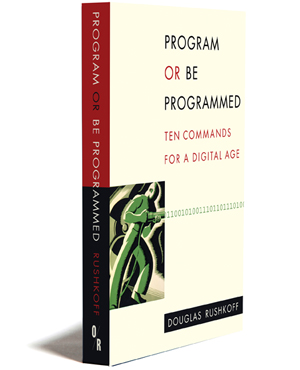
Podcast: Play in new window | Download
Publishing Talks: David Wilk interviews David Steinberger
July 4, 2010 by David
Filed under Publishing History, PublishingTalks, The Future
 In this series of interviews, called Publishing Talks, I have been talking to book industry professionals about the future of publishing, books, and culture. This is a period of disruption and change for all media businesses. How will publishing evolve as our culture is affected by technology, climate change, population density, and the ebb and flow of civilization and its economics? Publishing Talks interviews help us understand the outlines of what is happening, and how we might ourselves interact with and influence the future of publishing as it unfolds.
These interviews give people in the book business a chance to talk openly about ideas and concerns that are often only talked about “around the water cooler,” at industry conventions and events, and in emails between friends and they give people inside and outside the book industry a chance to hear first hand some of the most interesting and challenging thoughts, ideas and concepts being discussed by people in the book business.
David Steinberger is well known now as the CEO and President of The Perseus Books Group. Perseus is in many ways, a creation of the unusual business conditions that have marked the book industry over the past dozen years. The company began as a relatively small independent book publisher, growing over time via acquisitions of usually unwanted or under appreciated business units of other companies. Today it is made up of about 10 seperate imprints. Its six main publishing divisions include PublicAffairs (non-fiction), Running Press (fiction and non-fiction titles), Basic Books (non-fiction), Da Capo (non-fiction), Vanguard (fiction and non-fiction), and Avalon Travel (travel guides). Perseus also publishes academic books, including college textbooks from Westview Press.
In addition to publishing, Perseus acquired Client Distribution Services (renamed Perseus Distribution), Consortium (specializing in mostly independent literary and political presses) and most of the assets of Publishers Group West (PGW) in daring and innovative bankruptcy purchase, so that today it is by far the largest distributor of client publishers in the North American market. With Steinberger as CEO and Joe Mangan as COO (and aided by strong financing from its parent company), Perseus has crafted what appears to be a very successful strategy for navigating changeful times, including an early and deep commitment to digital publishing, a diverse set of publishing imprints, a decentralized management system based around a set of core services shared by internal resources as well as clients, and a willingness to experiment with new ideas (including Vanguard’s no-advance, high royalty publishing program as well as a variety of interesting digital initiatives).
In my conversation with David Steinberger, I wanted to learn more about how he sees Perseus today, as well as a sense of his vision for the future, not only of Perseus itself, but the publishing industry as a whole. I think listeners interested in the future of publishing and book distribution will find this discussion useful and interesting on a number of levels.
Podcast: Play in new window | Download
Publishing Talks: David Wilk interviews Tim O’Reilly
January 12, 2010 by David
Filed under PublishingTalks
 In this series of interviews, called Publishing Talks, I am talking to book industry professionals who have varying perspectives and thoughts about the future of publishing, books, and culture. This is a period of disruption and change for all media businesses.
Publishing has been a crucial part of human culture for as long as people have been writing and reading. How will publishing evolve as our culture is affected by technology, climate change, population density, and the ebb and flow of civilization and its economics? Publishing Talks interviews help us understand the outlines of what is happening, and how we might ourselves interact with and influence the future of publishing as it unfolds. Publishing Talks interviews give people in the book business a chance to talk about ideas and concerns in a public forum that are often only talked about “around the water cooler,” at industry conventions and events, and in emails between friends.
I hope that Publishing Talks interviews will give people inside and outside the book industry a chance to hear about some of the thoughts, ideas and concepts that are currently being discussed by engaged individuals within the industry.
It was very exciting for me to have a chance to interview Tim O’Reilly, widely considered to be one of the smartest and most innovative publishers around. He’s been involved in the World Wide Web and computers for a very long time, and throughout that time, his work has been marked by intelligence, innovation, and clarity about what matters to consumers. We talked about the history of his involvement in publishing, the web, publishing technology, and his views about the way publishing needs to evolve using new digital tools and establishing new business models – with examples.
Here’s his bio: Tim O’Reilly is the founder and CEO of O’Reilly Media, thought by many to be the best computer book publisher in the world. The company also publishes online through the O’Reilly Network and hosts conferences on technology topics. Tim is an activist for open source, open standards, and sensible intellectual property laws.
Since 1978, Tim has led the company’s pursuit of its core goal: to be a catalyst for technology change by capturing and transmitting the knowledge of “alpha geeks” and other innovators. His active engagement with technology communities drives both the company’s product development and its marketing. Tim has built a culture where advocacy, meme-making, and evangelism are key tenets of the business philosophy.
Tim has served on the board of trustees for both the Internet Society and the Electronic Frontier Foundation, two organizations devoted to making sure that the internet fulfills its promise. He was on the board of Macromedia up until the recent merger with Adobe. He is currently on the board of CollabNet.
Tim graduated from Harvard College in 1975 with a B.A. cum laude in Classics. His honors thesis explored the tension between mysticism and logic in Plato’s dialogues.
An archive of Tim’s online articles, talks, and interviews can be found at Tim’s archive page.
Podcast: Play in new window | Download
Publishing Talks: David Wilk interviews Joe Esposito
January 5, 2010 by David
Filed under PublishingTalks
 In this series of interviews, called Publishing Talks, I am talking to book industry professionals who have varying perspectives and thoughts about the future of publishing, books, and culture. This is a period of disruption and change for all media businesses.
Publishing has been a crucial part of human culture for as long as people have been writing and reading. How will publishing evolve as our culture is affected by technology, climate change, population density, and the ebb and flow of civilization and its economics? Publishing Talks interviews help us understand the outlines of what is happening, and how we might ourselves interact with and influence the future of publishing as it unfolds. Publishing Talks interviews give people in the book business a chance to talk about ideas and concerns in a public forum that are often only talked about “around the water cooler,” at industry conventions and events, and in emails between friends.
I hope that Publishing Talks interviews will give people inside and outside the book industry a chance to hear about some of the thoughts, ideas and concepts that are currently being discussed by engaged individuals within the industry.
I’ve been reading Joe Esposito’s writings about the book business – past, present and future – for quite some time with a great deal of admiration. He is smart, understands business, and cares deeply about books, ideas and people. Here is his “official” biography: Joseph J. Esposito is an independent consultant providing strategy assessment and interim management to the information industries. He has served as an executive at Simon & Schuster and Random House, as President of Merriam-Webster, and CEO of Encyclopaedia Britannica, where he was responsible for the launch of the first Internet service of its kind. Mr. Esposito has also served as CEO of Internet communications company Tribal Voice and SRI Consulting, both of which he led to successful exits. Among Mr. Esposito’s clients have been such technology companies as Microsoft and Hewlett Packard, various publishers of all stripes, and a growing number of not-for-profit organizations (e.g., JSTOR, the University of California Press, and the American Nationals Standards Institute). You can find his writing frequently at Scholarly Kitchen.
My interview with Joe covered alot of different subjects, including his background in publishing, current trends in digital media and e-reading, how publishing will change as it adapts to a digital marketing landscape. We spent a good deal of time talking about publishing strategy relating to e-book publishing, an issue that is important to many in the publishing industry today. His views and ideas, and his delivery of them, makes for a great conversation.
Podcast: Play in new window | Download