
David Wilk talks with Lise Quintana of Lithomobilus
September 20, 2015 by David
Filed under Ebooks and Digital Publishing, PublishingTalks, Technology
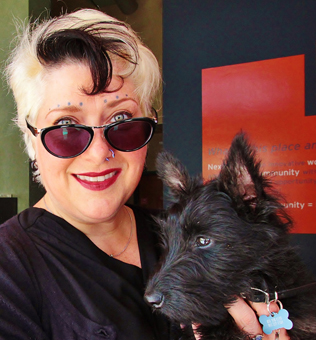 Publishing Talks began as a series of conversations with book industry professionals and others involved in media and technology about the future of publishing, books, and culture. As we continue to experience disruption and change in all media businesses, I’ve been talking with some of the people involved in our industry about how publishing might evolve as our culture is affected by technology and the larger context of civilization and economics.
I’ve now expanded the series to include conversations that go beyond the future of publishing. I’ve talked with editors and publishers who have been innovators and leaders in independent publishing in the past and into the present, and will continue to explore the ebb and flow of writing, books, and publishing in all sorts of forms and formats, as change continues to be the one constant we can count on.
It’s my hope that these conversations can help us understand the outlines of what is happening in publishing and writing, and how we might ourselves interact with and influence the future of publishing as it unfolds.
As many listeners here know, I have an ongoing interest in experiments in technology that expand the writing experience for creators and of course then the reading experience as well. Honestly, while we have seen many attempts, thus far, not very many have captured the greater imagination of writers or readers.
The latest undertaking I have run across is Lithomobilus, founded by writer Lise Quintana, whose “online writing software gives authors the power to expand upon their existing works, create new works with built-in expansion opportunities, and craft amazing nonlinear works….Readers can then download the reader software and enjoy the first e-book reading experience that values words without slavishly following the format of a printed book.”
I’m ready to see what happens and I thought it would be fun to talk to Lise to find out more.
Creating compelling “interactive” fiction and new forms of storytelling is a hugely challenging undertaking. I found a comprehensive review of Lithomobilus by Emily Short, who knows a lot about new narrative forms, her blog is well worth reading. “There’s a core problem of interactive fiction design here: if you design a narrative where the intention is that the reader will read as much as she’s curious about and then stop, but you don’t communicate that she’s allowed to do that, she’ll continue exploring the story space past the point where she’s started to feel bored and then blame the author for that boredom. This is genuinely not easy to resolve, and it’s at the heart of what Lithomobilus appears to be trying to do: to offer stories that aren’t consumed completely, but yield more and more content in response to a reader’s desire, inexhaustibly, never saying that your experience is complete.”
I like Lise Quintana’s own piece of writing in the Lithomobilus app, it’s called The Strangely-Browne Episode, and even though it’s likely meant as a demonstration of the app’s capabilities, it is an engaging story. I know there are many who doubt that there is a “need” for new technology to create interactive reading experiences. It seems possible that even if it’s “better” storytelling, it may not be a mainstream sort of thing – recumbent bicycles come to mind here. They are demonstrably better riding devices than traditional bikes, but they will never be popular with more than a minority of riders, they take time to learn to ride, they look weird and they cost more. I think similar factors are at play with writing that tries to harness new technologies to tell stories differently. Too hard for most readers to learn, interactivity changes the reading experience from what is expected, and “costs” more time and effort than readers are willing to give. But for those who do want “something more”, apps like Lithomobilus do provide an opportunity that may be worth the effort to engage.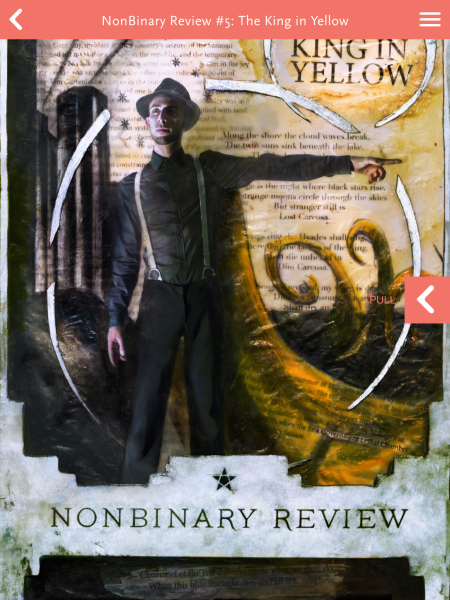
Lise’s publishing effort is called Zoetic Press, which publishes using the Lithomobilus app platform. She is Lise the CEO and founder of Narrative Technologies, which uses interactive and hypertext narrative tools to publish new kinds of literature. Quintana was formerly the editor-in-chief of Lunch Ticket, a literary journal of Antioch University Los Angeles. Previously she worked as a writer and project manager at various hardware and software companies in Silicon Valley. Quintana is on the Board of Trustees for Antioch University Los Angeles and formerly on the Board of Directors for Friends of the Santa Cruz Public Library.
Podcast: Play in new window | Download
David Wilk talks with Sherisse Hawkins from Beneath the Ink
June 22, 2015 by David
Filed under Ebooks and Digital Publishing, PublishingTalks, Technology, The Future
 Publishing Talks began as a series of conversations with book industry professionals and others involved in media and technology about the future of publishing, books, and culture. As we continue to experience disruption and change in all media businesses, I’ve been talking with some of the people involved in our industry about how publishing might evolve as our culture is affected by technology and the larger context of civilization and economics.
It’s my hope that these conversations can help us understand the outlines of what is happening in publishing and writing, and how we might ourselves interact with and influence the future of publishing as it unfolds.
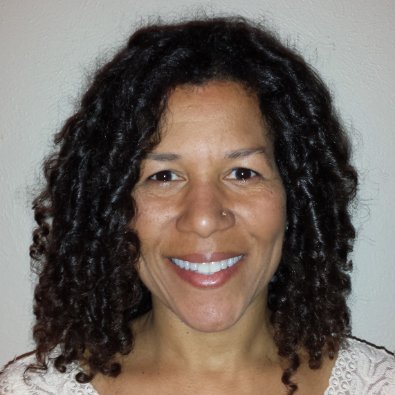
Sherisse Hawkins is co-founder with Alex Milewski of Beneath the Ink, a Boulder, Colorado based ebook technology company. Beneath the Ink is working on what is likely the next phase in ebook development evolution, which is the provision of tools that enable authors and publishers to easily create ebooks with interactive content and multimedia resources. As Sherisse says in our interview, the story must and will remain the core of the book, but there are many types of books where the reading experience can be meaningfully expanded with the addition of expanded content.
This concept is not new of course, but what differentiates Beneath the Ink is the way their technology integrates the additional material to enable the reader to choose whether to engage or not, and making sure the presence of the option is not distracting to the reader. Their proprietary technology creates what they call “binks,” which contain the media content within the book file, as opposed to simply being a link out to the open web (which is, of course, also always enabled in epubs and mobi files). Another other key offering is to make it easy for creators to manage their own ebook media production process simply and easily.
I think it makes sense to enable this sort of feature in the digital reading experience. Not all readers want to “go deeper” or be taken out of the main text. But many others do. In a way it’s like having enhanced footnotes – and many of us do enjoy a good footnote to enhance our understanding of the text at hand. Fiction is another matter and is likely going to be a much greater challenge both for writers and for readers. But again, there are plenty of readers who do enjoy taking side trips from the main text, perhaps to better understand a character or a place inside a novel.
Beneath the Ink creates the tools for expanded reading experiences; of course, it remains to be seen how they are used and deployed by creators, and appreciated by readers. Aside from Binks, Beneath the Ink now has a new product called PageDip, which enables the one-click creation and has also created the option for users to offer their ebooks as hosted WebBooks, essentially untethering the reading experience from devices and apps, something that many in the ebook development world have been promoting for a number of years.
Beneath the Ink appeared on Shark Tank April 17, 2015! heavy.com did an interview with Sherisse about her appearance.
I like what this company is doing and have done some experimenting with their technology for my clients. I wanted to talk to Sherisse about her vision for the future of digital publishing and also to learn more about her experiences in creating technology and offering it to the publishing community. Beneath the Ink has done a great deal of research into the ways that readers prefer to interact with digital content and Sherisse and her team have developed their software accordingly. Her insights into the ways that digital reading is evolving are very worthwhile to hear.
Sherisse is the former VP of software development at Time Warner cable and was a Senior Electrical Engineer in the Walt Disney Imagineering Show and Ride division, responsible for the design, development, and installation of attractions in four major Disney theme parks. She received a BS degree in Engineering from the University of Arizona, and earned a Masters in Engineering Management from the University of Colorado. Alex Milewski is the other co-founder of Beneath The Ink. His background is in web and mobile application development using Javascript, PHP, CSS3, HTML5 and many other programming languages. Beneath the Ink is based in Boulder, Colorado.
Podcast: Play in new window | Download
Publishing Talks: David Wilk interviews Matt Cavnar
June 27, 2012 by David
Filed under Ebooks and Digital Publishing, PublishingTalks, The Future
 In this series of interviews, called Publishing Talks, I talk to book industry professionals and other smart people about the future of publishing, books, and culture. This is a period of disruption and change for all media businesses. How will publishing evolve as our culture is affected by technology, climate change, population density, and the ebb and flow of civilization and economics?
I hope these Publishing Talks conversations will help us better understand the outlines of what is happening in publishing, books and reading culture, and how we can ourselves both understand and influence the future of books and reading.
I’ve been thinking alot lately about the evolution of ebook building. My friends Ron Martinez and Nick Ruffilo at Aerbook and Hugh McGuire at PressBooks, have also built on this kind of concept, in Aerbook’s case a cloud based authoring tool that is highly sophisticated and probably best used by experienced book designers (called Aerbook Maker), and in PressBooks’ model a WordPress based authoring tool that enables writers and editors to collaborate in the cloud to build books from scratch. Barnes & Noble has created a tool for publishers who want to build fixed page children’s books for their own device, the Nook. This seems like a growing trend, presaged by what happened years ago in the realm of desktop publishing (which resulted in today’s powerful tools, InDesign and Quark – and InDesign now can even be used to make ebooks), making it possible for book designers to do incredible work with powerful, economical tools.
The received wisdom about ebooks with video and audio features is that they don’t sell all that well, at least compared to straight text or even just books with illustrations. And since they have had to be built more or less by hand as one off productions, they have had significantly higher costs of production. With low sales and high cost of production, the ROI for publishers for these sorts of ebooks has been mostly terrible.
That has meant that relatively few such books have been published. Which of course has meant that there has been relatively little audience development for ebooks that combine text, illustrations, audio and video features, and perhaps also. By streamlining the process of ebook building and empowering creators, these tools will reduce the cost of deploying ebooks with integrated audio and video elements, improve design, and hopefully increase the level of interest in enhanced ebooks by attracting more creativity on the production side. One might imagine that a meaningful increase in the number of these kinds of enhanced or “app-like” ebooks in the various e-bookstores, will also increase the interest of readers for them, and thus more sales. And of course we can also hope for more marketing commitment from the device manufacturers themselves and better software and hardware to enable readers to more readily enjoy this expected increase in creativity on the author and publisher side of the equation (Amazon, Barnes & Noble, and Apple, are you listening?)
As a proponent of enhanced ebooks, I’d like to believe that with relatively lower cost of production, and more platform support, we will indeed see an increase in output of these kinds of ebooks, and that a great upsurge of creative, meaningful use of audio and video in books will really “enhance” the usefulness and popularity of these kinds of ebooks for readers.
Matt Cavnar is the VP of Business Development for Vook, a company that is now offering their own sophisticated ebook publishing tool for authors and publishers. When the company started in 2009, it set out to provide video-enabled ebooks to the reading public. Over the past three years the company has produced hundreds of ebooks of all different kinds. During that time, they soon realized that acting simply as a production company, they could never achieve the kind of scale they really hoped for, so over the past year or so, Vook’s staff took everything they had learned about making ebooks, and built a toolset that virtually anyone can use to make great ebooks.
Matt is a passionately committed to books, and especially to ebooks, and to expanding their reach. In the course of our conversation, we talked first about the Vook platform and the tools it offers to users, and then went on from there to talk broadly about the current and evolving state of digital publishing, informed by Matt’s hands on experience working with ebooks and their creators for the past several years. This conversation should be valuable to anyone involved in publishing, whether ebooks are your primary interest or not, but especially if you are interested in seeing where the nuts and bolts of ebook creation have gone in mid-2012.
Podcast: Play in new window | Download
Publishing Talks: David Wilk interviews Liate Stehlik
May 14, 2012 by David
Filed under Ebooks and Digital Publishing, PublishingTalks, Technology, The Future
 In this series of interviews, called Publishing Talks, I talk to book industry professionals and other smart people about the future of publishing, books, and culture. This is a period of disruption and change for all media businesses. How will publishing evolve as our culture is affected by technology, climate change, population density, and the ebb and flow of civilization and economics?
I hope these Publishing Talks conversations will help us better understand the outlines of what is happening in publishing, books and reading culture, and how we can ourselves both understand and influence the future of books and reading.
Liate Stehlik appeared on a panel I moderated last winter for Digital Book World, and I was very much impressed by her perceptive understanding of the evolving publishing landscape. In her role as the Senior Vice President and Publisher of William Morrow/Harper Voyager/Avon Books division of HarperCollins, Liate oversees the digital-centric Avon Impulse imprint, giving her a unique experience base and outlook. Avon Impulse is innovative publishing for authors and readers, and is a learning base for the company within which it operates.
I thought it would be interesting and enjoyable to talk to her about her views on the book business, past, present and future, and I think our conversation demonstrates that it was just that and more. Avon Impulse represents a significant effort by a Big Six publisher, creating a chance to experiment and learn important and valuable lessons about digital books and readers, which can then be applied across the overall publishing enterprise. Much of what Liate and her company has learned will doubtless be applicable to many others in publishing. I’ll welcome comments and reactions from listeners in all kinds of publishing.
Podcast: Play in new window | Download
Publishing Talks: David Wilk interviews Andrea Fleck-Nisbet
April 8, 2012 by David
Filed under Ebooks and Digital Publishing, PublishingTalks, Technology, The Future
 In this series of interviews, called Publishing Talks, I talk to book industry professionals and other smart people about the future of publishing, books, and culture. This is a period of disruption and change for all media businesses. How will publishing evolve as our culture is affected by technology, climate change, population density, and the ebb and flow of civilization and economics?
I hope these Publishing Talks conversations will help us better understand the outlines of what is happening in publishing, books and reading culture, and how we can ourselves both understand and influence the future of books and reading.
I have met and talked to a wide range of people involved in publishing and books over the past few years and I’ve interviewed quite a few of them for this series of podcasts. I noticed recently that I have not done very many interviews lately with people who are involved in creating digital reading experiences (also known as “ebooks”). Andrea Fleck-Nisbet, the Director of Digital Publishing at Workman Publishing wrote a piece for American Libraries Magazine called “A Publisher’s Perspective on Ebooks” that caught my eye. In this article, she wrote cogently about e-publishing as seen from the perspective of a leading trade publisher, so I thought that talking to Andrea for this series of Publishing Talks interviews would be fun and interesting.
Andrea has been at Workman for nine years and has worked on their digital initiatives since 2007. Workman is well known in the book industry for its innovative books and deep commitment to marketing and understanding what readers want.
We had a great talk about where things are today in e-publishing, and how we can expect it to evolve over the next few years. As Andrea’s American Libraries article was headlined: “the digital revolution has transformed every aspect of the publishing business.” Many of us know this to be true in theory, but not everyone can speak to all the myriad elements of publishing that are involved in making over an entire business. Andrea’s practical experience in digital publishing inform her perspective and make her well worth listening to.
Podcast: Play in new window | Download
Publishing Talks: David Wilk interviews Hugh McGuire
May 1, 2011 by David
Filed under Ebooks and Digital Publishing, Publishing History, PublishingTalks, Technology, The Future
 In this series of interviews, called Publishing Talks, I have been talking to book industry professionals and other smart people about the future of publishing, books, and culture. This is a period of disruption and change for all media businesses. We must wonder now, how will publishing evolve as our culture is affected by technology, climate change, population density, and the ebb and flow of civilization and economics?
I hope these Publishing Talks conversations can help us understand the outlines of what is happening in the publishing industry, and how we might ourselves interact with and influence the future of publishing as it unfolds.
These interviews give people in and around the book business a chance to talk openly about ideas and concerns that are often only talked about “around the water cooler,” at industry conventions and events, and in emails between friends and they give people inside and outside the book industry a chance to hear first hand some of the most interesting and challenging thoughts, ideas and concepts being discussed by people in the book business.
Hugh McGuire is a serial digital entrepreneur. There’s a great story about him and an online interview at NextMontreal, in which the focus of the conversation is a company he started a few years ago called Book Oven, aiming to build an online book publishing platform. That particular venture did not meet expectations, but it’s a great story for anyone interested in digital publishing and start-up businesses in publishing (and resulted in a very cool tool called PressBooks, that “lets you and your team easily author and output books in multiple formats including: epub, Kindle, print-on-demand-ready PDF, HTML, and inDesign-ready XML.”)
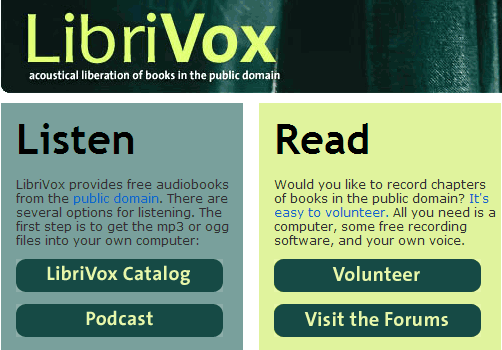
Hugh is also the founder of the outstanding free audio book LibriVox, which currently features perhaps the largest catalog of audio books drawn from the public domain. It’s a great service and operates on open source principles. In addition to LibriVox, Hugh has also started and now runs a for-profit audio book business called Iambik, which shares many principles with LibriVox except in its profit goals, which of course drives a different business model.
What prompted me to contact Hugh now is the recent and terrific guest piece he wrote called What are Libraries For? for the outstanding blog In the Library with the Leadpipe (subtitled: The murder victim? Your library assumptions. Suspects? It could have been any of us.) This piece has so much great stuff in it (and is so well written and clear), that it’s a must-read for anyone interested in the future of publishing, books and readers (and In the Library is a great discovery too).
You may not agree with all of Hugh’s assumptions, nor his conclusions (I mostly do), but what he says will make you think hard about the digital future and what it will mean to libraries and every other institution in the book to reader supply chain. I’d be happy to hear from Writerscast listeners what you think of Hugh’s article after you read it. Comments are open.
Here’s the first graph of Hugh’s essay: “Ebooks will become the dominant form of casual reading for adults at some point in the future1. When this happens, community and public libraries will face a major existential crisis, because a fundamental (perhaps the fundamental) function of community libraries—lending print books—will no longer be a fundamental demand from the community. Libraries that do not adjust will find their services increasingly irrelevant to the populations they serve.”
Podcast: Play in new window | Download
Publishing Talks: David Wilk interviews Phil Ollila
March 9, 2011 by David
Filed under Ebooks and Digital Publishing, Publishing History, PublishingTalks, Technology, The Future
 In this series of interviews, called Publishing Talks, I have been talking to book industry professionals and other smart people about the future of publishing, books, and culture. This is a period of disruption and change for all media businesses. We must wonder now, how will publishing evolve as our culture is affected by technology, climate change, population density, and the ebb and flow of civilization and economics?
I hope these Publishing Talks conversations can help us understand the outlines of what is happening in the publishing industry, and how we might ourselves interact with and influence the future of publishing as it unfolds.
These interviews give people in and around the book business a chance to talk openly about ideas and concerns that are often only talked about “around the water cooler,” at industry conventions and events, and in emails between friends and they give people inside and outside the book industry a chance to hear first hand some of the most interesting and challenging thoughts, ideas and concepts being discussed by people in the book business.
Philip Ollila (widely known as Phil in the book industry) is the Chief Content Officer of Ingram Content Group Inc., one of the largest distributors of book content and providers of digital printing in the North American book industry. Phil is responsible for Ingram Content Group’s publisher facing business, and has been instrumental in leading the transformation of Ingram from a traditional wholesale service provider, into what is now a fully integrated solutions company for clients. Ingram combines wholesale distribution, print-on-demand, digital distribution, inventory management and comprehensive worldwide services for both physical and digital content.
Phil leads a number of Ingram business units including wholesale merchandising, Lightning Source, Ingram Publisher Services and digital distribution through CoreSource® and also heads up Ingram Content Group marketing. Before joining Ingram, where he has held several leadership positions, he was Vice President of Marketing and Merchandising for Borders.
Anyone in the book business, and many people outside it know about Ingram. It is one of the two large book wholesalers transitioning from a key role in the physical supply chain between publishers and retailers. Perhaps earlier than any other large company in the industry, Ingram had the foresight to invest in a range of services that would enhance their offerings to both their suppliers (mainly publishers) and their customers (bookstores, libraries and many other retailers). In many ways, it is only the two large former traditional wholesalers, Ingram and its competitor Baker & Taylor that have the unique perspective and ability to act as really powerful and influential transformative agencies as the book business evolves into a combination of print and digital products.
Phil Ollila is therefore now in a key role at a tremendously interesting and fast moving business that possesses a great deal of information valuable to publishers and to anyone interested in how publishing, books and readers will interact in the future, both near term and much, much farther into the future.
Podcast: Play in new window | Download
Publishing Talks: David Wilk Interviews Adam Hodgkin
August 2, 2010 by David
Filed under Ebooks and Digital Publishing, PublishingTalks, Technology, The Future
 In this series of interviews, called Publishing Talks, I have been talking to book industry professionals about the future of publishing, books, and culture. This is a period of disruption and change for all media businesses. How will publishing evolve as our culture is affected by technology, climate change, population density, and the ebb and flow of civilization and its economics?
I hope these Publishing Talks conversations will help us understand the outlines of what is happening, and how we might ourselves interact with and influence the future of publishing as it unfolds.
These interviews give people in the book business a chance to talk openly about ideas and concerns that are often only talked about “around the water cooler,” at industry conventions and events, and in emails between friends and they give people inside and outside the book industry a chance to hear first hand some of the most interesting and challenging thoughts, ideas and concepts being discussed by people in the book business.
Adam Hodgkin is one of the three publishing and technology experienced founders of Exact Editions, which started as a digital publishing solution for magazines to run on the iPhone (and of course now on the iPad as well). Exact Editions enables magazine publishers to sell “in-app” subscriptions, and notably, preserves the notion of the designed page, something that has been a concern for many publishers of illustrated books as well. I’ve been reading the Exact Editions blog for some time and have been impressed with Adam’s understanding of the emerging digital publishing universe. Something he wrote recently caught my attention immediately, as I have long been interested in the ways that authors, publishers and readers will learn to connect with one another in the online environment. Here’s what Adam wrote about the Apple environment upon which EE is built:
“The Apple e-commerce system works extremely well in my view and with the freemium method that we are adopting at Exact Editions it works in a way in which the ratios between ‘sampling’ and ‘purchasing’ are extremely informative. And as we get more data and get on top of it and learn how to do SRO (SampleRevisionOptimisation – a bit like SEO and it will be an equally dark art) the business of presenting the right amount of content to optimise sales will be established. We currently recommend working at about 8-15% exposure, but its guesstimatory at this point. Amazon must know quite a lot about this from their system, but I am not sure if they have issued any guidance to publishers.
The Apple system is better than most physical bookshops because it can put ‘samples’ in the hands of thousands (many thousands) of potential subscribers/purchasers much more efficiently than can be done with printed paper pages. The economics of this are pretty compelling even if the ‘sample’ to ‘purchase’ ratio is as low as 1%. And in most cases its quite a bit higher than that.
Will probably blog something a bit more informative about this in the next few days. But just let me say that I am simply ASTONISHED by how much more takeup there is for the iPad than for the iPhone. More in absolute terms, by quite a margin, even though there are maybe 40X as many iPhone/IPod touches in the market than iPads.
The iPad is turning out to be a hugely strong reading environment. Absolutely no question about it. And its darn easy to buy stuff on it that you might want to read.”
I thought it would be interesting to talk to Adam about Exact Editions and some of the things he and his colleagues have learned through the experience of working in the Apple environment, not only with magazine publishers but now as they are expanding into working with book publishers as well. My discussion with Adam covered his background and experience in traditional publishing, technology, and some of the lessons learned by the Exact Editions team in their work in digital publishing apps and proved to be as compelling as I had expected.
Podcast: Play in new window | Download
Publishing Talks: David Wilk interviews David Steinberger
July 4, 2010 by David
Filed under Publishing History, PublishingTalks, The Future
 In this series of interviews, called Publishing Talks, I have been talking to book industry professionals about the future of publishing, books, and culture. This is a period of disruption and change for all media businesses. How will publishing evolve as our culture is affected by technology, climate change, population density, and the ebb and flow of civilization and its economics? Publishing Talks interviews help us understand the outlines of what is happening, and how we might ourselves interact with and influence the future of publishing as it unfolds.
These interviews give people in the book business a chance to talk openly about ideas and concerns that are often only talked about “around the water cooler,” at industry conventions and events, and in emails between friends and they give people inside and outside the book industry a chance to hear first hand some of the most interesting and challenging thoughts, ideas and concepts being discussed by people in the book business.
David Steinberger is well known now as the CEO and President of The Perseus Books Group. Perseus is in many ways, a creation of the unusual business conditions that have marked the book industry over the past dozen years. The company began as a relatively small independent book publisher, growing over time via acquisitions of usually unwanted or under appreciated business units of other companies. Today it is made up of about 10 seperate imprints. Its six main publishing divisions include PublicAffairs (non-fiction), Running Press (fiction and non-fiction titles), Basic Books (non-fiction), Da Capo (non-fiction), Vanguard (fiction and non-fiction), and Avalon Travel (travel guides). Perseus also publishes academic books, including college textbooks from Westview Press.
In addition to publishing, Perseus acquired Client Distribution Services (renamed Perseus Distribution), Consortium (specializing in mostly independent literary and political presses) and most of the assets of Publishers Group West (PGW) in daring and innovative bankruptcy purchase, so that today it is by far the largest distributor of client publishers in the North American market. With Steinberger as CEO and Joe Mangan as COO (and aided by strong financing from its parent company), Perseus has crafted what appears to be a very successful strategy for navigating changeful times, including an early and deep commitment to digital publishing, a diverse set of publishing imprints, a decentralized management system based around a set of core services shared by internal resources as well as clients, and a willingness to experiment with new ideas (including Vanguard’s no-advance, high royalty publishing program as well as a variety of interesting digital initiatives).
In my conversation with David Steinberger, I wanted to learn more about how he sees Perseus today, as well as a sense of his vision for the future, not only of Perseus itself, but the publishing industry as a whole. I think listeners interested in the future of publishing and book distribution will find this discussion useful and interesting on a number of levels.
Podcast: Play in new window | Download
Publishing Talks: David Wilk Interviews David Rothman
January 26, 2010 by David
Filed under PublishingTalks
 In this series of interviews, called Publishing Talks, I am talking to book industry professionals who have varying perspectives and thoughts about the future of publishing, books, and culture. This is a period of disruption and change for all media businesses.
Publishing has been a crucial part of human culture for as long as people have been writing and reading.
How will publishing evolve as our culture is affected by technology, climate change, population density, and the ebb and flow of civilization and its economics? Publishing Talks interviews help us understand the outlines of what is happening, and how we might ourselves interact with and influence the future of publishing as it unfolds. Publishing Talks interviews give people in the book business a chance to talk about ideas and concerns in a public forum that are often only talked about “around the water cooler,” at industry conventions and events, and in emails between friends.
I hope that Publishing Talks interviews will give people inside and outside the book industry a chance to hear about some of the thoughts, ideas and concepts that are currently being discussed by engaged individuals within the industry.
David Rothman grew up in the D.C. area, went to the University of North Carolina and worked as a reporter for the Journal in Lorain, Ohio, where he covered poverty and public housing and was a feature writer. Among other stories, Rothman chronicled the aftermath of the Kent State massacre.
Related distantly to the late Hollywood scriptwriter Arnold Belgard, Rothman is the author of six nonfiction books on technology-related topics and lives with his wife, Carly, in Alexandria, Virginia. He is well known on the Internet and among digerati for having created and operated TeleRead, a popular site devoted to libraries and technology and recently has published a novel based on real-life Washington, D.C., The Solomon Scandals.
I talked with David Rothman about his long history of involvement in technology, the internet and digital reading alternatives, with emphasis on Teleread, and we then moved on to cover some of the current issues of the day, including the business structure of the rapidly growing e-publishing marketplace, copyright issues in the digital era, and how the web might enable new compensation models for authors and other creators. David displayed his typical verve and journalist’s willingness to tackle any subject and every challenge.
Podcast: Play in new window | Download